
The Claim
“Refused to give counselling to a pregnant woman prior to an abortion. The woman was raped whilst in our asylum seeker prisons.”
Original Sources Provided
✅ FACTUAL VERIFICATION
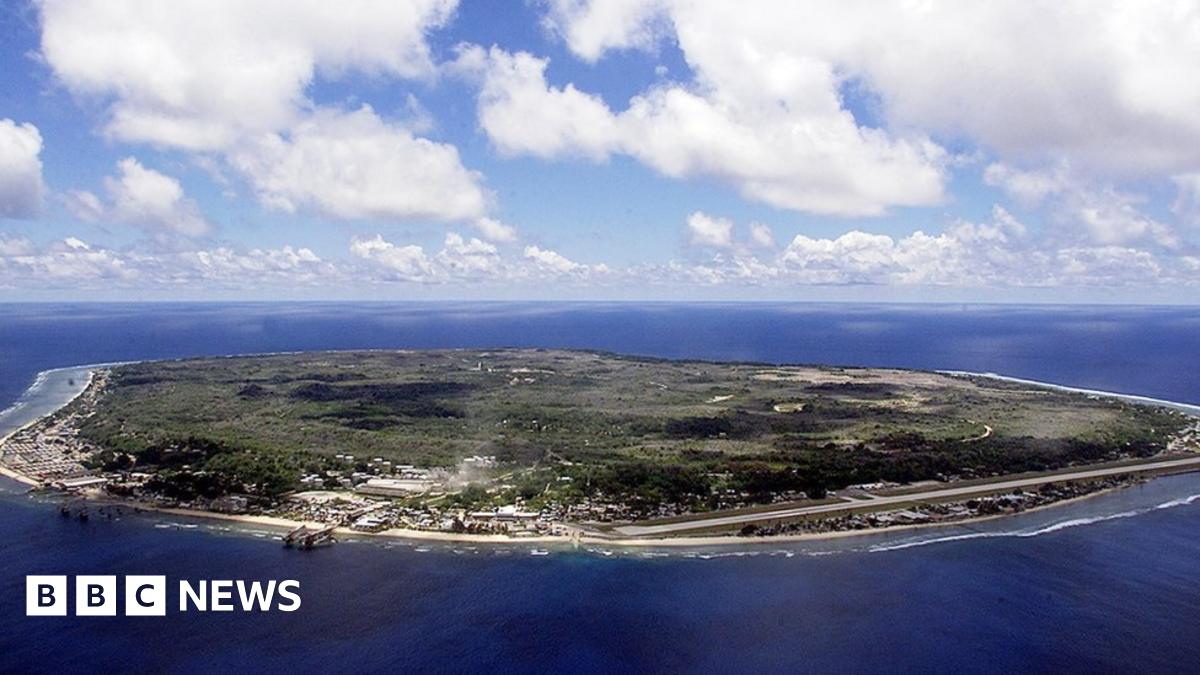
The claim refers to the highly publicized case of "Abyan" (a pseudonym), a 23-year-old Somali refugee who was allegedly raped on Nauru in July 2015 while in Australian immigration detention, resulting in pregnancy [1]. Abortion services are not available in Nauru, where abortion is criminalized [2].
In October 2015, Abyan was transferred to Australia (Villawood detention facility) ostensibly to receive an abortion after medical staff at the Nauru detention facility raised health concerns about continuing the pregnancy [3]. However, she was returned to Nauru after just five days without having undergone the procedure.
Regarding the specific claim about counselling refusal, Abyan herself stated in a public letter: "I saw a nurse at a clinic but there was no counselling. I saw a nurse at Villawood but there was no interpreter" [4]. This contradicts Immigration Minister Peter Dutton's account, which listed appointments including what the government characterized as "counselling" [4].
Freedom of Information (FOI) documents later revealed that senior Department of Immigration officials knew Abyan had NOT outright refused an abortion, contrary to Minister Dutton's public claims [3]. The documents show Abyan indicated she was "not mentally well enough" to undergo the procedure on arrival but had not changed her mind about wanting an abortion [3].
Missing Context
The claim omits several critical contextual elements:
Abyan was eventually returned to Australia: Following the controversy and public pressure, Abyan was brought back to Australia several weeks after her initial return to Nauru to receive medical assistance in Brisbane [3].
Abortion legality in Nauru: The necessity of transferring Abyan to Australia was due to Nauru's criminalization of abortion, a legal framework that predated the Coalition government and exists independently of Australian policy [2].
Offshore detention policy origins: The offshore detention policy that placed Abyan on Nauru was originally established by the Keating Labor government in 1994 with the opening of processing facilities on Nauru and Manus Island [5]. The policy was subsequently maintained, expanded, or reinstated by governments of both persuasions.
FOI revelations about departmental conduct: The FOI documents revealed that Australian Border Force officials expressed concern that "there is a risk that once in Australia, [Abyan] will seek to join legal action which would prevent her return" [3]. This suggests departmental motivations beyond medical care considerations.
The government's stated position: The Coalition maintained they were willing to bring Abyan back for a termination while insisting she could not remain in Australia permanently [4].
Source Credibility Assessment
The original source provided is GetUp.org.au, a prominent Australian progressive advocacy organization. GetUp operates as a grassroots campaigning organization with a stated mission to "build a more fair, flourishing, and just Australia" [6].
Assessment:
- GetUp is a partisan advocacy organization, not a neutral news source or government body
- The organization campaigns on progressive causes including refugee rights, environmental protection, and social justice
- While GetUp presents factual information in campaigns, the framing and emphasis align with their advocacy goals
- The "Bring Her Back" campaign was a legitimate advocacy effort, but the source should be understood as coming from an organization with a clear political position opposing offshore detention
This is distinct from mainstream news sources (ABC, Fairfax, News Corp) or official government/audit sources. Information from GetUp should be cross-referenced with primary sources and mainstream reporting for verification.
Labor Comparison
Did Labor do something similar?
Search conducted: "Labor government offshore detention Nauru asylum seeker medical transfers"
Finding: The offshore detention policy itself was originally implemented by Labor. The Keating Labor government opened the Nauru and Manus Island processing centers in 1994 as part of the "Pacific Solution" framework [5]. The Rudd Labor government (2007-2010 initially) maintained offshore processing, and the Gillard Labor government (2010-2013) continued and expanded these arrangements [7].
When Kevin Rudd returned as Prime Minister in 2013, his government declared that asylum seekers arriving by boat would be sent to Papua New Guinea for processing and resettlement, with no possibility of settlement in Australia [8].
Comparative Analysis:
- The policy framework that placed Abyan on Nauru was established and maintained by both major parties
- Labor governments similarly resisted medical transfers when they believed transfers could create legal precedents or encourage more boat arrivals
- The Gillard government faced criticism for conditions in detention facilities, including reports of sexual assault
- Both parties have faced scrutiny over healthcare provision in offshore detention
This is not unique to the Coalition - the systemic issues with offshore detention, including medical care access and transfer delays, have occurred under governments of both political persuasions.
Balanced Perspective
The Abyan case highlights serious concerns about the treatment of vulnerable women in Australia's offshore detention system. Multiple credible sources (SBS News, The Guardian, ABC, Amnesty International) documented:
Legitimate criticisms:
- Abyan's claim that she did not receive adequate counselling or interpreter services during her first transfer [4]
- FOI documents revealing departmental knowledge that contradicted Minister Dutton's public statements [3]
- The apparent prioritization of preventing legal action over medical care [3]
- The broader pattern of sexual violence against women in detention facilities, documented by multiple human rights organizations [9]
Government perspective and context:
- The government claimed Abyan received medical attention including counselling, though Abyan disputed the adequacy of this care [4]
- Officials expressed concern about "gaming the system" through legal injunctions, reflecting a broader policy concern about maintaining the offshore detention deterrent [4]
- The government eventually did bring Abyan back to Australia for medical care
- The Coalition maintained the offshore detention policy inherited from and continued by previous Labor governments
Key context: This case occurred within a policy framework established by Labor and continued by the Coalition. While the specific handling of Abyan's case drew significant criticism, the broader issues of offshore detention healthcare access are systemic and bipartisan.
PARTIALLY TRUE
6.0
out of 10
The core factual elements are accurate: Abyan, a pregnant asylum seeker allegedly raped in detention, stated she did not receive counselling prior to an abortion decision during her first transfer to Australia. FOI documents revealed departmental misrepresentation of her position. However, the claim omits:
- That Abyan was eventually returned to Australia for medical care
- That offshore detention is a bipartisan policy framework originating under Labor
- The complexity of medical transfers in a policy context where both parties have sought to deter boat arrivals
The framing suggests this was uniquely a Coalition failing, when in reality the systemic issues with offshore detention healthcare have persisted across multiple governments of both persuasions.
Final Score
6.0
OUT OF 10
PARTIALLY TRUE
The core factual elements are accurate: Abyan, a pregnant asylum seeker allegedly raped in detention, stated she did not receive counselling prior to an abortion decision during her first transfer to Australia. FOI documents revealed departmental misrepresentation of her position. However, the claim omits:
- That Abyan was eventually returned to Australia for medical care
- That offshore detention is a bipartisan policy framework originating under Labor
- The complexity of medical transfers in a policy context where both parties have sought to deter boat arrivals
The framing suggests this was uniquely a Coalition failing, when in reality the systemic issues with offshore detention healthcare have persisted across multiple governments of both persuasions.
📚 SOURCES & CITATIONS (10)
-
1
bbc.com
A woman who said she was pregnant after being raped at the Nauru detention centre arrives in Australia, amid public pressure for her to be allowed an abortion.
BBC News -
2PDF
ASA1227172015ENGLISH
Amnesty • PDF Document -
3

sbs.com.au
Documents from the Department of Immigration and Border protection show that officials knew a Somali woman who had been raped on Nauru had not outright refused an abortion despite claims she had by Immigration Minister Peter Dutton after she was sent back to Nauru without the procedure last year.
SBS News -
4

dailybulletin.com.au
The Conversation
Daily Bulletin -
5
rch.org.au
Rch Org
-
6

getup.org.au
An independent movement to build a progressive Australia and bring participation back into our democracy.
GetUp -
7

en.wikipedia.org
Wikipedia -
8
lowyinstitute.org
One area of policy difference between Kevin Rudd and Julia Gillard immediately raised after last night's leadership change is asylum seekers. After all, it's one of the biggest challenges in terms of policy and votes facing the Government, and Rudd famously declared he did not want to see the party 'lurch to the right' on the issue on the night he was deposed three years ago.
Lowyinstitute -
9

vice.com
Twenty-three-year-old Somali refugee Abyan was raped in an Australian offshore detention center. Now women's rights activists claim that the government doesn't want to give her an abortion.
VICE -
10
nytimes.com
Nytimes
Rating Scale Methodology
1-3: FALSE
Factually incorrect or malicious fabrication.
4-6: PARTIAL
Some truth but context is missing or skewed.
7-9: MOSTLY TRUE
Minor technicalities or phrasing issues.
10: ACCURATE
Perfectly verified and contextually fair.
Methodology: Ratings are determined through cross-referencing official government records, independent fact-checking organizations, and primary source documents.