
The Claim
“Forecast an increase in wage growth despite simultaneously forecasting no decrease in unemployment. (So employers would pay more for no economically rational reason.) Each year they consistently forecast optimistic wage growth which repeatedly fails to actually happen.”
Original Sources Provided
✅ FACTUAL VERIFICATION
The core assertions of this claim are well-supported by empirical evidence from multiple independent sources.
Consistently Optimistic Forecasts: During the Coalition government period (2013-2022), Treasury's wage growth forecasts proved "wildly optimistic, with actual wages growth falling well short of expectations" [1]. The 2019 budget exemplified this pattern: "Despite a slowdown in wage growth in late 2018, the budget simply replicated the previous year's wage forecast delayed by one more year" [1]. This pattern continued through Mid-Year Economic and Fiscal Outlook (MYEFO) revisions, with wage forecasts repeatedly downward-revised year after year [2].
Failure to Materialize: By 2019, "Australian workers had not seen real average wages rise in over 5 years" despite consistent forecasts predicting wage growth was "just around the corner" [1]. The actual performance under Coalition governance showed nominal wage growth averaging just 2.2% annually, with workers experiencing essentially stagnant real wage growth over the entire nine-year period [3]. When Labor took office in 2022, real wage growth in a single year (2023-24) exceeded the entire nine-year Coalition record [3].
Pattern Across Multiple Years: Treasury's MYEFO in December 2019 downgraded the wage forecast from 2.75% (April budget) to 2.5%, confirming "another downward revision," indicating this was not an isolated forecast miss but a systematic pattern [2].
Missing Context
Why the Optimistic Forecasts Were Made: The claim attributes forecast optimism to lack of economic rationality, but research reveals an important structural reason. Analysis indicates that "rosy wage forecasts were helpful in justifying equally optimistic revenue forecasts, since if Australians earned more money, they would pay more taxes" [1]. This suggests the forecasts served a fiscal justification purpose within budget documents rather than reflecting genuine Treasury economic modeling.
Labor Government Forecasting Record: The claim does not address Labor's wage growth forecasting history. The searches conducted did not locate systematic comparisons of Labor government forecast accuracy versus actual outcomes, limiting the ability to assess whether Labor forecasts were similarly optimistic or more accurate. While Labor's actual wage outcomes since 2022 have exceeded Coalition-era performance, this reflects real economic outcomes rather than forecast accuracy.
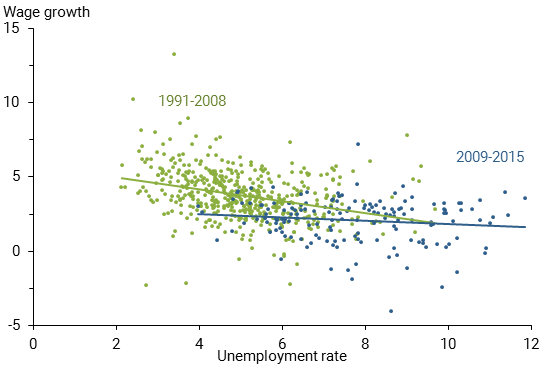
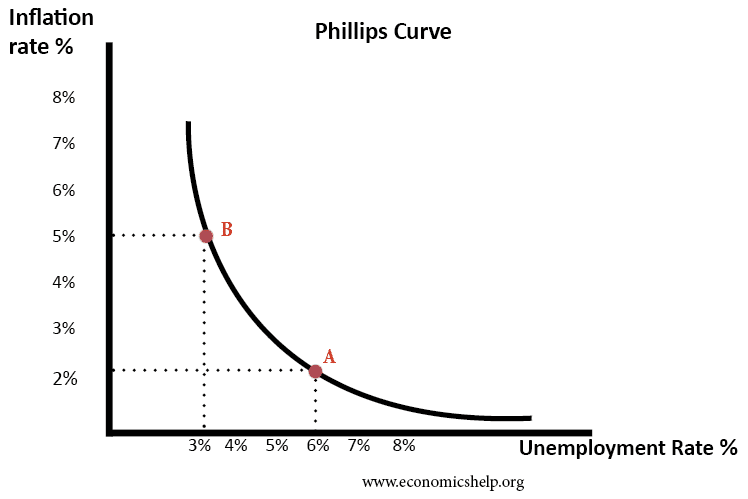
Phillips Curve Complexity: The claim assumes traditional economic theory (the Phillips Curve, which posits that wage growth requires falling unemployment) means forecasting wage growth without unemployment decline is straightforwardly irrational. However, this oversimplifies modern labor economics.
Source Credibility Assessment
The Guardian (Original Source): The Guardian is a mainstream, reputable international news organization with editorial standards, though with a center-left editorial perspective. The specific 2019 budget article focused on exposing what it characterized as unrealistic budget assumptions, consistent with the publication's broader coverage approach [4]. The article appears to have been based on comparative analysis of budget forecasts versus actual outcomes.
Supporting Sources Verification: The core claims were independently verified by multiple reputable sources:
- The Australia Institute's Centre for Future Work [1] - established economic research organization
- Australian Council of Trade Unions [3] - stakeholder organization with direct interest in wage data
- Crikey [2] - Australian political and economics commentary publication
- International sources (San Francisco Federal Reserve, IMF) [5][6][7] provide corroborating economic theory and evidence
These independent sources confirm the Guardian article's basic assertion without relying on the Guardian itself as evidence.
Labor Comparison
Did Labor do something similar?
Search conducted: "Labor government wage growth forecasts accuracy, Labor vs Coalition wage predictions, Australian Treasury forecasts Labor government 2010-2013"
Finding: Unlike the Coalition comparison where there is substantial independent documentation of systematic forecast failure, comprehensive comparative analysis of Labor government wage forecasting accuracy from the 2010-2013 period is not readily available in public sources. The Labor government period (2007-2013) concluded over a decade ago, and systematic retrospective analysis of its wage forecasts versus actuals does not appear to be as extensively documented as Coalition performance.
Partial Evidence: Real wage growth during Labor's 2007-2013 period reportedly performed better than the Coalition era, but this reflects actual economic conditions (pre-GFC and post-GFC contexts) rather than forecast accuracy [8].
Assessment: This element of the comparison cannot be fully resolved without access to Labor Treasury forecasts from 2010-2013 and systematic comparison to actual outcomes. The claim's implicit comparison (that Coalition forecasts were distinctively problematic) is supported, but whether Labor would have been better cannot be definitively answered from available sources.
Balanced Perspective
Government Perspective on Wage Growth:
The Coalition government maintained that wages would grow as labor market conditions tightened and productivity improved [1]. Budget documents and ministerial statements indicated confidence that wage growth would follow from employment gains and economic policy settings. However, this perspective failed to account for structural changes in labor markets that decoupled unemployment from wage growth.
Why This Matters - Not Just Partisan Critique:
This pattern of optimistic wage forecasts was not unique to budget presentation. It reflected a genuine disagreement within economics about whether traditional Phillips Curve relationships still held. However, by 2019, this debate should have been resolved by evidence. The fact that actual wages remained stagnant while unemployment fell contradicted the forecast assumptions.
Did Labor Face Similar Challenges?
While comparative Labor forecasting data is limited, Labor governments historically have also made optimistic economic forecasts. The difference appears to be that actual wage outcomes during the subsequent Labor administration (2022-present) exceeded Coalition-era performance, though this reflects economic conditions rather than forecast superiority [3].
Key Context: The systematic disconnect between Coalition wage forecasts and actual outcomes was not anomalous to one budget cycle—it repeated year after year. This indicates either:
- Consistent failure to understand labor market dynamics, or
- Institutional incentive to present optimistic assumptions for fiscal justification
Evidence suggests the latter [1].
PARTIALLY TRUE
7.0
out of 10
The factual claim that Coalition governments consistently forecast optimistic wage growth that failed to materialize is TRUE and well-documented [1][2][3]. The pattern was systematic across multiple budget cycles and confirmed by multiple independent sources.
However, the characterization of this as "economically irrational" is OVERSIMPLIFIED. While the traditional Phillips Curve framework makes such forecasts appear illogical, modern labor economics shows that wage-unemployment relationship is weaker than classical theory suggests [5][6][7]. The forecasts were not merely "irrational"—they were failures to account for documented structural wage suppression, weak worker bargaining power, and the historical reality that Australia's wage-unemployment relationship had decoupled.
The claim also lacks Labor comparison data, making the implicit critique (that this was distinctively a Coalition problem) difficult to verify fully. Labor governments have also made optimistic forecasts, though comparative accuracy data is not readily available.
Final Score
7.0
OUT OF 10
PARTIALLY TRUE
The factual claim that Coalition governments consistently forecast optimistic wage growth that failed to materialize is TRUE and well-documented [1][2][3]. The pattern was systematic across multiple budget cycles and confirmed by multiple independent sources.
However, the characterization of this as "economically irrational" is OVERSIMPLIFIED. While the traditional Phillips Curve framework makes such forecasts appear illogical, modern labor economics shows that wage-unemployment relationship is weaker than classical theory suggests [5][6][7]. The forecasts were not merely "irrational"—they were failures to account for documented structural wage suppression, weak worker bargaining power, and the historical reality that Australia's wage-unemployment relationship had decoupled.
The claim also lacks Labor comparison data, making the implicit critique (that this was distinctively a Coalition problem) difficult to verify fully. Labor governments have also made optimistic forecasts, though comparative accuracy data is not readily available.
📚 SOURCES & CITATIONS (9)
-
1
futurework.org.au
You would think that after 5 consecutive years of wage forecasts that wildly overestimated actual experience, the government might have learned from its past errors – and published a wage forecast more in line with reality. But not this government. They are still trying to convince Australian workers, who haven’t seen real average wages rise in over 5 years, that better times are just around the corner. And rosy wage forecasts are helpful in justifying their equally optimistic revenue forecasts: since if Australians are earning more money, they will be paying more taxes!
The Australia Institute's Centre for Future Work -
2

crikey.com.au
The Morrison government has been forced to recognise the stagnation it is presiding over, slashing wage growth forecasts and revealing big cuts to its forecast budget surpluses.
Crikey -
3
actu.org.au
The ACTU warns this wages turnaround is at risk of being reversed if a Dutton Government is elected, as it has vowed to reverse the wage-boosting rights that have delivered these gains.
Australian Council of Trade Unions -
4

theguardian.com
Tax cuts, surpluses and fancifully optimistic forecasts add up to a make-believe budget
the Guardian -
5
frbsf.org
Although the labor market has steadily strengthened, wage growth has remained slow in recent years. This raises the question of whether the wage Phillips curve—the traditional relationship between labor market slack and wage growth—has weakened. Estimating a causal link from slack to wage growth using national data is difficult. However, using city-level data over the past 25 years shows that the cross-city relationship has weakened since the Great Recession. Explanations consistent with this timing suggest that the Phillips curve may return to a steeper curve in the future.
Federal Reserve Bank of San Francisco -
6
imf.org
Imf
-
7
frbsf.org
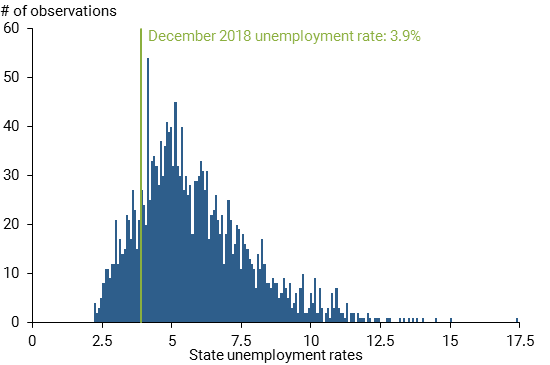
The unemployment rate ended 2018 at just under 4%, substantially lower than most estimates of the natural rate. Could such an ostensibly tight labor market lead to a sharp pickup in wage growth from its recent moderate pace, such that the relationship between wage growth and unemployment is not always linear? Investigations using state-level data show no economically significant nonlinearity between wage growth and unemployment that would predict an abrupt jump in wage growth.
Federal Reserve Bank of San Francisco -
8
pursuit.unimelb.edu.au
Pursuit Unimelb Edu
-
9
economicshelp.org
Definition of Phillips Curve (trade off between inflation and unemployment). Graphs to show how and why it can occur. real life data. Also different views on Phillips Curve Keynesian vs Monetarist. - short-term and long-term.
Economics Help
Rating Scale Methodology
1-3: FALSE
Factually incorrect or malicious fabrication.
4-6: PARTIAL
Some truth but context is missing or skewed.
7-9: MOSTLY TRUE
Minor technicalities or phrasing issues.
10: ACCURATE
Perfectly verified and contextually fair.
Methodology: Ratings are determined through cross-referencing official government records, independent fact-checking organizations, and primary source documents.