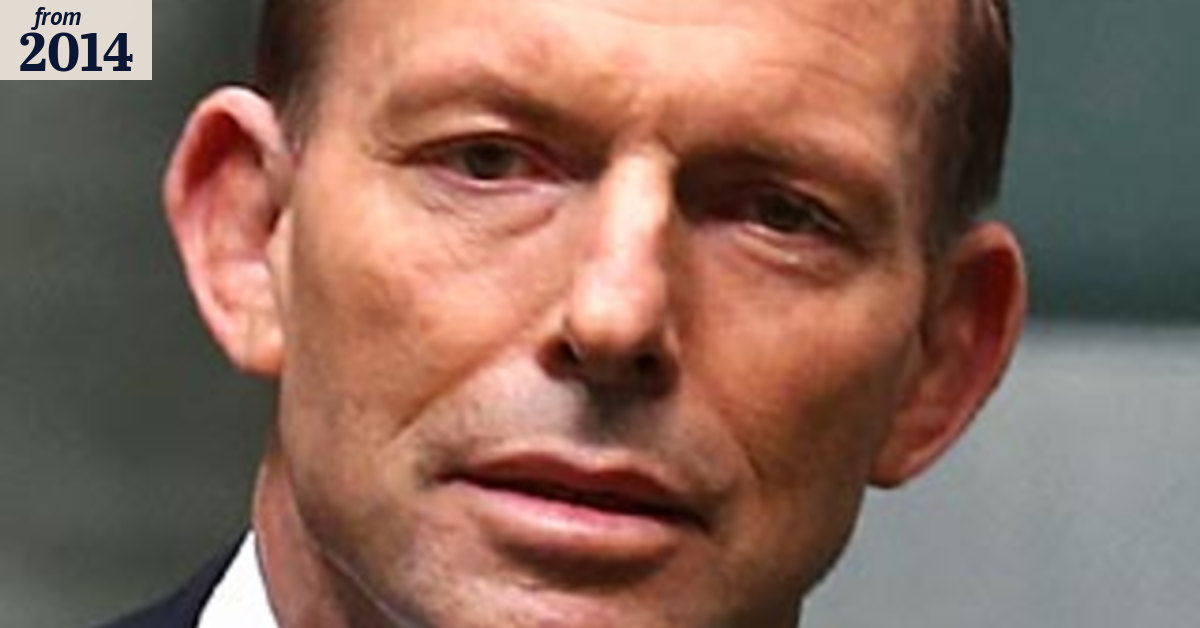
In June 2014, Prime Minister Tony Abbott did state that climate change would not be on the G20 agenda, arguing the summit should focus on economic issues [1].
Abbott Abbott 表示 biǎo shì : : 「 「 同樣 tóng yàng 重要 zhòng yào 的 de 是 shì 確保 què bǎo 這些 zhè xiē 國際會議 guó jì huì yì 不會 bù huì 涵蓋 hán gài 所有主 suǒ yǒu zhǔ 題 tí 卻 què 什麼 shén me 都 dōu 沒 méi 有 yǒu 闡明 chǎn míng 」 」 , , 以及 yǐ jí 「 「 G20 G20 的 de 焦點 jiāo diǎn 將壓 jiāng yā 倒性 dào xìng 地 dì 集中 jí zhōng 於 yú 我們 wǒ men 的 de 經濟 jīng jì 安全 ān quán 、 、 金融 jīn róng 穩定 wěn dìng , , 以及 yǐ jí 私營 sī yíng 部門 bù mén 主導 zhǔ dǎo 增長 zēng zhǎng 的 de 重要性 zhòng yào xìng 」 」 [ [ 1 1 ] ] 。 。
Abbott said: "It's also important to ensure that these international meetings don't cover all subjects and illuminate none" and "The focus of the G20 will overwhelmingly be our economic security, our financial stabilisation, the importance of private sector-led growth" [1].
然而 rán ér , , 這項 zhè xiàng 說法 shuō fǎ 遺漏 yí lòu 了 le 關鍵 guān jiàn 事實 shì shí : : * * * * 氣候 qì hòu 變遷 biàn qiān 最終 zuì zhōng 確實 què shí 被 bèi 納入 nà rù G20 G20 議程 yì chéng * * * * 。 。
However, the claim omits the critical fact that **climate change WAS ultimately included on the G20 agenda**.
Following significant international pressure from the US, EU, and other G20 members, Australia backed down and included climate change in the final Brisbane Summit communiqué [2][3].
The final G20 Leaders' Communiqué from November 15-16, 2014 explicitly included a full paragraph on climate change (paragraph 19), stating: "We support strong and effective action to address climate change" and committing to work toward a Paris 2015 climate agreement [4].
The G20 summit also produced an Energy Efficiency Action Plan and endorsed principles on energy collaboration that included climate considerations [4][5].
缺失的脈絡
這項 zhè xiàng 說法 shuō fǎ 遺漏 yí lòu 了 le 幾個 jǐ gè 關鍵 guān jiàn 事實 shì shí : :
The claim omits several critical facts:
1. **Abbott backed down under pressure**: By October 2014, Australia agreed to include climate change on the agenda after facing "tough diplomatic pressure from the US administration" and other international leaders [2].
US Ambassador John Berry stated that climate change was an issue that "the United States will raise in every international forum" [2].
2. **Abbott's reasoning**: While misguided in the eyes of critics, Abbott's rationale was that the G20 should focus on core economic issues like growth, jobs, and financial stability - he argued climate change was better suited to other forums like the UNFCCC process [1].
3. **Domestic policy context**: Abbott had just fulfilled his election promise to abolish the carbon tax in July 2014 [2].
美國 měi guó 大使 dà shǐ John John Berry Berry 表示 biǎo shì , , 氣候 qì hòu 變遷 biàn qiān 是 shì 「 「 美國將 měi guó jiāng 在 zài 每個 měi gè 國際 guó jì 論壇 lùn tán 中 zhōng 提出 tí chū 的 de 議題 yì tí 」 」 [ [ 2 2 ] ] 。 。
His position on the G20 agenda was consistent with his domestic climate policy of "Direct Action" rather than carbon pricing.
4. **Final outcome**: The G20 Brisbane 2014 summit produced substantive climate-related outcomes including commitments to the UNFCCC process, support for the Green Climate Fund, and energy efficiency initiatives [4].
原始 yuán shǐ 來源 lái yuán 為 wèi GlobalPost GlobalPost , , 特別 tè bié 是 shì 一篇 yī piān 標題 biāo tí 為 wèi 「 「 11 11 ways ways prime prime minister minister tony tony abbott abbott ruining ruining australia australia and and threatening threatening the the planet planet 」 」 的 de 文章 wén zhāng 。 。
The original source provided is GlobalPost, specifically an article titled "11 ways prime minister tony abbott ruining australia and threatening the planet." According to Media Bias/Fact Check, GlobalPost covers a wide range of original news with minimal use of loaded language and sources to credible outlets such as Reuters and Human Rights Watch [6].
根據 gēn jù Media Media Bias Bias / / Fact Fact Check Check , , GlobalPost GlobalPost 涵蓋 hán gài 廣泛 guǎng fàn 的 de 原 yuán 創新聞 chuàng xīn wén , , 極少 jí shǎo 使用 shǐ yòng 煽動性 shān dòng xìng 語言 yǔ yán , , 並 bìng 引用 yǐn yòng Reuters Reuters 和 hé Human Human Rights Rights Watch Watch 等 děng 可信 kě xìn 來源 lái yuán [ [ 6 6 ] ] 。 。
However, the specific article cited appears to be an opinion/commentary piece with a clear negative framing of Abbott, suggesting potential bias in presentation.
**Did Labor handle international climate summits differently?**
Search conducted: "Kevin Rudd Copenhagen climate summit 2009 Kyoto Protocol ratification"
Finding: Labor governments under Kevin Rudd and Julia Gillard took markedly different approaches to international climate engagement:
- **Kevin Rudd (2007-2010)**: Made ratifying the Kyoto Protocol his first official act as Prime Minister in December 2007, stating it demonstrated his government's "commitment to tackling climate change" [7][8].
* * * *
Rudd attended the 2009 Copenhagen climate summit personally.
- **However, Rudd's Copenhagen efforts failed**: The 2009 Copenhagen summit, which Rudd attended with high expectations, "collapsed" and was considered a major disappointment in international climate negotiations [9].
Rudd subsequently abandoned his domestic Carbon Pollution Reduction Scheme (CPRS) after it failed to pass the Senate.
- **Julia Gillard (2010-2013)**: Implemented a carbon pricing scheme in 2012 and maintained international climate engagement, though the policy proved politically costly.
**Comparison**: While Labor governments were more rhetorically committed to climate action at international forums, they also faced significant setbacks.
發現 fā xiàn : : 在 zài Kevin Kevin Rudd Rudd 和 hé Julia Julia Gillard Gillard 領導 lǐng dǎo 下 xià 的 de Labor Labor 政府 zhèng fǔ , , 對國際 duì guó jì 氣候 qì hòu 參與 cān yǔ 採取 cǎi qǔ 了 le 明顯 míng xiǎn 不同 bù tóng 的 de 做法 zuò fǎ : :
The Copenhagen failure under Rudd was arguably more damaging to international climate progress than Abbott's G20 reluctance, which was ultimately reversed.
Labor's approach was more proactive but faced domestic political challenges; Abbott's approach was initially resistant but ultimately yielded to international pressure.
Tony Abbott's initial attempt to exclude climate change from the G20 agenda was consistent with his government's domestic climate policy approach and his view that the G20 should focus narrowly on economic growth issues [1].
This position was criticized domestically by Labor and the Greens, with the Grattan Institute's Tony Wood noting that "climate change was clearly an economic issue" and should be on the agenda [1].
While Abbott initially resisted, international pressure - particularly from the United States - led Australia to include climate change in the final G20 agenda [2][3].
Labor under Rudd made climate a signature issue, ratifying Kyoto immediately and attending Copenhagen, but ultimately failed to achieve significant outcomes at Copenhagen or pass domestic legislation [9].
Abbott's government was rhetorically less committed but ultimately still included climate in the G20 outcomes after pressure.
**Key context**: This was **not entirely unique** - governments often adjust summit agendas based on host priorities and international pressure.
Abbott's reluctance was consistent with his domestic policy position at the time (having just abolished the carbon tax), but the claim ignores that he ultimately backed down and climate change WAS discussed and included in the final G20 outcomes.
Abbott Abbott 的 de 猶豫 yóu yù 與 yǔ 他 tā 當時 dāng shí 的 de 國內 guó nèi 政策 zhèng cè 立場 lì chǎng ( ( 剛廢除 gāng fèi chú 碳稅 tàn shuì ) ) 一致 yí zhì , , 但 dàn 這項 zhè xiàng 說法 shuō fǎ 忽略 hū lüè 了 le 他 tā 最終 zuì zhōng 讓 ràng 步 bù , , 且 qiě 氣候 qì hòu 變遷 biàn qiān 確實 què shí 被 bèi 討論 tǎo lùn 並納入 bìng nà rù 最終 zuì zhōng G20 G20 成果 chéng guǒ 。 。
The claim is misleading because it presents Abbott's initial position (June 2014) as the final outcome, when in fact climate change WAS ultimately included on the G20 agenda following international pressure.
While Abbott did initially attempt to exclude the topic - a position consistent with his domestic policy approach and which drew criticism - the claim omits the critical context that he backed down and the G20 did discuss and commit to climate action [1][2][3][4].
The claim is misleading because it presents Abbott's initial position (June 2014) as the final outcome, when in fact climate change WAS ultimately included on the G20 agenda following international pressure.
While Abbott did initially attempt to exclude the topic - a position consistent with his domestic policy approach and which drew criticism - the claim omits the critical context that he backed down and the G20 did discuss and commit to climate action [1][2][3][4].