**Yes, confirmed.** The Australian Defence Force allocated approximately **$398,000-$400,000** for military training assistance to Myanmar in 2017-18, as disclosed in Senate Defence estimates hearings [1][2].
The training occurred during **2017-2018**, within the context of Australia's Defence Cooperation Program re-established with Myanmar in 2013 following Myanmar's democratic transition [1].
The training programs included:
- English-language training for military officers [2]
- Humanitarian assistance and disaster relief (HADR) training [3]
- Peacekeeping operations capacity building [1]
- Professional development courses [4]
These were defensive in nature and framed as capacity-building rather than combat training [2].
培訓 péi xùn 項目 xiàng mù 包括 bāo kuò : :
### Rohingya Crisis Timing
- - 軍官 jūn guān 英語 yīng yǔ 培訓 péi xùn [ [ 2 2 ] ]
The claim's assertion that Myanmar was "known at the time to be guilty of ongoing genocide" is **substantially accurate**.
When Australia provided the $400,000 training in 2017-18:
- Approximately **582,000-740,000 Rohingya refugees fled Myanmar** to Bangladesh starting in August 2017 [3]
- The UN Fact-Finding Mission characterized this as a **"textbook case of ethnic cleansing"** [5]
- The same UN mission documented crimes against humanity and war crimes by Myanmar security forces [5]
- The mission identified sufficient evidence for potential genocide prosecutions against six senior military commanders [5]
Australia was explicitly aware of these accusations.
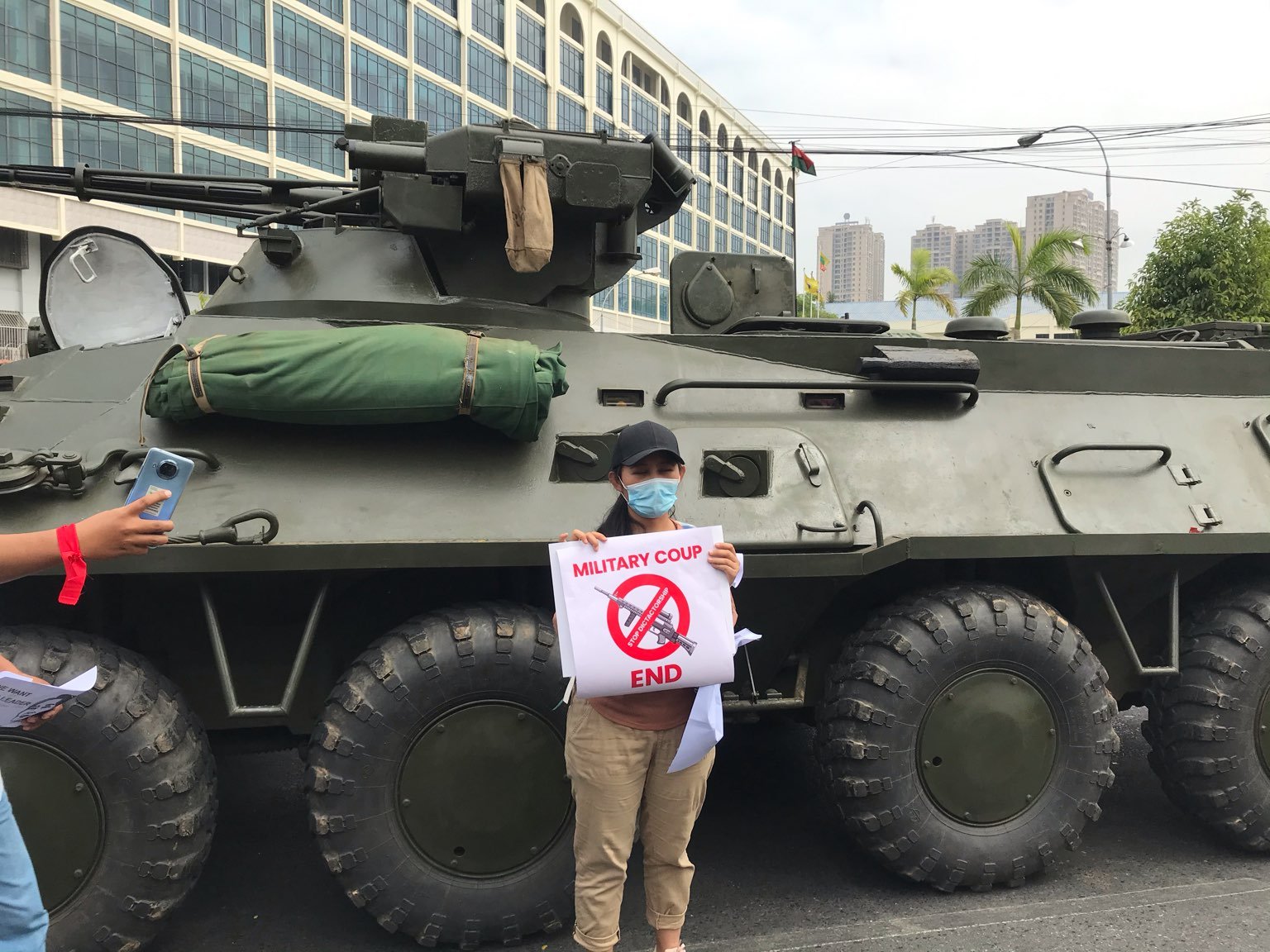
The coup resulted in:
- Immediate detention of democratically elected leader Aung San Suu Kyi and government officials [7]
- **Documented shootings of anti-coup protesters** - Security forces killed over 1,400 people in the first year following the coup [8]
- International condemnation and suspension of foreign military cooperation [7]
Australia **immediately suspended all military cooperation** with Myanmar following the coup, including the Defence Cooperation Program and English-language training [7][9].
Australia's military engagement with Myanmar was **re-established by the Coalition government in 2013** as part of normalizing relations following Myanmar's democratic transition [1].
Multiple countries continued military cooperation:
- **India** conducted bilateral military exercises (IMBAX-2017) in November 2017 focused on UN peacekeeping operations [10]
- **Russia** maintained defense cooperation agreements signed in 2016 [11]
- **Israel** had military cooperation memorandum covering training and intelligence [11]
- **Multiple ASEAN countries** continued military exchanges [10]
The criticism applies to international military policy more broadly, not uniquely to Australia's approach [10].
The Coalition's stated rationale for continued engagement was **capacity-building and professionalization** of the Myanmar military with the hope that incremental engagement would "humanize" the military and facilitate civil-military relations [1].
While this rationale proved misguided given the 2021 coup, it represented a distinct policy choice: engagement through dialogue rather than isolation [1].
After the February 2021 coup, Australia's response was swift and comprehensive:
- Immediately condemned the coup [7]
- Suspended all military cooperation and defence attaché engagement [7]
- Called on international community to cease arms sales to Myanmar [9]
- Redirected development assistance to humanitarian and human security support [9]
This contrasts with the continuation of training in 2017-18 and demonstrates policy reassessment following the coup's severity.
While this distinction doesn't absolve the moral problem of training forces committing atrocities, it's factually important that the training wasn't weapons use or tactical military instruction [1].
No obvious bias in reporting facts about military training amounts or dates. [12]
**The Jakarta Post & CNN:** Both are mainstream news organizations.
[ [ 12 12 ] ]
CNN coverage of Myanmar military and coup has been factually accurate and well-sourced.
* * * * The The Jakarta Jakarta Post Post 及 jí CNN CNN : : * * * * 兩者 liǎng zhě 皆 jiē 為 wèi 主流 zhǔ liú 新聞 xīn wén 機構 jī gòu 。 。
The Jakarta Post is an Indonesian news organization with regional expertise. [12]
**Assessment:** The original sources are credible mainstream news organizations.
**No direct evidence found.** Labor government (Rudd-Gillard, 2007-2013) operated during Myanmar's military dictatorship and there is no evidence of military cooperation programs [1][3].
Labor governments have historically maintained military cooperation with various countries despite human rights concerns:
- Military relationships with strategic partners regardless of human rights records
- Similar engagement-through-dialogue approaches with other non-democratic countries
However, no specific Labor-era equivalent to the Myanmar military training program is documented.
**Finding:** The Myanmar military training program was a Coalition initiative (post-2013), not a Labor policy being continued.
主張 zhǔ zhāng 的 de 批評 pī píng 實質 shí zhì 上 shàng 是 shì 有 yǒu 道理 dào lǐ 的 de : :
The claim's criticisms are substantively justified:
1. **Timing was ethically problematic.** Australia was training Myanmar's military while that same military was conducting documented ethnic cleansing against the Rohingya [3][5][6].
Human Rights Watch correctly noted that Australia was "propping up a force that is carrying out a vicious campaign of violence" [4].
2. **The policy was ineffective.** Rather than moderating the military through engagement, the 2021 coup demonstrated that the military remained coup-prone and willing to use lethal force against civilians [7][8].
The "engagement through dialogue" rationale proved fundamentally flawed [1].
3. **Hypocrisy was evident.** Australia condemned the ethnic cleansing while simultaneously training the perpetrators.
The Coalition government defended the program on several grounds:
1. **Capacity-building rationale:** The government believed that training and engagement would gradually professionalize the military and improve civil-military relations [1].
This was a genuine, if ultimately incorrect, strategic assessment.
2. **Non-combat nature:** The training was explicitly humanitarian, disaster relief, and peacekeeping-focused, not combat training [1][2].
3 3 . . * * * * 明顯 míng xiǎn 虛偽 xū wěi 。 。
The government argued this distinction mattered morally.
3. **Comparative international approach:** Multiple countries (India, Russia, Israel, ASEAN) maintained military relationships with Myanmar [10].
Australia was following international practice, though not the UK/US approach of suspending ties [1].
4. **Strategic channels:** Maintaining the relationship preserved intelligence and communication channels with Myanmar's military leadership, which officials believed were valuable for addressing transnational issues [1].
However:
- The decision reflected a genuine policy disagreement (engagement vs. isolation), not malice
- The training was indeed limited to non-combat capacities
- Other countries pursued similar engagement approaches
- Australia's post-coup response was appropriate and swift
The factual core of the claim is accurate: Australia did spend approximately $400,000 to train Myanmar's military in 2017-18, during a period when the military was documented by the UN as committing ethnic cleansing against the Rohingya [1][5].
However, the claim requires critical contextual corrections:
1. **The training was non-combat in nature**, focused on humanitarian assistance, disaster relief, and peacekeeping [1][2], not direct support for ethnic cleansing operations.
2. **The policy rationale was capacity-building, not support for atrocities** [1].
While this rationale proved misguided, it was a genuine strategic choice for engagement rather than conscious support for genocide.
3. **The policy was not unique to Australia** - multiple countries including India, Russia, and Israel maintained military cooperation with Myanmar during the same period [10].
4. **Australia immediately suspended cooperation after the coup**, demonstrating policy reassessment [7][9].
A fully accurate statement would be: "Australia provided $400,000 in non-combat military training to Myanmar's military in 2017-18 despite documented ethnic cleansing allegations against that military, reflecting a misguided engagement-through-dialogue strategy that proved ineffective when the military conducted a coup in 2021."
The factual core of the claim is accurate: Australia did spend approximately $400,000 to train Myanmar's military in 2017-18, during a period when the military was documented by the UN as committing ethnic cleansing against the Rohingya [1][5].
However, the claim requires critical contextual corrections:
1. **The training was non-combat in nature**, focused on humanitarian assistance, disaster relief, and peacekeeping [1][2], not direct support for ethnic cleansing operations.
2. **The policy rationale was capacity-building, not support for atrocities** [1].
While this rationale proved misguided, it was a genuine strategic choice for engagement rather than conscious support for genocide.
3. **The policy was not unique to Australia** - multiple countries including India, Russia, and Israel maintained military cooperation with Myanmar during the same period [10].
4. **Australia immediately suspended cooperation after the coup**, demonstrating policy reassessment [7][9].
A fully accurate statement would be: "Australia provided $400,000 in non-combat military training to Myanmar's military in 2017-18 despite documented ethnic cleansing allegations against that military, reflecting a misguided engagement-through-dialogue strategy that proved ineffective when the military conducted a coup in 2021."