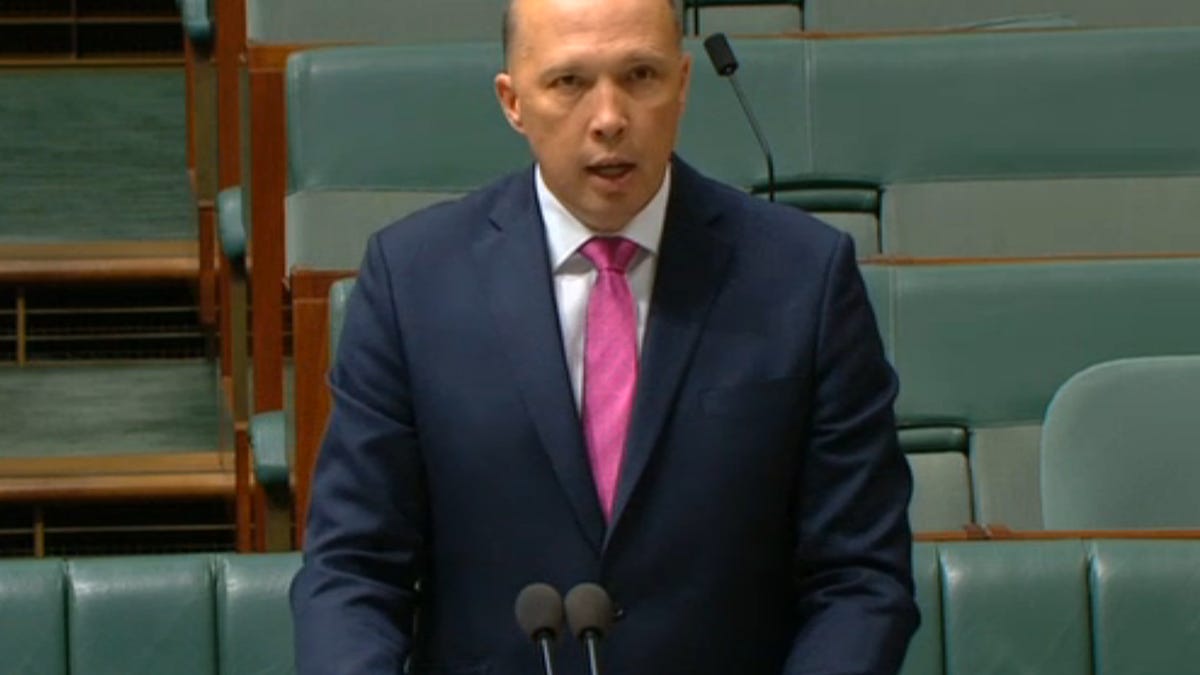
According to the Department of Home Affairs response to Senate Estimates in early March 2020, the department was appropriated just under $92 million (reported as "nearly AU$65 million" in external contracts) for the design and procurement of the Global Digital Platform (GDP) [1].
The ZDNet report states the figure more clearly: the department was appropriated approximately $92 million total, with AU$65 million spent on external contracts [2].
細項 xì xiàng 包括 bāo kuò : :
The breakdown included:
- AU$24 million on co-design and development of business requirements
- AU$32 million on GDP request for tender processes, probity, legal, and assurance
- AU$18 million on departmental IT readiness
- AU$17 million on development of Business Rules [3]
Of the external contracts worth AU$65 million, Boston Consulting Group received AU$43.5 million and KPMG received nearly AU$8 million [4].
The legitimacy of the modernization objective:** The government's stated rationale was not purely ideological profit-seeking, but responding to genuine operational challenges.
At Senate estimates in October 2019, Home Affairs secretary Michael Pezzullo noted the department was using approximately 50 different systems for visa processing with legacy computer systems struggling to cope with demand—processing 9 million applications annually with expectations to reach 13 million by 2028-29 [6].
The conflict of interest was caught and addressed:** While Scott Briggs (Pacific Blue Capital, 19% holder in the Australian Visa Processing Consortium and friend of PM Morrison and David Coleman) initially bid, he withdrew himself from the process after the conflict of interest was revealed [8].
The project was cancelled for reasonable policy reasons:** The government ultimately decided the privatisation model wasn't suitable and pivoted to a different approach focused on building "modern, easy to access, digital services" and integrated enterprise-scale workflow processing capability [9].
這 zhè 不是 bú shì 發現 fā xiàn 腐敗 fǔ bài , , 而是 ér shì 故意 gù yì 的 de 政策 zhèng cè 逆轉 nì zhuǎn 。 。
This wasn't discovered corruption, but a deliberate policy reversal.
**5.
* * * * 5 5 . . 成本 chéng běn 反映 fǎn yìng 典型 diǎn xíng 的 de IT IT 採購 cǎi gòu 複 fù 雜性 zá xìng : : * * * * 複 fù 雜的 zá de 政府 zhèng fǔ IT IT 專案 zhuān àn 通常 tōng cháng 花費 huā fèi 這個 zhè gè 金額 jīn é 。 。
The costs reflect typical IT procurement complexity:** Complex government IT projects routinely cost this amount.
The $65 million in external consulting (to BCG, KPMG, EY, PwC, etc.) reflects the reality that designing large-scale visa systems requires substantial expert input.
The article is factual and well-sourced with specific departmental figures [10].
**The Guardian** article by Ben Doherty is from a mainstream news organization with editorial standards.
* * * * The The Guardian Guardian * * * * 的 de 文章 wén zhāng 由 yóu Ben Ben Doherty Doherty 撰寫 zhuàn xiě , , 來 lái 自有 zì yǒu 編輯 biān jí 標準 biāo zhǔn 的 de 主流 zhǔ liú 新聞 xīn wén 機構 jī gòu 。 。
However, the framing is explicitly critical and opposition-oriented.
The article quotes extensively from union officials and Greens/Labor politicians opposing the scheme, and includes phrases like "sold to the highest bidder" and "corruption of the integrity" that represent opposition opinions rather than neutral reporting [11].
**Did Labor do something similar?**
Search conducted: "Labor government visa system outsourcing privatisation Australia"
Labor's position: Labor **opposed** the Coalition's visa privatisation scheme and continues to oppose outsourcing visa processing.
* * * *
Labor MP Andrew Giles led a motion in Parliament specifically opposing the privatisation, and Labor's immigration spokesman Shayne Neumann criticized the proposal as reflecting "conservative, cost-cutting ideology" [12].
Instead, Labor has focused on "skilled visa reforms to build a modern Australia" through modernization rather than outsourcing [13].
**Comparative spending:** There is no direct Labor equivalent to the $96 million spending on a visa privatisation tender because Labor has not pursued privatisation.
Labor Labor 議員 yì yuán Andrew Andrew Giles Giles 在 zài 國會 guó huì 提出 tí chū 動議 dòng yì 明確 míng què 反對 fǎn duì 私有化 sī yǒu huà , , Labor Labor 的 de 移民 yí mín 發言人 fā yán rén Shayne Shayne Neumann Neumann 批評 pī píng 該 gāi 提案 tí àn 反映 fǎn yìng 了 le 「 「 保守 bǎo shǒu 的 de 、 、 削減 xuē jiǎn 成本 chéng běn 的 de 意識 yì shí 形態 xíng tài 」 」 [ [ 12 12 ] ] 。 。
Labor's approach has been to modernize through government-led digital transformation rather than private sector outsourcing.
The situation presents a genuine policy disagreement rather than demonstrable corruption:
**The critical view is:**
- $96 million spent on a tender process for something that was ultimately abandoned is wasteful
- The government proceeded despite significant union and political opposition warnings
- The idea of "commercial" visa processing that treats access as a "profitable" monopoly is fundamentally problematic for a sovereign function
- Scott Briggs's involvement, though ultimately withdrawn, reflects problematic conflicts of interest
**The legitimate government defense is:**
- Visa processing modernization was genuinely necessary—50 legacy systems could not handle 9-13 million annual applications
- Standard procurement processes were followed with competitive market testing
- The conflict of interest (Briggs) was caught, disclosed, and addressed through his withdrawal
- Cancelling the scheme after recognizing it wasn't the right approach is a policy course correction, not failure
- The costs (AU$65 million external + AU$27 million internal) reflect real work: tendering, consulting, business requirements development, legal advice—all necessary whether the project proceeds or not
- Many sophisticated government IT transformation projects cost similar amounts
**Expert context:**
The Joint Committee of Public Accounts and Audit (JCPA) launched an inquiry into the visa privatisation procurement process in November 2023 [14], suggesting the parliament itself recognized the project warranted scrutiny, though this appears to be standard post-project review rather than investigation of criminal conduct.
**Key finding:** This represents a failed policy experiment, not proven corruption.
* * * * 批判 pī pàn 觀點 guān diǎn 是 shì : : * * * *
The government spent money on designing a system, decided it wasn't appropriate, and changed course.
While the spending was substantial and the project contentious, the absence of any investigation or finding of criminal wrongdoing—despite this being high-profile and subject to scrutiny—suggests the conduct, while debatable policy-wise, wasn't illegal.
However, the framing as "administration costs for a single tender" to "decide who to sell" mischaracterizes what the expenditure entailed—it was comprehensive design, procurement, and requirements development.
More significantly, the implication of serious misconduct ("because... it's obviously a bad idea") oversimplifies a genuine policy disagreement about whether privatisation was appropriate for visa processing.
該 gāi 專案 zhuān àn 雖有 suī yǒu 爭議 zhēng yì , , 但 dàn 遵循 zūn xún 了 le 適當 shì dāng 程序 chéng xù , , 利益 lì yì 衝突 chōng tū 在 zài 被 bèi 確認 què rèn 時 shí 得到 dé dào 處理 chù lǐ , , 取消 qǔ xiāo 反映 fǎn yìng 了 le 政策 zhèng cè 判斷 pàn duàn 而 ér 非 fēi 揭露 jiē lù 的 de 腐敗 fǔ bài 。 。
The project was controversial but followed proper procedures, conflicts of interest were addressed when identified, and the cancellation reflected policy judgment rather than exposed corruption.
最終分數
6.0
/ 10
部分真實
關於花費 guān yú huā fèi 金額 jīn é 和 hé 專案 zhuān àn 取消 qǔ xiāo 的 de 事 shì 實主張 shí zhǔ zhāng 是 shì 準確 zhǔn què 的 de 。 。
The factual claims about the spending amount and project cancellation are accurate.
However, the framing as "administration costs for a single tender" to "decide who to sell" mischaracterizes what the expenditure entailed—it was comprehensive design, procurement, and requirements development.
More significantly, the implication of serious misconduct ("because... it's obviously a bad idea") oversimplifies a genuine policy disagreement about whether privatisation was appropriate for visa processing.
該 gāi 專案 zhuān àn 雖有 suī yǒu 爭議 zhēng yì , , 但 dàn 遵循 zūn xún 了 le 適當 shì dāng 程序 chéng xù , , 利益 lì yì 衝突 chōng tū 在 zài 被 bèi 確認 què rèn 時 shí 得到 dé dào 處理 chù lǐ , , 取消 qǔ xiāo 反映 fǎn yìng 了 le 政策 zhèng cè 判斷 pàn duàn 而 ér 非 fēi 揭露 jiē lù 的 de 腐敗 fǔ bài 。 。
The project was controversial but followed proper procedures, conflicts of interest were addressed when identified, and the cancellation reflected policy judgment rather than exposed corruption.