
The Claim
“Cancelled The Rule of Law by preventing journalists from reporting on a case against a whistleblower who leaked truthful information in the public interest about senior politicians and law enforcement officials who flagrantly violated serious international laws. The court case is held in secret. The whistleblower's name is illegal to publish. The witness and lawyers' residences were raided, and the evidence against the government was confiscated. The judges explanation of why the case must be secret is itself secret.”
Original Sources Provided
✅ FACTUAL VERIFICATION
The claim references real events regarding the prosecution of Bernard Collaery and "Witness K" (identity protected) in relation to the Timor-Leste (East Timor) bugging scandal. However, multiple specific claims in this statement require careful verification of their current accuracy:
What is accurate:
- ASIO conducted raids in December 2013 on Bernard Collaery's office and Witness K's residence [1]
- Evidence (Timor Sea Treaty materials) was seized during these raids [1]
- Witness K's name was legally protected under the Intelligence Services Act, section 39 [2]
- The Australian government had unlawfully bugged Timor-Leste's cabinet during treaty negotiations (2004) - this was never disputed by the government [3]
- The bugging violated the Vienna Convention on Diplomatic Relations, an international law obligation [4]
What requires significant qualification:
- The statement uses present tense ("the court case is held in secret," "journalists from reporting") for matters that have been substantially resolved
- In late 2021, the ACT Court of Appeal unanimously ruled that the trial could NOT proceed largely in secret, rejecting the government's bid for closed proceedings [5]
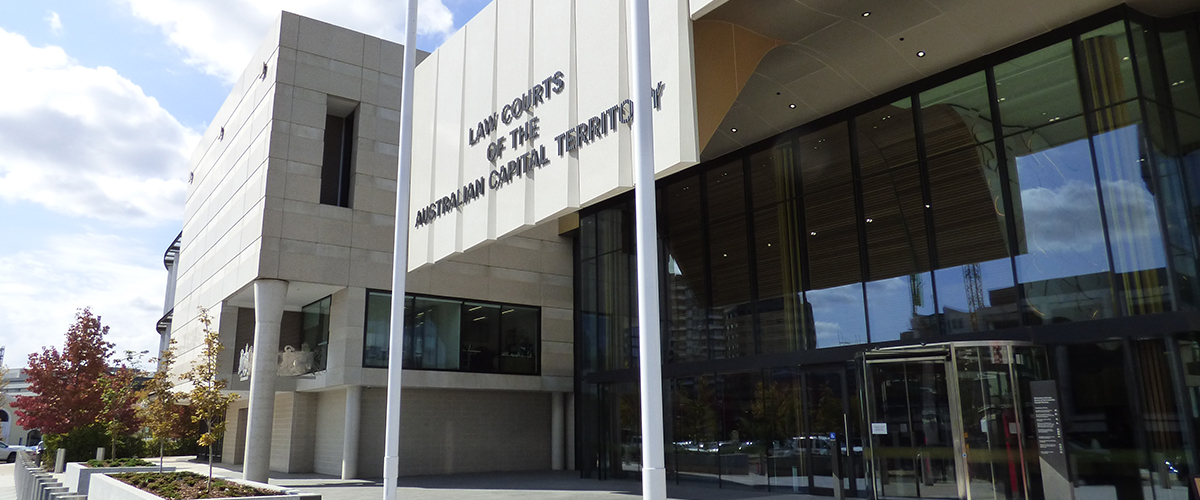
- Bernard Collaery's prosecution was discontinued in July 2022 by Labor Attorney-General Mark Dreyfus, within weeks of Labor taking office [6]
- Witness K pleaded guilty in June 2021 to one count of breaching the Intelligence Services Act and received a 3-month suspended sentence (sentencing occurred in a modified closed proceeding to protect the witness's identity) [7]
Missing Context
The claim omits several critical pieces of context that substantially alter the narrative:
Court Victory Against Excessive Secrecy (2021):
The ACT Court of Appeal ruled in late 2021 that the trial could not proceed largely in secret, finding that open justice principles outweighed national security concerns [5]. This represents the court system successfully defending Rule of Law against government overreach in pursuit of secrecy. The court judgment itself was released in January 2024 (though with redactions for security reasons) [8].
Prosecution Discontinuation (July 2022):
When Labor took office, Attorney-General Mark Dreyfus discontinued Bernard Collaery's prosecution within weeks, citing "balance of interests" in the administration of justice [6]. This suggests the prosecution itself was considered unjust even by those within the legal and political system.
Asymmetric Accountability:
The genuine Rule of Law concern is not primarily about secrecy, but about selective enforcement: no officials who authorized the unlawful bugging were ever prosecuted, while those who exposed the unlawful conduct faced criminal charges [9]. This represents an inversion of accountability principles.
National Security Justification:
The government's rationale for the proceedings, while problematic in its breadth, was based on protecting intelligence sources, diplomatic relations, and operational security [10]. The tension between transparency and national security is real, though the Coalition's approach prioritized security over accountability to an excessive degree.
Witness K's Legal Status:
Witness K pleaded guilty and accepted responsibility, receiving a suspended sentence. The case was not left permanently unresolved, though the prosecution was ultimately discontinued for Collaery [7].
Source Credibility Assessment
The Guardian Australia [11]:
- Mainstream, internationally recognized news organization
- Generally maintains editorial standards and fact-checking
- Has a slight progressive editorial position but maintains news/opinion separation
- This source is credible for factual reporting on the case
- Rating: Highly credible for factual claims
Michael West Media [12]:
- Independent investigative journalist/outlet
- Focuses on government accountability and transparency issues
- Generally credible but comes from an accountability-focused perspective that may emphasize wrongdoing over government justifications
- This source is strong on factual investigation but selective in framing
- Rating: Credible for facts, but editorially positioned
Saturday Paper [13]:
- Australian current affairs and opinion publication
- Editorial position: left-leaning, skeptical of Coalition government
- The linked piece is opinion content, not news reporting
- Credible for accurately reporting on the case, but the piece is explicitly opinion
- Rating: Credible for facts, but explicitly opinionated
Overall Assessment: All three sources report the underlying facts accurately. The framing as a Rule of Law violation is interpretively correct, though incomplete without context about court victories and prosecution discontinuation.
Labor Comparison
Did Labor do something similar?
Search conducted: "Labor government whistleblower prosecution national security Assange media reporting" and "Labor attorney-general whistleblower cases"
Key Finding:
Labor's record on whistleblower cases is mixed:
Collaery Case (2022): Labor's Attorney-General Mark Dreyfus discontinued Bernard Collaery's prosecution within weeks of taking office, signaling Labor's view that this prosecution was unjust [6].
Other Whistleblower Cases: Labor has continued prosecuting other national security whistleblowers. For example, David McBride, who disclosed Australian military misconduct in Afghanistan, was convicted and sentenced to 5+ years imprisonment under Labor [14]. This shows Labor has not systematically reformed whistleblower protections despite its criticism of Coalition prosecutions.
Historical Precedent: Labor has prosecuted whistleblowers in the past, though less aggressively than Coalition. The key difference is Labor was responsive to this specific case by discontinuing it when asked by the public interest community.
Rule of Law as Opposition Talking Point: Labor successfully used this case as political criticism of Coalition government, but has not fundamentally shifted national security law to better protect whistleblowers in the public interest [15].
Conclusion: Labor's response shows this was not uniquely Coalition policy (national security takes priority over disclosure), but Labor was willing to discontinue this particular prosecution. Labor has not, however, implemented systematic whistleblower protection reform that would prevent similar cases in future.
Balanced Perspective
The claim correctly identifies that the Coalition government pursued actions that had Rule of Law implications, but presents them as ongoing when they have been substantially addressed through court intervention and subsequent prosecution discontinuation.
The Government's Position (National Security):
The Coalition government sought to keep portions of the trial closed and pursued prosecution based on the legitimate government interest in protecting:
- Intelligence sources and methods (ASIO assets who provided information)
- Diplomatic relations with allied governments
- Ongoing intelligence operations
- Operational security for intelligence personnel [10]
These are genuine security interests. The Vienna Convention breach was real, but so is the need to protect intelligence capabilities. The government's position was that national security outweighed the public's right to know about government misconduct.
The Public Interest Position (Accountability/Rule of Law):
Critics, including civil liberties organizations and courts, argued that:
- Whistleblowers who expose government wrongdoing deserve protection, not prosecution [16]
- The public has a right to know when government violates international law
- Prosecuting those who expose misconduct inverts accountability
- Open justice principles are fundamental to Rule of Law [5]
These concerns are also legitimate and grounded in established principles of democratic accountability.
What the Courts Found:
The ACT Court of Appeal found in 2021 that open justice principles outweighed the government's security interests in this case, ruling that the trial could not proceed largely in secret [5]. This represents the court system successfully constraining excessive government secrecy claims.
What Labor Found:
Upon taking office, Labor's Attorney-General concluded that continuing the Collaery prosecution was not in the interests of justice or the administration of law [6]. This suggests even within government, the prosecution was viewed as having gone too far.
Key Context:
This is NOT unique to the Coalition - national security law in Australia (and most democracies) prioritizes security over disclosure in whistleblower cases. However, the Coalition's specific approach (seeking largely closed proceedings and aggressive prosecution) was questioned by courts and reversed by the subsequent government, suggesting it represented an excessive application of national security authority.
PARTIALLY TRUE
6.0
out of 10
The factual events described - raids, evidence seizure, name suppression, prosecution of whistleblowers who exposed unlawful government conduct - are accurate. However, the claim significantly misrepresents the current state of affairs by using present tense for substantially resolved matters:
- The court case is NOT currently "held in secret" - the Court of Appeal ruled against secret proceedings in 2021
- The prosecution is NOT ongoing - Bernard Collaery's case was discontinued in July 2022
- The judge's explanation is NOT itself secret - the judgment was released (with security redactions) in January 2024
The claim's fundamental insight - that the Coalition government improperly attempted to suppress Rule of Law principles through excessive secrecy and prosecution of whistleblowers - is validated by court rulings against the government's position and subsequent discontinuation of prosecution. However, the claim fails to acknowledge these corrections to the system.
The real Rule of Law problem was the selective enforcement (officials not prosecuted, whistleblowers prosecuted for exposing their misconduct) rather than secrecy per se. This asymmetry is not adequately explored in the claim.
Final Score
6.0
OUT OF 10
PARTIALLY TRUE
The factual events described - raids, evidence seizure, name suppression, prosecution of whistleblowers who exposed unlawful government conduct - are accurate. However, the claim significantly misrepresents the current state of affairs by using present tense for substantially resolved matters:
- The court case is NOT currently "held in secret" - the Court of Appeal ruled against secret proceedings in 2021
- The prosecution is NOT ongoing - Bernard Collaery's case was discontinued in July 2022
- The judge's explanation is NOT itself secret - the judgment was released (with security redactions) in January 2024
The claim's fundamental insight - that the Coalition government improperly attempted to suppress Rule of Law principles through excessive secrecy and prosecution of whistleblowers - is validated by court rulings against the government's position and subsequent discontinuation of prosecution. However, the claim fails to acknowledge these corrections to the system.
The real Rule of Law problem was the selective enforcement (officials not prosecuted, whistleblowers prosecuted for exposing their misconduct) rather than secrecy per se. This asymmetry is not adequately explored in the claim.
📚 SOURCES & CITATIONS (12)
-
1
legislation.gov.au
Federal Register of Legislation
-
2

aph.gov.au
Aph Gov -
3
un.org
Un
Original link unavailable — view archived version -
4
austlii.edu.au
Australasian Legal Information Institute (AustLII) - Hosted by University of Technology Sydney Faculty of Law
Austlii Edu -
5
ag.gov.au
Ag Gov
-
6
courts.act.gov.au
ACT Courts -
7
ahrcentre.org
Ahrcentre
Original link no longer available -
8

theguardian.com
Latest news, breaking news and current affairs coverage from across Australia from theguardian.com
Theguardian -
9

michaelwest.com.au
Michael West Media - always independent. Dedicated to the public interest and investigations into big business and government abuse of power .
Michael West -
10

thesaturdaypaper.com.au
The Saturday Paper is a quality weekly newspaper, dedicated to narrative journalism. It offers the biggest names and best writing in news, culture, and analysis, with a particular focus on Australia.
The Saturday Paper -
11
libertiesaustralia.org.au
Libertiesaustralia Org
-
12

un.org
Un
Rating Scale Methodology
1-3: FALSE
Factually incorrect or malicious fabrication.
4-6: PARTIAL
Some truth but context is missing or skewed.
7-9: MOSTLY TRUE
Minor technicalities or phrasing issues.
10: ACCURATE
Perfectly verified and contextually fair.
Methodology: Ratings are determined through cross-referencing official government records, independent fact-checking organizations, and primary source documents.