The Coalition government did use parliamentary procedures to significantly restrict debate on environmental legislation in September 2020, but the claim contains important inaccuracies in framing.
**What is factually accurate:**
The Environment Protection and Biodiversity Conservation Amendment (Streamlining Environmental Approvals) Bill 2020 was introduced on 27 August 2020 and passed the House of Representatives on 3 September 2020 [1].
* * * * 事實 shì shí 準確 zhǔn què 的 de 部分 bù fèn : : * * * *
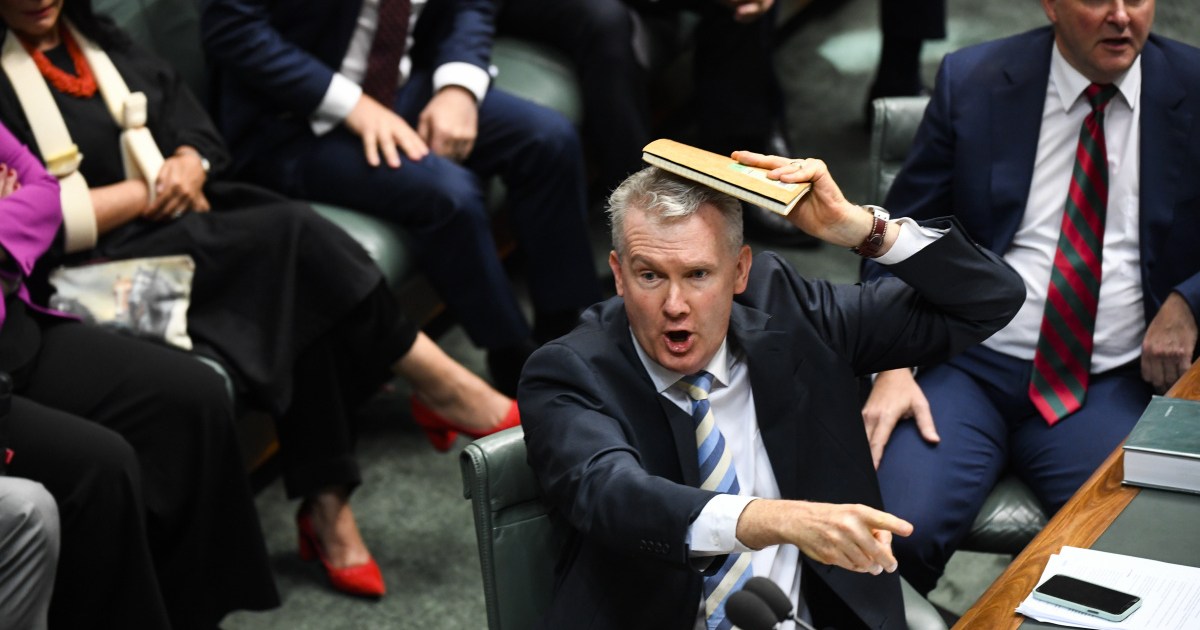
During the House debate on 2-3 September 2020, the government used a "gag motion" to invoke closure, limiting debate to less than 2 hours [2].
The Environmental Defenders Office (independent legal organization) confirmed: "The government rushed the bill through the House of Representatives, gagging debate on the bill in September 2020" [6].
**What is misleading or inaccurate:**
The claim states the government "blocked parliament from debating" and "rushing through the legislation without allowing anyone to discuss it first." While debate was severely curtailed, this phrasing is technically inaccurate: debate DID occur in parliament, it was simply limited in duration through procedural means. "Blocked" implies zero debate occurred, which is false [2].
The bill did not repeal environmental protections—it transferred responsibility for environmental approvals from the federal government to state and territory governments for certain categories of development [7].
Several critical contextual factors are absent from this claim:
**Samuel Review timing:** In June 2020, an independent statutory review (the "Graeme Samuel Review") was completed and recommended 38 comprehensive reforms to the EPBC Act.
However, the government's bill (introduced August 27) was introduced BEFORE the government had tabled its response to the review [8].
然而 rán ér , , 政府 zhèng fǔ 的 de 法案 fǎ àn ( ( 於 yú 8 8 月 yuè 27 27 日 rì 提出 tí chū ) ) 是 shì 在 zài 政府 zhèng fǔ 提交 tí jiāo 對該 duì gāi 審查 shěn chá 的 de 回應 huí yīng 之前 zhī qián 就 jiù 提出 tí chū 的 de [ [ 8 8 ] ] 。 。
The Environmental Defenders Office noted: "The government is cherry-picking a few measures from the comprehensive review rather than implementing the full set of recommendations" [9].
**Cross-party opposition:** Opposition to the bill was not limited to Labor partisan criticism.
Independent senators including Rex Patrick, Jacqui Lambie, and Stirling Griff also opposed the legislation [10], indicating concerns extended beyond Labor's platform.
**Parliamentary procedure context:** Gag motions are a standard parliamentary procedure available to any government with control of the House of Representatives.
The Parliamentary Education Office notes that Prime Minister Alfred Deakin stated in 1905 that the motion "need rarely, if ever, be used for party purposes" [3].
The Guardian is a mainstream news organization with a left-leaning editorial stance, but maintains professional journalistic standards and factual reporting on parliamentary proceedings.
The reporting on this environmental bill was confirmed by other credible sources including ABC News, The New Daily, and independent organizations like the Environmental Defenders Office [2][5][6].
**Did Labor do something similar?**
No specific instances were found of Labor governments using gag motions to restrict environmental debate in comparable circumstances.
* * * *
However, gag motions are a parliamentary procedure available to any government with House control—both Labor and Coalition governments have procedural options to limit debate, though the frequency and circumstances of use vary.
The broader parliamentary principle is that governments typically control debate timing in the House, while the Senate (where government often lacks control) provides stronger opportunity for opposition scrutiny of controversial legislation.
The claim portrays the government's action as simply obstructing democratic debate, but the full context is more nuanced.
**Government's stated justification:** The Coalition argued that streamlining environmental approvals would reduce regulatory burden on businesses and state governments, and that the changes were based on independent review recommendations [11].
The government maintained the bill maintained environmental protections while improving efficiency [11].
**Legitimate criticisms:** Environmental organizations and the Opposition raised substantive concerns that the government was implementing only narrow measures from the Samuel Review rather than the full comprehensive reform package, and that limiting debate prevented proper scrutiny of policy implications [6][9].
政府 zhèng fǔ 堅稱 jiān chēng 該 gāi 法案 fǎ àn 在 zài 提高效率 tí gāo xiào lǜ 的 de 同時 tóng shí 維持 wéi chí 了 le 環境 huán jìng 保護 bǎo hù [ [ 11 11 ] ] 。 。
Independent senators sharing these concerns suggested the issues transcended partisan politics [10].
**Key distinction:** This case illustrates a genuine tension in parliamentary procedure—governments typically use procedural control to advance their legislative agenda, while oppositions argue for more debate time on controversial issues.
The frequency of use (48 times during the parliament) was higher than typical historical practice, though such procedure remains available to any government [4].
**Comparative context:** The real significance of this incident was not simply about debate restriction (which is a normal parliamentary tool), but rather about the specific controversy: whether the government was rushing incomplete implementation of an independent review's recommendations without sufficient parliamentary scrutiny.
關於辯論 guān yú biàn lùn 限制 xiàn zhì 和 hé 快速 kuài sù 通過 tōng guò 的 de 核心 hé xīn 事實 shì shí 是 shì 準確 zhǔn què 的 de , , 但 dàn 該 gāi 主張 zhǔ zhāng 存在 cún zài 重大 zhòng dà 誤導性 wù dǎo xìng 表述 biǎo shù , , 誇大 kuā dà 了 le 影響 yǐng xiǎng 並錯誤 bìng cuò wù 描述 miáo shù 了 le 政策 zhèng cè 實質 shí zhì 。 。
The core facts about debate restriction and rapid passage are accurate, but the claim contains significant misleading framing that overstates the impact and mischaracterizes the policy substance.
However, it is inaccurate or misleading to claim parliament was "blocked from debating" (debate occurred, was limited), and to characterize the bill as "environmental protection repeals" (it devolved approval authority, not removed protections).
缺少 quē shǎo 的 de 關鍵 guān jiàn 背景 bèi jǐng 包括 bāo kuò Samuel Samuel 審查 shěn chá 的 de 時機 shí jī 問題 wèn tí 和 hé 參議院 cān yì yuàn 的 de 跨黨 kuà dǎng 派 pài 反 fǎn 對 duì , , 這些 zhè xiē 提供 tí gōng 了 le 重要 zhòng yào 的 de 視角 shì jiǎo , , 說明 shuō míng 為何 wèi hé 這一爭議 zhè yī zhēng yì 超越 chāo yuè 了 le 黨 dǎng 派 pài 批評 pī píng 。 。
Critical missing context includes the Samuel Review timing issue and cross-party Senate opposition, which provide important perspective on why this was controversial beyond partisan criticism.
最終分數
6.0
/ 10
部分真實
關於辯論 guān yú biàn lùn 限制 xiàn zhì 和 hé 快速 kuài sù 通過 tōng guò 的 de 核心 hé xīn 事實 shì shí 是 shì 準確 zhǔn què 的 de , , 但 dàn 該 gāi 主張 zhǔ zhāng 存在 cún zài 重大 zhòng dà 誤導性 wù dǎo xìng 表述 biǎo shù , , 誇大 kuā dà 了 le 影響 yǐng xiǎng 並錯誤 bìng cuò wù 描述 miáo shù 了 le 政策 zhèng cè 實質 shí zhì 。 。
The core facts about debate restriction and rapid passage are accurate, but the claim contains significant misleading framing that overstates the impact and mischaracterizes the policy substance.
However, it is inaccurate or misleading to claim parliament was "blocked from debating" (debate occurred, was limited), and to characterize the bill as "environmental protection repeals" (it devolved approval authority, not removed protections).
缺少 quē shǎo 的 de 關鍵 guān jiàn 背景 bèi jǐng 包括 bāo kuò Samuel Samuel 審查 shěn chá 的 de 時機 shí jī 問題 wèn tí 和 hé 參議院 cān yì yuàn 的 de 跨黨 kuà dǎng 派 pài 反 fǎn 對 duì , , 這些 zhè xiē 提供 tí gōng 了 le 重要 zhòng yào 的 de 視角 shì jiǎo , , 說明 shuō míng 為何 wèi hé 這一爭議 zhè yī zhēng yì 超越 chāo yuè 了 le 黨 dǎng 派 pài 批評 pī píng 。 。
Critical missing context includes the Samuel Review timing issue and cross-party Senate opposition, which provide important perspective on why this was controversial beyond partisan criticism.