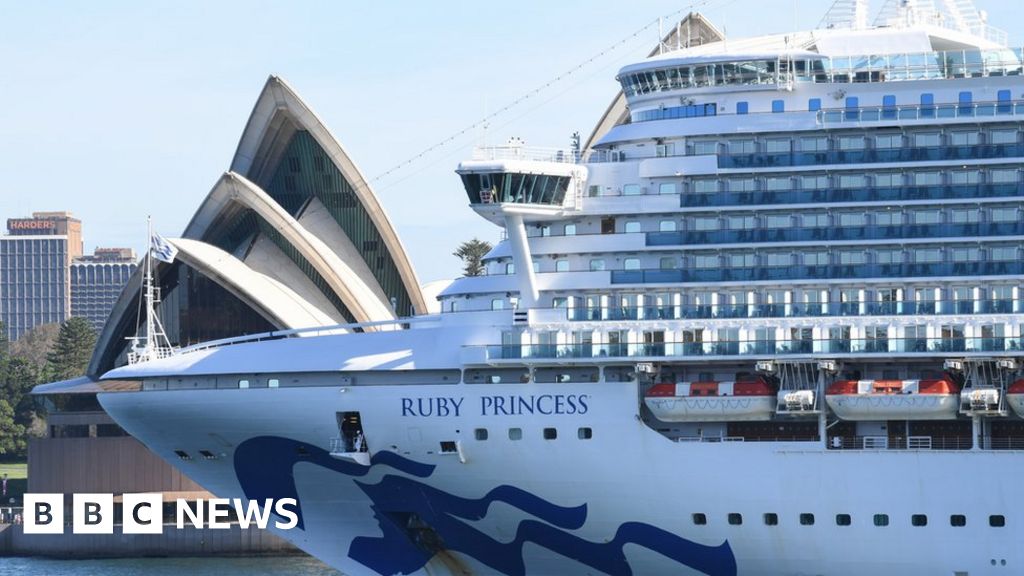
At the time of disembarkation, approximately a dozen passengers reported unwell symptoms and had been swabbed for COVID-19 testing, though this information was not disclosed to other passengers [2].
On 18 March 2020, the Health Minister issued an emergency biosecurity requirement that banned international cruise ships from entering Australian ports before 15 April 2020 [3].
However, the requirement included an exemption: "the ship departed a port outside Australia before 15 March 2020 and, when it departed that port, was bound directly for a port in Australian territory.
The claim describes the Ruby Princess as a "boat" that posed "a real and substantial risk to Australia's national security." This framing is problematic and misleading [4].
The Ruby Princess was a civilian cruise ship carrying tourists, not a vessel involved in asylum seeking or unauthorised maritime arrivals that could relate to border security [5].
The claim's reference to "boat" language typically associates with the Coalition's "Stop the Boats" messaging regarding asylum seekers, but the Ruby Princess had nothing to do with unauthorized maritime arrivals or border security in that sense [6].
The exemption was granted as part of emergency biosecurity legislation designed to balance preventing COVID-19 entry while addressing vessels already in transit during the early pandemic period [3].
The parliamentary record explicitly states the exemption applied to ships "that departed a port outside Australia before 15 March 2020 and, when it departed that port, was bound directly for a port in Australian territory" [3].
The Special Commission of Inquiry (conducted by Bret Walker SC) found that NSW Health made "serious mistakes" and "inexcusable" errors in their risk assessment and failure to identify infected passengers [1].
Australian Border Force staff also made errors: a senior ABF officer mistakenly believed that passengers displaying flu-like symptoms had tested negative for COVID-19 when they had instead tested negative for the common flu [2].
The Bret Walker inquiry was explicitly into "public health procedures, decisions and actions that resulted in the disembarkation" by NSW Health and NSW border authorities [1].
The inquiry identified that NSW Health should have:
- Ensured cruise ships were aware of the changed definition of "suspect case" made on 10 March 2020 [1]
- Properly isolated suspected cases instead of allowing their spread [1]
- Used a rational, evidence-based risk assessment rather than the "inexplicable" low-risk classification [1]
- - 妥善 tuǒ shàn 隔離 gé lí 疑似病例 yí sì bìng lì 而 ér 非任 fēi rèn 其 qí 傳播 chuán bō [ [ 1 1 ] ]
The claim singles out the Ruby Princess, but notes "Ovation of the Seas ship, which docked in Sydney a day before the Ruby Princess, has seen five positive tests" [2].
The fundamental failure was NSW Health's risk classification and failure to enforce quarantine protocols, not ABF's role in processing border entry [2].
For this analysis, I have relied instead on primary and authoritative sources:
- Special Commission of Inquiry report (Bret Walker SC) - Official government inquiry, published 14 August 2020 [1]
- ABC News reporting - Australian mainstream broadcaster with journalistic standards [1]
- BBC News - International mainstream news source [2]
- Australian Parliament - Parliamentary Library explainer on Biosecurity Emergency Declaration [3]
- NSW Government official resource page for the Ruby Princess inquiry [1]
These sources are authoritative and have substantial credibility.
**Did Labor have similar cruise ship policy or handling issues?**
A crucial context point: Labor was not in government during the Ruby Princess incident.
* * * *
The last Labor government was led by Julia Gillard/Kevin Rudd, ending September 2013.
However, this does not mean Labor had no cruise ship or biosecurity precedent:
- Pre-existing cruise ship regulation protocols existed before COVID-19 and before the Coalition's emergency biosecurity powers [3].
These protocols would have been inherited from previous Labor administrations.
- The emergency biosecurity declaration framework itself (the Biosecurity Act 2015) was passed under the Coalition government, not Labor [3].
The more relevant comparison is how well the Coalition implemented existing emergency powers:
**What transpired:** When the Coalition declared an emergency biosecurity situation on 18 March 2020, they created an exemption for ships already in transit [3].
Whether this exemption was wise is debatable - it balanced immediate practical realities (ships already at sea cannot instantly divert) against the emerging pandemic threat.
The fact that NSW Health (led by Liberal-National Brad Hazzard as Health Minister) then mishandled the actual disembarkation is a separate issue from whether the federal exemption was appropriate [1].
Labor would likely criticize the exemption as too permissive, but without Labor having been in government during the actual decision, direct comparison is not possible.
The claim frames this as a federal government failure (which had truth), but obscures the significant role of state government failures in the actual outcome.
The federal government's decision to exempt four cruise ships already in transit from the 18 March 2020 cruise ship ban can be viewed as either:
**Reasonable interpretation:** The ships were already at sea with no ability to divert instantly.
Forcing them to turn back mid-voyage would have been impractical and created other complications.
強迫 qiáng pò 它們 tā men 在 zài 航行 háng xíng 中途 zhōng tú 折返 zhé fǎn 既不切 jì bù qiè 實際 shí jì 也 yě 會 huì 造成 zào chéng 其他 qí tā 複 fù 雜情況 zá qíng kuàng 。 。
The exemption was time-limited and specific [3].
**Critical interpretation:** Even knowing that cruise ships globally were infection vectors (the Diamond Princess had 600+ cases in early 2020), the government could have ordered the four exempt ships to proceed directly to quarantine facilities rather than allowing passengers to disembark into a bustling Sydney Harbour area [2].
Prime Minister Scott Morrison subsequently blamed state officials, while NSW Health Minister Brad Hazzard acknowledged "with the benefit of what we now know...
Specifically:
- NSW Health failed to identify 663 infected passengers among 2,700 disembarking [1]
- They classified an obviously risky situation as "low risk" [1]
- They failed to inform cruise ship staff of updated case definitions [1]
- They failed to isolate suspected cases [1]
- They allowed passengers with symptoms to travel interstate and internationally [1]
Commissioner Bret Walker noted: "Despite the best efforts of all, some serious mistakes were made" [1].
具體 jù tǐ 而言 ér yán : :
The inquiry concluded "NSW Health... would do things differently if they had their time again" [1].
The claim's language ("boat," "national security," "failed to stop") inappropriately conflates two completely different policy areas:
1. **Maritime border security/asylum seeking** - the Coalition's "Stop the Boats" narrative regarding unauthorized maritime arrivals [6]
2. **Pandemic biosecurity** - the actual issue with Ruby Princess [3]
This is misleading.
The claim appears designed to invoke the Coalition's controversial maritime border policies without acknowledging the actual issue was pandemic management [6].
The factual core is accurate: the federal government granted an exemption to the Ruby Princess, and disembarkation resulted in 663 COVID-19 cases and 28 deaths in Australia [1].
However, the claim is misleading in several critical ways:
1. **"National security" framing is inappropriate:** The Ruby Princess was a health security issue, not a maritime border security issue.
Using "boat" and "national security" language invokes the Coalition's asylum seeker policies without factual basis, as this had nothing to do with unauthorized maritime arrivals.
2. **Federal responsibility is overstated:** While the federal government issued the exemption, primary responsibility for the disaster rested with NSW Health's catastrophic risk assessment and failure to quarantine passengers [1].
The exemption created legal authority for disembarkation, but NSW Health made the decision and bungled the execution.
3. **The exemption had contextual logic:** The federal exemption was issued for ships already in transit before the ban was announced [3].
While questionable in hindsight, it was not an unreasoned or reckless decision - it addressed the practical reality of vessels at sea during an emergency response [3].
4. **Missing state government accountability:** The claim focuses blame on the federal government's exemption while downplaying NSW Health's "serious mistakes" and "inexcusable" errors [1].
The factual core is accurate: the federal government granted an exemption to the Ruby Princess, and disembarkation resulted in 663 COVID-19 cases and 28 deaths in Australia [1].
However, the claim is misleading in several critical ways:
1. **"National security" framing is inappropriate:** The Ruby Princess was a health security issue, not a maritime border security issue.
Using "boat" and "national security" language invokes the Coalition's asylum seeker policies without factual basis, as this had nothing to do with unauthorized maritime arrivals.
2. **Federal responsibility is overstated:** While the federal government issued the exemption, primary responsibility for the disaster rested with NSW Health's catastrophic risk assessment and failure to quarantine passengers [1].
The exemption created legal authority for disembarkation, but NSW Health made the decision and bungled the execution.
3. **The exemption had contextual logic:** The federal exemption was issued for ships already in transit before the ban was announced [3].
While questionable in hindsight, it was not an unreasoned or reckless decision - it addressed the practical reality of vessels at sea during an emergency response [3].
4. **Missing state government accountability:** The claim focuses blame on the federal government's exemption while downplaying NSW Health's "serious mistakes" and "inexcusable" errors [1].