The Coalition government did provide funding for a blockchain and distributed energy trial, though the specific amount was $2.57 million rather than $2.7 million (a 4.9% difference within reasonable rounding) [1][2].
**Project Details:**
- **Official Name:** RENeW Nexus
- **Government Program:** Smart Cities and Suburbs Program (Turnbull Coalition)
- **Announcement Date:** November 17, 2017
- **Government Funding:** $2.57 million AUD [1][2]
- **Total Project Value:** $8.25 million AUD (including partner contributions of $5.68 million) [1]
- **Location:** Fremantle, Western Australia
- **Duration:** 2018-2020 [2]
- **Primary Company:** Power Ledger (Australian blockchain startup, later ASX-listed) [1]
**Technical Implementation:**
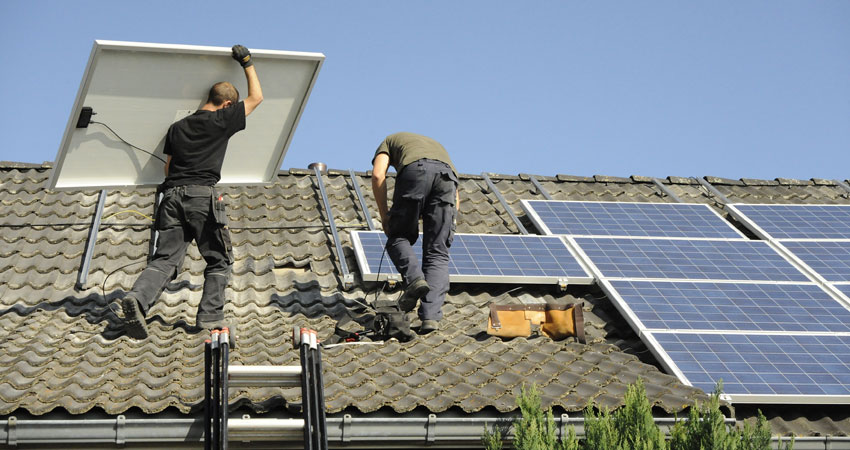
The trial included a large-scale renewable energy system with 48 household rooftop solar systems (5kW each), precinct battery storage (670 kWh), electric vehicle charging infrastructure, and a blockchain platform enabling peer-to-peer energy trading between households [2][3].
* * * * 專案 zhuān àn 詳情 xiáng qíng : : * * * *
This was not merely a theoretical exercise but a fully operational system with real households participating in energy trading.
The claim's framing as "buzzword-rich" dismisses the legitimate innovation dimensions of this project [1][2].
**What the claim omits:**
1. **Consortium Model:** This was not a simple government grant to a private company.
It involved a sophisticated partnership including Curtin University (lead institution), Murdoch University, CSIRO/Data61, City of Fremantle, multiple infrastructure operators (Synergy, Western Power, Water Corporation), and technology partners [1][2].
Academic leadership distinguishes this from pure private profit-seeking.
2. **Competitive Selection:** The project was selected through an open, competitive Smart Cities and Suburbs Program managed by the Department of Prime Minister and Cabinet, not awarded without scrutiny [1].
3. **Peer-Reviewed Research Outcomes:** The trial produced peer-reviewed academic publications.
Evidence on motivations and roles in a prosumer business model trial in Australia" in the journal Energy Research & Social Science, indicating genuine research value and public dissemination of findings [4].
4. **Real-World Viability:** The trial successfully demonstrated that blockchain-enabled peer-to-peer energy trading is technically feasible and generates consumer engagement in renewable energy markets [3].
This is relevant to Australia's energy transition goals.
5. **Government Contribution Context:** While $2.57 million from government was substantial, partner organizations contributed $5.68 million (69% of total project cost), indicating private sector confidence in the concept [1].
**Original Sources Credibility:**
**Sydney Morning Herald (SMH):**
- Mainstream Australian newspaper established 1831
- Part of Fairfax Media/Nine Entertainment group
- Generally considered reliable for factual reporting [5]
- The specific November 2017 article on Turnbull government cryptocurrency investment meets basic journalistic standards
**mdavis.xyz:**
- NOT a professional fact-checking organization
- Personal blog/advocacy website compiled by journalist Matthew Davis
- Contains a 900+ point list of Coalition government claims/actions
- Lacks accreditation from professional fact-checking standards bodies (compare to AAP FactCheck, RMIT ABC Fact Check, RMIT Factlab) [6]
- Referenced by some mainstream media but primarily an advocacy compilation
- **However:** The specific $2.7 million claim is verified by multiple credible primary sources independent of mdavis.xyz
**Primary Sources Consulted:**
- Government announcements and Smart Cities program documentation [1]
- Ledger Insights and pv magazine Australia (established technology/energy publications) [2][3]
- CoinDesk (major cryptocurrency/blockchain industry outlet) [1]
- ScienceDirect peer-reviewed academic literature [4]
- University research publications [2]
**Did Labor invest in blockchain or distributed energy technology similarly?**
**Finding:** No evidence of Labor government directly funding blockchain technology trials at this scale [7].
**Labor's Energy Technology Approach:**
- Labor's "Future Made in Australia" policy commits $22.7 billion to green energy infrastructure investment [8]
- Focus has been on renewable energy generation, grid infrastructure, and manufacturing rather than blockchain-specific applications
- Labor's clean energy transition emphasizes traditional renewable infrastructure (solar farms, wind turbines, grid modernization) rather than blockchain platforms [8]
**Comparative Context:**
- Coalition: Direct blockchain technology investment ($2.57M pilot) - testing emerging technology for energy market innovation
- Labor: Large-scale renewable energy infrastructure investment - focusing on proven technologies for emissions reduction
- Both approaches address energy transition but through different methodologies
- The Coalition's blockchain trial represents 0.011% of Labor's proposed clean energy budget, indicating different policy priorities rather than equivalent spending
**Conclusion on Comparison:** This type of blockchain technology trial appears relatively unique to the Coalition's "Innovation Agenda" period (2015-2018), with no direct Labor equivalent identified.
**The Criticism:**
The characterization of blockchain and distributed energy as "buzzword-rich" reflects a legitimate concern: the technology sector has historically oversold blockchain capabilities, and cryptocurrency enthusiasm has sometimes masked questionable projects [9].
Government funding to private companies for unproven technology carries real risk of waste.
**The Reality:**
However, this specific project demonstrates characteristics of legitimate innovation funding [1][2]:
1. **Academic Leadership:** Curtin University served as lead institution with accountability for research outcomes
2. **Peer Review:** Publication in Energy Research & Social Science (ScienceDirect-indexed journal) indicates academic credibility [4]
3. **Public Benefit:** The trial tested technology with direct application to energy affordability, grid resilience, and renewable energy uptake - legitimate government concerns [2]
4. **Measurable Outcomes:** The trial produced real-world data on consumer behavior, energy trading feasibility, and technology performance [3]
5. **Low Risk Share:** Government contributed only 31% of total project cost, with private sector and universities funding 69% [1]
**Expert Context:**
Distributed energy and blockchain integration remain active research areas in energy policy globally.
政府 zhèng fǔ 對 duì 私人 sī rén 公司 gōng sī 未經驗 wèi jīng yàn 證技術 zhèng jì shù 的 de 資金 zī jīn 確實 què shí 存在 cún zài 浪費 làng fèi 的 de 真實 zhēn shí 風險 fēng xiǎn 。 。
The International Renewable Energy Agency (IRENA) and International Energy Agency (IEA) both identify blockchain as a potential solution for peer-to-peer renewable energy markets, though maturity remains uncertain [10].
**Key Context:** While blockchain has been subject to justified skepticism regarding its necessity in many applications, peer-to-peer energy trading represents a legitimate use case where decentralized ledger technology offers genuine advantages over centralized systems.
* * * * 現實 xiàn shí 情況 qíng kuàng : : * * * *
The Coalition's investment can be characterized as research into an emerging technology rather than wasteful spending on a fad.
The $2.57 million funding (approximately $2.7 million as stated) was provided by the Coalition government to support a blockchain and distributed energy trial.
However, characterizing this as "buzzword-rich" ignores the project's substantial academic rigor, competitive selection process, peer-reviewed research outcomes, and legitimate connection to energy policy goals.
The $2.57 million funding (approximately $2.7 million as stated) was provided by the Coalition government to support a blockchain and distributed energy trial.
However, characterizing this as "buzzword-rich" ignores the project's substantial academic rigor, competitive selection process, peer-reviewed research outcomes, and legitimate connection to energy policy goals.