The core facts of this claim are substantially verified by authoritative sources:
**Funding Amount**: The Coalition government allocated $18 million over five years (2021-22 onwards) to the Australian Future Leaders Foundation through the 2022 budget, with an additional $4 million per year after that period [1].
This figure is accurate.
**No Staff/Office**: Department of Prime Minister and Cabinet officials confirmed under Senate estimates that the foundation "appeared to have no office, website or staff, apart from its directors Chris Hartley and Julie and Andrew Overton" [1].
此數 cǐ shù 字 zì 準確 zhǔn què 無誤 wú wù 。 。
The ABC reported the foundation was established only in April 2021, just over a year before the funding was announced, making it newly established with no operational history [1].
**Registered Address Issue**: The claim about an "incorrect registered business address" is partially verified.
This raises questions about the accuracy of the registered address, though the term "incorrect" may be interpretive—it appears to be a real address but not actually occupied by the foundation.
**No Track Record**: The foundation had no public track record of delivering leadership programs.
The Governor-General's official secretary acknowledged Mr Hartley "has been involved with the Commonwealth Study Conference" and "similar leadership programs in Malaysia," but the foundation itself was brand new [1].
Senate estimates witness Senator Tim Ayres stated: "They don't do anything else, they don't exist, and yet here they are about to be the recipients of $18 million worth of grant funding" [1].
**No Normal Tender Process**: This is confirmed.
Finance Minister Simon Birmingham described it as coming through "normal policy proposal processes," but government sources confirmed it was a "closed, non-competitive selection process" [2].
However, the claim omits important context that explains how this unusual arrangement occurred:
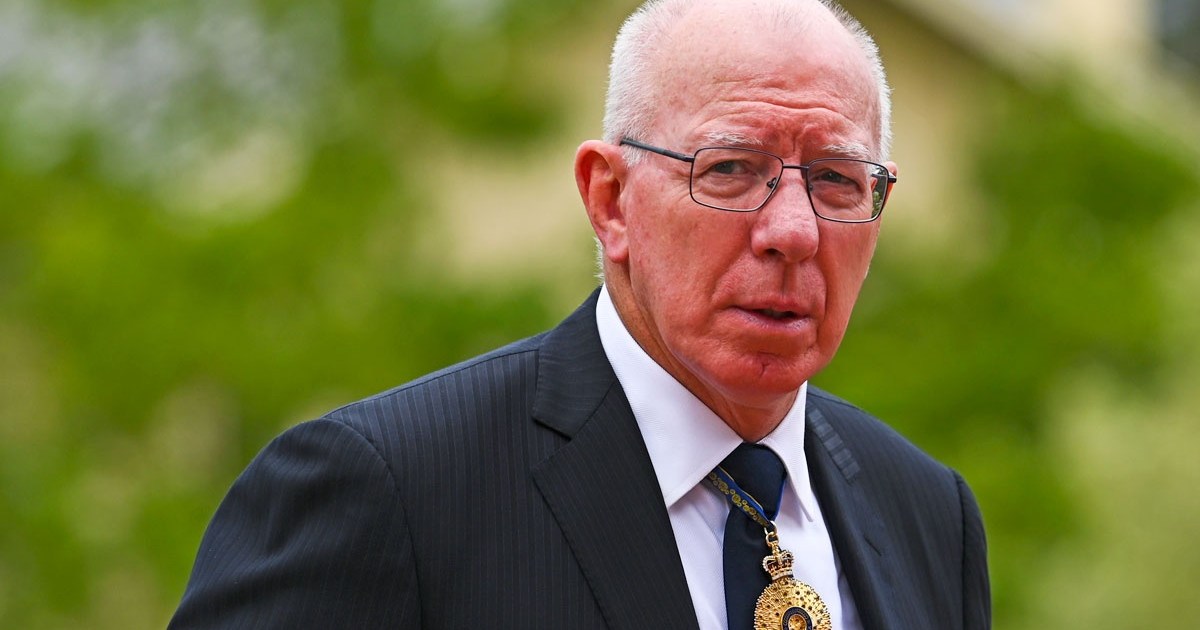
**Governor-General's Involvement**: The program was first proposed to Governor-General David Hurley by Chris Hartley in 2020, and the Governor-General subsequently raised it with then-Prime Minister Scott Morrison [1].
* * * * 總督 zǒng dū 的 de 參 cān 與 yǔ * * * * : : 該計畫 gāi jì huà 最初 zuì chū 由 yóu Chris Chris Hartley Hartley 於 yú 2020 2020 年 nián 向 xiàng 總督 zǒng dū David David Hurley Hurley 提出 tí chū , , 隨後總督 suí hòu zǒng dū 向 xiàng 時任 shí rèn 總理 zǒng lǐ Scott Scott Morrison Morrison 提出 tí chū [ [ 1 1 ] ] 。 。
The Governor-General's office stated the design "had been informed by extensive consultation with more than 100 stakeholders and it had the support of 13 university vice-chancellors" [1].
This doesn't excuse the lack of due diligence, but contextualizes why the government pursued it despite its unusual nature.
**Due Diligence Claims**: The Department of PMC insisted it "had followed due diligence in awarding the funding," stating: "We have done a range of due diligence on Mr Hartley and on the program he is proposing to support" [1].
However, officials could not specify what this due diligence entailed, and Senator Ayres questioned whether proper due diligence had actually been conducted [1].
**International Precedent**: The program was "modelled on a couple of similar leaders forums elsewhere in the Commonwealth, notably Canada and India" [1], suggesting there was a policy template, though this doesn't address the lack of competitive selection.
**DGR Status Timeline**: The government also amended tax law in the December budget update to list the foundation as a deductible gift recipient (DGR) backdated to July 2021, enabling tax-deductible donations [1].
The ABC is Australia's publicly funded national broadcaster and is considered a mainstream, non-partisan news source with strong editorial standards [1].
The article is based on information revealed during Senate estimates hearings (official parliamentary proceedings), making these primary sources highly credible [1].
Government officials from the Department of PM&C gave evidence under oath, which is recorded in parliamentary Hansard.
支持 zhī chí 來源 lái yuán 包括 bāo kuò The The New New Daily Daily ( ( 中間 zhōng jiān 偏左 piān zuǒ 但屬 dàn shǔ 主流 zhǔ liú 澳洲 ào zhōu 新聞 xīn wén 媒體 méi tǐ [ [ 2 2 ] ] ) ) 和 hé Independent Independent Australia Australia ( ( 左傾 zuǒ qīng 倡導 chàng dǎo 媒體 méi tǐ ) ) 。 。
Supporting sources include The New Daily (center-left but mainstream Australian news outlet [2]) and Independent Australia (left-leaning advocacy outlet).
較 jiào 早 zǎo 搜尋中 sōu xún zhōng 引用 yǐn yòng 的 de Michael Michael West West Media Media 和 hé Junkee Junkee 來源 lái yuán 具有 jù yǒu 黨 dǎng 派性 pài xìng 質 zhì — — — — Michael Michael West West Media Media 以 yǐ 調查 diào chá 新聞聞名 xīn wén wén míng , , 但 dàn 對 duì Coalition Coalition 政府 zhèng fǔ 持批 chí pī 評立場 píng lì chǎng , , 而 ér Junkee Junkee 則是 zé shì 左派 zuǒ pài 出版物 chū bǎn wù 。 。
The Michael West Media and Junkee sources cited in earlier searches are partisan in nature—Michael West Media is known for investigative journalism but with a critical stance toward Coalition governance, and Junkee is a left-aligned publication.
**Did Labor do something similar?**
Search conducted: "Labor government grant funding scandal Australia no tender process"
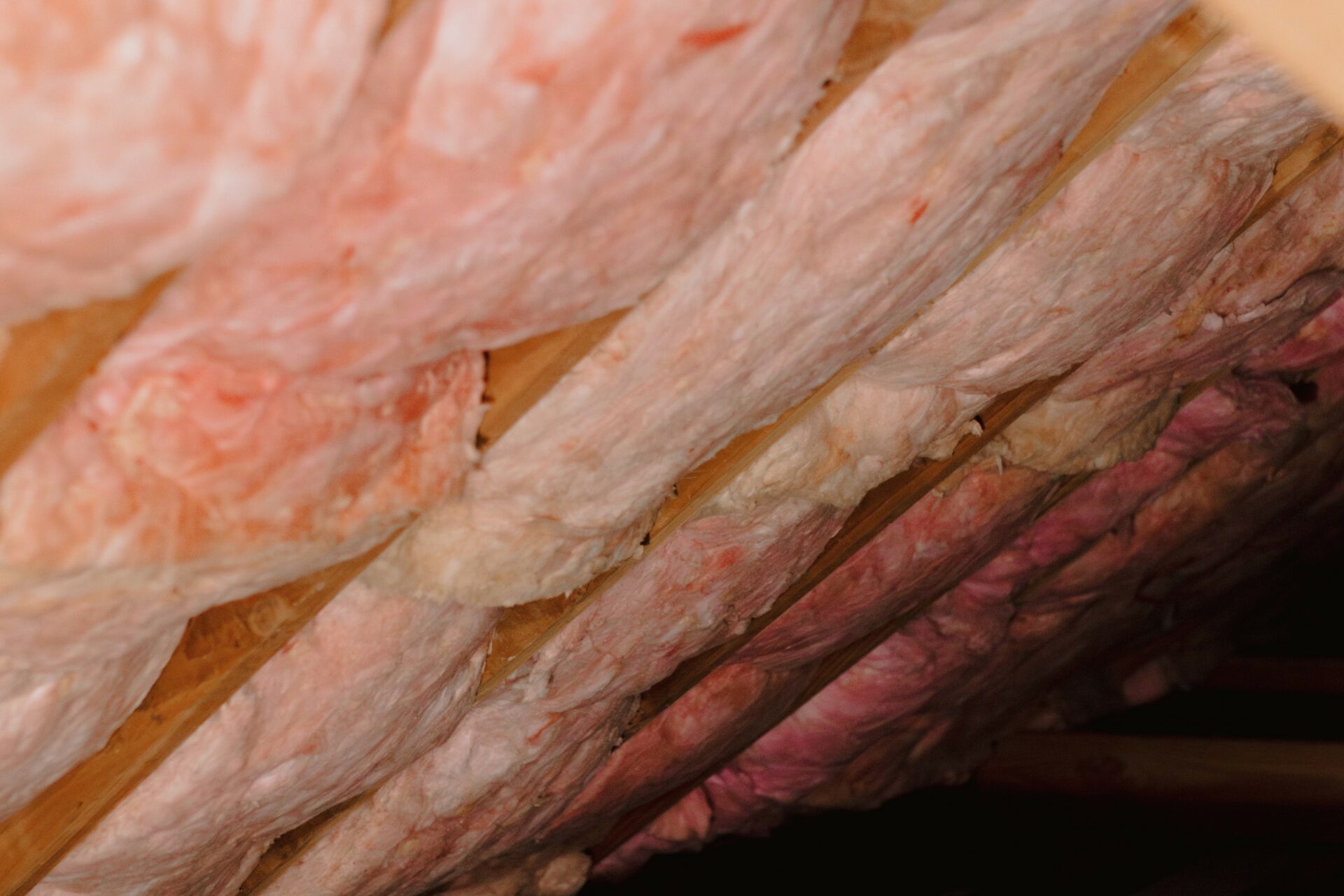
**Pink Batts Scheme (Home Insulation Program)**: The Rudd Labor government (2008-2010) implemented the Home Insulation Program as part of the Energy Efficient Homes Package in response to the Global Financial Crisis [3].
* * * *
This program became one of Australia's most notorious grant-related controversies:
- **Deaths**: Four workers died during the rollout of the program, partly due to poor safety protocols and inadequate vetting of contractors [3]
- **Rushed Implementation**: The program was implemented rapidly to stimulate the economy during the GFC, resulting in inadequate safety measures and contractor vetting [3]
- **Royal Commission**: A Royal Commission concluded the program was "fundamentally flawed" [3]
- **Budget Impact**: The program cost approximately $2.45 billion, with significant waste and problematic outcomes [3]
The Pink Batts scheme demonstrates that Labor government has also awarded large grant funding without sufficient due diligence and oversight, though the Australian Future Leaders Foundation involved neither deaths nor fraud, making it less serious in outcomes.
**School Halls Program**: The Rudd Labor government also implemented a large-scale School Halls Program during the GFC stimulus period, which faced audits finding significant wastage and over-payments to contractors, though conducted through a more formal procurement process than the Future Leaders Foundation [3].
**Key Distinction**: Labor's schemes were stimulus responses to an economic crisis and involved actual delivery (albeit problematic), whereas the Australian Future Leaders Foundation had not yet delivered anything when funded.
搜尋內容 sōu xún nèi róng : : 「 「 Labor Labor government government grant grant funding funding scandal scandal Australia Australia no no tender tender process process 」 」 ( ( 澳洲 ào zhōu 工黨 gōng dǎng 政府 zhèng fǔ 撥款 bō kuǎn 醜聞 chǒu wén 無招標 wú zhāo biāo 程序 chéng xù ) )
However, both demonstrate a pattern across governments of prioritizing rapid deployment over rigorous due diligence.
雖然 suī rán Australian Australian Future Future Leaders Leaders Foundation Foundation 的 de 撥款 bō kuǎn 在 zài 執行 zhí xíng 上 shàng 確實 què shí 存在 cún zài 問題 wèn tí , , 但 dàn 完整 wán zhěng 背景 bèi jǐng 揭示 jiē shì 了 le 該 gāi 主張 zhǔ zhāng 未能 wèi néng 捕捉到 bǔ zhuō dào 的 de 複 fù 雜性 zá xìng : :
While the Australian Future Leaders Foundation funding was genuinely problematic in its execution, the full context reveals complexity that the claim does not capture:
**The Legitimate Criticism**: Critics were right to question why $18 million was allocated to a brand-new organization with no operational history, no office, no staff, and no competitive tender process [1].
Senator Tim Ayres's statement—"They have put the cart before the horse, they have delivered the money without having any evidence that it's going to deliver real results for Australians"—highlights a real governance failure [1].
Tim Tim Ayres Ayres 參議員 cān yì yuán 的 de 聲明 shēng míng — — — — 「 「 他們 tā men 本末倒置 běn mò dào zhì , , 在 zài 沒 méi 有 yǒu 任何 rèn hé 證據 zhèng jù 表明 biǎo míng 這將 zhè jiāng 為 wèi 澳洲人 ào zhōu rén 帶來 dài lái 實際 shí jì 成果 chéng guǒ 的 de 情況 qíng kuàng 下 xià 就 jiù 先 xiān 撥款 bō kuǎn 」 」 — — — — 突顯 tū xiǎn 了 le 一個 yī gè 真正 zhēn zhèng 的 de 治理 zhì lǐ 失敗 shī bài [ [ 1 1 ] ] 。 。
The fact that the Albanese government subsequently scrapped the funding (announced September 2022) suggests even Labor's subsequent government did not believe the arrangement was defensible [2].
**The Government's Defense**: Finance Minister Simon Birmingham and PMC officials claimed the proposal came through normal processes and that due diligence had been conducted [1].
The program concept was based on international models (Canada, India), and it had support from university vice-chancellors and extensive stakeholder consultation according to the Governor-General's office [1].
These points don't excuse the lack of competitive selection, but they indicate the intention was not corrupt—rather, it reflected unusual decision-making prioritizing a proposal backed by the Governor-General.
**Comparative Context**: This is not unique to the Coalition.
Labor's Pink Batts scheme was dramatically more problematic—it resulted in deaths, cost $2.45 billion with significant wastage, and required a Royal Commission [3].
這些 zhè xiē 要點 yào diǎn 不能 bù néng 成為 chéng wèi 缺乏 quē fá 競爭性 jìng zhēng xìng 遴選 lín xuǎn 的 de 藉口 jiè kǒu , , 但 dàn 它們 tā men 表明 biǎo míng 其意 qí yì 圖並 tú bìng 非 fēi 貪腐 tān fǔ — — — — 相反 xiāng fǎn , , 這 zhè 反映 fǎn yìng 了 le 不 bù 尋常 xún cháng 的 de 決策 jué cè , , 優 yōu 先考 xiān kǎo 慮 lǜ 了 le 獲 huò 總督 zǒng dū 支持 zhī chí 的 de 提案 tí àn 。 。
The Australian Future Leaders Foundation, by contrast, resulted in no demonstrable harm before being defunded.
Both major parties have shown capacity for poor grant-making decisions when prioritizing speed over due diligence.
**Systemic Issue**: The program exemplifies a broader problem in Australian government: the balance between ministerial discretion and democratic oversight.
However, the Coalition's approach here was more egregious because the organization had literally no track record, whereas Labor's schemes at least had stated delivery intentions.
**Key context**: This is not unique to the Coalition—Labor has also awarded large grants without rigorous oversight.
However, the Australian Future Leaders Foundation case represents a particularly poor decision because funding was committed before the organization demonstrated any operational capacity, making it more indefensible than Labor's stimulus programs that at least attempted service delivery (however imperfectly).
The factual elements of the claim are verified: the $18 million figure is accurate, the lack of staff and office is confirmed, the registered address issue is real, and the absence of a normal tender process is documented [1][2].
However, the claim's framing as "corruption" is misleading—the evidence indicates poor governance and decision-making prioritizing vice-regal backing over due diligence, rather than corruption in the sense of personal financial benefit or criminal conduct.
No evidence presented suggests individuals involved were enriched personally or engaged in corrupt practices; rather, it was an unusual policy decision given insufficient scrutiny.
The claim also omits that both major parties have demonstrated capacity for poor grant-making (Labor's Pink Batts scheme was demonstrably worse in outcomes), and that the subsequent Albanese government itself scrapped the funding, suggesting even Labor acknowledged it was indefensible.
The factual elements of the claim are verified: the $18 million figure is accurate, the lack of staff and office is confirmed, the registered address issue is real, and the absence of a normal tender process is documented [1][2].
However, the claim's framing as "corruption" is misleading—the evidence indicates poor governance and decision-making prioritizing vice-regal backing over due diligence, rather than corruption in the sense of personal financial benefit or criminal conduct.
No evidence presented suggests individuals involved were enriched personally or engaged in corrupt practices; rather, it was an unusual policy decision given insufficient scrutiny.
The claim also omits that both major parties have demonstrated capacity for poor grant-making (Labor's Pink Batts scheme was demonstrably worse in outcomes), and that the subsequent Albanese government itself scrapped the funding, suggesting even Labor acknowledged it was indefensible.