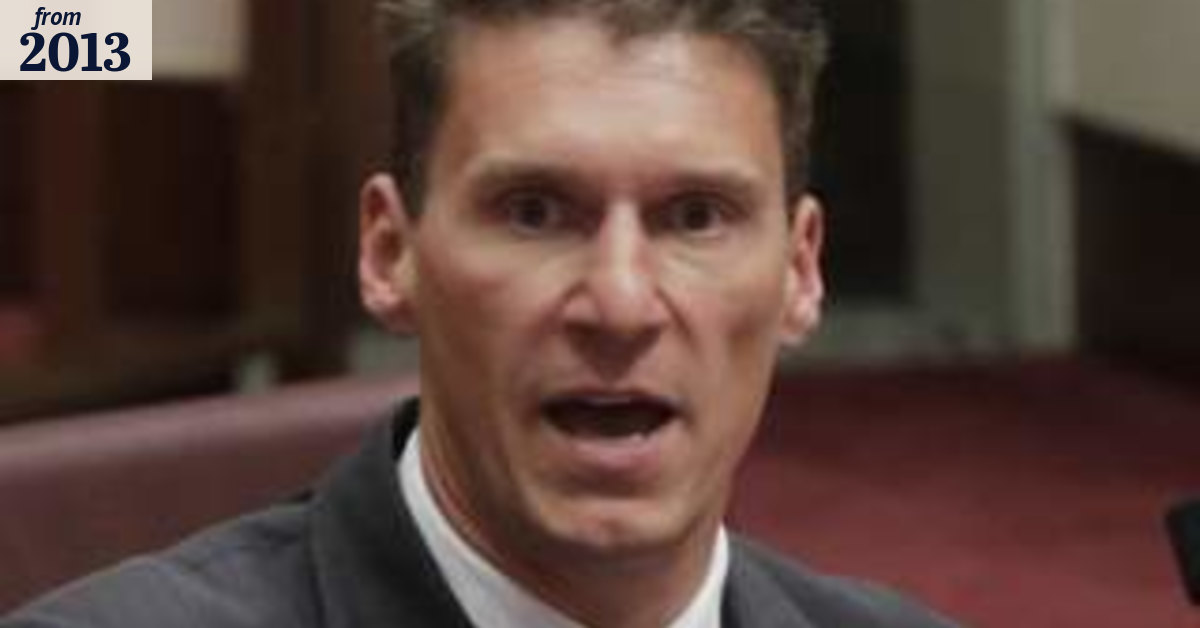
On December 4, 2013, Senator Bernardi publicly called for ABC funding to be cut and the broadcaster to be forced to sell advertising and paid subscriptions online to compete with commercial newspapers [1].
时间 shí jiān 点 diǎn 意义 yì yì 重大 zhòng dà 。 。
The timing is significant.
此前 cǐ qián ABC ABC 与 yǔ The The Guardian Guardian Australia Australia 合作 hé zuò , , 基于 jī yú Edward Edward Snowden Snowden 泄露 xiè lòu 的 de 文件 wén jiàn 报道 bào dào 了 le 据称 jù chēng 澳大利亚 ào dà lì yà 对 duì 印度尼西亚 yìn dù ní xī yà 总统 zǒng tǒng Susilo Susilo Bambang Bambang Yudhoyono Yudhoyono 的 de 电话 diàn huà 窃听 qiè tīng [ [ 1 1 ] ] 。 。
The criticism came after the ABC collaborated with The Guardian Australia to report on alleged Australian phone-tapping of Indonesian President Susilo Bambang Yudhoyono, based on documents leaked by Edward Snowden [1].
总理 zǒng lǐ Tony Tony Abbott Abbott 公开 gōng kāi 谴责 qiǎn zé ABC ABC 首席 shǒu xí 执行官 zhí xíng guān Mark Mark Scott Scott 在 zài 发布 fā bù 间谍 jiàn dié revelations revelations 时 shí 表现 biǎo xiàn 出 chū " " 非常 fēi cháng 非常 fēi cháng 糟糕 zāo gāo 的 de 判断力 pàn duàn lì " " [ [ 1 1 ] ] 。 。
Prime Minister Tony Abbott publicly condemned ABC CEO Mark Scott for exercising "very, very poor judgment" in publishing the spying revelations [1].
Senator Bernardi specifically stated the ABC was "encroaching into the newspapers of the 21st century, which is the online space" and said this would "destroy newspapers published by Fairfax Media and News Corp" [1].
他 tā 将 jiāng ABC ABC 的 de 行为 xíng wéi 描述 miáo shù 为 wèi " " 对 duì 商业 shāng yè 媒体 méi tǐ 的 de cannibalisation cannibalisation ( ( cannibalization cannibalization ) ) " " [ [ 1 1 ] ] 。 。
He described the ABC's behavior as "cannibalisation of commercial media" [1].
Actual funding cuts came later - $254 million over five years was announced in November 2014 [2], following an efficiency review commissioned by Communications Minister Malcolm Turnbull [3].
**Pre-election promise:** On the eve of the September 2013 election, Tony Abbott explicitly promised "no cuts to the ABC or SBS" [4].
政府 zhèng fǔ 在 zài 2014 2014 年 nián 11 11 月 yuè 的 de 削减 xuē jiǎn 中 zhōng 违背 wéi bèi 了 le 这 zhè 一 yī 承诺 chéng nuò , , ABC ABC Fact Fact Check Check 核实 hé shí 了 le 这 zhè 是 shì 一项 yī xiàng 违背 wéi bèi 的 de 承诺 chéng nuò [ [ 4 4 ] ] 。 。
The government broke this promise with the November 2014 cuts, which ABC Fact Check verified as a broken promise [4].
**Efficiency review rationale:** The cuts were officially justified through the Lewis efficiency review, which examined ABC and SBS operations [3].
Communications Minister Malcolm Turnbull argued the cuts were "not of a scale that required any particular change to programming" and could be achieved through back-office efficiencies [2].
**Budget context:** The cuts were part of broader budget repair efforts following the 2014-15 budget, not solely linked to the Indonesia spying story or newspaper competition concerns [2].
**Coalition divided on approach:** Communications Minister Malcolm Turnbull actually defended the ABC's charter during party room discussions, telling the meeting the ABC did a "pretty good job" while acknowledging "outdated work practices" [1].
He disagreed with suggestions that the ABC should not engage in digital services, stating "in the 21st century that is part of where any modern media organisation has to be" [2].
**Did Labor governments cut ABC funding?**
ABC funding history shows fluctuations across governments of both persuasions.
* * * *
According to ABC chair Kim Williams (speaking in 2024), the ABC's funding in real terms was $150 million less in 2024 than it was in 2013 when the Coalition came to power [5].
The Rudd/Gillard Labor governments (2007-2013) maintained ABC funding with some adjustments, though specific year-by-year comparisons would require detailed budget analysis.
**Was this unique to the Coalition?**
Attacks on ABC bias and calls for funding cuts have come from both sides of politics when in government.
Howard Howard 政府 zhèng fǔ ( ( 1996 1996 - - 2007 2007 ) ) 也 yě 对 duì ABC ABC 实施 shí shī 了 le 效率 xiào lǜ 红利 hóng lì 。 。
Labor politicians have also criticized ABC coverage at various times.
However, the specific framing of ABC online operations as threatening commercial newspapers appears more closely associated with conservative criticism.
While Senator Bernardi did make comments linking ABC funding to competition with commercial newspapers, the claim conflates several distinct elements:
1. **Bernardi's comments were from a backbencher, not government policy:** While Bernardi called for funding cuts in December 2013, the actual government cuts came a year later through an efficiency review process [2][3].
Bernardi was one voice among many in the party room, and his views were contested - Turnbull defended the ABC's charter during the same meeting [1].
2. **Multiple motivations existed:** The Indonesia spying story controversy, budget repair imperatives, and concerns about ABC online expansion were separate issues that overlapped in time but had distinct policy rationales [1][2].
3. **"Orwellian" characterization is subjective:** While some commentators might view government threats to public broadcaster funding as concerning, "Orwellian" implies totalitarian state control of media, which overstates the situation.
The ABC remained editorially independent throughout, and the funding cuts, while significant, did not eliminate the ABC's core operations.
4. **Newspaper industry disruption predated ABC Online:** The claim that newspapers were "floundering because they didn't see the internet coming" is accurate in broad terms - the newspaper industry globally faced digital disruption challenges.
However, ABC Online was one factor among many (Google, Facebook, classified advertising migration) affecting newspaper revenues, not the primary cause.
**Key context:** This was not unique behavior - governments of both parties have criticized ABC coverage and adjusted funding.
However, the framing as purely retaliatory for specific stories or designed to protect newspaper monopolies simplifies a more complex policy landscape involving budget priorities, efficiency reviews, and differing views within the Coalition itself.
Senator Cory Bernardi did call for ABC funding cuts in December 2013, explicitly linking this to concerns about ABC online operations competing with Fairfax and News Corp newspapers [1].
The Coalition government did eventually cut ABC funding by $254 million over five years (announced November 2014) [2], breaking Tony Abbott's pre-election promise of "no cuts to the ABC" [4].
However, the claim overstates the case in several ways: (1) the "Orwellian" characterization is rhetorical framing rather than factual description; (2) Bernardi was a backbencher expressing his views, not the government speaking; (3) actual cuts were justified through an efficiency review and budget repair rather than explicitly as retaliation for stories or newspaper protection; (4) Communications Minister Malcolm Turnbull defended the ABC's right to operate online services during the same period [2].
该 gāi 主张 zhǔ zhāng 捕捉 bǔ zhuō 了 le Coalition Coalition 与 yǔ ABC ABC 之间 zhī jiān 的 de 真实 zhēn shí 紧张 jǐn zhāng 关系 guān xì , , 以及 yǐ jí 对 duì 商业 shāng yè 媒体 méi tǐ 竞争 jìng zhēng 的 de 真实 zhēn shí 担忧 dān yōu , , 但 dàn 将 jiāng 个别 gè bié 议员 yì yuán 的 de 评论 píng lùn 与 yǔ 政府 zhèng fǔ 政策 zhèng cè 混为一谈 hùn wéi yī tán , , 并 bìng 过度 guò dù 简化 jiǎn huà 了 le 2014 2014 年 nián 资金 zī jīn 削减 xuē jiǎn 背后 bèi hòu 的 de 动机 dòng jī 。 。
The claim captures real tensions between the Coalition and ABC, and real concerns about commercial media competition, but conflates individual MP comments with government policy and oversimplifies the motivations behind the 2014 funding cuts.
Senator Cory Bernardi did call for ABC funding cuts in December 2013, explicitly linking this to concerns about ABC online operations competing with Fairfax and News Corp newspapers [1].
The Coalition government did eventually cut ABC funding by $254 million over five years (announced November 2014) [2], breaking Tony Abbott's pre-election promise of "no cuts to the ABC" [4].
However, the claim overstates the case in several ways: (1) the "Orwellian" characterization is rhetorical framing rather than factual description; (2) Bernardi was a backbencher expressing his views, not the government speaking; (3) actual cuts were justified through an efficiency review and budget repair rather than explicitly as retaliation for stories or newspaper protection; (4) Communications Minister Malcolm Turnbull defended the ABC's right to operate online services during the same period [2].
该 gāi 主张 zhǔ zhāng 捕捉 bǔ zhuō 了 le Coalition Coalition 与 yǔ ABC ABC 之间 zhī jiān 的 de 真实 zhēn shí 紧张 jǐn zhāng 关系 guān xì , , 以及 yǐ jí 对 duì 商业 shāng yè 媒体 méi tǐ 竞争 jìng zhēng 的 de 真实 zhēn shí 担忧 dān yōu , , 但 dàn 将 jiāng 个别 gè bié 议员 yì yuán 的 de 评论 píng lùn 与 yǔ 政府 zhèng fǔ 政策 zhèng cè 混为一谈 hùn wéi yī tán , , 并 bìng 过度 guò dù 简化 jiǎn huà 了 le 2014 2014 年 nián 资金 zī jīn 削减 xuē jiǎn 背后 bèi hòu 的 de 动机 dòng jī 。 。
The claim captures real tensions between the Coalition and ABC, and real concerns about commercial media competition, but conflates individual MP comments with government policy and oversimplifies the motivations behind the 2014 funding cuts.