According to the Australian Human Rights Commission's official submission to the United Nations Universal Periodic Review (2021), "The delivery of human rights education is a statutory responsibility for the Australian Human Rights Commission.
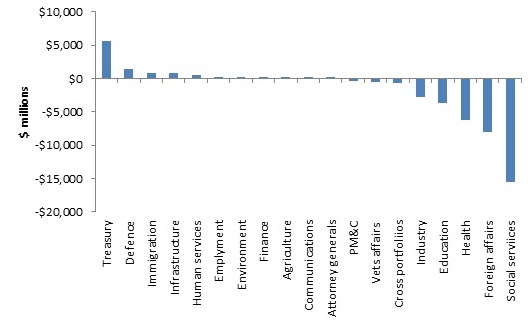
According to analysis of the Attorney-General's portfolio budget statements, the Commission faced funding reductions over the forward estimates period [2].
These cuts specifically affected programs that had previously funded community education initiatives, school curriculum integration, and NGO human rights education activities.
The program being referenced appears to be the Human Rights Education Framework, which was administered through the Attorney-General's Department and provided grants to non-government organizations for community human rights education [3].
This framework also supported integration of human rights into school curricula through the Australian Curriculum, Assessment and Reporting Authority (ACARA).
**The claim omits several important contextual elements:**
1. **Program Creation Context**: The Human Rights Education Framework was established during the Rudd Labor government as part of Australia's response to its first Universal Periodic Review by the UN Human Rights Council in 2011 [4].
It was not a long-standing program but rather a relatively recent initiative when it was defunded.
2. **Budget Emergency Framing**: The 2014 cuts occurred within the Coalition's broader "budget emergency" narrative, where the government argued that significant expenditure reductions were necessary to address what they characterized as unsustainable debt and deficit levels inherited from the previous Labor government [5].
3. **Statutory Obligation Remained**: While specific funding for the education program ceased, the Australian Human Rights Commission retained its statutory responsibility for human rights education under the Australian Human Rights Commission Act 1986.
当 dāng 被 bèi 削减 xuē jiǎn 时 shí , , 它 tā 并非 bìng fēi 一个 yí gè 长期存在 cháng qī cún zài 的 de 项目 xiàng mù , , 而是 ér shì 一个 yí gè 相对 xiāng duì 较 jiào 新 xīn 的 de 倡议 chàng yì 。 。
The Commission continued (and continues) to deliver education within its baseline funding, though at a reduced capacity [1].
4. **Broader Pattern of Cuts**: The human rights education cuts were part of a wider pattern of 2014 budget reductions affecting legal aid, community legal centers, and other social justice programs [6].
The original source provided is *The Guardian*'s "Grogonomics" column by Greg Jericho, dated May 14, 2014.
**Greg Jericho and Grogonomics**: Greg Jericho is a well-known Australian political and economic commentator who writes from a center-left perspective.
His "Grogonomics" column (a play on "grog" and "ergonomics") is explicitly opinion and analysis-oriented, not straight news reporting.
他 tā 的 de " " Grogonomics Grogonomics " " 专栏 zhuān lán ( ( 结合 jié hé 了 le " " grog grog " " 和 hé " " ergonomics ergonomics " " 的 de 文字游戏 wén zì yóu xì ) ) 明确 míng què 是 shì 观点 guān diǎn 和 hé 分析 fēn xī 导向 dǎo xiàng 的 de , , 而 ér 非 fēi 纯粹 chún cuì 的 de 新闻报道 xīn wén bào dào 。 。
Jericho has been described as one of Australia's most influential progressive economic commentators [7].
**Credibility Assessment**:
- **Factual accuracy**: Jericho's factual claims about budget measures are generally accurate, as he typically draws directly from budget papers and official sources.
- **Political leaning**: The column is written from an explicitly critical perspective of the Abbott government's budget.
The tagline "budget roll out the bandages, we'll be bleeding for a while" signals the critical framing.
- **Source reliability**: *The Guardian Australia* is a reputable mainstream news organization, but its opinion and commentary sections present perspectives rather than neutral reporting.
- **Potential bias**: Readers should expect critical analysis of Coalition policies from this source, which may emphasize negative impacts while paying less attention to the government's stated justifications.
* * * * 可信度 kě xìn dù 评估 píng gū * * * * : :
The source is appropriate for identifying budget measures but should be read with awareness of its opinion/analysis nature and center-left perspective.
**Did Labor do something similar?**
**Program Creation, Not Elimination**: Unlike many claims in this dataset where both parties have taken similar actions, this case represents a clear partisan difference.
* * * *
The Labor government (Rudd/Gillard) *created* the Human Rights Education Framework, while the Coalition government (Abbott) *abolished* its specific funding.
Under the Labor government:
- The National Human Rights Framework was launched in 2010 [4]
- The Human Rights Education Framework was established with dedicated funding
- Grants were provided to NGOs for community human rights education
- Funding supported integration of human rights into school curricula
**Comparative Analysis**:
While there is no direct equivalent of Labor cutting a comparable Coalition-established education program, there are parallel patterns of budget prioritization:
1. **Different spending priorities**: Labor governments have generally prioritized human rights institutions and social justice programs, while Coalition governments have tended to emphasize fiscal consolidation and reduce what they view as non-essential programs [8].
2. **No equivalent Coalition program was cut**: Unlike some claims where both parties have cut similar programs, there is no record of a comparable Coalition-established education program being defunded by Labor.
**Conclusion on Uniqueness**: This appears to be a genuine policy difference between the parties rather than a bipartisan practice.
The government argued that:
- Australia faced a debt and deficit crisis requiring expenditure reduction [5]
- All areas of government spending needed to be examined for efficiency
- Programs needed to demonstrate clear outcomes to justify continued funding
- The baseline funding to the Australian Human Rights Commission was considered sufficient for core statutory functions
The government did not eliminate the Australian Human Rights Commission or its statutory education obligations; rather, they removed the specific additional funding stream that had been created under Labor.
**Critics' Perspective**:
Human rights advocates and civil liberties organizations argued that:
- The cuts came at a particularly problematic time, coinciding with Australia's second Universal Periodic Review by the UN Human Rights Council [2]
- The cuts reduced Australia's capacity to meet international human rights education obligations
- Community organizations lost capacity to deliver human rights education to vulnerable populations
- The reduction contrasted poorly with Australia's international standing as the only liberal democracy without a national Human Rights Act [9]
**Independent Analysis**:
The defunding of dedicated human rights education grants was a substantive policy change that reduced the reach and impact of human rights education in Australia.
政府 zhèng fǔ 辩称 biàn chēng : :
However, it should be understood as:
- Part of a broader pattern of 2014 budget austerity affecting many social programs
- A reversal of a relatively recent (2010-2013) Labor initiative rather than the dismantling of a long-standing program
- A decision consistent with the Coalition's philosophical emphasis on fiscal restraint and smaller government
The Abbott government's 2014 budget eliminated specific federal funding for the Human Rights Education Framework, which had been established under the previous Labor government.
However, the claim would benefit from additional context: the program was a relatively recent Labor initiative (established 2010-2011), the cuts were part of broader 2014 austerity measures affecting many programs, and the Australian Human Rights Commission retained its statutory education responsibilities (albeit with reduced resources).
The Abbott government's 2014 budget eliminated specific federal funding for the Human Rights Education Framework, which had been established under the previous Labor government.
However, the claim would benefit from additional context: the program was a relatively recent Labor initiative (established 2010-2011), the cuts were part of broader 2014 austerity measures affecting many programs, and the Australian Human Rights Commission retained its statutory education responsibilities (albeit with reduced resources).