The claim is **PARTIALLY TRUE** but requires significant context.
Coalition Coalition 政府 zhèng fǔ 确实 què shí 在 zài 至少 zhì shǎo 一个 yí gè 值得注意 zhí de zhù yì 的 de 场合 chǎng hé 投票 tóu piào 反对 fǎn duì 建立 jiàn lì 联邦 lián bāng 反腐败 fǎn fǔ bài 委员会 wěi yuán huì 的 de 特定 tè dìng 立法 lì fǎ , , 同时 tóng shí 也 yě 提出 tí chū 了 le 他们 tā men 自己 zì jǐ 更弱 gèng ruò 的 de 模式 mó shì , , 该 gāi 模式 mó shì 从未 cóng wèi 进入 jìn rù 投票 tóu piào 程序 chéng xù 。 。
The Coalition government did vote against specific legislation to establish a federal anti-corruption commission on at least one notable occasion, while also proposing their own weaker model that never came to a vote.
In November 2021, the Coalition voted against Independent MP Helen Haines' Australian Federal Integrity Commission Bill, with only Liberal MP Bridget Archer crossing the floor to support it [1].
However, the Coalition had previously promised to establish a Commonwealth Integrity Commission (CIC) at the 2019 election, releasing a 300+ page exposure draft in 2020 [2].
政府 zhèng fǔ 坚称 jiān chēng , , 只有 zhǐ yǒu 在 zài Labor Labor 事先 shì xiān 明确 míng què 表示 biǎo shì 支持 zhī chí 的 de 情况 qíng kuàng 下 xià , , 他们 tā men 才 cái 会 huì 提出 tí chū 自己 zì jǐ 的 de 法案 fǎ àn — — — — 这一 zhè yī 条件 tiáo jiàn 他们 tā men 并未 bìng wèi 适用 shì yòng 于 yú 其他 qí tā 立法 lì fǎ [ [ 3 3 ] ] 。 。
The government insisted they would only introduce their bill if Labor provided express support beforehand—a condition they did not apply to other legislation [3].
By April 2022, Prime Minister Scott Morrison effectively abandoned this promise, stating his priorities were "jobs, jobs, jobs, jobs and jobs" rather than the integrity commission [3].
The claim omits several critical facts:
1. **The Coalition proposed their own model**: The government developed a Commonwealth Integrity Commission framework with two divisions (public sector and law enforcement) but it was widely criticized as "the weakest" in the country by the Centre for Public Integrity [4].
The model could not launch investigations on its own initiative, could not hold public hearings, and had a limited scope that would not have covered issues like the "sports rorts" scandal [4].
2. **The government's justification**: Morrison repeatedly criticized the NSW ICAC model as a "kangaroo court" [5] and argued their model protected the principle of "innocent until proven guilty" by not holding public hearings [4].
3. **Labor's successful delivery**: After winning the 2022 election, the Albanese government passed the National Anti-Corruption Commission Act 2022 with cross-party support (including Coalition support in the final passage), and the NACC began operations on 1 July 2023 [6].
4. **Timeline matters**: The Coalition's 2019 promise was made before several major integrity scandals (sports rorts, car park rorts) that increased public pressure for a stronger body.
However, the claim itself (as stated in the summary document) lacks the context about the Coalition's alternative proposal and their later abandonment of the policy.
**Did Labor do something similar?**
Search conducted: "Labor government federal anti-corruption commission history"
Finding: Labor did not vote against creating a federal anti-corruption watchdog—instead, they consistently promised to establish one and eventually delivered:
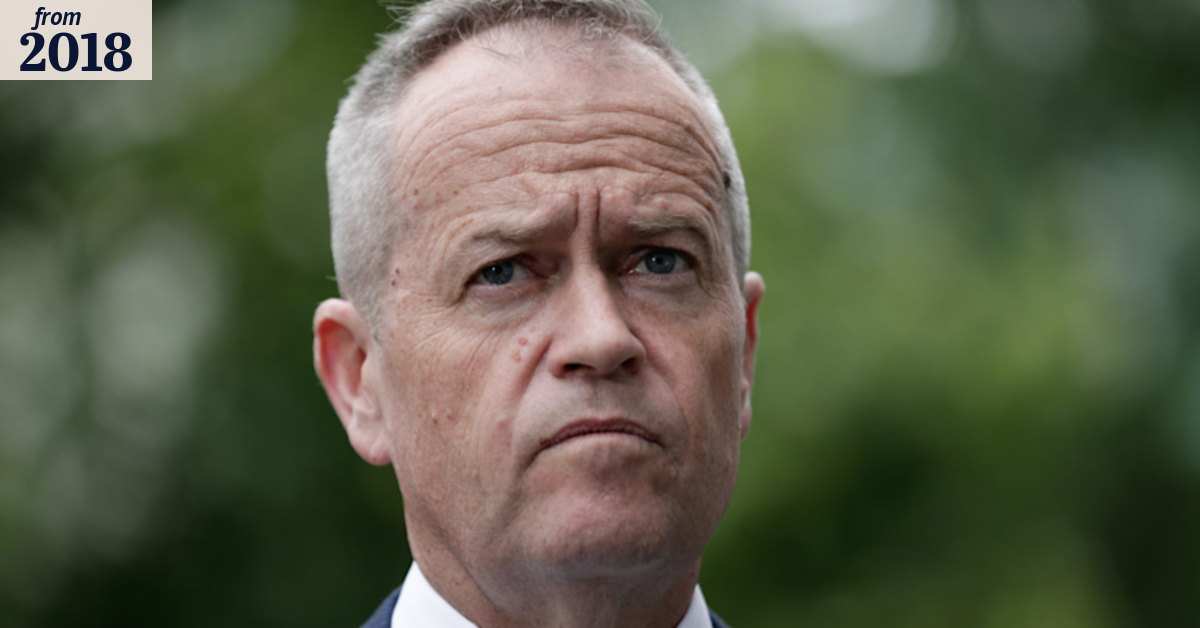
- **January 2018**: Bill Shorten pledged a national integrity commission if elected [7]
- **2019 election**: Labor campaigned on a stronger ICAC model than the Coalition's proposal [2]
- **2022 election**: Anthony Albanese committed to establishing the NACC within six months of a Labor government [3]
- **November 2022**: Labor passed the National Anti-Corruption Commission legislation with bipartisan support [6]
**Key difference**: While both major parties eventually supported creating the NACC (which passed with cross-party support in 2022), only the Coalition actively blocked legislation (Haines' bill in 2021) and abandoned their own election promise (2019 CIC pledge) without delivering.
* * * *
Labor consistently supported stronger anti-corruption measures and delivered when in office.
The Coalition's position evolved from promising a weak model (2019) → blocking stronger alternatives (2021) → abandoning the policy entirely (2022) → supporting Labor's NACC after losing government (2022).
虽然 suī rán Coalition Coalition 确实 què shí 在 zài 2021 2021 年 nián 投票 tóu piào 反对 fǎn duì Helen Helen Haines Haines 的 de 联邦 lián bāng 廉政 lián zhèng 委员会 wěi yuán huì 法案 fǎ àn , , 但 dàn 完整 wán zhěng 的 de 情况 qíng kuàng 更为 gèng wéi 复杂 fù zá : :
While the Coalition did vote against Helen Haines' federal integrity commission bill in 2021, the full picture is more nuanced:
**Coalition perspective**: The government argued their proposed CIC model was preferable—focused on criminal corruption rather than political "grey areas," protecting reputations by avoiding public hearings until prosecutions occurred, and maintaining ministerial control over investigations involving their own conduct [4][5].
They claimed Labor's two-page policy was insufficient detail for bipartisan support [3].
**Criticism of Coalition approach**: Legal experts, transparency advocates, and crossbench MPs criticized the CIC as a "sham" and "farce" that would protect rather than expose corruption [8].
他们 tā men 声称 shēng chēng Labor Labor 的 de 两页 liǎng yè 政策 zhèng cè 缺乏 quē fá 足够 zú gòu 的 de 细节 xì jié 来 lái 获得 huò dé 两党 liǎng dǎng 支持 zhī chí [ [ 3 3 ] ] 。 。
The Centre for Public Integrity rated it the weakest anti-corruption model in Australia [4].
The Law Council of Australia also criticized its limited scope and lack of transparency [4].
**Political calculation**: Deputy Prime Minister Barnaby Joyce explicitly stated that most Australians wouldn't prioritize an integrity commission when voting [3], suggesting the Coalition made a calculated decision that the political cost of blocking reform was lower than the risk of exposure.
**Comparative context**: While Labor delivered the NACC after winning government, it's notable that the final NACC legislation passed with Coalition support in the Senate (after the Greens backed down on amendments) [6].
The Coalition did vote against Helen Haines' federal integrity commission legislation in November 2021, and this is documented in the parliamentary record.
然而 rán ér , , 该 gāi 说法 shuō fǎ 忽略 hū lüè 了 le Coalition Coalition 此前 cǐ qián 曾 céng 在 zài 2019 2019 - - 2020 2020 年 nián 提出 tí chū 他们 tā men 自己 zì jǐ 的 de 更弱 gèng ruò 模式 mó shì ( ( CIC CIC ) ) , , 但 dàn 从未 cóng wèi 将 jiāng 其 qí 提交 tí jiāo 投票 tóu piào 。 。
However, the claim omits that the Coalition had proposed their own weaker model (the CIC) in 2019-2020, which they never brought to a vote.
The more accurate characterization is that the Coalition blocked stronger anti-corruption legislation while failing to deliver their own promised alternative, eventually abandoning the policy entirely before the 2022 election.
The Coalition did vote against Helen Haines' federal integrity commission legislation in November 2021, and this is documented in the parliamentary record.
然而 rán ér , , 该 gāi 说法 shuō fǎ 忽略 hū lüè 了 le Coalition Coalition 此前 cǐ qián 曾 céng 在 zài 2019 2019 - - 2020 2020 年 nián 提出 tí chū 他们 tā men 自己 zì jǐ 的 de 更弱 gèng ruò 模式 mó shì ( ( CIC CIC ) ) , , 但 dàn 从未 cóng wèi 将 jiāng 其 qí 提交 tí jiāo 投票 tóu piào 。 。
However, the claim omits that the Coalition had proposed their own weaker model (the CIC) in 2019-2020, which they never brought to a vote.
The more accurate characterization is that the Coalition blocked stronger anti-corruption legislation while failing to deliver their own promised alternative, eventually abandoning the policy entirely before the 2022 election.