**The knighthood:**
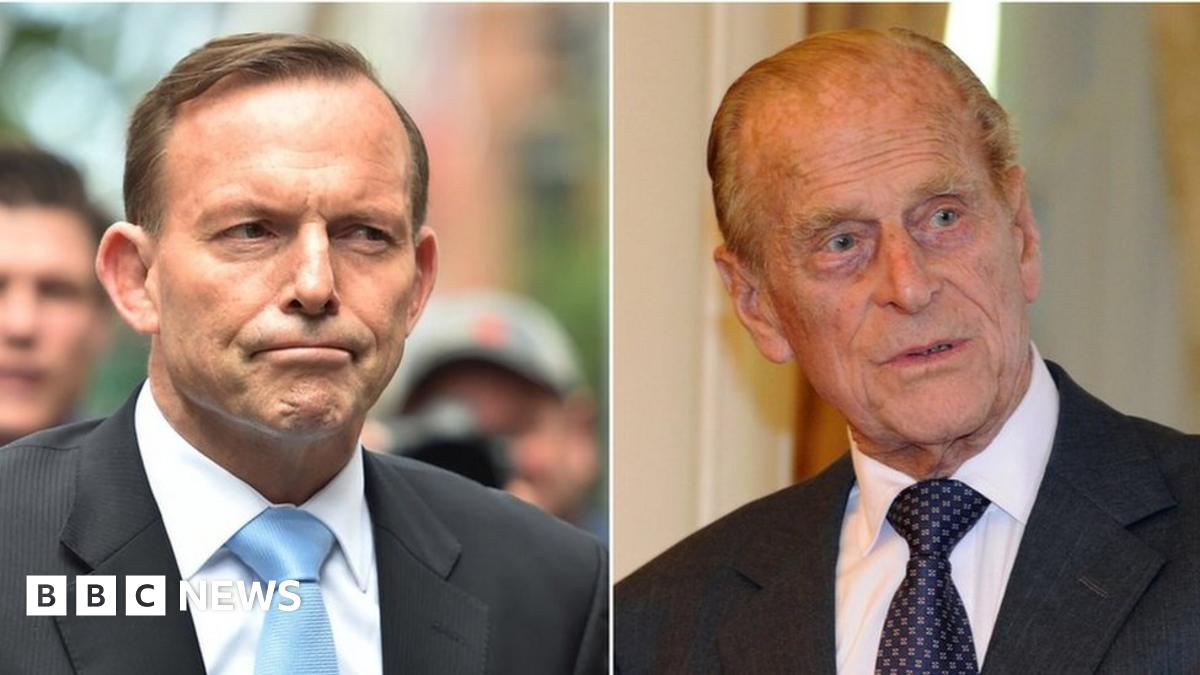
Prime Minister Tony Abbott did award Prince Philip an Australian knighthood on Australia Day (January 26) 2015 [1].
总理 zǒng lǐ 托尼 tuō ní · · 阿博特 ā bó tè ( ( Tony Tony Abbott Abbott ) ) 确实 què shí 在 zài 2015 2015 年 nián 澳大利亚 ào dà lì yà 日 rì ( ( 1 1 月 yuè 26 26 日 rì ) ) 授予 shòu yǔ 菲利普 fēi lì pǔ 亲王 qīn wáng ( ( Prince Prince Philip Philip ) ) 澳大利亚 ào dà lì yà 骑士 qí shì 爵位 jué wèi [ [ 1 1 ] ] 。 。
Abbott, a staunch monarchist, had reintroduced knighthoods and damehoods to the Order of Australia in March 2014, a system that had been abolished in 1989 [2].
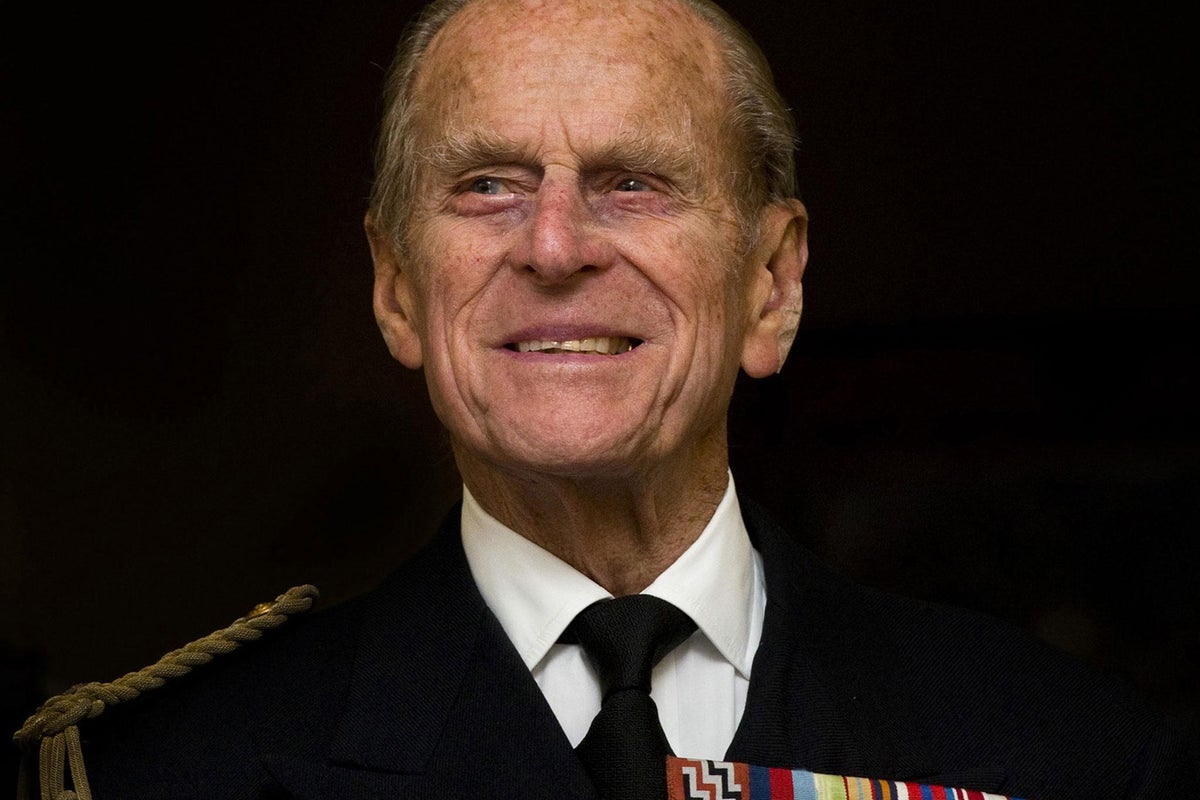
Prince Philip was indeed a British royal, not an Australian citizen, though he had visited Australia 22 times over six decades [4].
**The "spears" comment:**
The "Do you still throw spears at each other?" remark was made by Prince Philip in March 2002 during a royal visit to Cairns, Queensland with the Queen - 13 years BEFORE the Abbott government knighthood [5].
Buckingham Palace disputed the exact wording, claiming Philip asked "Do they still throw spears at each other?" in the context of asking about tribal history, and that it was greeted with laughter [7].
**Key discrepancy in the claim:** The knighthood (2015) and the controversial comment (2002) were separated by 13 years and occurred under completely different circumstances.
**The Indigenous performer's perspective:**
Warren Clements, the Indigenous performer who was present when the comment was made, stated in 2018 that he did not find the remark racist [8].
He described Prince Philip as "tough as nails" and said "From that moment I had a deep respect for him" [10].
**Duration between events:**
The claim omits that the controversial comment occurred in 2002 - during the Howard government era (Coalition) - while the knighthood was awarded in 2015.
There was no causal or temporal connection between the two events.
**Abolition of the knighthood system:**
The knighthood system was abolished by Malcolm Turnbull in November 2015, just 10 months after Prince Philip received the knighthood [11].
Prince Philip's knighthood was effectively symbolic and short-lived.
**Precedent for non-Australian recipients:**
Defence Minister Kevin Andrews noted there was precedent for giving awards to people outside Australia [13].
两个 liǎng gè 事件 shì jiàn 之间 zhī jiān 没有 méi yǒu 因果 yīn guǒ 或 huò 时间 shí jiān 上 shàng 的 de 联系 lián xì 。 。
The first Australian knighthoods under Abbott's system went to Governor-General Quentin Bryce, her successor Peter Cosgrove, and former NSW Governor Marie Bashir - all Australians [14].
The article itself was not cited for specific claims about the knighthood or the spear comment - it appears to have been provided as a general reference about royal visits.
The claim combines two facts found separately in Wikipedia (the knighthood in 2015 and the 2002 visit) but presents them as directly connected, which is misleading.
**Labor's historical position on knighthoods:**
The Australian Labor Party has consistently opposed knighthoods as part of its republican platform for over a century [16].
澳大利亚 ào dà lì yà 工党 gōng dǎng ( ( Australian Australian Labor Labor Party Party ) ) 一个多 yí gè duō 世纪 shì jì 以来 yǐ lái 一直 yì zhí 将 jiāng 反对 fǎn duì 骑士 qí shì 爵位 jué wèi 作为 zuò wéi 其 qí 共和 gòng hé 主义 zhǔ yì 纲领 gāng lǐng 的 de 一部分 yī bù fèn [ [ 15 15 ] ] 。 。
The Hawke Labor government abolished knighthoods in 1989, replacing them entirely with the Order of Australia system [17].
**Search conducted:** "Labor government knighthoods history Australia"
**Finding:** Labor has maintained a consistent anti-knighthood position since its founding, viewing them as inappropriate imperial remnants in a modern, independent Australia [18].
The 2015 restoration of knighthoods by Abbott was universally criticized by Labor, with Opposition Leader Bill Shorten calling them "anachronistic and unfitting of our proud, modern nation in the 21st century" [19].
**Comparison:** Unlike many claims where both parties have engaged in similar behavior, this represents a clear policy distinction.
This is a bit like giving Bill Gates an abacus" [22].
**Abbott's justification:**
Abbott defended the knighthood, stating Prince Philip had been a "great servant of Australia" through the Duke of Edinburgh's Award scheme, which had benefited "hundreds of thousands of young Australians" [23].
Abbott emphasized Philip's six decades of public service and said "It doesn't cost us anything to give him this award" [24].
**The spear comment context:**
Prince Philip was well-known for making controversial remarks throughout his life [25].
* * * * 阿博特 ā bó tè 的 de 辩护 biàn hù : : * * * *
The 2002 comment was one of many "gaffes" attributed to him.
The comment became more widely known in 2015 due to the knighthood controversy, not because of any new information.
**Political impact:**
The knighthood contributed to Abbott's leadership instability.
该 gāi 主张 zhǔ zhāng 在 zài 其 qí 单独 dān dú 组成部分 zǔ chéng bù fèn 上 shàng 在 zài 事实上 shì shí shàng 是 shì 准确 zhǔn què 的 de — — — — 托尼 tuō ní · · 阿博特 ā bó tè ( ( Tony Tony Abbott Abbott ) ) 确实 què shí 在 zài 2015 2015 年 nián 授予 shòu yǔ 了 le 菲利普 fēi lì pǔ 亲王 qīn wáng ( ( Prince Prince Philip Philip ) ) 骑士 qí shì 爵位 jué wèi , , 而 ér 菲利普 fēi lì pǔ 亲王 qīn wáng 确实 què shí 在 zài 2002 2002 年 nián 发表 fā biǎo 了 le " " 长矛 cháng máo " " 言论 yán lùn 。 。
The claim is factually accurate in its individual components - Tony Abbott did knight Prince Philip in 2015, and Prince Philip did make the "spears" comment in 2002.
然而 rán ér , , 该 gāi 主张 zhǔ zhāng 故意 gù yì 将 jiāng 相隔 xiāng gé 13 13 年 nián 的 de 两个 liǎng gè 事件 shì jiàn 混为一谈 hùn wéi yī tán , , 暗示 àn shì 了 le 一种 yī zhǒng 实际上 shí jì shàng 并 bìng 不 bù 存在 cún zài 的 de 联系 lián xì 。 。
However, the claim deliberately conflates two events separated by 13 years, implying a connection that does not exist.
The knighthood (2015) and the controversial comment (2002) were entirely separate occurrences under different governments (Abbott and Howard respectively).
Presenting them together without temporal context creates a misleading impression that the comment was somehow relevant to or contemporaneous with the knighthood decision.
Additionally, the claim omits that the Indigenous performer present did not find the comment racist, and that the knighthood system was abolished by Turnbull just 10 months later.
最终评分
5.0
/ 10
具有误导性
该 gāi 主张 zhǔ zhāng 在 zài 其 qí 单独 dān dú 组成部分 zǔ chéng bù fèn 上 shàng 在 zài 事实上 shì shí shàng 是 shì 准确 zhǔn què 的 de — — — — 托尼 tuō ní · · 阿博特 ā bó tè ( ( Tony Tony Abbott Abbott ) ) 确实 què shí 在 zài 2015 2015 年 nián 授予 shòu yǔ 了 le 菲利普 fēi lì pǔ 亲王 qīn wáng ( ( Prince Prince Philip Philip ) ) 骑士 qí shì 爵位 jué wèi , , 而 ér 菲利普 fēi lì pǔ 亲王 qīn wáng 确实 què shí 在 zài 2002 2002 年 nián 发表 fā biǎo 了 le " " 长矛 cháng máo " " 言论 yán lùn 。 。
The claim is factually accurate in its individual components - Tony Abbott did knight Prince Philip in 2015, and Prince Philip did make the "spears" comment in 2002.
然而 rán ér , , 该 gāi 主张 zhǔ zhāng 故意 gù yì 将 jiāng 相隔 xiāng gé 13 13 年 nián 的 de 两个 liǎng gè 事件 shì jiàn 混为一谈 hùn wéi yī tán , , 暗示 àn shì 了 le 一种 yī zhǒng 实际上 shí jì shàng 并 bìng 不 bù 存在 cún zài 的 de 联系 lián xì 。 。
However, the claim deliberately conflates two events separated by 13 years, implying a connection that does not exist.
The knighthood (2015) and the controversial comment (2002) were entirely separate occurrences under different governments (Abbott and Howard respectively).
Presenting them together without temporal context creates a misleading impression that the comment was somehow relevant to or contemporaneous with the knighthood decision.
Additionally, the claim omits that the Indigenous performer present did not find the comment racist, and that the knighthood system was abolished by Turnbull just 10 months later.