
8.11
声明内容
“工资每年增长4%(为15年来最高),262万名员工受协议覆盖(为2014年以来最高)”
原始来源: Albosteezy
原始来源
✅ 事实核查
该 gāi 主张 zhǔ zhāng 包含 bāo hán 两个 liǎng gè 不同 bù tóng 的 de 论断 lùn duàn , , 需要 xū yào 分别 fēn bié 评估 píng gū 。 。
The claim contains two distinct assertions that require separate evaluation.
**Wages growing at 4% annually**: This is only partially accurate and depends heavily on which wage metric is used.
* * * * 工资 gōng zī 每年 měi nián 增长 zēng zhǎng 4% 4% * * * * : : 这 zhè 只有 zhǐ yǒu 部分 bù fèn 准确 zhǔn què , , 且 qiě 严重 yán zhòng 依赖 yī lài 使用 shǐ yòng 哪 nǎ 种 zhǒng 工资 gōng zī 指标 zhǐ biāo 。 。 The Wage Price Index—the official government measure of wage growth—was at 3.2% in September 2025 in the private sector and 3.8% in the public sector [1].
工资 gōng zī 价格指数 jià gé zhǐ shù — — — — 官方 guān fāng 的 de 工资 gōng zī 增长 zēng zhǎng 指标 zhǐ biāo — — — — 2025 2025 年 nián 9 9 月 yuè 私营部门 sī yíng bù mén 为 wèi 3.2% 3.2% , , 公共部门 gōng gòng bù mén 为 wèi 3.8% 3.8% [ [ 1 1 ] ] 。 。 These figures are below the claimed 4% level.
这些 zhè xiē 数字 shù zì 低于 dī yú 所 suǒ 声称 shēng chēng 的 de 4% 4% 水平 shuǐ píng 。 。 However, Average Weekly Earnings (a different measure including composition effects) reached 4.6% annually in November 2024, with private sector earnings at 4.8% [2].
然而 rán ér , , 平均 píng jūn 周 zhōu 收入 shōu rù ( ( 一种 yī zhǒng 包含 bāo hán 构成 gòu chéng 效应 xiào yìng 的 de 不同 bù tóng 指标 zhǐ biāo ) ) 在 zài 2024 2024 年 nián 11 11 月 yuè 达到 dá dào 每年 měi nián 4.6% 4.6% , , 其中 qí zhōng 私营部门 sī yíng bù mén 收入 shōu rù 为 wèi 4.8% 4.8% [ [ 2 2 ] ] 。 。 The claim appears to conflate different wage measures or cherry-pick the highest figure from available data.
该 gāi 主张 zhǔ zhāng 似乎 sì hū 混淆 hùn xiáo 了 le 不同 bù tóng 的 de 工资 gōng zī 衡量标准 héng liáng biāo zhǔn , , 或 huò 从 cóng 可用 kě yòng 数据 shù jù 中 zhōng 挑选 tiāo xuǎn 了 le 最高 zuì gāo 数字 shù zì 。 。 Regarding whether this represents the "highest in 15 years": The Wage Price Index has not reached 4% in recent data [1].
关于 guān yú 这 zhè 是否 shì fǒu 代表 dài biǎo " " 15 15 年来 nián lái 最高 zuì gāo " " : : 工资 gōng zī 价格指数 jià gé zhǐ shù 在 zài 近期 jìn qī 数据 shù jù 中未 zhōng wèi 达到 dá dào 4% 4% [ [ 1 1 ] ] 。 。 Average Weekly Earnings of 4.6% in November 2024 is described as "the highest annual growth since May 2020," not the highest in 15 years [2].
2024 2024 年 nián 11 11 月 yuè 4.6% 4.6% 的 de 平均 píng jūn 周 zhōu 收入 shōu rù 被 bèi 描述 miáo shù 为 wèi " " 自 zì 2020 2020 年 nián 5 5 月 yuè 以来 yǐ lái 最高 zuì gāo 的 de 年 nián 增长 zēng zhǎng " " , , 而 ér 非 fēi 15 15 年来 nián lái 最高 zuì gāo [ [ 2 2 ] ] 。 。 The claim overstates the historical comparison.
该 gāi 主张 zhǔ zhāng 夸大 kuā dà 了 le 历史 lì shǐ 比较 bǐ jiào 。 。 Real wage growth (adjusted for inflation) has been positive but modest.
实际工资 shí jì gōng zī 增长 zēng zhǎng ( ( 经 jīng 通胀 tōng zhàng 调整 tiáo zhěng 后 hòu ) ) 一直 yì zhí 为 wèi 正 zhèng 但 dàn 幅度 fú dù modest modest 。 。 Real wages grew by 0.8% in the year to December 2024 [2], which is meaningful but not exceptional.
实际工资 shí jì gōng zī 在 zài 截至 jié zhì 2024 2024 年 nián 12 12 月 yuè 的 de 一年 yī nián 内 nèi 增长 zēng zhǎng 了 le 0.8% 0.8% [ [ 2 2 ] ] , , 这 zhè 具有 jù yǒu 意义 yì yì 但 dàn 并非 bìng fēi exceptional exceptional 。 。 This follows years of negative real wage growth during the Coalition government.
**2.62 million employees covered by agreements**: The available data does not support the specific figure of 2.62 million.
这 zhè follows follows Coalition Coalition 政府 zhèng fǔ 期间 qī jiān 多年 duō nián 的 de 负 fù 实际工资 shí jì gōng zī 增长 zēng zhǎng 。 。 As of March 2024, enterprise agreement coverage was 2.14 million employees [3].
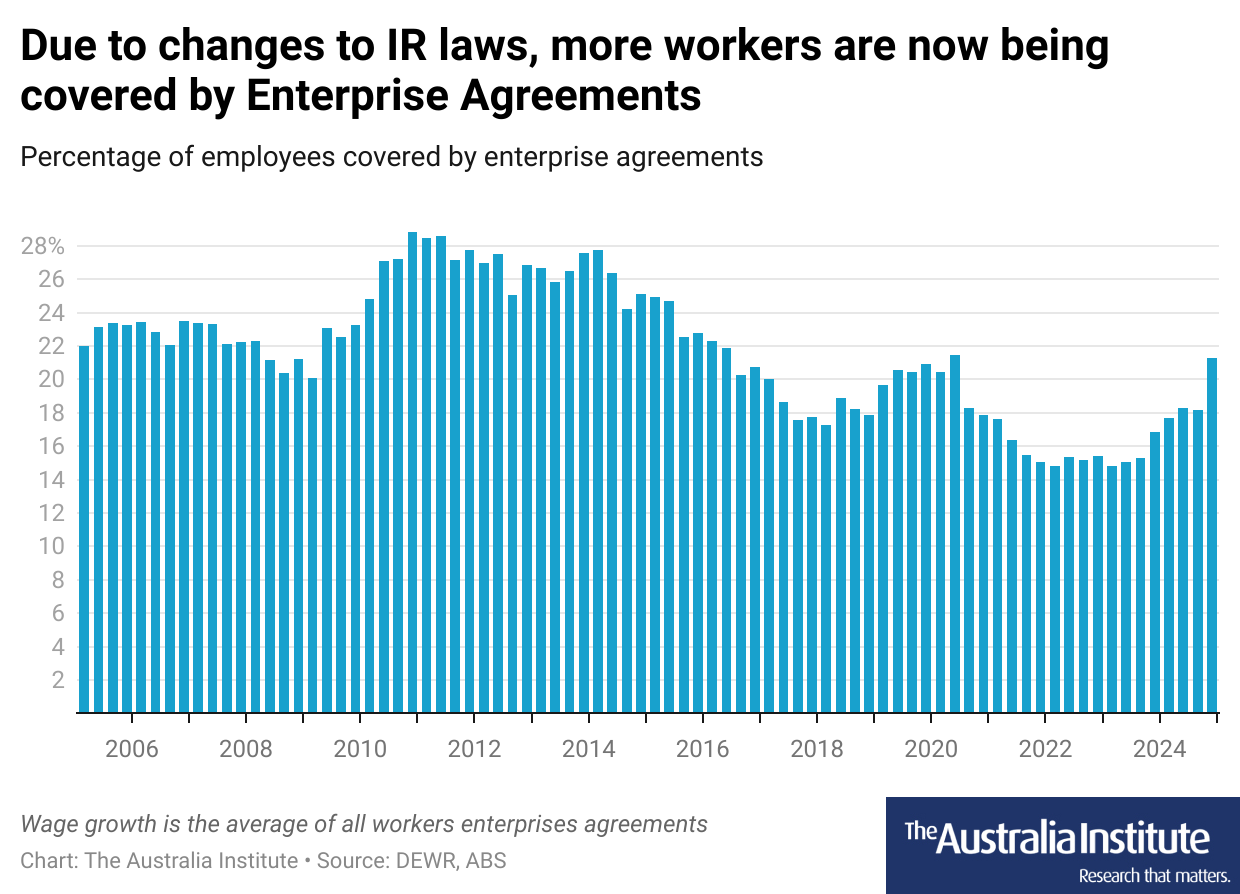
* * * * 262 262 万名 wàn míng 员工 yuán gōng 受 shòu 协议 xié yì 覆盖 fù gài * * * * : : 现有 xiàn yǒu 数据 shù jù 不 bù 支持 zhī chí 262 262 万 wàn 这 zhè 一 yī 具体 jù tǐ 数字 shù zì 。 。 More recent data from the Fair Work Commission indicates that 21.3% of workers were covered by enterprise agreements, described as "the first time more than 20% of workers have been covered by EBAs since June 2020" [3][4].
截至 jié zhì 2024 2024 年 nián 3 3 月 yuè , , 企业 qǐ yè 协议 xié yì 覆盖 fù gài 人数 rén shù 为 wèi 214 214 万 wàn [ [ 3 3 ] ] 。 。 The 2.62 million figure cannot be verified from official sources.
公平 gōng píng 工作 gōng zuò 委员会 wěi yuán huì 的 de 最新 zuì xīn 数据 shù jù 显示 xiǎn shì , , 21.3% 21.3% 的 de 工人 gōng rén 受 shòu 企业 qǐ yè 协议 xié yì 覆盖 fù gài , , 被 bèi 描述 miáo shù 为 wèi " " 自 zì 2020 2020 年 nián 6 6 月 yuè 以来 yǐ lái 首次 shǒu cì 超过 chāo guò 20% 20% 的 de 工人 gōng rén 受 shòu EBA EBA 覆盖 fù gài " " [ [ 3 3 ] ] [ [ 4 4 ] ] 。 。 Whether this represents the "highest since 2014" also cannot be definitively confirmed.
262 262 万 wàn 这 zhè 一 yī 数字 shù zì 无法 wú fǎ 从 cóng 官方 guān fāng 来源 lái yuán 得到 dé dào 证实 zhèng shí 。 。 March 2024 coverage of 2.14 million is higher than recent years shown in available data (1.74 million in March 2023, 2.03 million in December 2023), but comparison to 2014 levels would require historical data not provided in current sources [3].
这 zhè 是否 shì fǒu 代表 dài biǎo " " 2014 2014 年 nián 以来 yǐ lái 最高 zuì gāo " " 也 yě 无法 wú fǎ 得到 dé dào 确切 què qiè 确认 què rèn 。 。 2024 2024 年 nián 3 3 月 yuè 的 de 214 214 万 wàn 覆盖 fù gài 人数 rén shù 高于 gāo yú 可用 kě yòng 数据 shù jù 中 zhōng 显示 xiǎn shì 的 de 近年 jìn nián 水平 shuǐ píng ( ( 2023 2023 年 nián 3 3 月 yuè 为 wèi 174 174 万 wàn , , 2023 2023 年 nián 12 12 月 yuè 为 wèi 203 203 万 wàn ) ) , , 但 dàn 与 yǔ 2014 2014 年 nián 水平 shuǐ píng 的 de 比较 bǐ jiào 需要 xū yào 当前 dāng qián 来源 lái yuán 未 wèi 提供 tí gōng 的 de 历史数据 lì shǐ shù jù [ [ 3 3 ] ] 。 。 缺失背景
该 gāi 主张 zhǔ zhāng 缺少 quē shǎo 几个 jǐ gè 重要 zhòng yào 的 de 背景 bèi jǐng 要素 yào sù : :
Several important contextual elements are absent from the claim:
1. **Wage measure ambiguity**: The claim doesn't specify whether it refers to the Wage Price Index (the official measure at 3.2-3.8%), Average Weekly Earnings (4.6%), or enterprise agreement wages (4.8% for covered workers) [1][2][3].
1 1 . . * * * * 工资 gōng zī 指标 zhǐ biāo 模糊性 mó hú xìng * * * * : : 该 gāi 主张 zhǔ zhāng 未 wèi 明确 míng què 是 shì 指 zhǐ 工资 gōng zī 价格指数 jià gé zhǐ shù ( ( 官方 guān fāng 指标 zhǐ biāo 为 wèi 3.2 3.2 - - 3.8% 3.8% ) ) 、 、 平均 píng jūn 周 zhōu 收入 shōu rù ( ( 4.6% 4.6% ) ) 还是 hái shì 企业 qǐ yè 协议 xié yì 工资 gōng zī ( ( 受 shòu 覆盖 fù gài 工人 gōng rén 为 wèi 4.8% 4.8% ) ) [ [ 1 1 ] ] [ [ 2 2 ] ] [ [ 3 3 ] ] 。 。 These are substantively different figures, and choosing the highest one misrepresents the typical wage growth experience.
2. **Real vs. nominal wages**: While nominal wages have grown, real wage growth (adjusted for inflation) remains modest at 0.8% [2].
这些 zhè xiē 是 shì 实质 shí zhì 上 shàng 不同 bù tóng 的 de 数字 shù zì , , 选择 xuǎn zé 最高 zuì gāo 的 de 数字 shù zì 歪曲 wāi qū 了 le 典型 diǎn xíng 的 de 工资 gōng zī 增长 zēng zhǎng 体验 tǐ yàn 。 。 This is meaningful but far less impressive than the nominal figure suggests.
3. **Composition effects in Average Weekly Earnings**: The 4.6% Average Weekly Earnings growth includes changes in hours worked and employment composition, not just wage rate increases [2].
2 2 . . * * * * 名义 míng yì 与 yǔ 实际工资 shí jì gōng zī * * * * : : 虽然 suī rán 名义工资 míng yì gōng zī 有所 yǒu suǒ 增长 zēng zhǎng , , 但 dàn 实际工资 shí jì gōng zī 增长 zēng zhǎng ( ( 经 jīng 通胀 tōng zhàng 调整 tiáo zhěng 后 hòu ) ) 仍仅 réng jǐn 为 wèi 0.8% 0.8% [ [ 2 2 ] ] 。 。 Pure wage rate growth (Wage Price Index) is lower at 3.2-3.8% [1].
4. **Unverified 2.62 million figure**: The claim provides a specific number without corroboration.
这 zhè 具有 jù yǒu 意义 yì yì , , 但 dàn 远不如 yuǎn bù rú 名义 míng yì 数字 shù zì 所 suǒ 显示 xiǎn shì 的 de 那么 nà me impressive impressive 。 。 Official data shows 2.14 million as of March 2024 [3].
5. **Enterprise agreement specifics**: Workers covered by enterprise agreements have experienced 4.8% average annual wage growth, which exceeds the general workforce average [3].
3 3 . . * * * * 平均 píng jūn 周 zhōu 收入 shōu rù 中 zhōng 的 de 构成 gòu chéng 效应 xiào yìng * * * * : : 4.6% 4.6% 的 de 平均 píng jūn 周 zhōu 收入 shōu rù 增长 zēng zhǎng 包括 bāo kuò 工作 gōng zuò 时长 shí cháng 和 hé 就业 jiù yè 构成 gòu chéng 的 de 变化 biàn huà , , 而 ér 不仅仅 bù jǐn jǐn 是 shì 工资 gōng zī 率 lǜ 增长 zēng zhǎng [ [ 2 2 ] ] 。 。 However, this represents only a subset of workers, and the claim doesn't clarify this distinction.
6. **International and historical context**: While wage growth has improved from the Coalition years (2.2% average 2013-2022), it remains in the low range historically and internationally [2].
纯 chún 工资 gōng zī 率 lǜ 增长 zēng zhǎng ( ( 工资 gōng zī 价格指数 jià gé zhǐ shù ) ) 较 jiào 低 dī , , 为 wèi 3.2 3.2 - - 3.8% 3.8% [ [ 1 1 ] ] 。 。 The "highest in 15 years" claim for 4% growth is not supported by available data.
7. **Implementation attribution**: The claim doesn't clearly state whether these outcomes result from Labor government policy (Fair Work reforms, enterprise agreement changes) or broader economic factors (wage pressures from low unemployment, composition shifts, demand for workers).
4 4 . . * * * * 未经 wèi jīng 证实 zhèng shí 的 de 262 262 万 wàn 数字 shù zì * * * * : : 该 gāi 主张 zhǔ zhāng 提供 tí gōng 了 le 一个 yí gè 未经 wèi jīng 证实 zhèng shí 的 de 具体 jù tǐ 数字 shù zì 。 。 官方 guān fāng 数据 shù jù 显示 xiǎn shì 截至 jié zhì 2024 2024 年 nián 3 3 月 yuè 为 wèi 214 214 万 wàn [ [ 3 3 ] ] 。 。 5 5 . . * * * * 企业 qǐ yè 协议 xié yì 具体 jù tǐ 细节 xì jié * * * * : : 受 shòu 企业 qǐ yè 协议 xié yì 覆盖 fù gài 的 de 工人 gōng rén 经历 jīng lì 了 le 4.8% 4.8% 的 de 平均 píng jūn 年 nián 工资 gōng zī 增长 zēng zhǎng , , 超过 chāo guò 了 le 普通 pǔ tōng 劳动力 láo dòng lì 平均水平 píng jūn shuǐ píng [ [ 3 3 ] ] 。 。 然而 rán ér , , 这仅 zhè jǐn 代表 dài biǎo 一部分 yī bù fèn 工人 gōng rén , , 该 gāi 主张 zhǔ zhāng 未 wèi 澄清 chéng qīng 这一 zhè yī 区别 qū bié 。 。 6 6 . . * * * * 国际 guó jì 和 hé 历史背景 lì shǐ bèi jǐng * * * * : : 虽然 suī rán 工资 gōng zī 增长 zēng zhǎng 相比 xiāng bǐ Coalition Coalition 时期 shí qī ( ( 2013 2013 - - 2022 2022 年 nián 平均 píng jūn 2.2% 2.2% ) ) 有所改善 yǒu suǒ gǎi shàn , , 但 dàn 在历史上 zài lì shǐ shàng 和 hé 国际 guó jì 上 shàng 仍 réng 处于 chǔ yú 较 jiào 低 dī 范围 fàn wéi [ [ 2 2 ] ] 。 。 4% 4% 增长 zēng zhǎng " " 15 15 年来 nián lái 最高 zuì gāo " " 的 de 主张 zhǔ zhāng 未 wèi 得到 dé dào 可用 kě yòng 数据 shù jù 支持 zhī chí 。 。 7 7 . . * * * * 实施 shí shī 归因 guī yīn * * * * : : 该 gāi 主张 zhǔ zhāng 未 wèi 明确 míng què 说明 shuō míng 这些 zhè xiē 结果 jié guǒ 是 shì 由 yóu 工党 gōng dǎng 政府 zhèng fǔ 政策 zhèng cè ( ( 公平 gōng píng 工作 gōng zuò 改革 gǎi gé 、 、 企业 qǐ yè 协议 xié yì 变更 biàn gēng ) ) 还是 hái shì 更 gèng 广泛 guǎng fàn 的 de 经济 jīng jì 因素 yīn sù ( ( 低 dī 失业率 shī yè lǜ 带来 dài lái 的 de 工资 gōng zī 压力 yā lì 、 、 构成 gòu chéng 转变 zhuǎn biàn 、 、 工人 gōng rén 需求 xū qiú ) ) 所致 suǒ zhì 。 。 💭 批判视角
该 gāi 主张 zhǔ zhāng 通过 tōng guò 选择性 xuǎn zé xìng 使用 shǐ yòng 指标 zhǐ biāo , , 以 yǐ 尽可能 jǐn kě néng 有利 yǒu lì 的 de 角度 jiǎo dù 呈现 chéng xiàn 工资 gōng zī 增长 zēng zhǎng 。 。
The claim presents wage growth in the most favorable light possible through selective use of metrics.
如果 rú guǒ 意图 yì tú 是 shì 描述 miáo shù 4.6% 4.6% 的 de 平均 píng jūn 周 zhōu 收入 shōu rù 增长 zēng zhǎng ( ( 所 suǒ 引用 yǐn yòng 的 de 最高 zuì gāo 数字 shù zì ) ) , , 那 nà 是 shì 真实 zhēn shí 的 de 但 dàn 具有 jù yǒu 误导性 wù dǎo xìng , , 因为 yīn wèi [ [ 2 2 ] ] : : If the intention is to describe the 4.6% Average Weekly Earnings growth (the highest figure cited), that is real but misleading because [2]:
- It includes compositional changes and increased hours worked, not just wage rate improvements [2]
- The true wage rate growth (Wage Price Index) remains 3.2-3.8%, below the claimed 4% [1]
- Real wage growth is only 0.8% when adjusted for inflation [2]
The enterprise agreement coverage claim cannot be verified at the stated 2.62 million level.
- - 它 tā 包括 bāo kuò 构成 gòu chéng 变化 biàn huà 和 hé 增加 zēng jiā 的 de 工作 gōng zuò 时 shí 长 zhǎng , , 而 ér 不仅仅 bù jǐn jǐn 是 shì 工资 gōng zī 率 lǜ 改善 gǎi shàn [ [ 2 2 ] ] Official data shows 2.14 million as of March 2024, with recent data indicating 21.3% coverage—meaningful growth but not at the claimed level [3][4].
- - 真实 zhēn shí 工资 gōng zī 率 lǜ 增长 zēng zhǎng ( ( 工资 gōng zī 价格指数 jià gé zhǐ shù ) ) 仍为 réng wèi 3.2 3.2 - - 3.8% 3.8% , , 低于 dī yú 所 suǒ 声称 shēng chēng 的 de 4% 4% [ [ 1 1 ] ] The Fair Work reforms, including the enhanced enterprise bargaining framework, have contributed to increased enterprise agreement coverage and wage growth for covered workers [3][4].
- - 经 jīng 通胀 tōng zhàng 调整 tiáo zhěng 后 hòu , , 实际工资 shí jì gōng zī 增长 zēng zhǎng 仅为 jǐn wèi 0.8% 0.8% [ [ 2 2 ] ] This represents a genuine policy achievement.
企业 qǐ yè 协议 xié yì 覆盖 fù gài 主张 zhǔ zhāng 无法 wú fǎ 在 zài 所述 suǒ shù 262 262 万 wàn 水平 shuǐ píng 上 shàng 得到 dé dào 证实 zhèng shí 。 。 However:
1.
官方 guān fāng 数据 shù jù 显示 xiǎn shì 截至 jié zhì 2024 2024 年 nián 3 3 月 yuè 为 wèi 214 214 万 wàn , , 最新 zuì xīn 数据 shù jù 显示 xiǎn shì 21.3% 21.3% 的 de 覆盖率 fù gài lǜ — — — — 具有 jù yǒu 意义 yì yì 的 de 增长 zēng zhǎng , , 但 dàn 未 wèi 达到 dá dào 所 suǒ 声称 shēng chēng 的 de 水平 shuǐ píng [ [ 3 3 ] ] [ [ 4 4 ] ] 。 。 The claim overstates the scale of wage growth by using the highest available metric rather than the standard Wage Price Index [1]
2.
公平 gōng píng 工作 gōng zuò 改革 gǎi gé , , 包括 bāo kuò 增强 zēng qiáng 的 de 企业 qǐ yè 谈判 tán pàn 框架 kuāng jià , , 促进 cù jìn 了 le 企业 qǐ yè 协议 xié yì 覆盖范围 fù gài fàn wéi 的 de 增加 zēng jiā 和 hé 受 shòu 覆盖 fù gài 工人 gōng rén 的 de 工资 gōng zī 增长 zēng zhǎng [ [ 3 3 ] ] [ [ 4 4 ] ] 。 。 Real wage growth remains modest despite nominal growth [2]
3.
这 zhè 代表 dài biǎo 了 le 真实 zhēn shí 的 de 政策 zhèng cè 成就 chéng jiù 。 。 The 2.62 million coverage figure appears to be unverified
4.
然而 rán ér : : The claim doesn't distinguish between policy-driven outcomes and broader economic labor market tightness
Workers covered by enterprise agreements have indeed benefited from stronger wage outcomes (4.8% average wage growth), suggesting the Fair Work reforms are having positive effects [3].
1 1 . . 该 gāi 主张 zhǔ zhāng 通过 tōng guò 使用 shǐ yòng 最高 zuì gāo 的 de 可用 kě yòng 指标 zhǐ biāo 而 ér 非 fēi 标准工资 biāo zhǔn gōng zī 价格指数 jià gé zhǐ shù , , 夸大 kuā dà 了 le 工资 gōng zī 增长 zēng zhǎng 的 de 规模 guī mó [ [ 1 1 ] ] However, the overall claim presents selective evidence in a misleading manner.
2 2 . . 尽管 jǐn guǎn 名义 míng yì 增长 zēng zhǎng , , 实际工资 shí jì gōng zī 增长 zēng zhǎng 仍 réng 保持 bǎo chí modest modest [ [ 2 2 ] ] 3 3 . . 262 262 万 wàn 覆盖 fù gài 数字 shù zì 似乎 sì hū 未经 wèi jīng 证实 zhèng shí 4 4 . . 该 gāi 主张 zhǔ zhāng 未 wèi 区分 qū fēn 政策 zhèng cè 驱动 qū dòng 的 de 结果 jié guǒ 与 yǔ 更 gèng 广泛 guǎng fàn 的 de 经济 jīng jì 劳动力 láo dòng lì 市场 shì chǎng 紧张状况 jǐn zhāng zhuàng kuàng 受 shòu 企业 qǐ yè 协议 xié yì 覆盖 fù gài 的 de 工人 gōng rén 确实 què shí 受益 shòu yì 于 yú 更 gèng 强 qiáng 的 de 工资 gōng zī 成果 chéng guǒ ( ( 4.8% 4.8% 的 de 平均工资 píng jūn gōng zī 增长 zēng zhǎng ) ) , , 表明 biǎo míng 公平 gōng píng 工作 gōng zuò 改革 gǎi gé 正在 zhèng zài 产生 chǎn shēng 积极 jī jí 效果 xiào guǒ [ [ 3 3 ] ] 。 。 然而 rán ér , , 整体 zhěng tǐ 主张 zhǔ zhāng 以 yǐ 误导性 wù dǎo xìng 的 de 方式 fāng shì 呈现 chéng xiàn 选择性 xuǎn zé xìng 证据 zhèng jù 。 。 部分属实
4.5
/ 10
发生 fā shēng 了 le 一些 yī xiē 工资 gōng zī 增长 zēng zhǎng , , 且 qiě 高于 gāo yú 历史 lì shǐ 上 shàng Coalition Coalition 政府 zhèng fǔ 的 de 平均水平 píng jūn shuǐ píng 。 。
Some wage growth has occurred and is above historical Coalition government averages.
然而 rán ér , , 该 gāi 主张 zhǔ zhāng 混淆 hùn xiáo 了 le 多项 duō xiàng 工资 gōng zī 指标 zhǐ biāo 以 yǐ 引用 yǐn yòng 最高 zuì gāo 数字 shù zì ( ( 4.6% 4.6% 的 de 平均 píng jūn 周 zhōu 收入 shōu rù ) ) , , 实际工资 shí jì gōng zī 率 lǜ 增长 zēng zhǎng 仍为 réng wèi 3.2 3.2 - - 3.8% 3.8% ( ( 低于 dī yú 4% 4% ) ) , , 实际工资 shí jì gōng zī 增长 zēng zhǎng 仅为 jǐn wèi 0.8% 0.8% , , 且 qiě 262 262 万 wàn 企业 qǐ yè 协议 xié yì 覆盖 fù gài 数字 shù zì 无法 wú fǎ 从 cóng 官方 guān fāng 来源 lái yuán 得到 dé dào 证实 zhèng shí ( ( 可用 kě yòng 数据 shù jù 显示 xiǎn shì 截至 jié zhì 2024 2024 年 nián 3 3 月 yuè 为 wèi 214 214 万 wàn ) ) 。 。 However, the claim conflates multiple wage measures to cite the highest figure (4.6% Average Weekly Earnings), actual wage rate growth remains 3.2-3.8% (below 4%), real wage growth is only 0.8%, and the 2.62 million enterprise agreement coverage figure cannot be verified from official sources (available data shows 2.14 million as of March 2024).
最终评分
4.5
/ 10
部分属实
发生 fā shēng 了 le 一些 yī xiē 工资 gōng zī 增长 zēng zhǎng , , 且 qiě 高于 gāo yú 历史 lì shǐ 上 shàng Coalition Coalition 政府 zhèng fǔ 的 de 平均水平 píng jūn shuǐ píng 。 。
Some wage growth has occurred and is above historical Coalition government averages.
然而 rán ér , , 该 gāi 主张 zhǔ zhāng 混淆 hùn xiáo 了 le 多项 duō xiàng 工资 gōng zī 指标 zhǐ biāo 以 yǐ 引用 yǐn yòng 最高 zuì gāo 数字 shù zì ( ( 4.6% 4.6% 的 de 平均 píng jūn 周 zhōu 收入 shōu rù ) ) , , 实际工资 shí jì gōng zī 率 lǜ 增长 zēng zhǎng 仍为 réng wèi 3.2 3.2 - - 3.8% 3.8% ( ( 低于 dī yú 4% 4% ) ) , , 实际工资 shí jì gōng zī 增长 zēng zhǎng 仅为 jǐn wèi 0.8% 0.8% , , 且 qiě 262 262 万 wàn 企业 qǐ yè 协议 xié yì 覆盖 fù gài 数字 shù zì 无法 wú fǎ 从 cóng 官方 guān fāng 来源 lái yuán 得到 dé dào 证实 zhèng shí ( ( 可用 kě yòng 数据 shù jù 显示 xiǎn shì 截至 jié zhì 2024 2024 年 nián 3 3 月 yuè 为 wèi 214 214 万 wàn ) ) 。 。 However, the claim conflates multiple wage measures to cite the highest figure (4.6% Average Weekly Earnings), actual wage rate growth remains 3.2-3.8% (below 4%), real wage growth is only 0.8%, and the 2.62 million enterprise agreement coverage figure cannot be verified from official sources (available data shows 2.14 million as of March 2024).
📚 来源与引用 (5)
-
1
Wage Price Index, Australia, September 2025
The WPI measures changes in the price of labour, unaffected by compositional shifts in the labour force, hours worked or employee characteristics
Australian Bureau of Statistics -
2
Average Weekly Earnings, Australia, November 2024
Estimates of weekly earnings classified by industry, sector, state and territory
Australian Bureau of Statistics -
3
Trends in Federal Enterprise Bargaining - March quarter 2024
Dewr Gov
-
4
Increased enterprise agreements and wages show the government's IR policy is working
The changes to industrial relations show that bold policy delivers good outcomes.
The Australia Institute -
5
Developments in Wages Growth Across Pay-setting Methods
The dynamics of wages growth can differ across pay-setting methods.
Reserve Bank of Australia
评分方法
1-3: 不实
事实错误或恶意捏造。
4-6: 部分属实
有一定真实性,但缺乏背景或有所偏颇。
7-9: 基本属实
仅有微小的技术性或措辞问题。
10: 准确
完全经过验证且客观公正。
方法论: 评分通过交叉参照政府官方记录、独立事实核查机构和原始文件确定。