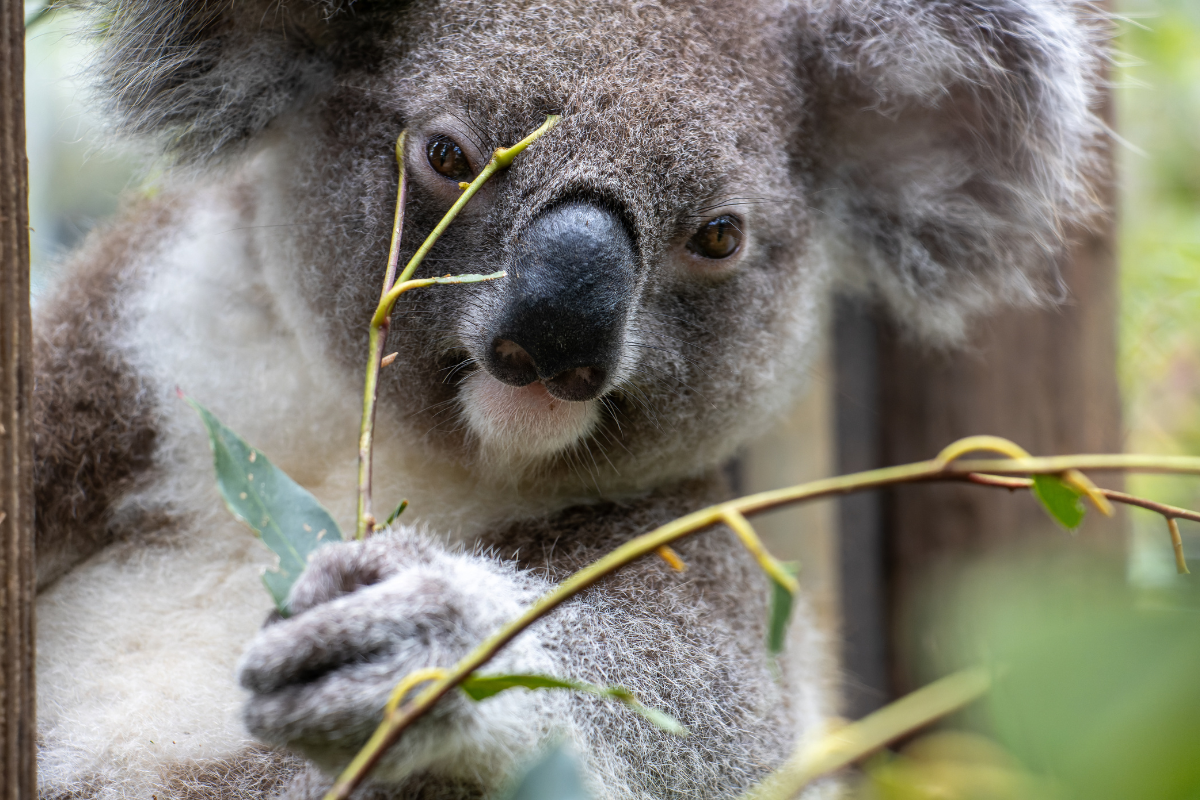
According to the Department of Climate Change, Energy, Environment and Water (DCCEEW), the Saving Koalas Fund provides "more than $76 million over 4 years to support the recovery and long-term conservation of the koala and its habitats" [1].
Additionally, the $19 million allocated for wildlife hospital service upgrades, expanded services, and vaccine research is a confirmed component of the fund [3].
The government reports these are outcomes of 59 community-led projects supported by the fund, but provides limited detail on completion timelines or restoration methodology.
While the government claims 5,000 hectares of koala habitat have been restored through this program, the federal government has simultaneously approved the clearing of approximately 25,000 hectares of koala habitat over the past decade [4].
Most significantly, in 2024 alone—well into the Saving Koalas Fund's implementation period—the federal government approved the destruction of 3,003 hectares of koala habitat [5].
The Australian Conservation Foundation's analysis reveals that koala habitat has been "the biggest loser" among all threatened species' habitats in federal land-clearing approvals, with almost half of the approved clearing related to an inland rail project in NSW [6].
This means the government is simultaneously investing $76 million to restore koala habitat while approving development projects that destroy habitat at a rate far exceeding restoration efforts.
**Population Status Not Improving**
The claim frames the fund as an achievement, but obscures the fact that koala populations remain listed as "Endangered" across Queensland, NSW, and the ACT under the Environment Protection and Biodiversity Conservation Act [7].
This indicates the fund has not reversed the fundamental decline in koala numbers despite its implementation.
**Implementation Timeline Vagueness**
The government's communication creates an impression of completed work ("5,000 hectares restored, 250,000 trees planted") but provides no clear timeline for when these outcomes were achieved.
The Saving Koalas Fund Community Grants Round 2 runs from 2023-24 to 2024-25 [9], meaning the majority of funded projects are still in early stages of implementation.
The term "restored" is not defined—whether this refers to ongoing projects or completed work remains unclear.
**Funding Allocation Breakdown Hidden**
The claim presents $76 million as monolithic support for habitat restoration, but the actual allocation is: $10 million for community-led habitat projects [10], $19 million for wildlife health and research [3], and unspecified amounts for monitoring and other activities.
* * * * 实施 shí shī 时间表 shí jiān biǎo 模糊 mó hú * * * *
This means only approximately 13% of the fund ($10 million) directly funds habitat restoration—the remaining funding goes to health services, research, and administration.
Even the 250,000 trees planted must be contextualized: the Koala Habitat Restoration Partnership Program has planted 245,000 trees over 150 hectares of cleared land since 2019 [11], demonstrating how tree planting alone is insufficient without addressing the broader habitat loss drivers.
One analysis concludes that "until koala habitat is protected, conservation efforts – largely funded by the taxpayer – will continue to be undermined" [12].
**Historical Comparison: Labor vs Coalition Spending**
The $76 million Labor commitment represents an increase over the Coalition government's $50 million koala conservation package announced earlier [13].
The research suggests that spending on conservation alone cannot compensate for habitat destruction approval in federal land-clearing assessments.
**Expert Assessment of Sufficiency**
Multiple sources indicate this spending is insufficient to reverse koala decline.
The National Koala Monitoring Program found that despite $76 million in investment and 335 sites surveyed under the monitoring program, "populations of the endemic and iconic koala continue to decline across much of their native Australian range" [3].
While framed as a pro-koala achievement, the simultaneous approval of habitat clearing at three times the restoration rate indicates structural policy conflict: environmental approval mechanisms permit habitat destruction at a pace that outstrips conservation investments.
**Outcome vs.
Promise Distinction**
The claim presents 5,000 hectares as completed work, but the government's own grant timelines (extending to 2024-25) indicate most projects are still underway.
The fund's accomplishment is modest: approximately 0.02% of Australia's total land area (5,000 hectares), directed at a species officially recognized as endangered with no population recovery yet evident.
The $76 million, 250,000 trees, and 5,000 hectares figures are factually accurate as stated by government sources, but the claim is highly misleading in presenting these numbers without context.
它 tā 将 jiāng 栖息地 qī xī dì 恢复 huī fù 描述 miáo shù 为 wèi 一项 yī xiàng 积极 jī jí 成就 chéng jiù , , 而 ér 忽略 hū lüè 了 le 联邦政府 lián bāng zhèng fǔ 同时 tóng shí 以远超 yǐ yuǎn chāo 恢复 huī fù 努力 nǔ lì 的 de 速度 sù dù 批准 pī zhǔn 栖息地 qī xī dì 破坏 pò huài 。 。
It frames habitat restoration as a positive achievement while omitting that the federal government is simultaneously approving habitat destruction at rates far exceeding restoration efforts.
The $76 million, 250,000 trees, and 5,000 hectares figures are factually accurate as stated by government sources, but the claim is highly misleading in presenting these numbers without context.
它 tā 将 jiāng 栖息地 qī xī dì 恢复 huī fù 描述 miáo shù 为 wèi 一项 yī xiàng 积极 jī jí 成就 chéng jiù , , 而 ér 忽略 hū lüè 了 le 联邦政府 lián bāng zhèng fǔ 同时 tóng shí 以远超 yǐ yuǎn chāo 恢复 huī fù 努力 nǔ lì 的 de 速度 sù dù 批准 pī zhǔn 栖息地 qī xī dì 破坏 pò huài 。 。
It frames habitat restoration as a positive achievement while omitting that the federal government is simultaneously approving habitat destruction at rates far exceeding restoration efforts.