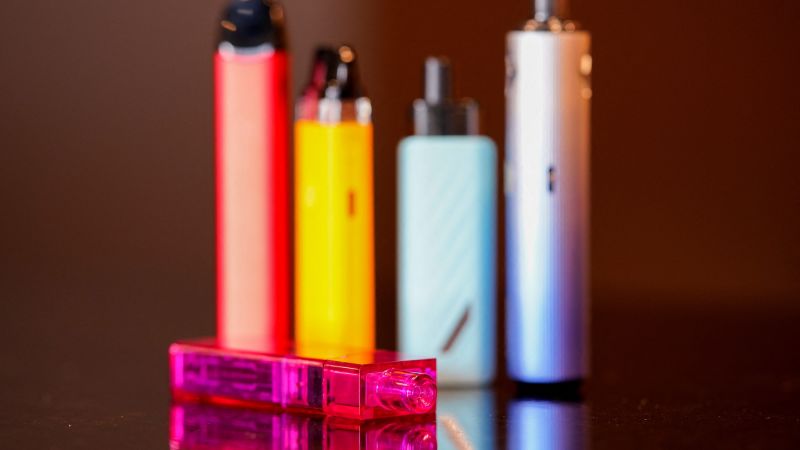
Australia implemented some of the world's toughest anti-vaping regulations, with key stages including: disposable vape importation prohibited from January 1, 2024; retail sales restricted to pharmacies from July 1, 2024; and therapeutic goods approval required for all vaping products [4, 5].
Despite 6.6 million vapes worth over $200 million seized at borders, illegal retailers continue to operate and supply vapes easily accessible to consumers, including young people [2].
Millions of seizures may represent enforcement effort but not necessarily enforcement success if the black market remains well-supplied.
**2. "World-First" Claim Requires Context**
While Australia's laws are among the world's strictest, the "world-first" claim can be misleading.
Other countries have implemented strong restrictions: Mexico banned disposable vapes in 2024; New Zealand implemented prescription-only vaping; Canada has strict regulations; various countries restrict nicotine content and flavors [6].
This framing inflates the policy's uniqueness.
**3.
其他 qí tā 国家 guó jiā 也 yě 实施 shí shī 了 le 严格 yán gé 限制 xiàn zhì : : 墨西哥 mò xī gē 于 yú 2024 2024 年 nián 禁止 jìn zhǐ 一次性 yí cì xìng 电子 diàn zi 烟 yān ; ; 新西兰 xīn xī lán 实施 shí shī 仅限 jǐn xiàn 处方 chǔ fāng 的 de 电子 diàn zi 烟 yān 政策 zhèng cè ; ; 加拿大 jiā ná dà 有 yǒu 严格 yán gé 规定 guī dìng ; ; 各国 gè guó 限制 xiàn zhì 尼古丁 ní gǔ dīng 含量 hán liàng 和 hé 口味 kǒu wèi [ [ 6 6 ] ] 。 。
The Real Success Metric Is Youth Vaping Rates—Mixed Results**
The claim focuses on seizures rather than the actual policy objective: reducing youth vaping.
Government data shows progress but with important caveats:
- Vaping rates among 15-29 year-olds reduced by around a third from 2023 to 2024 [3]
- Youth vaping rates fell from 17.5% (early 2023) to 14.6% (April 2025) [7]
- The proportion of teens aged 14-17 who have never vaped increased in 2024 compared to 2023 [8]
However, this must be contextualized: youth vaping rates had nearly tripled from 2019 (9.6%) to 2023 (28%), so returning to 14.6% still represents a doubling from pre-2020 levels [8, 9].
Early Policy Implementation May Influence Results**
The decline in youth vaping rates coincides with law implementation, but the government itself acknowledges timing uncertainty.
Health Minister Mark Butler stated in December 2024: "It is really early days" to assess whether seizures and enforcement are driving behavioral change or whether other factors (social trends, media campaigns, delayed effects) are involved [10].
**5.
Enforcement Remains Challenging and Resource-Intensive**
The government committed an additional $107 million specifically for regulation and enforcement of vaping laws, indicating the scope of resources required to address the issue [11].
Despite this investment and the seizures reported, NSW Health data showed only 55,000 vapes seized in Q1 2025 at retail venues, a much lower number than border seizures, suggesting compliance enforcement at retail is lagging [4].
**6.
Pharmacy-Only Sales Model May Exclude Legitimate Users**
While restricting vaping to pharmacies with therapeutic goods approval is protective of youth, it has created barriers for adult smokers attempting to use vaping as smoking cessation tools.
The seizure of millions of vaping products demonstrates genuine enforcement effort and commitment to the stated policy objective of reducing vaping access.
Most importantly, the claim inflates the causal connection between seizures and behavior change without acknowledging the complexity of measuring policy effectiveness when multiple factors (media campaigns, social trends, delayed effects, enforcement intensity) may influence youth vaping decisions.
However, the claim misleadingly presents seizures as evidence of policy success without acknowledging that the black market has surged despite enforcement.
However, the claim misleadingly presents seizures as evidence of policy success without acknowledging that the black market has surged despite enforcement.