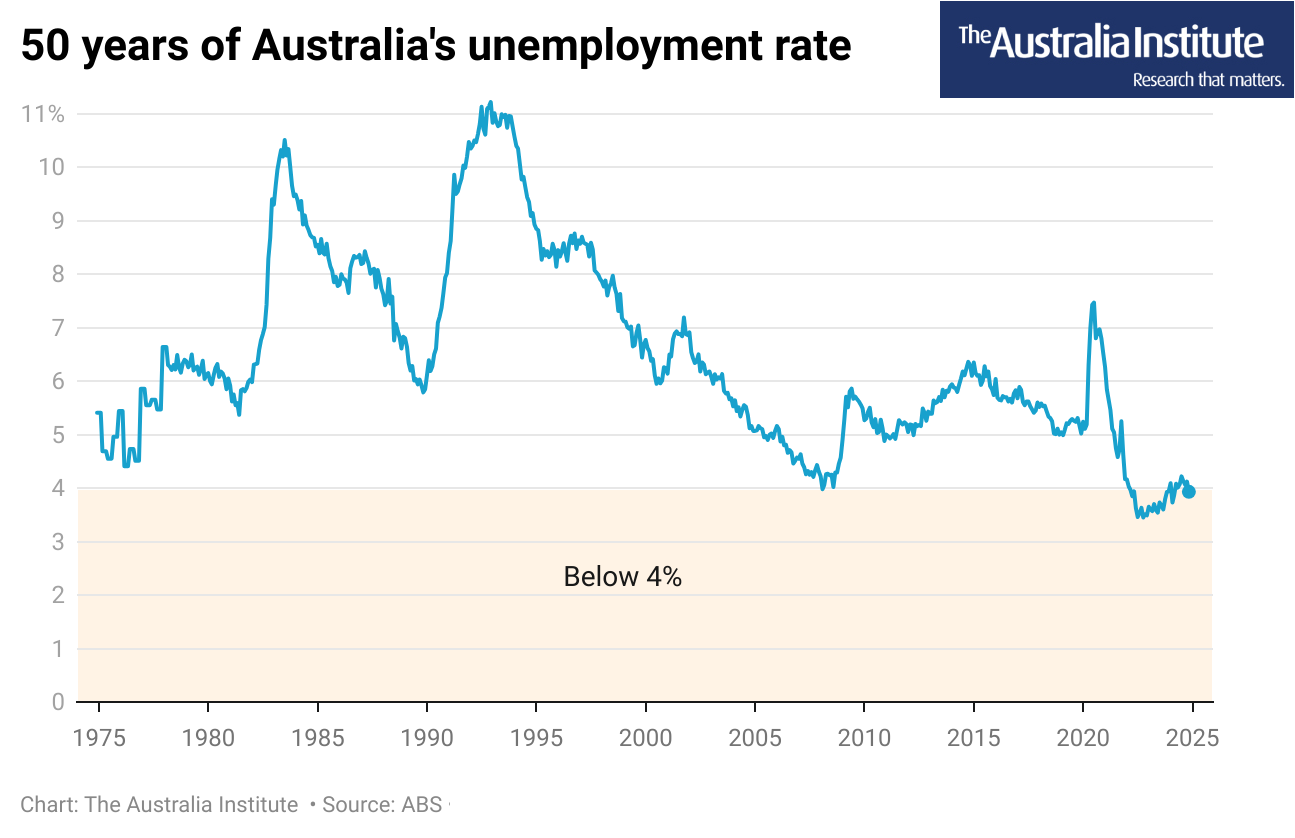
The claim that 4.3% is "one of lowest rates in 50 years" is technically true—it is lower than pre-2022 unemployment for much of the period, with rates below 4% being rare historically [5].
然而 rán ér , , 这种 zhè zhǒng 表述 biǎo shù 掩盖 yǎn gài 了 le 一个 yí gè 关键 guān jiàn 事实 shì shí : : 失业率 shī yè lǜ 在 zài 工党 gōng dǎng 执政 zhí zhèng 期间 qī jiān 实际上 shí jì shàng * * 恶化 è huà * * 了 le 。 。
However, the framing obscures the critical fact that unemployment has *worsened* under Labor's tenure.
Unemployment Rose Under Labor**
The most important missing context is that when Labor took office in May 2022, unemployment was at a 50-year low of 3.5%.
Labor Inherited the Strong Job Market**
The 3.5% unemployment rate in mid-2022 was the result of the previous Coalition government's policies and the post-COVID labor market tightness.
Underemployment at 12-Month Highs**
While headline unemployment remained at 4.3% in November 2025, underemployment rose to 12-month highs according to ABC News reporting [6].
While this appears positive, much of this was driven by women entering the workforce (participation rising 3.1 percentage points for women age 25-54) [9].
This increase in labor supply competing for jobs, combined with population growth from high migration, likely explains why unemployment rose despite "1.2 million jobs created"—the jobs barely kept pace with new entrants to the labor force.
**6.
Population Growth Masking Real Labor Demand**
Australia's unemployment rise must be understood in context of the highest net migration in the country's history during Labor's term.
This is not an achievement—it's deterioration from an already exceptional starting position.
2. **Headline vs Reality**: The 4.3% headline unemployment rate masks rising underemployment at 12-month highs [6].
这 zhè 绝非 jué fēi 成就 chéng jiù , , 而是 ér shì 从本 cóng běn 已 yǐ 卓越 zhuó yuè 的 de 起点 qǐ diǎn 上 shàng 的 de 恶化 è huà 。 。
Workers are getting *less* hours, not more—underemployment tells this story.
4. **Supply vs Demand**: Population growth and record migration meant the labor market had to create jobs just to keep unemployment from rising *further*.
The 1.2 million jobs created must be understood as barely matching supply growth.
5. **Historical Comparison Dishonesty**: Saying "one of the lowest in 50 years" when unemployment *rose* during your term from the actual 50-year low is misleading.