Bahagyang Totoo

Rating: 6.0/10

Coalition
C0978

Ang Claim

“Pinutol ang $3 bilyon sa welfare para sa mga estudyante, matatanda at pamilya.”
Orihinal na Pinagmulan: Matthew Davis
Sinuri: 3 Feb 2026

Orihinal na Pinagmulan

FACTUAL NA BERIPIKASYON

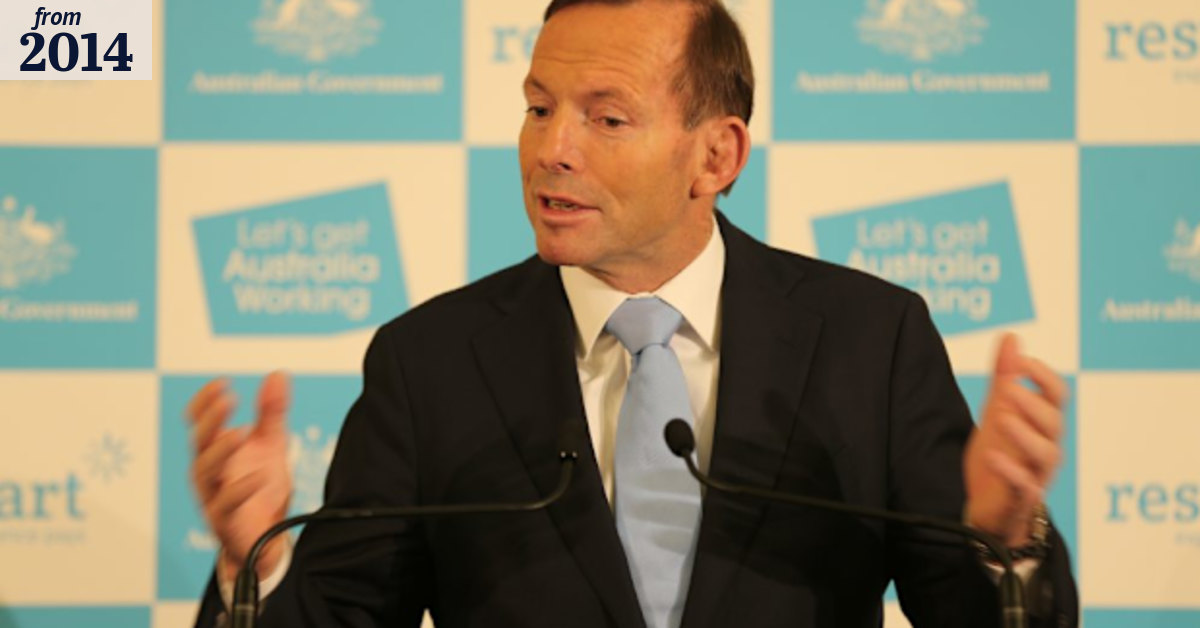
Ang claim ay tumutukoy sa mga pagbabago sa welfare na inanunsyo sa unang budget ng pamahalaang Abbott na inihain noong Mayo 13, 2014 [1].
The claim refers to welfare changes announced in the Abbott government's first budget delivered on 13 May 2014 [1].
Ang budget ng 2014 ay ang unang inihain ng pamahalaang Abbott pagkatapos ng tagumpay ng Koalisyon sa halalan pampederal ng Australia noong 2013 [2].
The 2014 budget was the first delivered by the Abbott government following the Coalition's victory in the 2013 Australian federal election [2].
Ang budget ay nagtatampok ng mga makabuluhang pagbabago sa welfare, kabilang ang: **Mga Bayad sa Pamilya:** - Ang income threshold ng Family Tax Benefit Part B ay binaba sa $100,000 [3] - Ang mga rate ng Family Tax Benefit ay pinatigil sa loob ng dalawang taon [3] - Ang mga pamilya ay hindi na kwalipikado para sa Family Tax Benefit Part B kapag ang kanilang pinakabatang anak ay tumuntong ng anim na taong gulang [3] - Ang Schoolkids Bonus ay inalis [2] **Mga Pagbabago sa Pensyon:** - Mula Setyembre 2017, ang mga pagtaas ng pensyon ay ikakabit sa inflation sa halip na sa male average earnings [2] - Ang mga asset at income test thresholds ay i-index hanggang 2017, pagkatapos ay mananatiling fixed sa loob ng tatlong taon [3] - Ang edad ng pensyon ay unti-unting tataas hanggang 70 sa pamamagitan ng 2035 (nagpapatuloy sa nakaraang pagtaas ng Labor hanggang 67 sa pamamagitan ng 2023) [2][3] - Ang taunang Seniors Supplement ay inalis simula Hulyo 1, 2014 [2] **Welfare para sa Kabataan at Estudyante:** - Ang Newstart Allowance ay hindi na magagamit ng mga taong wala pang 25 taong gulang [2] - Ang mga walang trabahong tao na wala pang 30 taong gulang ay kailangang maghintay ng anim na buwan bago makatanggap ng unemployment benefits [2][3] - Ang First Home Saver Accounts scheme ay inalis, na nagtitipid ng $134.3 milyon [2] - Ang pondo para sa higher education ay pinutol ng $4.7 bilyon sa loob ng apat na taon [2] - Ang mga HECS repayment thresholds ay binaba at ang mga interest rate ay binago [2] Bagama't ang partikular na "$3 bilyon" na figure ay mahirap i-verify mula sa mga primary source, ang mga budget papers ay nagpapahiwatig ng kabuuang budget repair efforts na $36 bilyon sa loob ng limang taon, kung saan ang higit sa tatlong-kapat ay nanggaling sa spending cuts [2][4].
The budget featured significant changes to welfare, including: **Family Payments:** - Family Tax Benefit Part B income threshold reduced to $100,000 [3] - Family Tax Benefit rates frozen for two years [3] - Families cease being eligible for Family Tax Benefit Part B when their youngest child turns six [3] - The Schoolkids Bonus was abolished [2] **Pension Changes:** - From September 2017, pension increases would be linked to inflation rather than male average earnings [2] - Asset and income test thresholds would be indexed until 2017, then remain fixed for three years [3] - The pension age would gradually increase to 70 by 2035 (building on Labor's previous increase to 67 by 2023) [2][3] - The annual Seniors Supplement was abolished from 1 July 2014 [2] **Youth and Student Welfare:** - Newstart Allowance would not be available to people under 25 [2] - Unemployed people under 30 would have to wait six months before receiving unemployment benefits [2][3] - The First Home Saver Accounts scheme was abolished, saving $134.3 million [2] - Higher education funding was cut by $4.7 billion over four years [2] - HECS repayment thresholds lowered and interest rates changed [2] While the specific "$3 billion" figure is difficult to verify from primary sources, the budget papers indicate total budget repair efforts of $36 billion over five years, with more than three-quarters coming from spending cuts [2][4].
Ang mga pagbabago sa welfare ay isang makabuluhang bahagi ng mga savings na ito.
Welfare changes were a significant component of these savings.

Nawawalang Konteksto

Ang claim ay hindi naglalaman ng ilang mahahalagang kontekstwal na salik: **Konteksto ng Budget:** Ang pamahalaan ay nagmana ng projected deficit na $49.9 bilyon para sa 2013-14 at gross debt na inaasahang aabot sa $667 bilyon [3].
The claim omits several important contextual factors: **Budget Context:** The government inherited a projected deficit of $49.9 billion for 2013-14 and gross debt projected to reach $667 billion [3].
Ang mga budget measures ay inihain bilang kinakailangan upang tugunan ang tinukoy ng pamahalaan bilang structural budget problem [3]. **Ang Kontrobersya sa "Budget Emergency":** Ang paglalarawan ng pamahalaan sa isang "budget emergency" ay pinagtatalunan ng 63 nangungunang ekonomista na pumirma sa "Economists' Statement on Commonwealth Budgetary and Economic Priorities" noong Setyembre 2014 [5][6].
The budget measures were framed as necessary to address what the government described as a structural budget problem [3]. **The "Budget Emergency" Controversy:** The government's characterisation of a "budget emergency" was disputed by 63 leading economists who signed the "Economists' Statement on Commonwealth Budgetary and Economic Priorities" in September 2014 [5][6].
Sinabi ng mga ekonomista na "ang utang at deficit ng Australia ay mas malapit sa trivial kaysa sa mapanganib" kung ikukumpara sa ibang OECD countries [5]. **Komparatibong Posisyong Pang-ekonomiya:** Ang net public debt ng Australia sa humigit-kumulang 15% ng GDP ay makabuluhang mas mababa kaysa sa maraming katulad na bansa.
The economists argued that "Australia's debt and deficit is closer to trivial than dangerous" when compared to other OECD countries [5]. **Comparative Economic Position:** Australia's net public debt at approximately 15% of GDP was significantly lower than many comparable nations.
Tulad ng tinalala ni ekonomistang si Saul Eslake, ang Britain ay nakaharap sa deficit na 10% ng GDP at net public debt na lumampas sa 60% ng GDP noong 2010 - upang gamitin ang katulad na "crisis" na terminolohiya sa posisyon ng Australia ay "abusuhin ang wikang Ingles" [6]. **Ang Ilan sa mga Higher Income Earners ay Naapektuhan Din:** Ang budget ay nagpakilala ng 2% na "Temporary Budget Repair Levy" sa mga indibidwal na kumikita ng higit sa $180,000, na inaasahang magtataas ng $3.1 bilyon sa loob ng apat na taon [2][3].
As economist Saul Eslake noted, Britain faced a deficit of 10% of GDP and net public debt exceeding 60% of GDP in 2010 - to apply similar "crisis" terminology to Australia's position was "to abuse the English language" [6]. **Some Higher Income Earners Also Affected:** The budget introduced a 2% "Temporary Budget Repair Levy" on individuals earning over $180,000, expected to raise $3.1 billion over four years [2][3].
Ito ay kumakatawan sa kontribusyon mula sa mga may mas mataas na kita, bagama't ang claim ay nakatuon lamang sa mga pagputol na nakakaapekto sa mga estudyante, matatanda at pamilya.
This represented a contribution from higher-income Australians, though the claim focuses only on cuts affecting students, elderly and families.

Pagsusuri ng Kredibilidad ng Pinagmulan

**The Courier-Mail (News Corp Australia):** Ang unang source ay mula sa The Courier-Mail, isang mainstream Australian newspaper na pag-aari ng News Corp Australia.
**The Courier-Mail (News Corp Australia):** The first source is from The Courier-Mail, a mainstream Australian newspaper owned by News Corp Australia.
Bagama't pangkalahatang maaasahan para sa factual reporting, ang mga publikasyon ng News Corp ay inilarawan bilang may centre-right na editorial stance.
While generally reliable for factual reporting, News Corp publications have been described as having a centre-right editorial stance.
Ang partikular na artikulo na tinukoy (mula 2014) ay kailangang i-verify para sa accuracy ng reporting. **The Guardian Australia:** Ang pangalawang source ay The Guardian Australia, na may centre-left na editorial stance.
The specific article referenced (from 2014) would need to be verified for its reporting accuracy. **The Guardian Australia:** The second source is The Guardian Australia, which has a centre-left editorial stance.
Ang artikulo ay tumutukoy sa pahayag ng mga ekonomista na pinagtatalunan ang "budget emergency" na narrative.
The article references the economists' statement disputing the "budget emergency" narrative.
Ang The Guardian ay pangkalahatang itinuturing bilang isang reputable na news source, bagama't tulad ng lahat ng sources, dapat na i-cross-reference.
The Guardian is generally regarded as a reputable news source, though like all sources, should be cross-referenced.
Ang parehong sources ay tila mainstream media outlets sa halip na partisan advocacy organisations, bagama't dapat na maging aware ang mga mambabasa sa kanilang mga kaukulang editorial leanings.
Both sources appear to be mainstream media outlets rather than partisan advocacy organisations, though readers should be aware of their respective editorial leanings.
⚖️

Paghahambing sa Labor

**Ginawa ba ng Labor ang katulad na bagay?** Ang mga pamahalaang Rudd/Gillard Labor (2007-2013) ay nagpatupad din ng mga makabuluhang pagbabago at pagputol sa welfare: 1. **Mga Pagputol sa Welfare para sa Single Parent (2013):** Ang pamahalaang Gillard ay inilipat ang humigit-kumulang 80,000 single parents mula sa Parenting Payment Single patungo sa mas mababang Newstart Allowance, na nagtitipid ng tinatayang $728 milyon sa loob ng apat na taon [7].
**Did Labor do something similar?** The Rudd/Gillard Labor governments (2007-2013) also implemented significant welfare changes and cuts: 1. **Single Parent Welfare Cuts (2013):** The Gillard government moved approximately 80,000 single parents from the Parenting Payment Single onto the lower Newstart Allowance, saving an estimated $728 million over four years [7].
Ito ay nakakaapekto sa mga single parent kapag ang kanilang pinakabatang anak ay tumuntong ng walong taong gulang. 2. **Mga Pagputol sa Pondong Pang-unibersidad:** Ang pamahalaang Gillard ay pinutol ang $2.3 bilyon mula sa mga unibersidad noong 2013 upang pondohan ang Gonski school reforms [7]. 3. **Mga Pagbabago sa Aged Pension:** Ang pamahalaang Gillard ay itinaas ang edad ng pensyon mula 65 patungo 67, na unti-unting ipapatupad sa pagitan ng 2017 at 2023 [8].
This affected single parents when their youngest child turned eight. 2. **University Funding Cuts:** The Gillard government cut $2.3 billion from universities in 2013 to fund the Gonski school reforms [7]. 3. **Aged Pension Changes:** The Gillard government increased the pension age from 65 to 67, to be phased in between 2017 and 2023 [8].
Ang pamahalaang Abbott ay nagpatuloy dito sa pamamagitan ng pagpapalawig ng pagtaas hanggang edad 70 sa pamamagitan ng 2035. 4. **Welfare Payment Indexation:** Ang pamahalaang Gillard ay pinatigil ang ilang welfare payment indexation sa panahon ng 2012-13 budget upang makatipid ng $1 bilyon [9]. 5. **Historical Pattern:** Ang parehong pangunahing partido ay nagpatupad ng mga pagputol sa welfare kapag nasa pamahalaan.
The Abbott government built on this by extending the increase to age 70 by 2035. 4. **Welfare Payment Indexation:** The Gillard government froze some welfare payment indexation during the 2012-13 budget to save $1 billion [9]. 5. **Historical Pattern:** Both major parties have implemented welfare cuts when in government.
Ang pamahalaang Howard (1996-2007) ay gumawa din ng mga makabuluhang pagbabago sa eligibility at mga bayad sa welfare. **Pangunahing Pagkakaiba:** Ang sukat at saklaw ng mga pagbabago sa welfare sa budget ng 2014 ay mas malawak kaysa sa karamihan sa mga nakaraang pagbabago, at ito ay dumating pagkatapos ng mga eksplisitong pangakong pre-election na "walang sinuman ang pensyon o benepisyo sa loob ng dalawang linggo ang bababa" [1].
The Howard government (1996-2007) also made significant changes to welfare eligibility and payments. **Key Difference:** The scale and scope of the 2014 budget welfare changes were more extensive than most previous changes, and they came after explicit pre-election promises that "no-one's fortnightly pension or benefit will go down" [1].
🌐

Balanseng Pananaw

Ang mga pagbabago sa welfare sa budget ng 2014 ay dapat na tingnan sa konteksto ng parehong ang mga inihain na layunin ng pamahalaan at ang kanilang aktwal na epekto: **Paliwanag ng Pamahalaan:** - Ang pamahalaan ay nagsabing ang mga pagbabago ay kinakailangan upang gawing "sustainable at affordable" ang sistema ng welfare sa loob ng mga dekada [3] - Itinuro nila ang minanang deficits na $123 bilyon at utang na tataas sa $667 bilyon [3] - Nagdeklara si Treasurer Joe Hockey na "tapos na ang panahon ng entitlement" [2] - Ang pamahalaan ay nagsabing kung walang pagbabago, ang budget ay mananatiling deficit sa loob ng hindi bababa sa isang dekada [3] **Mga Puna at Pag-aalala:** - Ang Treasury analysis ay nagpapahiwatig na ang budget ay hindi proporsyonal na tatama sa mga low-income households kumpara sa mga mayaman [2] - Ang Australian Council of Social Service (ACOSS) ay nagbabala na ang mga pagputol ay maaaring "wasakin ang social safety net" [2] - Ang budget ay lumabag sa maraming pangakong pre-election kabilang ang "walang pagbabago sa mga pensyon" [1][2] - Ang "anim na buwang paghihintay" para sa Newstart ay malawakang pinuna bilang hindi patas sa mga kabataang walang trabaho **Komparatibong Konteksto:** Bagama't ang mga pagputol sa welfare noong 2014 ay makabuluhan, ito ay sumunod sa isang pattern kung saan ang parehong pangunahing partido sa Australia ay nagpatupad ng mga pagputol sa welfare kapag nasa pamahalaan.
The 2014 budget welfare changes must be viewed in the context of both the government's stated objectives and their actual impact: **Government Justification:** - The government argued the changes were necessary to make the welfare system "sustainable and affordable for decades to come" [3] - They pointed to inherited deficits of $123 billion and debt rising to $667 billion [3] - Treasurer Joe Hockey declared "the age of entitlement is over" [2] - The government argued that without change, the budget would remain in deficit for at least a decade [3] **Criticisms and Concerns:** - Treasury analysis indicated the budget would disproportionately hit low-income households compared to wealthier ones [2] - The Australian Council of Social Service (ACOSS) warned the cuts could "destroy the social safety net" [2] - The budget broke multiple pre-election promises including "no change to pensions" [1][2] - The "six-month wait" for Newstart was widely criticised as unfair to young unemployed people **Comparative Context:** While the 2014 welfare cuts were significant, they followed a pattern where both major Australian parties have implemented welfare cuts when in government.
Ang mga pagputol sa single parent payment ng pamahalaang Gillard ay inilarawan ng mga tagapagtaguyod ng welfare bilang "ang pinakamasamang pagputol sa isang henerasyon" noong panahong iyon [7].
The Gillard government's single parent payment cuts were described by welfare advocates as "the worst cut in a generation" at the time [7].
Ang pagkakaiba sa budget ng 2014 ay ang konsentrasyon ng mga pagputol sa isang solong package at ang pagkakaiba sa mga eksplisitong pre-election commitments.
The difference with the 2014 budget was the concentration of cuts in a single package and the contrast with explicit pre-election commitments.
Ang pahayag ng mga ekonomista ay nagmumungkahi na bagama't ang budget repair ay isang lehitimong layunin ng patakaran, ang "emergency" na framing na ginamit upang bigyang-katwiran ang mga pagputol ay overstated sa konteksto ng relatibong malakas na posisyong pang-ekonomiya ng Australia kumpara sa ibang developed nations [5][6].
The economists' statement suggests that while budget repair was a legitimate policy goal, the "emergency" framing used to justify the cuts was overstated given Australia's relatively strong economic position compared to other developed nations [5][6].

BAHAGYANG TOTOO

6.0

sa 10

Ang claim na ang pamahalaang Koalisyon ay "pinutol ang $3 bilyon sa welfare para sa mga estudyante, matatanda at pamilya" ay bahagyang tumpak ngunit kulang sa mahahalagang konteksto.
The claim that the Coalition government "cut $3 billion in welfare for students, the elderly and families" is partially accurate but lacks important context.
Ang budget ng 2014 ay naglaman ng mga makabuluhang pagputol sa welfare na nakakaapekto sa mga grupong ito, bagama't ang partikular na "$3 bilyon" na figure ay mahirap i-verify nang eksakto mula sa mga opisyal na budget documents.
The 2014 budget did contain significant welfare cuts affecting these groups, though the specific "$3 billion" figure is difficult to verify precisely from official budget documents.
Ang kabuuang budget repair package ay $36 bilyon sa loob ng limang taon, kung saan ang mga pagbabago sa welfare ay bumubuo sa isang malaking bahagi.
The total budget repair package was $36 billion over five years, with welfare changes forming a substantial component.
Gayunpaman, ang claim ay hindi naglalaman ng: 1.
However, the claim omits that: 1.
Ang pamahalaan ay nagsabing ang mga pagputol na ito ay kinakailangan upang tugunan ang minanang deficits at hindi sustainable na spending trajectories 2.
The government argued these cuts were necessary to address inherited deficits and unsustainable spending trajectories 2.
Ang mga higher-income earners ay tinarget din sa pamamagitan ng Temporary Budget Repair Levy 3.
Higher-income earners were also targeted through the Temporary Budget Repair Levy 3.
Ang mga nakaraang pamahalaang Labor ay nagpatupad din ng mga makabuluhang pagputol sa welfare 4.
Previous Labor governments had also implemented significant welfare cuts 4.
Ang "budget emergency" na framing na ginamit upang bigyang-katwiran ang mga pagputol ay pinagtatalunan ng 63 nangungunang ekonomista Ang mga pagputol sa welfare ay totoo at makabuluhan, ngunit dapat na maunawaan sa mas malawak na konteksto ng parehong ang fiscal justification ng pamahalaan at ang historical pattern ng mga pagbabago sa welfare ng mga pamahalaan ng parehong pangunahing partido.
The "budget emergency" framing used to justify the cuts was disputed by 63 leading economists The welfare cuts were real and significant, but they should be understood in the broader context of both the government's fiscal justification and the historical pattern of welfare changes by governments of both major parties.

📚 MGA PINAGMULAN AT SANGGUNIAN (9)

  1. 1
    Budget 2014: Tony Abbott and Joe Hockey walking fine line on broken promises

    Budget 2014: Tony Abbott and Joe Hockey walking fine line on broken promises

    Tony Abbott will be looking for a verdict on what he did in his first term rather than what he promised in the campaign before it, writes Lyndal Curtis.

    Abc Net
  2. 2
    2014 Australian federal budget

    2014 Australian federal budget

    Wikipedia
  3. 3
    Treasurer Joe Hockey's 2014-15 Federal Budget Speech

    Treasurer Joe Hockey's 2014-15 Federal Budget Speech

    Full text and audio of Treasurer Joe Hockey's 2014-15 Budget Speech to the House of Representatives. Includes downloads of key Budget documents.

    AustralianPolitics.com
  4. 4
    Pensioners, health, family payments face cuts under Abbott government's Commission of Audit report

    Pensioners, health, family payments face cuts under Abbott government's Commission of Audit report

    States would have the power to levy income tax, all patients would  pay $15 co-payments to visit a doctor, everyone would pay more for medicines, and family payments would be slashed under a sweeping set of measures recommended by the Abbott government’s Commission of Audit.

    The Sydney Morning Herald
  5. 5
    PDF

    Australiainstitute.org.au - Economists' Statement on Commonwealth Budgetary and Economic Priorities

    Australiainstitute Org • PDF Document
  6. 6
    No budget emergency, say economists

    No budget emergency, say economists

    Leading economists have rejected the Abbott government’s claims of a ’’budget emergency”, saying the budget only faces a medium-term “problem” rather than a crisis, which should be dealt with sooner rather than later.

    The Age
  7. 7
    wsws.org

    Revealed: Australian Labor government's record spending cuts

    Labor made deep inroads into social expenditure, clearing the way for the incoming Liberal-National Coalition to intensify the offensive.

    World Socialist Web Site
  8. 8
    Labor's legacy: six years of … what exactly?

    Labor's legacy: six years of … what exactly?

    Political historians are likely to treat the Rudd and Gillard governments far more kindly than many contemporary commentators have - and certainly more kindly than the Murdoch press has. The passing of…

    The Conversation
  9. 9
    PDF

    Australian Government spending trends

    Pbo Gov • PDF Document
Pamamaraan ng Rating Scale

1-3: MALI

Hindi tama sa katotohanan o malisyosong gawa-gawa.

4-6: BAHAGYA

May katotohanan ngunit kulang o baluktot ang konteksto.

7-9: HALOS TOTOO

Maliit na teknikal na detalye o isyu sa pagkakasulat.

10: TUMPAK

Perpektong na-verify at patas ayon sa konteksto.

Pamamaraan: Ang mga rating ay tinutukoy sa pamamagitan ng cross-referencing ng opisyal na mga rekord ng pamahalaan, independiyenteng mga organisasyong nag-fact-check, at mga primaryang dokumento.