Totoo

Rating: 7.0/10

Coalition
C0913

Ang Claim

“Ninakaw ang mahalagang ebidensya mula sa isang Australian na abogado na kumakatawan sa East Timor sa isang internasyonal na tribuna laban sa Australia na may kaugnayan sa aming ilegal na pag-espiya sa kasunduan sa langis ng East Timor.”
Orihinal na Pinagmulan: Matthew Davis

Orihinal na Pinagmulan

FACTUAL NA BERIPIKASYON

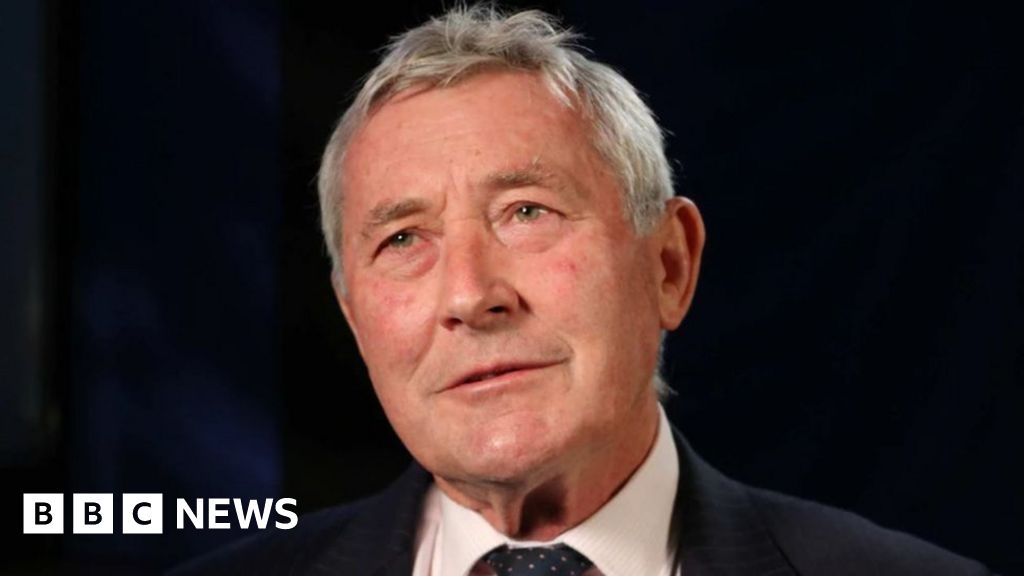
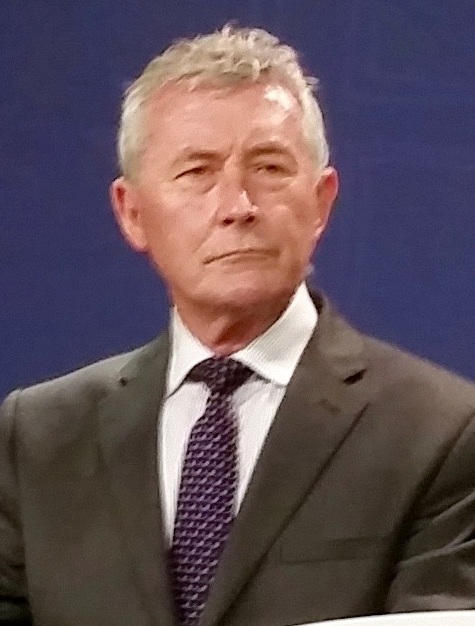
**TAMA** - Ang ASIO ay nag-raid sa opisina ni Bernard Collaery, ang abogadong kumakatawan sa East Timor sa isang internasyonal na kaso laban sa Australia, at sinamsam ang mga dokumento at electronic files na may kaugnayan sa kaso [1][2].
**TRUE** - ASIO did raid the office of Bernard Collaery, the lawyer representing East Timor in an international case against Australia, and seized documents and electronic files related to the case [1][2].
Noong Disyembre 3, 2013, ang mga ahente ng ASIO, kasama ang Australian Federal Police, ay nag-raid sa opisina ng batas ni Collaery sa Canberra at sinamsam ang mga dokumento at electronic data [1].
On December 3, 2013, ASIO agents, accompanied by Australian Federal Police, raided Collaery's Canberra law office and seized documents and electronic data [1].
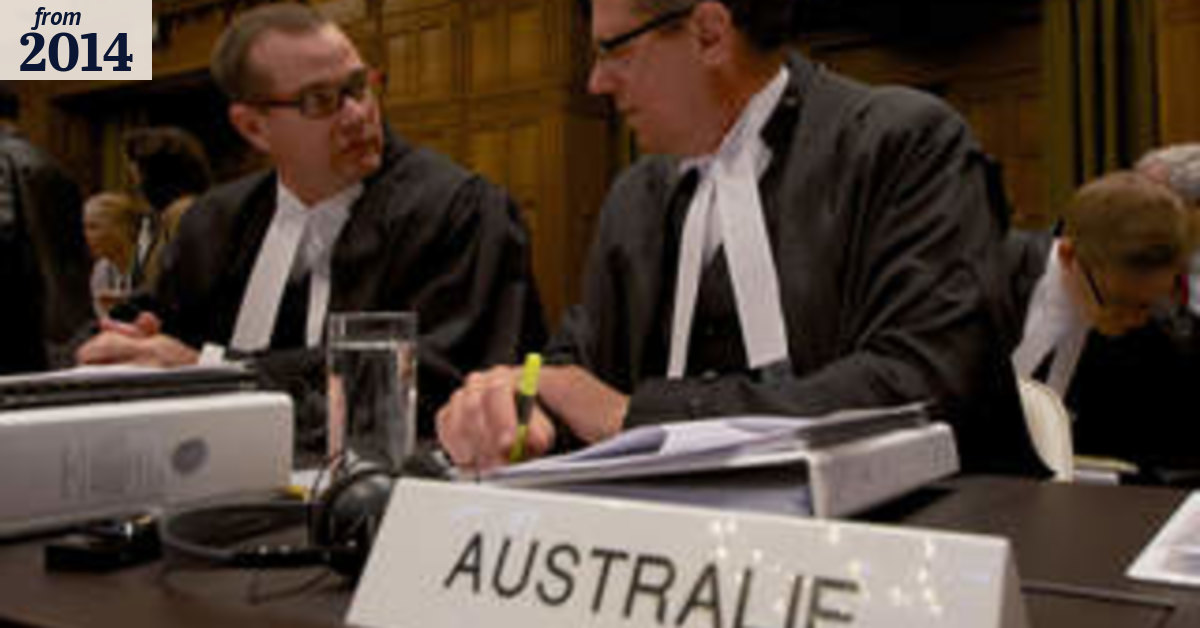
Ang raid ay nangyari ilang araw lamang bago magsimula ang mga pagdinig sa Permanent Court of Arbitration sa The Hague, kung saan inihahamon ng East Timor ang Certain Maritime Arrangements in the Timor Sea (CMATS) treaty [1][2].
The raid occurred just days before hearings were scheduled to begin at the Permanent Court of Arbitration in The Hague, where East Timor was challenging the Certain Maritime Arrangements in the Timor Sea (CMATS) treaty [1][2].
Ang sinamsam na materyal ay kinabibilangan ng: - Mga legal na dokumento na may kaugnayan sa mga negosasyon ng Timor Sea Treaty [3] - Mga electronic file na naglalaman ng ebidensya ng umano'y pag-espiya ng Australia [1] - Isang pahayag ng isang dating ahente ng ASIS (kilala bilang "Witness K") na nag-aakusa na binug ng Australia ang cabinet room ng East Timor noong 2004 treaty negotiations [3][4] Kinumpirma ni Attorney-General George Brandis na awtorisasyon niya ang mga search warrant, na nagsabing ang mga ito ay inisyu "sa mga batayan na ang mga dokumento ay naglalaman ng intelligence na may kaugnayan sa mga bagay na pang-seguridad" [1].
The seized material included: - Legal documents related to the Timor Sea Treaty negotiations [3] - Electronic files containing evidence of Australia's alleged spying [1] - A statement by a former ASIS agent (known as "Witness K") alleging Australia bugged East Timor's cabinet room during 2004 treaty negotiations [3][4] Attorney-General George Brandis confirmed he authorized the search warrants, stating they were issued "on the grounds that the documents contained intelligence related to security matters" [1].
Noong Marso 2014, ang International Court of Justice (ICJ) ay nag-utos sa Australia na isara ang lahat ng dokumento at data na sinamsam sa raid at huwag aksesin ang mga ito, na unang pagkakataon na nagpatupad ang hukuman ng mga paghihigpit sa mga spy agency ng isang Five Eyes state [3][5].
In March 2014, the International Court of Justice (ICJ) ordered Australia to seal all documents and data seized in the raid and not to access them, marking the first time the court had imposed restrictions on the spy agencies of a Five Eyes state [3][5].
Sumunod na inamin ng Australia sa harap ng ICJ na nais nitong tutulan ang pagbibigay ng ebidensya ni Witness K sa arbitral tribunal, sa takot na ang dating ahente ay "makakagawa ng karagdagang mga pagbubunyag na hindi maililimitahan ng Australia" [6].
Australia subsequently admitted before the ICJ that it intended to object to Witness K giving evidence at the arbitral tribunal, fearing the former agent "would make further disclosures that Australia could not confine" [6].

Nawawalang Konteksto

**Ang claim ay nagpabaya ng ilang kritikal na katotohanan:** 1. **Ang pag-espiya mismo ay nangyari noong 2004 sa ilalim ng Howard government** - Ang umano'y pag-bug sa mga opisina ng cabinet ng East Timor noong mga negosasyon ng treaty ay nangyari noong 2004 sa ilalim ng Coalition ni John Howard, hindi sa ilalim ng Abbott government noong nangyari ang ASIO raid [2][4]. 2. **Ang ipinahayag na dahilan ng raid** - Sinabi ng gobyerno na ang raid ay kinakailangan upang protektahan ang pambansang seguridad at maiwasan ang paglalantad ng mga Australian intelligence officer at tradecraft [6].
**The claim omits several critical facts:** 1. **The spying itself occurred in 2004 under the Howard government** - The alleged bugging of East Timor's cabinet offices during treaty negotiations occurred in 2004 under the Coalition's John Howard, not during the Abbott government when the ASIO raid occurred [2][4]. 2. **The raid's stated justification** - The government claimed the raid was necessary to protect national security and prevent the exposure of Australian intelligence officers and tradecraft [6].
Ipinagtanggol ni Solicitor-General Justin Gleeson ang aksyon na nagtutukoy sa mga panganib na "mapanganib" sa mga spy at mailantad ang mga teknikal na kakayahan [6]. 3. **Ang passport ni Witness K ay kinansela** - Ang dating ahente ng ASIS ay kinansela ang kanyang passport, na pinipigilan siyang maglakbay papuntang The Hague upang magbigay ng oral na ebidensya [6]. 4. **Ang Australia at East Timor ay sa huli ay nakapagkasundo ng bagong treaty** - Noong 2018, ang Australia at East Timor ay pumirma ng bagong maritime boundary treaty na mas paborable sa East Timor [2]. 5. **Ang mga pag-uusig ay sa huli ay iniwan** - Noong Hulyo 2022, inalis ni Labor Attorney-General Mark Dreyfus ang suporta para sa pag-uusig kay Collaery, na nagtapos sa halos isang dekada ng legal na saga [4][7]. 6. **Ang legal privilege ay nilabag** - Ang raid ay sumamsam ng materyal na sakop ng lawyer-client privilege, isang hindi pa nararanasang aksyon na nakakuha ng pagkondena mula sa mga eksperto sa batas [2][8].
Solicitor-General Justin Gleeson defended the action citing risks to "endanger" spies and expose technical capabilities [6]. 3. **Witness K's passport was cancelled** - The former ASIS agent had his passport cancelled, preventing him from traveling to The Hague to give oral evidence [6]. 4. **Australia and East Timor eventually reached a new treaty** - In 2018, Australia and East Timor signed a new maritime boundary treaty that was more favorable to East Timor [2]. 5. **The prosecutions were eventually dropped** - In July 2022, Labor Attorney-General Mark Dreyfus withdrew support for the prosecution of Collaery, ending a nearly decade-long legal saga [4][7]. 6. **Legal privilege was breached** - The raid seized material subject to lawyer-client privilege, an unprecedented action that drew condemnation from legal experts [2][8].

Pagsusuri ng Kredibilidad ng Pinagmulan

Ang orihinal na pinagmulan, *The Age* (Fairfax Media), ay isang mainstream, reputable na Australian na pahayagan na may center-left na editorial stance.
The original source, *The Age* (Fairfax Media), is a mainstream, reputable Australian newspaper with a center-left editorial stance.
Ito ay pangkalahatang itinuturing na maaasahan para sa factual na pag-uulat [6].
It is generally regarded as reliable for factual reporting [6].
Ang mga karagdagang pinagkunan na sinangguni (ABC News, BBC, The Sydney Morning Herald, Wikipedia, at ICJ documents) ay may awtoridad at nagbibigay ng pare-parehong mga factual na ulat ng mga kaganapan [1][2][3][4][5].
Additional sources consulted (ABC News, BBC, The Sydney Morning Herald, Wikipedia, and ICJ documents) are authoritative and provide consistent factual accounts of the events [1][2][3][4][5].
Ang pag-uulat ay kinumpirma ng: - Sariling pahayag ni Attorney-General George Brandis na kinumpirma ang raid [1] - Opisyal na dokumentasyon ng kaso ng ICJ [5] - Maraming mainstream media outlets sa iba't ibang bahagi ng political spectrum
The reporting is corroborated by: - Attorney-General George Brandis's own statement confirming the raid [1] - ICJ official case documentation [5] - Multiple mainstream media outlets across the political spectrum
⚖️

Paghahambing sa Labor

**Ginawa ba ng Labor ang katulad na bagay?** Isinagawang paghahanap: "Labor government ASIO intelligence operations spying foreign countries" Pagkakatuklas: **Bahagyang katumbas na may mahahalagang pagkakaiba:** 1. **Ang orihinal na operasyon ng pag-espiya ay nangyari sa ilalim ng Coalition government (2004)** - Ang umano'y pag-bug sa cabinet ng East Timor ay nangyari sa ilalim ng Howard government (Coalition), hindi ng Labor [2][4]. 2. **Ang Labor ay may kaalaman ngunit walang ginawang aksyon** - Ang East Timor ay unang nagbanggit ng mga akusasyon ng pag-espiya kay dating Prime Minister Julia Gillard (Labor) noong huli ng 2012, ngunit walang aksyon na ginawa [6].
**Did Labor do something similar?** Search conducted: "Labor government ASIO intelligence operations spying foreign countries" Finding: **Partial equivalent with important distinctions:** 1. **The original spying operation occurred under Coalition government (2004)** - The alleged bugging of East Timor's cabinet occurred under the Howard government (Coalition), not Labor [2][4]. 2. **Labor was aware but took no action** - East Timor first raised the spying allegations with then-Prime Minister Julia Gillard (Labor) in late 2012, but no action was taken [6].
Ang Labor government ay nanatili sa posisyon na ang 2004 na operasyon ay isang lehitimong aktibidad ng intelligence. 3. **Ang Labor ay sa huli ay iniwan ang mga pag-uusig** - Noong Hulyo 2022, ang Albanese Labor government ay iniwan ang pag-uusig kay Bernard Collaery sa pamamagitan ni Attorney-General Mark Dreyfus, na kinikilala na hindi ito sa interes ng publiko na ipagpatuloy [4][7]. 4. **Ang Labor ay itinabi ang pangakong imbestigasyon** - Sa kabila ng mga pangako bago ang eleksyon na magdaos ng imbestigasyon sa operasyon ng ASIS at kasunod na pag-uusig, ang Labor government ay itinabi ang pangakong ito noong 2023 [4]. 5. **Mas malawak na konteksto sa mga operasyon ng intelligence** - Ang mga Australian intelligence agency ay nagsagawa ng mga operasyon ng pag-espiya sa ibang bansa sa ilalim ng mga gobyerno ng parehong partido.
The Labor government maintained the position that the 2004 operation was a legitimate intelligence activity. 3. **Labor eventually dropped the prosecutions** - In July 2022, the Albanese Labor government dropped the prosecution of Bernard Collaery through Attorney-General Mark Dreyfus, acknowledging it was not in the public interest to continue [4][7]. 4. **Labor shelved inquiry promise** - Despite pre-election promises to hold an inquiry into the ASIS operation and subsequent prosecution, the Labor government shelved this commitment in 2023 [4]. 5. **Broader context on intelligence operations** - Australian intelligence agencies have conducted foreign spying operations under governments of both parties.
Ang 2004 na operasyon sa East Timor ay hindi pangkaraniwan pangunahin sa dahilang umano'y ito ay nag-target sa isang kaibigang bansa para sa komersyal na kalamangan sa halip na mga layunin ng pambansang seguridad [2][8]. **Paghahambing:** Bagama't ang raid mismo ay nangyari sa ilalim ng isang Coalition government, ang mas malawak na pattern ng pagprotekta sa mga operasyon ng intelligence at paglaban sa transparency ay pare-pareho sa parehong pangunahing partido.
The 2004 East Timor operation was unusual primarily in that it allegedly targeted a friendly nation for commercial advantage rather than national security purposes [2][8]. **Comparison:** While the raid itself occurred under a Coalition government, the broader pattern of protecting intelligence operations and resisting transparency has been consistent across both major parties.
Ang pangunahing pagkakaiba ay ang Labor ay sa huli ay itinigil ang mga pag-uusig na sinimulan ng Coalition.
The key distinction is that Labor ultimately discontinued the prosecutions that the Coalition had initiated.
🌐

Balanseng Pananaw

Ang kasong ito ay kumakatawan sa isa sa mga pinaka-kontrobersyal na intelligence-related na episode sa kasaysayan ng Australia, na kinasasangkutan ng mga akusasyon ng hindi angkop na pag-espiya sa isang kaibigang kapitbahay para sa komersyal na kalamangan, na sinundan ng mga aksyon na tila dinisenyo upang maiwasan ang pagbubunyag ng mga aktibidad na iyon. **Mga pagpuna sa mga aksyon ng gobyerno:** 1. **Oras ng raid** - Ang raid noong Disyembre 2013 ay nangyari dalawang araw lamang bago magsimula ang mga pagdinig sa The Hague, na nagdulot ng mga akusasyon na ito ay dinisenyo upang guluhin ang kaso ng East Timor [6].
This case represents one of the most controversial intelligence-related episodes in Australian history, involving allegations of improper spying on a friendly neighbor for commercial advantage, followed by actions that appeared designed to prevent disclosure of those activities. **Criticisms of the government's actions:** 1. **Timing of the raid** - The December 2013 raid occurred just two days before The Hague proceedings were to begin, leading to accusations it was designed to disrupt East Timor's case [6].
Inilarawan ito ni Bernard Collaery bilang isang "halatang, kahiya-hiyang pagtatangka na hadlangan ang katarungan" [1]. 2. **Komersyal na motibasyon** - Ang umano'y 2004 na pag-bug ay tila ginanahan ng pagkuha ng mga paborableng termino sa mga negosasyon ng oil at gas treaty na may halagang tinatayang $40 bilyon, sa halip na mga lehitimong alalahanin sa pambansang seguridad [2][8]. 3. **Paglabag sa legal privilege** - Ang pag-raid sa opisina ng isang abogado at pagsamsam ng mga materyal ng kliyente ay labis na bihira at sinisira ang kakayahang ng propesyon ng legal na kumatawan sa mga kliyente nang epektibo [2][8]. 4. **Sobra sa pagiging lihim** - Ang kasunod na pag-uusig kay Collaery at Witness K sa ilalim ng National Security Information Act, na may mga pagtatangka na magdaos ng mga lihim na paglilitis, ay kinritisismo ng mga eksperto sa batas bilang nakakapinsala sa bukas na katarungan [4][8]. 5. **Mga alalahanin sa political prosecution** - Ang pagkaantala sa pagitan ng 2013 raid at 2018 charges, na nagkataong may pagbabago sa Attorney-General mula kay George Brandis kay Christian Porter, ay nagdulot ng mga katanungan tungkol sa political motivation [4]. **Mga ipinahayad na dahilan ng gobyerno:** 1. **Pambansang seguridad** - Ang gobyerno ay nanatili na ang raid ay kinakailangan upang protektahan ang classified na impormasyon at maiwasan ang paglalantad ng mga intelligence officer at mga pamamaraan [6]. 2. **Legal na batayan** - Sinabi ni Attorney-General Brandis na ang mga warrant ay wastong inisyu sa mga batayan ng pambansang seguridad at inutusan ang ASIO na ang sinamsam na materyal ay hindi dapat ipahayag sa mga nagtatanggol sa Australia sa The Hague [1]. 3. **Pagpigil sa karagdagang pagbubunyag** - Ang gobyerno ay natakot na si Witness K ay gagawa ng "karagdagang mga pagbubunyag na hindi maililimitahan ng Australia" [6]. 4. **Rule of law** - Ang mga tagasuporta ng pag-uusig ay nagsabing ang pagbubunyag ng classified na impormasyon ay isang seryosong krimen, anuman ang mga motibo ng whistleblower. **Mga pagtatasa ng eksperto:** Ang mga nakatataas na Australian legal na personalidad, kabilang si barrister Geoffrey Watson SC at constitutional law expert na si Rebecca Ananian-Welsh, ay inilarawan ang pag-uusig bilang hindi angkop at nakakapinsala sa pampublikong kumpiyansa sa katarungan [2][8].
Bernard Collaery described it as a "blatant, disgraceful attempt to impede justice" [1]. 2. **Commercial motivation** - The alleged 2004 bugging appeared motivated by securing favorable terms in oil and gas treaty negotiations worth an estimated $40 billion, rather than genuine national security concerns [2][8]. 3. **Breach of legal privilege** - Raiding a lawyer's office and seizing client materials is extraordinarily rare and undermines the legal profession's ability to represent clients effectively [2][8]. 4. **Secrecy overreach** - The subsequent prosecution of Collaery and Witness K under the National Security Information Act, with attempts to hold secret trials, was criticized by legal experts as damaging to open justice [4][8]. 5. **Political prosecution concerns** - The delay between the 2013 raid and 2018 charges, coinciding with a change in Attorney-General from George Brandis to Christian Porter, raised questions about political motivation [4]. **Government's stated justifications:** 1. **National security** - The government maintained the raid was necessary to protect classified information and prevent exposure of intelligence officers and methods [6]. 2. **Legal basis** - Attorney-General Brandis stated the warrants were properly issued on national security grounds and instructed ASIO that the seized material should not be communicated to those conducting Australia's defense at The Hague [1]. 3. **Preventing further disclosures** - The government feared Witness K would make "further disclosures that Australia could not confine" [6]. 4. **Rule of law** - Supporters of the prosecution argued that disclosing classified information is a serious offense, regardless of the whistleblower's motives. **Expert assessments:** Senior Australian legal figures, including barrister Geoffrey Watson SC and constitutional law expert Rebecca Ananian-Welsh, described the prosecution as inappropriate and damaging to public confidence in justice [2][8].
Ang ACT Court of Appeal ay sa huli ay nagpasya na ang bukas na pagdinig ng mga kriminal na paglilitis ay mahalaga dahil ito ay "nagpigil sa mga political prosecution" at nagpapahintulot ng pampublikong pagsusuri [4]. **Pangunahing konteksto:** Ang episode na ito ay **hindi tipikal** sa mga relasyon ng Australia-East Timor, na sa pangkalahatan ay malapit mula nang pinangunahan ng Australia ang INTERFET intervention noong 1999.
The ACT Court of Appeal ultimately ruled that the open hearing of criminal trials was important because it "deterred political prosecutions" and allowed public scrutiny [4]. **Key context:** This episode is **not typical** of Australia-East Timor relations, which have generally been close since Australia led the INTERFET intervention in 1999.
Ang kaso ay nag-highlight ng mga tensyon sa pagitan ng pambansang seguridad, komersyal na interes, at internasyonal na batas - na ang interbensyon ng ICJ ay nagmungkahing ang mga aksyon ng Australia ay lumampas sa mga internasyonal na legal na hangganan [3][5].
The case highlighted tensions between national security, commercial interests, and international law - with the ICJ's intervention suggesting Australia's actions crossed international legal boundaries [3][5].

TOTOO

7.0

sa 10

Ang pangunahing factual claim ay tumpak.
The core factual claim is accurate.
Ang ASIO ay talagang nag-raid sa opisina ni Bernard Collaery at sinamsam ang mga dokumento at electronic files na may kaugnayan sa kaso ng East Timor.
ASIO did raid Bernard Collaery's office and seize documents and electronic files related to East Timor's international case against Australia.
Ang ICJ ay kasunod na nag-utos sa Australia na isara ang sinamsam na materyal, at inamin ng Australia na sinikap nitong pigilan ang pangunahing saksi mula sa pagbibigay ng ebidensya.
The ICJ subsequently ordered Australia to seal the seized material, and Australia admitted it sought to prevent the key witness from giving evidence.
Gayunpaman, ang pagkakahulog bilang "pagnanakaw" ay teknikal na hindi tumpak - ang raid ay isinagawa sa ilalim ng mga legal na warrant na awtorisado ng Attorney-General, bagama't ang mga warrant na ang ICJ ay sa huli ay epektibong nakitang hindi angkop sa internasyonal na konteksto.
However, the framing as "theft" is technically imprecise - the raid was conducted under legal warrants authorized by the Attorney-General, albeit warrants that the ICJ later effectively found improper in the international context.
Ang mas tumpak na pagkakalarawan ay na ang Australia ay nagsagawa ng isang hindi angkop na motibadong raid upang sumamsam ng mga materyal na may legal na privilege para sa tila layunin ng paggulo sa kaso ng isang banyagang bansa laban dito.
The more accurate characterization would be that Australia conducted an improperly motivated raid to seize legally privileged material for the apparent purpose of disrupting a foreign nation's legal case against it.

📚 MGA PINAGMULAN AT SANGGUNIAN (8)

  1. 1
    abc.net.au

    abc.net.au

    A lawyer representing East Timor in its spying case against Australia says his office has been raided by the Australian Security Intelligence Organisation (ASIO) and accused the agency of "muzzling" a key witness. Bernard Collaery says a number of agents seized electronic and paper files on Tuesday afternoon from his law practice in Canberra. East Timor has accused the Australia Secret Intelligence Service (ASIS) of covertly recording Timorese ministers and officials during oil-and-gas negotiations with Australia in 2004. Mr Collaery says a former spy turned whistleblower who had been due to give evidence to The Hague has been arrested in a separate raid in Canberra. The ABC is trying to confirm the arrest, but Mr Collaery says it is a "crass" effort by ASIO and the Government to muzzle "the oral evidence of the prime witness".

    Abc Net
  2. 2
    bbc.com

    bbc.com

    Bernard Collaery is a hero in East Timor, but faced prosecution in Australia for revealing a spy mission.

    Bbc
  3. 3
    en.wikipedia.org

    en.wikipedia.org

    Wikipedia
  4. 4
    PDF

    240112GuardianLabor shelves election promise for inquiry into prosecution of Witness K and Bernard Collaery

    Laohamutuk • PDF Document
  5. 5
    icj-cij.org

    icj-cij.org

    Icj-cij

  6. 6
    theage.com.au

    theage.com.au

    The Australian government has admitted it wants to block a former spy turned whistleblower from giving evidence to an international tribunal where East Timor is challenging a treaty between the two countries splitting lucrative oil and gas revenues.

    The Age
  7. 7
    hrlc.org.au

    hrlc.org.au

    The ACT Court of Appeal has published previously secret judgments to mark the end of the Bernard Collaery and Witness K saga, underscoring the need for the Albanese Government to implement transparency and whistleblowing reforms. 

    Human Rights Law Centre
  8. 8
    theconversation.com

    theconversation.com

    The prosecution was a scandal and should never have been commenced. It was a direct assault upon freedom of political communication, and it intimidated whistleblowers.

    The Conversation
Pamamaraan ng Rating Scale

1-3: MALI

Hindi tama sa katotohanan o malisyosong gawa-gawa.

4-6: BAHAGYA

May katotohanan ngunit kulang o baluktot ang konteksto.

7-9: HALOS TOTOO

Maliit na teknikal na detalye o isyu sa pagkakasulat.

10: TUMPAK

Perpektong na-verify at patas ayon sa konteksto.

Pamamaraan: Ang mga rating ay tinutukoy sa pamamagitan ng cross-referencing ng opisyal na mga rekord ng pamahalaan, independiyenteng mga organisasyong nag-fact-check, at mga primaryang dokumento.