Hindi Totoo

Rating: 3.0/10

Coalition
C0600

Ang Claim

“Ginamit ang kapangyarihang veto para harangin ang resolusyon ng UN na nananawagan na tapusin ang okupasyon ng Israel sa Palestine.”
Orihinal na Pinagmulan: Matthew Davis
Sinuri: 30 Jan 2026

Orihinal na Pinagmulan

FACTUAL NA BERIPIKASYON

**Pangunahing Pagsusuri ng Katotohanan:** Noong Disyembre 30, 2014, bumoto ng "hindi" (laban) ang Australia sa isang draft resolusyon ng UN Security Council na naghihiling na tapusin ng Israel ang okupasyon sa mga teritoryong Palestinian sa loob ng dalawang taon [1][2].
**Core Fact Check:** On December 30, 2014, Australia did vote "no" (against) a UN Security Council draft resolution demanding Israel end its occupation of Palestinian territories within two years [1][2].
Gayunpaman, ang claim ay naglalaman ng pundamental na factual na pagkakamali tungkol sa mga kapangyarihan ng Australia sa UN. **Ang Australia ay WALANG Kapangyarihang Veto:** Nagsisilbi ang Australia bilang isang **pansamantalang, hindi permanente na kasapi** ng UN Security Council noong 2013-2014 [3].
However, the claim contains a fundamental factual error regarding Australia's powers at the UN. **Australia Does NOT Have Veto Powers:** Australia was serving as a **temporary, non-permanent member** of the UN Security Council during 2013-2014 [3].
Tanging ang limang permanente na kasapi (P5) ng UN Security Council - China, France, Russia, United Kingdom, at United States - ang may mga kapangyarihang veto [4].
Only the five permanent members (P5) of the UN Security Council - China, France, Russia, the United Kingdom, and the United States - possess veto powers [4].
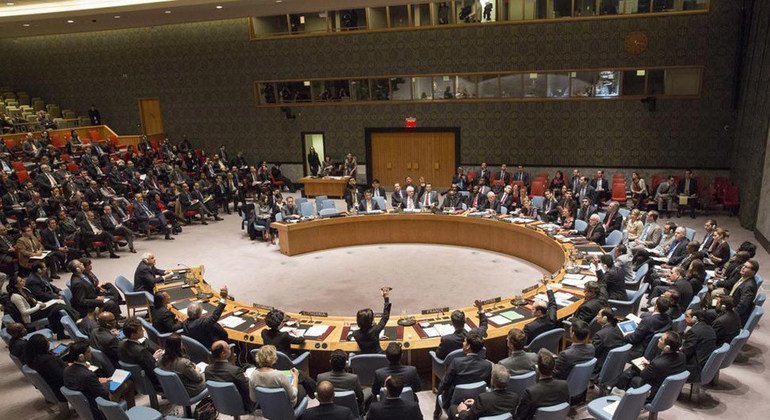
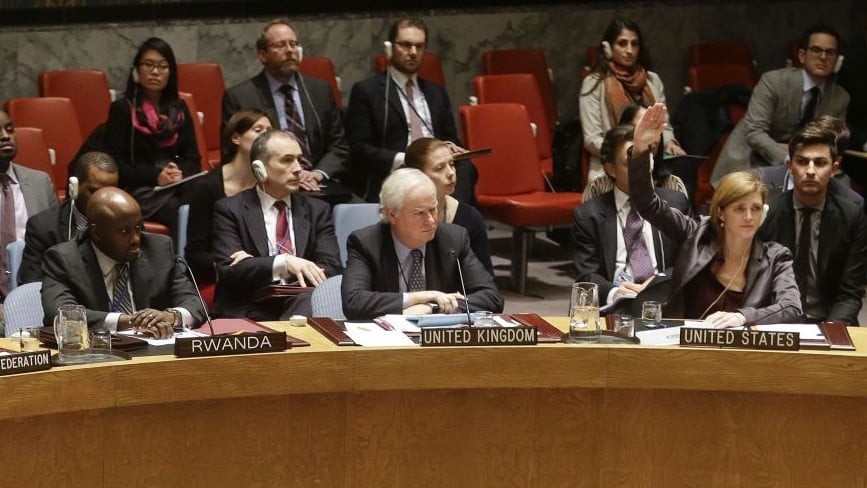
Ang mga hindi permanente na kasapi tulad ng Australia ay may mga karapatang bumoto ngunit walang anumang kapangyarihang veto. **Ang Talagang Nangyari:** Nabigong na-adopt ang boto ng UN Security Council noong Disyembre 30, 2014 sa Palestinian statehood resolusyon dahil: - Tanging 8 sa 15 kasapi ang bumoto ng pabor (9 boto ang kinakailangan para sa pag-adopt) [1][5] - Bumoto ng laban ang Australia at United States [1][2] - Limang bansa ang nag-abstain (kabilang ang United Kingdom at Rwanda) [1][6] - Magve-veto ang US sa resolusyon kung nakamit nito ang 9 boto, ngunit hindi na kailangan ang veto dahil nabigo ang resolusyon na makakuha ng suporta ng karamihan [1] **Nilalaman ng Resolusyon:** Ang resolusyon na isinponsor ng Jordan (iniharap sa ngalan ng mga Arabong bansa) ay magiging: - Nagtatakda ng 2017 deadline para sa Israel na umatras sa West Bank at Gaza [3] - Nananawagan sa mga hangganan batay sa 1967 na mga linya na may napag-usapang pagpapalit ng lupa [3] - Nagpapatibay na ang East Jerusalem ay kabisera ng isang estadong Palestinian [5]
Non-permanent members like Australia have voting rights but absolutely no veto authority. **What Actually Happened:** The UN Security Council vote on December 30, 2014, failed to adopt the Palestinian statehood resolution because: - Only 8 of 15 members voted in favor (9 votes were required for adoption) [1][5] - Australia and the United States voted against [1][2] - Five countries abstained (including the United Kingdom and Rwanda) [1][6] - The US would have vetoed the resolution if it had achieved 9 votes, but a veto was unnecessary since the resolution failed to gain majority support [1] **The Resolution's Content:** The Jordanian-sponsored resolution (presented on behalf of Arab nations) would have: - Set a 2017 deadline for Israel to withdraw from the West Bank and Gaza [3] - Called for borders based on 1967 lines with negotiated land swaps [3] - Affirmed East Jerusalem as the capital of a Palestinian state [5]

Nawawalang Konteksto

**Unang Pagkakataong "Hindi" Boto ng Australia:** Ito ang **unang pagkakataon** na bumoto ng laban ang Australia sa isang iminungkahing resolusyon sa kanyang dalawang taong termino sa Security Council [3].
**Australia's First-Ever "No" Vote:** This was the **first time** Australia had voted against a proposed resolution during its two-year term on the Security Council [3].
Dating nag-abstain ang Australia sa mga kontensyosong isyu sa halip na bumoto ng "hindi." **Opisyal na Pagpapaliwanag ng Australia:** Ipinaliwanag ng Permanent Representative ng Australia sa UN na si Gary Quinlan ang boto sa pamamagitan ng pagsasabing ang resolusyon ay "kulang sa balanse at nagsusumikap na ipataw ang isang solusyon na inihain ng isang panig lamang" at na "ang mga isyu ng huling katayuan ay maaari lamang malutas sa pagitan ng dalawang panig" [2][3].
Australia had previously abstained on contentious issues rather than voting "no." **Australia's Official Explanation:** Australia's Permanent Representative to the UN, Gary Quinlan, explained the vote by stating the resolution "lacks balance and seeks to impose a solution put forward by one party alone" and that "final status issues can only be resolved between the two sides" [2][3].
Muling tiniyak niya ang pangako ng Australia sa isang two-state solution ngunit ipinahayag na ang resolusyon ay hindi magpapaunlad sa prosesong pangkapayapaan [3]. **Ang Boto ay Nabigo Na:** Kahit walang "hindi" boto ng Australia, ang resolusyon ay mabibigo pa rin dahil sa hindi sapat na suporta (tanging 8 boto sa halip na kinakailangang 9).
He reiterated Australia's commitment to a two-state solution but argued the resolution would not advance the peace process [3]. **The Vote Was Already Doomed:** Even without Australia's "no" vote, the resolution would have failed due to insufficient support (only 8 votes instead of the required 9).
Ang boto ng Australia ay simboliko sa halip na mapagpasya [1][6]. **Konteksto ng Oras:** Naganap ang boto bago matapos ng Australia at Rwanda ang kanilang pansamantalang termino sa Council noong Disyembre 2014.
Australia's vote was symbolic rather than decisive [1][6]. **Timing Context:** The vote occurred just before Australia and Rwanda were to complete their temporary Council terms in December 2014.
Naniniwala na ang papasok na mga kasapi na New Zealand, Malaysia, at Venezuela ay mas maawain sa posisyon ng Palestinian [3]. **Reaksyon ng Arabong Mundo:** Ipinahayag ng kinatawan ng Palestinian sa Australia na si Izzat Abdulhadi ang pagkadismaya, na nagsasabing ang boto ay "makakaapekto sa mga relasyon sa Palestine at sa Arabong mundo" at inaasahan niya na ang Australia ay "hindi bababa" ay mag-abstain [2].
Incoming members New Zealand, Malaysia, and Venezuela were believed to be more sympathetic to the Palestinian position [3]. **Arab World Reaction:** The Palestinian representative in Australia, Izzat Abdulhadi, expressed disappointment, stating the vote would "affect relations with Palestine and the Arab world" and that he expected Australia to "at least" abstain [2].

Pagsusuri ng Kredibilidad ng Pinagmulan

**Orihinal na Pinagmulan: RT (Russia Today)** Ang orihinal na pinagmulan na ibinigay kasama ng claim ay RT (Russia Today), isang Russian state-funded media outlet [7][8][9]. - **Media Bias/Fact Check** ay nagtakda ng RT bilang "Questionable" batay sa "pagtataguyod ng pro-Russian propaganda, conspiracy theories, maraming nabigong fact check, at kakulangan ng transparency ng may-akda" [7] - **AllSides** ay nagsabing ang RT ay "madalas na inaakusahan sa pagpapakalat ng misinformation" at pinondohan ng Russian government [8] - Ang akademikong pananaliksik ay nagtukoy sa RT bilang "isang mahalagang bahagi ng Russian foreign policy at pangunahing global na pinagmulan ng disinformation" [9] Ang pag-uulat ng RT sa isyung ito ay tila nagbigay ng maling impormasyon sa pamamagitan ng pagmumungkahi o pagpapahintulot sa mga mambabasa na isipin na ang Australia ay may mga kapangyarihang veto, na maling factual.
**Original Source: RT (Russia Today)** The original source provided with the claim is RT (Russia Today), a Russian state-funded media outlet [7][8][9]. - **Media Bias/Fact Check** rates RT as "Questionable" based on "promoting pro-Russian propaganda, conspiracy theories, numerous failed fact checks, and a lack of author transparency" [7] - **AllSides** notes RT "has been accused frequently for spreading misinformation" and is funded by the Russian government [8] - Academic research identifies RT as "an important part of Russian foreign policy and key global sources of disinformation" [9] RT's reporting on this issue appears to have been misleading by suggesting or allowing readers to infer that Australia had veto powers, which is factually incorrect.
⚖️

Paghahambing sa Labor

Ang mga Labor Governments (Rudd 2007-2010, Gillard 2010-2013) ay kumuha ng kapansin-pansing ibang posisyon sa mga isyung Israel-Palestine: **Mga Boto sa UN General Assembly:** Sa ilalim ng Labor, binago ng Australia ang kanyang pattern ng pagboto sa ilang paulit-ulit na resolusyon ng UN General Assembly tungkol sa Palestine [10]: - **Nobyembre 2008:** Binago ang boto mula "abstain" patungong "pabor" sa resolusyon na nagpapatibay na ang Geneva Convention ay nalalapat sa Occupied Palestinian Territory - **Nobyembre 2008:** Binago ang boto mula "laban" patungong "pabor" sa resolusyon na nagsasabing ang mga Israeli settlement ay "ilegal at hadlang sa kapayapaan" - **Disyembre 2009:** Binago ang boto mula "abstain" patungong "pabor" sa resolusyon na nagpapatibay ng karapatan ng Palestinian sa self-determination **2012 UNGA Palestine Status Vote:** Noong Nobyembre 29, 2012, bumoto ang UN General Assembly na bigyan ang Palestine ng status na "non-member observer state." Ang Labor government ay **nag-abstain** sa botong ito pagkatapos ng internal na debate sa Cabinet [10].
**Did Labor do something similar?** The Labor Governments (Rudd 2007-2010, Gillard 2010-2013) took notably different positions on Israel-Palestine issues: **UN General Assembly Votes:** Under Labor, Australia changed its voting pattern on several recurring UN General Assembly resolutions concerning Palestine [10]: - **November 2008:** Changed vote from "abstain" to "in favour" on resolution affirming the Geneva Convention applies to Occupied Palestinian Territory - **November 2008:** Changed vote from "against" to "in favour" on resolution stating Israeli settlements are "illegal and an obstacle to peace" - **December 2009:** Changed vote from "abstain" to "in favour" on resolution affirming Palestinian right to self-determination **2012 UNGA Palestine Status Vote:** On November 29, 2012, the UN General Assembly voted to accord Palestine "non-member observer state" status.
Kapansin-pansin, sinabi ng Shadow Foreign Minister na si Julie Bishop na ang Coalition ay boboto ng "hindi" [10], na nagpapakita ng malinaw na partisan na pagkakaiba sa isyung ito. **Wika tungkol sa Israeli Settlements:** Ang mga opisyal ng Labor government, kabilang ang Australian UN Ambassador na si Gary Quinlan, ay tahasang tinukoy ang mga Israeli settlement bilang "ilegal" sa ilalim ng international law [10].
The Labor government **abstained** on this vote after internal Cabinet debate [10].
Ito ang unang pagkakataong ginamit ang ganoong wika ng isang Australian government mula noong kalagitnaan ng 1990s. **Pangunahing Pagkakaiba:** Hindi kailanman hinarap ng Labor government ang katulad na UN Security Council vote tungkol sa Palestinian statehood sa kanyang termino (2007-2013), kaya hindi posible ang direktang paghahambing sa tukoy na aksyon.
Notably, Shadow Foreign Minister Julie Bishop stated the Coalition would have voted "no" [10], demonstrating a clear partisan divide on this issue. **Language on Israeli Settlements:** Labor government officials, including Australia's UN Ambassador Gary Quinlan, explicitly referred to Israeli settlements as "illegal" under international law [10].
Gayunpaman, ang kabuuang diskarte ng Labor ay mas maawain sa mga posisyon ng Palestinian sa mga UN forum kumpara sa kapwa ang nauna at sumunod na mga Coalition government [10].
This marked the first time such language had been used by an Australian government since the mid-1990s. **Key Difference:** The Labor government never faced a similar UN Security Council vote on Palestinian statehood during its term (2007-2013), so a direct comparison on the specific action is not possible.
🌐

Balanseng Pananaw

**Pag-unawa sa Posisyon ng Australia:** Ang Australia ay tradisyonal na isa sa pinakamalakas na tagasuporta ng Israel sa international na antas.
**Understanding Australia's Position:** Australia has historically been one of Israel's strongest supporters internationally.
Ang boto ng Coalition government ay kasuwato sa tradisyonal na posisyon ng foreign policy ng Australia at sa kanyang alyansa sa United States, na bumoto rin ng "hindi" [2][3]. **Lehitimong Rasyonal ng Patakaran:** Ipinahayag ng Australian government na: 1.
The Coalition government's vote aligned with Australia's traditional foreign policy position and its alliance with the United States, which also voted "no" [2][3]. **Legitimate Policy Rationale:** The Australian government argued that: 1.
Ang resolusyon ay "one-sided" at kulang sa balanse [3] 2.
The resolution was "one-sided" and lacked balance [3] 2.
Ang kapayapaan ay maaari lamang maabot sa pamamagitan ng direktang negosasyon sa pagitan ng mga partido, hindi sa pamamagitan ng mga ipinataw na solusyon [2][3] 3.
Peace could only be achieved through direct negotiations between parties, not through imposed solutions [2][3] 3.
Hindi isinaalang-alang ng resolusyon ang mga lehitimong alalahanin sa seguridad ng Israel [3] 4.
The resolution ignored legitimate Israeli security concerns [3] 4.
Nanatiling pangako ang Australia sa isang two-state solution na makakamit sa pamamagitan ng negosasyon [3] **Pagkakahanay sa Posisyon ng US:** Tinawag ng US Ambassador sa UN na si Samantha Power ang resolusyon bilang "sobrang imbalanse" at sinabing itinataguyod nito ang "hindi konstruktibong mga deadline" [5].
Australia remained committed to a two-state solution achieved through negotiation [3] **US Position Alignment:** The US Ambassador to the UN, Samantha Power, called the resolution "deeply imbalanced" and stated it established "unconstructive deadlines" [5].
Ang boto ng Australia ay kasuwato sa posisyong ito, bagama't nagbigay parehong bansa ng hiwalay na mga pagpapaliwanag para sa kanilang mga "hindi" boto [3]. **Hindi Ito Natatangi sa Coalition:** Bagama't ang tukoy na Security Council vote ay naganap sa ilalim ng Abbott Coalition government, ang pro-Israel na pattern ng pagboto ng Australia sa UN ay nanatiling pareho sa kapwa Coalition at Labor governments sa kasaysayan, bagama't inilipat ng Labor ang posisyon patungo sa mas balanseng mga posisyon noong 2007-2013 [10].
Australia's vote aligned with this position, though both countries provided separate justifications for their "no" votes [3]. **This Was NOT Unique to Coalition:** While the specific Security Council vote occurred under the Abbott Coalition government, Australia's pro-Israel voting pattern at the UN has been consistent across both Coalition and Labor governments historically, though Labor shifted toward more balanced positions during 2007-2013 [10].
Ang Coalition government ay bumalik sa mga diskarteng Howard-era sa mga isyung ito [10]. **Ang Maling Paglalarawan ng Veto:** Ang pahayag ng claim na ang Australia ay "gumamit ng kapangyarihang veto" ay maling factual.
The Coalition government returned to Howard-era approaches on these issues [10]. **The Veto Mischaracterization:** The claim's assertion that Australia "used veto powers" is factually incorrect.
Hindi kailanman nagkaroon o nagtataglay ang Australia ng kapangyarihang veto sa UN Security Council.
Australia has never possessed veto power at the UN Security Council.
Ang kalituhan ay maaaring nagmula sa: 1.
The confusion may stem from: 1.
Hindi pag-unawa sa pagkakaiba sa pagitan ng permanenteng at hindi permanente na mga kasapi ng Council 2.
Misunderstanding the difference between permanent and non-permanent Council members 2.
Ang katotohanan na ang Australia at US ay parehong bumoto ng "hindi" 3.
The fact that both Australia and the US voted "no" 3.
Ang mga partisan na pinagmulan (RT) ay maaaring binuo ang kuwento upang pahusayin ang kritisismo
Partisan sources (RT) potentially framing the narrative to maximize criticism

HINDI TOTOO

3.0

sa 10

Ang claim na ito ay maling factual sa kanyang sentral na pahayag.
This claim is factually incorrect on its central assertion.
Hindi nagtataglay at hindi kailanman nagtaglay ang Australia ng mga kapangyarihang veto sa UN Security Council.
Australia does not possess and has never possessed veto powers at the UN Security Council.
Tanging ang limang permanente na kasapi (US, UK, France, Russia, China) ang may kapangyarihang veto [4].
Only the five permanent members (US, UK, France, Russia, China) have veto authority [4].
Bagama't bumoto ng "hindi" ang Australia laban sa Palestinian statehood resolusyon noong Disyembre 30, 2014, ito ay isang karaniwang boto, hindi veto [1][2][3].
While Australia did vote "no" against the Palestinian statehood resolution on December 30, 2014, this was a standard vote, not a veto [1][2][3].
Nabigo ang resolusyon dahil nakakuha lamang ito ng 8 boto ng pabor (kailangan ng 9), hindi dahil sa anumang aksyon ng Australia [1][5].
The resolution failed because it received only 8 votes in favor (needing 9), not because of any Australian action [1][5].
Ang claim ay mali rin sa paglalarawan sa kalikasan ng boto ng Australia sa pamamagitan ng paggamit ng inflammatory at hindi tumpak na terminong "kapangyarihang veto." Ang orihinal na pinagmulan (RT) ay isang questionable na pinagmulan na kilala sa propaganda at misinformation [7][8][9], na maaaring nagpapaliwanag sa factual na pagkakabaluktot.
The claim also misrepresents the nature of Australia's vote by using the inflammatory and inaccurate term "veto powers." The original source (RT) is a questionable source known for propaganda and misinformation [7][8][9], which may explain the factual distortion.

📚 MGA PINAGMULAN AT SANGGUNIAN (10)

  1. 1
    UN Security Council action on Palestinian statehood blocked

    UN Security Council action on Palestinian statehood blocked

    Falling short of the required number of positive votes and faced with a veto from one of its permanent members, the United Nations Security Council today failed to adopt a draft resolution that would have affirmed the “urgent need” to reach within 12 months a peaceful solution to the situation in the Middle East and would have paved the way to a Palestinian state with East Jerusalem as its capital.

    UN News
  2. 2
    Australia Votes 'No' On Palestinian Draft Resolution at UNSC

    Australia Votes 'No' On Palestinian Draft Resolution at UNSC

    Australia joined the United States in voting “no” on a UN Security Council draft resolution on Palestine.

    Thediplomat
  3. 3
    Australia votes against Palestinian UN resolution on Israel

    Australia votes against Palestinian UN resolution on Israel

    Australia has voted against a proposal in the United Nations Security Council demanding Israel end the occupation of Palestinian territories within two years.

    The Sydney Morning Herald
  4. 4
    un.org

    UN Security Council - Veto Power

    Un

    Original link unavailable — view archived version
  5. 5
    Security Council rejects Palestinian statehood

    Security Council rejects Palestinian statehood

    The U.N. Security Council, in a close 8-2 vote with five abstentions, on Tuesday voted down a Palestinian statehood resolution.

    CNN
  6. 6
    Palestinian statehood resolution fails at UN Security Council

    Palestinian statehood resolution fails at UN Security Council

    US veto not needed as motion falls one vote short, with last-minute Nigerian change of heart. France among 8 votes in favor; US, Australia against, five abstain

    Timesofisrael
  7. 7
    RT News Bias and Credibility - Media Bias/Fact Check

    RT News Bias and Credibility - Media Bias/Fact Check

    QUESTIONABLE SOURCE A questionable source exhibits one or more of the following: extreme bias, consistent promotion of propaganda/conspiracies, poor or no

    Media Bias/Fact Check
  8. 8
    allsides.com

    RT Media Bias - AllSides

    Allsides

  9. 9
    journals.sagepub.com

    Does Russian Propaganda Lead or Follow?

    Journals Sagepub

  10. 10
    PDF

    Australia and the Middle East conflict: the Rudd and Gillard Governments (2007-13)

    Core Ac • PDF Document
    Original link unavailable — view archived version

Pamamaraan ng Rating Scale

1-3: MALI

Hindi tama sa katotohanan o malisyosong gawa-gawa.

4-6: BAHAGYA

May katotohanan ngunit kulang o baluktot ang konteksto.

7-9: HALOS TOTOO

Maliit na teknikal na detalye o isyu sa pagkakasulat.

10: TUMPAK

Perpektong na-verify at patas ayon sa konteksto.

Pamamaraan: Ang mga rating ay tinutukoy sa pamamagitan ng cross-referencing ng opisyal na mga rekord ng pamahalaan, independiyenteng mga organisasyong nag-fact-check, at mga primaryang dokumento.