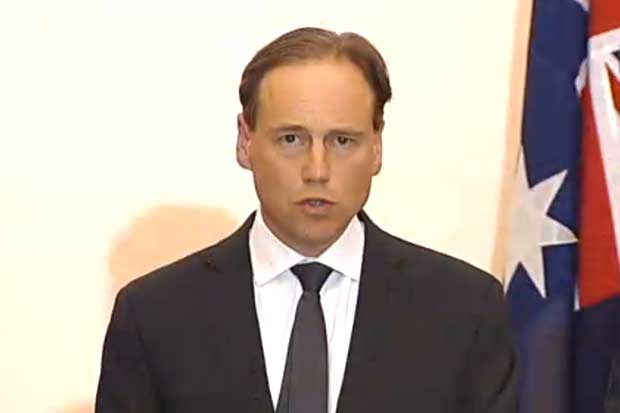
Ang pahayag ay may kaugnayan sa mga pahayag na ginawa ni Environment Minister Greg Hunt noong Abril 2015 na naghahambing sa gastos ng carbon pricing scheme ng Labor sa Emissions Reduction Fund (ERF) ng Coalition sa ilalim ng patakarang "Direct Action". **Tukoy na Pahayag ni Hunt:** Noong Abril 2015, kasunod ng unang ERF reverse auction, sinabi ni Greg Hunt: "Ang carbon tax ng Labor ay nagbawas ng emissions sa mahigit $1,300 kada tonelada [samantalang] ang average na presyo ng auction ng Emissions Reduction Fund ay $13.95 kada tonelada.
The claim relates to statements made by Environment Minister Greg Hunt in April 2015 comparing the cost of Labor's carbon pricing scheme with the Coalition's Emissions Reduction Fund (ERF) under the "Direct Action" policy.
**Hunt's Specific Claim:**
In April 2015, following the first ERF reverse auction, Greg Hunt claimed: "Labor's carbon tax reduced emissions at over $1,300 per tonne [while] the Emissions Reduction Fund auction price averages $13.95 per tonne.
Tama iyon, ang nabigong carbon tax ng Labor ay higit na 93 beses na mas mahal" [1]. **Ang Aktwal na Carbon Price:** Ang carbon pricing scheme ng pamahalaang Gillard Labor, na itinatag sa ilalim ng Clean Energy Act 2011, ay nagtakda ng carbon price sa: - **$23.00 kada tonelada** para sa 2012-13 [2] - **$24.15 kada tonelada** para sa 2013-14 [2] Ang presyo ay naka-iskedyul na lumipat sa isang market-linked emissions trading scheme noong 2015, na magdudugtong sa European system na nagte-trade sa humigit-kumulang $10 kada tonelada sa panahong iyon [1]. **Pagtatasa ng mga Eksperto sa Pahayag ni Hunt:** Tatlong independiyenteng eksperto na kinonsulta ng New Matilda ang tinanggihan ang pahayag ni Hunt na $1,300 kada tonelada: - **Professor Frank Jotzo (ANU)**: "Iyan ay kasing mali ng maaari mong makuha.
That's right, Labor's failed carbon tax was more than 93 times more expensive" [1].
**The Actual Carbon Price:**
The Gillard Labor government's carbon pricing scheme, established under the Clean Energy Act 2011, set the carbon price at:
- **$23.00 per tonne** for 2012-13 [2]
- **$24.15 per tonne** for 2013-14 [2]
The price was scheduled to transition to a market-linked emissions trading scheme in 2015, which would have linked to the European system trading at approximately $10 per tonne at that time [1].
**Expert Assessment of Hunt's Claim:**
Three independent experts consulted by New Matilda dismissed Hunt's $1,300 per tonne claim:
- **Professor Frank Jotzo (ANU)**: "That's about as wrong as you can possibly get it.
Ang pinakamahalagang bagay na dapat ayusin sa mga misimpormasyon at mapanlinlang na komento kahapon ay ang pahayag ni Minister Hunt na ang carbon price ay $1,300 kada tonelada" [1]. - **John Connor (CEO, Climate Institute)**: Inilarawan ang mga paghahambing ng presyo ni Hunt bilang "paghahambing ng mansanas at mga ref" [1]. - **Gujji Muthuswamy (Monash University)**: Tinawag itong "paghahambing ng mansanas at dalandan" [1]. **Ano Talaga ang Kahulugan ng $1,300 na Figure:** Ang $1,300 na figure ay mukhang nakuha sa paghahati ng kabuuang kita na nalikom ng carbon price ($6 bilyon sa loob ng dalawang taon) sa pamamagitan ng emissions reductions na direktang iniuugnay sa carbon price sa sektor ng kuryente (11-17 milyong tonelada ayon sa pag-aaral ng ANU ni Professor Jotzo) [1].
The most important thing to get straight in terms of misinformation and misleading comments there yesterday was Minister Hunt's assertion that the carbon price was $1,300 per tonne" [1].
- **John Connor (CEO, Climate Institute)**: Described Hunt's price comparisons as "comparing apples and fridges" [1].
- **Gujji Muthuswamy (Monash University)**: Called it "comparing apples and oranges" [1].
**What the $1,300 Figure Actually Represented:**
The $1,300 figure appears to have been derived from dividing the total revenue raised by the carbon price ($6 billion over two years) by only the emissions reductions directly attributed to the carbon price in the electricity sector (11-17 million tonnes according to Professor Jotzo's ANU study) [1].
Ito ay isang pangunahing depektong pagkalkula dahil: 1.
This is a fundamentally flawed calculation because:
1.
Hindi isinaalang-alang na ang carbon price ay isang broad-based economy-wide mechanism na nakakaapekto sa mahigit 60% ng ekonomiya [1] 2.
It ignores that the carbon price was a broad-based economy-wide mechanism affecting over 60% of the economy [1]
2.
Pinagdudugtong nito ang kinaltong kita sa abatement cost - ang carbon price ay nag-generate ng kita na napunta sa badyet, samantalang ang ERF ay isang gastos sa mga taxpayer 3.
It conflates revenue raised with abatement cost - the carbon price generated revenue that went to the budget, whereas the ERF was a cost to taxpayers
3.
Cherry-picking lamang sa abatement sa sektor ng kuryente sa halip na ang mga epekto sa buong ekonomiya **Komparatibong Pagganap:** - Carbon pricing scheme (2012-2014): Ang emissions mula sa mga sakop na kumpanya ay bumaba ng 7% sa pagpapakilala [2] - Ang carbon price ay nag-raise ng humigit-kumulang **$6 bilyon na kita** para sa pederal na badyet sa loob ng dalawang taon nitong operasyon [1] - Natuklasan ng pag-aaral ng ANU ni Professor Jotzo na ang carbon price ay nakamit ng 11-17 milyong tonelada ng abatement sa sektor ng kuryente lamang [1] - Unang auction ng ERF: $660 milyon ng pera ng taxpayer ang bumili ng 47 milyong tonelada ng abatement [1]
It cherry-picks only the electricity sector abatement rather than economy-wide effects
**Comparative Performance:**
- Carbon pricing scheme (2012-2014): Emissions from covered companies dropped 7% upon introduction [2]
- The carbon price raised approximately **$6 billion in revenue** for the federal budget over its two-year operation [1]
- Professor Jotzo's ANU study found the carbon price achieved 11-17 million tonnes of abatement in the electricity sector alone [1]
- ERF first auction: $660 million of taxpayer funds purchased 47 million tonnes of abatement [1]
Nawawalang Konteksto
**Ang Carbon Price ay Revenue-Positive:** Ang pahayag ay nag-iwan ng impormasyon na ang carbon pricing scheme ng Labor ay isang revenue-raising measure.
**The Carbon Price Was Revenue-Positive:**
The claim omits that Labor's carbon pricing scheme was a revenue-raising measure.
Ang carbon price ay nag-generate ng humigit-kumulang $6 bilyon na kita para sa pederal na badyet [1].
The carbon price generated approximately $6 billion in revenue for the federal budget [1].
Tulad ng tandaan ni Professor Jotzo: "Ngayon ang pera ng mga taxpayer ang ginagamit para bayaran ang mga emission reductions sa halip na ang perang papasok sa pederal na badyet mula sa mga emissions" [1]. **Mga Pagkakaiba sa Disenyo ng Patakaran:** Ang carbon price at ERF ay gumana sa mga pangunahing magkaibang mekanismo: - **Carbon price**: Isang broad-based market mechanism na nakakaapekto sa mahigit 60% ng ekonomiya, lumilikha ng economy-wide price signals para himukin ang pagbabago sa inobasyon at pag-uugali [1] - **ERF**: Isang grant-based system kung saan ang mga taxpayer ang nagbabayad sa mga polluter para bawasan ang mga emissions sa pamamagitan ng reverse auctions [1] **Lawak at Saklaw:** Ang carbon price ay sakop ang "isang cap sa polusyon para sa mahigit 60% ng ekonomiya" [1], samantalang ang ERF ay nagbigay ng "mga paisa-isang, patchy na mga pagbawas sa emissions" [1] na walang garantiya na matutugunan ang 5% reduction target ng Australia sa pamamagitan ng 2020 [1]. **Walang Safeguard Mechanism:** Ang ipinangakong "safeguard mechanism" ng pamahalaan - na dinisenyo para maiwasan ang malalaking emitters mula sa pagtaas ng emissions at pagsubok sa mga ERF abatements - ay epektibong inalis sa isang discussion paper noong Marso 2015 [1].
As Professor Jotzo noted: "Now you have taxpayers' money being used to pay for emission reductions rather than money coming in to the federal budget from emissions" [1].
**Policy Design Differences:**
The carbon price and ERF operated on fundamentally different mechanisms:
- **Carbon price**: A broad-based market mechanism affecting over 60% of the economy, creating economy-wide price signals to drive innovation and behavioral change [1]
- **ERF**: A grant-based system where taxpayers pay polluters to reduce emissions through reverse auctions [1]
**Scope and Scale:**
The carbon price covered "a cap on pollution for over 60% of the economy" [1], while the ERF provided "patchy, one-off cuts to emissions" [1] with no guarantee of meeting Australia's 5% reduction target by 2020 [1].
**No Safeguard Mechanism:**
The government's promised "safeguard mechanism" - designed to prevent big emitters from increasing emissions and undermining ERF abatements - was effectively removed in a March 2015 discussion paper [1].
Nangangahulugan ito na walang carbon cap, na nagpapahintulot sa malalaking polluter na magpatuloy sa "business as usual" [1].
This meant there was no carbon cap, allowing big polluters to continue "business as usual" [1].
Pagsusuri ng Kredibilidad ng Pinagmulan
**New Matilda (Pinagmulang Source):** - **Profile**: Independiyenteng online publication na inilunsad noong 2004, nakatuon sa investigative journalism at analisis - **Pagmamay-ari**: Pagmamay-ari at in-edit ng Walkley Award at Human Rights Award winning journalist na si Chris Graham - **Pampulitikang Alignement**: Pangkalahatang progresibo/left-leaning, independiyenteng media outlet - **Paraan**: Ang artikulo ay nagbibigay ng maraming independiyenteng akademikong eksperto at nagpresenta ng kanilang direktang mga quote, na nagpapalakas ng kredibilidad - **Potensyal na Bias**: Bilang isang independiyenteng outlet na may progresibong alignment, maaaring magpresenta ito ng analisis na pabor sa mga patakaran para sa climate action - **Expert Sourcing**: Ang kalakasan ng artikulo ay ang pagkonsulta nito sa tatlong independiyenteng eksperto mula sa ANU, Monash University, at The Climate Institute - mga organisasyon na may itinatag na kredibilidad sa climate economics [1]
**New Matilda (Original Source):**
- **Profile**: Independent online publication launched in 2004, focusing on investigative journalism and analysis
- **Ownership**: Owned and edited by Walkley Award and Human Rights Award winning journalist Chris Graham
- **Political Alignment**: Generally progressive/left-leaning, independent media outlet
- **Approach**: The article cites multiple independent academic experts and presents their direct quotes, enhancing credibility
- **Potential Bias**: As an independent outlet with progressive leanings, it may present analysis favoring climate action policies
- **Expert Sourcing**: The article's strength lies in its consultation of three independent experts from ANU, Monash University, and The Climate Institute - organizations with established credibility in climate economics [1]
⚖️
Paghahambing sa Labor
**Gumawa ba ng mapanlinlang na mga pahayag sa gastos ang Labor tungkol sa carbon pricing?** **Nagsagawa ng search**: "Labor government carbon price cost projections Treasury estimates accuracy" **Natagpuan**: Ang pamahalaang Labor, sa pamamagitan ng Treasury modeling, ay nagproject ng mga epekto ng carbon price na pangkalahatang naka-align sa aktwal na presyong $23-24 kada tonelada.
**Did Labor make misleading cost claims about carbon pricing?**
**Search conducted**: "Labor government carbon price cost projections Treasury estimates accuracy"
**Finding**: The Labor government, through Treasury modeling, projected carbon price impacts that generally aligned with the actual $23-24 per tonne price.
Walang ebidensya na ang Labor ay nagsabing ang carbon price ay mas mababa sa aktwal nito - ang inilathalang presyo ay transparent at statutory [2]. **Gayunpaman**, ang Labor ay humarap sa puna para sa: 1. **Pre-election commitment**: Sinabi ni Julia Gillard bago ang 2010 election na "there will be no carbon tax under the government I lead," na labis na kinutya ng Coalition nang magkaroon ng carbon pricing scheme [2] 2. **Mga projection ng epekto ng gastos**: Ang Treasury modeling ay nagproject ng minimal na epekto sa ekonomiya, ngunit tinutulan ng mga kritiko ang mga projection na ito **Pangunahing Pagkakaiba**: Bagama't ang parehong panig ay gumawa ng mga pinagtatalunang pahayag tungkol sa patakaran sa klima, ang pahayag ni Hunt na $1,300 kada tonelada ay tila kumakatawan sa isang mas malaking pagkabalisa sa katotohanan dahil: - Ang aktwal na statutory carbon price ay $23-24 kada tonelada, malinaw na nakadokumento [2] - Ang $1,300 na figure ay nakuha sa pamamagitan ng isang hindi pamantayang pamamaraan ng pagkalkula na itinakwil ng mga eksperto bilang mapanlinlang [1] - Ang paghahambing ay pinagsama ang revenue-raising at expenditure-based na mga mekanismo [1]
There is no evidence of Labor claiming the carbon price was significantly lower than it actually was - the published price was transparent and statutory [2].
**However**, Labor did face criticism for:
1. **Pre-election commitment**: Julia Gillard stated before the 2010 election "there will be no carbon tax under the government I lead," which the Coalition heavily criticized when a carbon pricing scheme was later introduced [2]
2. **Cost impact projections**: Treasury modeling projected minimal economic impact, but critics disputed these projections
**Key Distinction**: While both sides made contested claims about climate policy, Hunt's $1,300 per tonne claim appears to represent a more significant factual distortion because:
- The actual statutory carbon price was $23-24 per tonne, clearly documented [2]
- The $1,300 figure was derived through a non-standard calculation methodology that experts dismissed as misleading [1]
- The comparison conflated revenue-raising and expenditure-based mechanisms [1]
🌐
Balanseng Pananaw
**Posisyon ng Coalition:** Ang pamahalaang Coalition, sa pamamagitan ni Minister Hunt, ay nagsikap na ipakita ang cost-effectiveness ng kanilang Direct Action policy kumpara sa carbon pricing scheme ng Labor.
**Coalition's Position:**
The Coalition government, through Minister Hunt, sought to demonstrate the cost-effectiveness of its Direct Action policy compared to Labor's carbon pricing scheme.
Ang ERF ay nakamit ng mas mababang auction price kada tonelada ($13.95) kumpara sa statutory carbon price ($23-24) [1]. **Ligtitimong Depensa sa Pagkakahambing ni Hunt:** Mula sa isang tiyak na pananaw, kung ikalkula ang kabuuang kita na hinati sa isang makitid na subset ng direktang iniugnay na abatement, mas mataas na effective cost figure ang maaaring makuha.
The ERF did achieve a lower per-tonne auction price ($13.95) compared to the statutory carbon price ($23-24) [1].
**Legitimate Defense of Hunt's Comparison:**
From a certain perspective, if one calculates total revenue divided by a narrow subset of directly attributable abatement, a higher effective cost figure can be derived.
Maaaring argumentuhin ng pamahalaan na ito ay kumakatawan sa isang mas matapat na accounting ng mga gastos. **Bakit Tinanggihan ito ng mga Eksperto:** 1. **Depektong metodolohikal**: Ang paghahambing ay gumamit ng hindi magkatugmang mga sukatan - "paghahambing ng mansanas at mga ref" [1] 2. **Mapanlinlang na pag-frame**: Ang pagpresenta ng $1,300 bilang "ang carbon price" ay factually mali kung ang statutory price ay $23 [1] 3. **Hindi isinaalang-alang ang kita**: Ang carbon price ay nag-generate ng $6 bilyon na kita sa badyet; ang ERF ay nagkakahalaga sa mga taxpayer ng $660 milyon [1] 4. **Magkaibang saklaw**: Ang carbon price ay nagtulak ng pagbabago sa buong ekonomiya; ang ERF ay lumikha ng mga paisa-isang, patchy na mga pagbawas [1] **Komparatibong Konteksto:** Ang insidenteng ito ay nagpapakita ng isang mas malawak na pattern sa Australian climate politics kung saan ang parehong panig ay pinagtatalunan ang mga gastos at epektibidad ng mga patakaran sa klima.
The government could argue this represents a more honest accounting of costs.
**Why Experts Rejected This Defense:**
1. **Methodologically flawed**: The comparison used incompatible metrics - "comparing apples and fridges" [1]
2. **Misleading framing**: Presenting $1,300 as "the carbon price" was factually incorrect when the statutory price was $23 [1]
3. **Ignored revenue**: The carbon price generated $6 billion in budget revenue; the ERF cost taxpayers $660 million [1]
4. **Different scope**: The carbon price drove economy-wide change; the ERF created patchy, one-off cuts [1]
**Comparative Context:**
This incident reflects a broader pattern in Australian climate politics where both sides have contested the costs and effectiveness of climate policies.
Ang Coalition ay kinutya ang carbon price ng Labor bilang isang "great big tax"; ang Labor ay kinutya ang ERF bilang hindi epektibo at mahal. **Konsensyo ng mga Independiyenteng Eksperto:** Ang tatlong eksperto na kinonsulta (mula sa ANU, Monash, at The Climate Institute) ay pawang independiyenteng nagtapos na ang pahayag ni Hunt ay mapanlinlang [1].
The Coalition criticized Labor's carbon price as a "great big tax"; Labor criticized the ERF as ineffective and expensive.
**Independent Expert Consensus:**
The three experts consulted (from ANU, Monash, and The Climate Institute) all independently concluded Hunt's claim was misleading [1].
Iminumungkahi nito na ang puna ay hindi lamang partisan kundi sumasalamin sa mga totoong metodolohikal na alalahanin mula sa mga climate economist.
This suggests the criticism was not purely partisan but reflected genuine methodological concerns from climate economists.
NAKAKALITO
3.0
sa 10
Ang pahayag ni Greg Hunt na ang carbon tax ng Labor ay nagkakahalaga ng "$1,300 kada tonelada" ay factually mapanlinlang.
Greg Hunt's claim that Labor's carbon tax cost "$1,300 per tonne" was factually misleading.
Ang aktwal na statutory carbon price ay $23-24 kada tonelada [2].
The actual statutory carbon price was $23-24 per tonne [2].
Ang $1,300 na figure ay nakuha sa pamamagitan ng isang hindi pamantayang pagkalkula na: 1.
The $1,300 figure was derived through a non-standard calculation that:
1.
Hiniwa ang kabuuang kita sa abatement sa sektor ng kuryente lamang (hindi isinaalang-alang ang mga epekto sa buong ekonomiya) 2.
Divided total revenue by only electricity sector abatement (ignoring economy-wide effects)
2.
Pinagsama ang revenue-raising at expenditure-based na mga mekanismo [1] 3.
Conflated revenue-raising and expenditure-based mechanisms [1]
3.
Itinakwil ng maraming independiyenteng eksperto bilang "kalokohan" at "talagang outrageously misleading" [1] Bagama't madalas na gumawa ang mga politiko ng mga pinagtatalunang pahayag tungkol sa epektibidad ng patakaran, ang pagpresenta ng $1,300 bilang gastos "kada tonelada" kung ang aktwal na presyo ay $23 ay kumakatawan sa isang malaking pagbabaluktot na misrepresented ang pundamental na ekonomiya ng carbon pricing scheme.
Was dismissed by multiple independent experts as "nonsense" and "quite outrageously misleading" [1]
While politicians frequently make contested claims about policy effectiveness, presenting $1,300 as the cost "per tonne" when the actual price was $23 represents a significant distortion that misrepresented the fundamental economics of the carbon pricing scheme.
Huling Iskor
3.0
SA 10
NAKAKALITO
Ang pahayag ni Greg Hunt na ang carbon tax ng Labor ay nagkakahalaga ng "$1,300 kada tonelada" ay factually mapanlinlang.
Greg Hunt's claim that Labor's carbon tax cost "$1,300 per tonne" was factually misleading.
Ang aktwal na statutory carbon price ay $23-24 kada tonelada [2].
The actual statutory carbon price was $23-24 per tonne [2].
Ang $1,300 na figure ay nakuha sa pamamagitan ng isang hindi pamantayang pagkalkula na: 1.
The $1,300 figure was derived through a non-standard calculation that:
1.
Hiniwa ang kabuuang kita sa abatement sa sektor ng kuryente lamang (hindi isinaalang-alang ang mga epekto sa buong ekonomiya) 2.
Divided total revenue by only electricity sector abatement (ignoring economy-wide effects)
2.
Pinagsama ang revenue-raising at expenditure-based na mga mekanismo [1] 3.
Conflated revenue-raising and expenditure-based mechanisms [1]
3.
Itinakwil ng maraming independiyenteng eksperto bilang "kalokohan" at "talagang outrageously misleading" [1] Bagama't madalas na gumawa ang mga politiko ng mga pinagtatalunang pahayag tungkol sa epektibidad ng patakaran, ang pagpresenta ng $1,300 bilang gastos "kada tonelada" kung ang aktwal na presyo ay $23 ay kumakatawan sa isang malaking pagbabaluktot na misrepresented ang pundamental na ekonomiya ng carbon pricing scheme.
Was dismissed by multiple independent experts as "nonsense" and "quite outrageously misleading" [1]
While politicians frequently make contested claims about policy effectiveness, presenting $1,300 as the cost "per tonne" when the actual price was $23 represents a significant distortion that misrepresented the fundamental economics of the carbon pricing scheme.
Hindi tama sa katotohanan o malisyosong gawa-gawa.
4-6: BAHAGYA
May katotohanan ngunit kulang o baluktot ang konteksto.
7-9: HALOS TOTOO
Maliit na teknikal na detalye o isyu sa pagkakasulat.
10: TUMPAK
Perpektong na-verify at patas ayon sa konteksto.
Pamamaraan: Ang mga rating ay tinutukoy sa pamamagitan ng cross-referencing ng opisyal na mga rekord ng pamahalaan, independiyenteng mga organisasyong nag-fact-check, at mga primaryang dokumento.