Nakakalito

Rating: 4.0/10

Coalition
C0491

Ang Claim

“Sinubukang alisin ang mga exclusion zone sa paligid ng mga abortion clinic na dinisenyo upang protektahan ang mga pasyente mula sa pangha-harass.”
Orihinal na Pinagmulan: Matthew Davis

Orihinal na Pinagmulan

FACTUAL NA BERIPIKASYON

Nangangailangan ng masusing pag-aaral ang claim na ito upang maunawaan kung ano talaga ang nangyari noong Nobyembre 2015.
The claim requires careful parsing of what actually occurred in November 2015.
Ayon sa orihinal na pinagmulan, binanggit ng artikulo ang isang mosyon sa parliament tungkol sa abortion exclusion zones [1].
According to the original source, the article references a motion in parliament regarding abortion exclusion zones [1].
Gayunpaman, ang pagkakabanggit na "sinubukang alisin ang mga exclusion zone" ay misleading sa konteksto.
However, the phrasing "tried to remove exclusion zones" is misleading in context.
Ang mga safe access zone (tawag din na exclusion zones o buffer zones) ay unang itinatag sa Tasmania noong Disyembre 2013 sa ilalim ng Reproductive Health (Access to Terminations) Act 2013 [2].
Safe access zones (also called exclusion zones or buffer zones) were first established in Tasmania in December 2013 under the Reproductive Health (Access to Terminations) Act 2013 [2].
Ang mga zone na ito ay lumilikha ng 150-meter buffer sa paligid ng mga abortion clinic kung saan ipinagbabawal ang ilang mga pag-uugali tulad ng pangha-harass, pagpoprotesta, at pag-record ng mga pasyente.
These zones create a 150-meter buffer around abortion clinics where certain behaviors like harassment, protesting, and recording patients are prohibited.
Sa Victoria, ang Public Health and Wellbeing Amendment (Safe Access Zones) Act 2015 ay naipasa ng Victorian Parliament noong Nobyembre 27, 2015 [3].
In Victoria, the Public Health and Wellbeing Amendment (Safe Access Zones) Act 2015 was passed by the Victorian Parliament on November 27, 2015 [3].
Ang batas na ito ay naipasa sa tulong ng Pamahalaan, mga Greens MP, si Fiona Patten, at **ilang Coalition MPs** [4].
This legislation was passed with the support of the Government, Greens MPs, Fiona Patten, and **some Coalition MPs** [4].
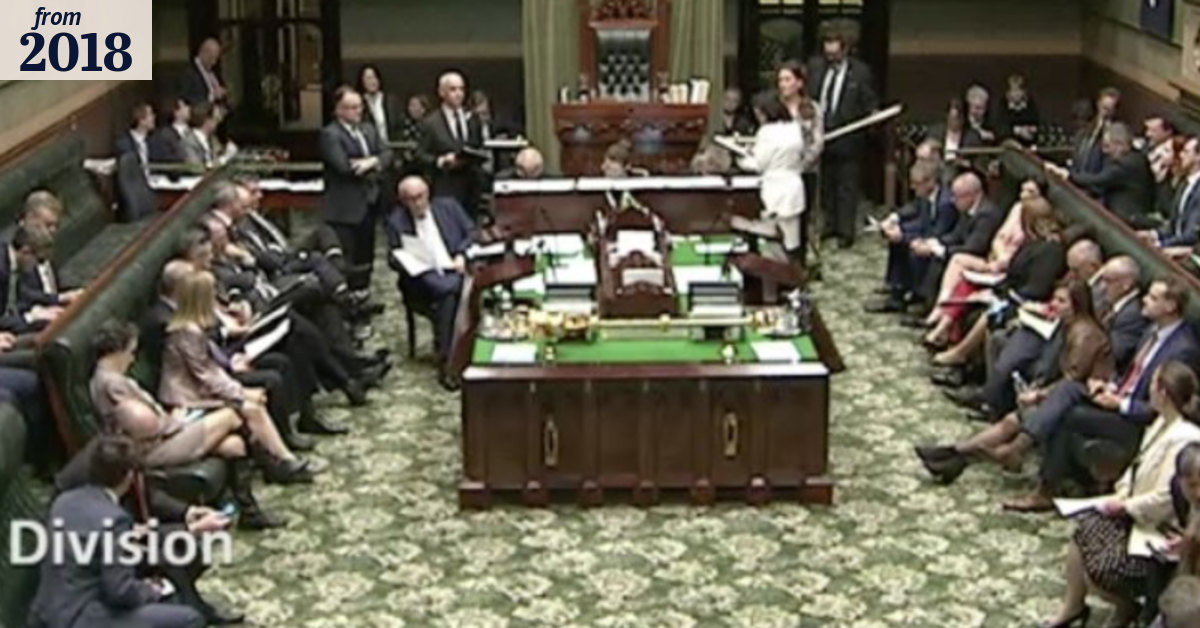
Ang partikular na kaganapan na binanggit sa orihinal na pinagmulan ay tila nauugnay sa isang parliamentary motion noong Nobyembre 2015, hindi sa pagtatangkang "alisin" ang mga umiiral na exclusion zone.
The specific event referenced in the original source appears to relate to a parliamentary motion in November 2015, not an attempt to "remove" existing exclusion zones.
Sa panahong iyon, ang Victoria ay nasa proseso ng pagtatatag ng mga safe access zone—hindi pa sila umiiral upang "alisin." Ang mga Coalition MPs na tumutol sa batas ay bumoto laban sa *paglikha* ng mga zone na ito, hindi sa pag-aalis ng mga ito [5].
At that time, Victoria was in the process of establishing safe access zones—they did not yet exist to be "removed." The Coalition MPs who opposed the legislation were voting against the *creation* of these zones, not their removal [5].

Nawawalang Konteksto

Ang claim ay nag-aalis sa ilang kritikal na kontekstwal na impormasyon: **Ang batas ay sa huli ay naipasa sa suporta ng parehong partido.** Kahit na may ilang Coalition MPs na tumutol sa Victorian safe access zone legislation, ang bill ay naipasa sa suporta mula sa "Pamahalaan, mga Greens MPs, si Fiona Patten, at ilang Coalition MPs" [4].
The claim omits several critical contextual facts: **The legislation ultimately passed with bipartisan support.** While some Coalition MPs opposed the Victorian safe access zone legislation, the bill was passed with support from "Government, Greens MPs, Fiona Patten and some Coalition MPs" [4].
Ito ay isang conscience vote para sa maraming MPs, ibig sabihin ay malaya silang bumoto ayon sa kanilang personal na paniniwala sa halip na party lines [6]. **Ang mga safe access zone ay isang bagong legislative development noong 2015.** Ang Tasmania ang unang jurisdiction na nagtatag ng mga ito noong 2013.
This was a conscience vote for many MPs, meaning they were free to vote according to their personal beliefs rather than party lines [6]. **Safe access zones were a new legislative development in 2015.** Tasmania was the first jurisdiction to establish them in 2013.
Ang Victoria lamang ang pangalawang jurisdiction na nagpatupad ng mga ito noong huling bahagi ng 2015 [7].
Victoria was only the second jurisdiction to implement them in late 2015 [7].
Ang konsepto ay bago at kontrobersyal, na nagsasangkot ng balanse sa pagitan ng pagprotekta sa privacy/kaligtasan ng pasyente at ang ipinahayag na constitutional freedom of political communication [8]. **Ang High Court ay pinalaganap ang constitutional validity ng mga safe access zone noong 2019.** Sa landmark case na *Clubb v Edwards; Preston v Avery* [2019] HCA 11, ang High Court ay unanimously pinalaganap ang validity ng mga safe access zone laws sa Victoria at Tasmania, na nakitang ang pagprotekta sa kaligtasan, privacy, at dignidad ng mga kababaihan sa pag-access sa abortion services ay isang compelling objective na compatible sa Constitution [9].
The concept was novel and controversial, involving a balance between protecting patient privacy/safety and the implied constitutional freedom of political communication [8]. **The High Court upheld the constitutional validity of safe access zones in 2019.** In the landmark case of *Clubb v Edwards; Preston v Avery* [2019] HCA 11, the High Court unanimously upheld the validity of safe access zone laws in Victoria and Tasmania, finding that protecting women's safety, privacy, and dignity when accessing abortion services was a compelling objective compatible with the Constitution [9].

Pagsusuri ng Kredibilidad ng Pinagmulan

Ang orihinal na pinagmulan, ang Daily Life, ay isang Fairfax Media online publication na tumutarget sa mga kababaihan na may pokus sa mga isyu ng kababaihan, lifestyle, at feminist perspectives [10].
The original source, Daily Life, was a Fairfax Media online publication targeting women with a focus on women's issues, lifestyle, and feminist perspectives [10].
Ang publication ay nag-oper mula 2013 hanggang sa ito ay isinara noong 2017 bilang bahagi ng digital restructuring ng Fairfax Media [11].
The publication operated from 2013 until it was shut down in 2017 as part of Fairfax Media's digital restructuring [11].
Ang coverage ng Daily Life ay may tendensyang kumuha ng progressive positions sa mga isyu ng karapatan ng kababaihan, kabilang ang reproductive rights.
Daily Life's coverage tended to take progressive positions on women's rights issues, including reproductive rights.
Kahit na ang factual reporting sa artikulo ay tila tumpak batay sa parliamentary record, ang framing—partikular ang headline na "Labor and Greens narrowly defeat government motion"—ay nagmumungkahi ng isang partisan angle na nag-e-emphasize sa oposisyon sa halip na sa huling bipartisan passage ng batas.
While the factual reporting in the article appears accurate based on the parliamentary record, the framing—particularly the headline "Labor and Greens narrowly defeat government motion"—suggests a partisan angle emphasizing opposition rather than the ultimate bipartisan passage of the legislation.
Ang pinagmulan ay pangkalahatang credible para sa factual reporting ngunit ang mga mambabasa ay dapat na maging aware ng editorial perspective nito na pabor sa mga karapatan ng kababaihan at progressive social policies.
The source is generally credible for factual reporting but readers should be aware of its editorial perspective favoring women's rights and progressive social policies.
⚖️

Paghahambing sa Labor

**Nagkaroon ba ng katulad na posisyon ang Labor sa mga isyu kaugnay ng abortion?** Ang posisyon ng Labor sa mga safe access zone ay pangkalahatang suportado sa mga jurisdiction kung saan ipinakilala ang mga ito.
**Did Labor take similar positions on abortion-related issues?** Labor's position on safe access zones has been generally supportive across jurisdictions where they have been introduced.
Sa NSW (2018), ang safe access zone legislation ay ipinakilala ng Labor MP na si Penny Sharpe at co-sponsored ni Nationals MP Trevor Khan [12].
In NSW (2018), the safe access zone legislation was introduced by Labor MP Penny Sharpe and co-sponsored by Nationals MP Trevor Khan [12].
Gayunpaman, ang Labor ay mayroon ding internal divisions sa abortion policy sa nakaraan.
However, Labor has also had internal divisions on abortion policy historically.
Sa ilalim ng mga pamahalaang Hawke at Keating (1983-1996), ang abortion ay nanatili sa criminal code sa karamihan ng mga estado, at ang Labor ay hindi nag-pursue ng decriminalization sa pederal na antas.
Under the Hawke and Keating governments (1983-1996), abortion remained in the criminal code in most states, and Labor did not pursue decriminalization at the federal level.
Ito ay lamang noong mga 2000s at 2010s na ang Labor ay lumipat sa mas malalakas na pro-choice positions. **Pangunahing paghahambing:** Ang parehong mga pangunahing partido ay may mga miyembro na may mixed positions sa mga isyu kaugnay ng abortion.
It was only in the 2000s and 2010s that Labor shifted to stronger pro-choice positions. **Key comparison:** Both major parties have had members with mixed positions on abortion-related issues.
Ang Coalition ay nagpayagan ng conscience votes sa safe access zone legislation, habang ang Labor ay pangkalahatang nag-whip ng mga boto nang pabor.
The Coalition allowed conscience votes on safe access zone legislation, while Labor generally whipped votes in favor.
Ang claim ay nagpo-focus sa oposisyon ng Coalition habang hindi kinikilala na: - Ang ilang Coalition MPs ay sumuporta sa batas - Ito ay isang isyu kung saan ang conscience votes ay pinapayagan - Ang mga pamahalaang Labor sa nakaraan ay hindi inuna ang mga katulad na proteksyon
The claim singles out Coalition opposition while not acknowledging that: - Some Coalition MPs supported the legislation - This was an issue where conscience votes were permitted - Labor governments in the past had not prioritized similar protections
🌐

Balanseng Pananaw

Ang claim na ang Coalition ay "sinubukang alisin ang mga exclusion zone" ay **maling pagkakabanggit**.
The claim that the Coalition "tried to remove exclusion zones" is **inaccurately phrased**.
Mas tumpak na sabihin: "Ang ilang Coalition MPs ay bumoto laban sa paglikha ng mga safe access zone sa paligid ng mga abortion clinic." **Ano ang tama sa claim:** - Ang ilang Coalition MPs ay talagang tumutol sa safe access zone legislation sa Victoria noong 2015 - Ang oposisyon ay batay sa mga alalahanin tungkol sa paglimita ng mga karapatan sa protesta at potensyal na mga constitutional issue tungkol sa kalayaan ng political communication - Ang boto ay malapit na sapat na ang Labor at Greens ay magkasamang tinatalo ang mga opposition amendments o motions **Ano ang mali sa claim:** - Ang Coalition ay hindi "sinubukang alisin" ang mga zone—hindi pa sila umiiral sa Victoria - Ang batas ay sa huli ay naipasa sa suporta ng parehong partido (ang ilang Coalition MPs ay bumoto nang pabor) - Ito ay isang conscience vote issue, hindi unified party policy - Ang mga safe access zone ay mula noon ay itinatag sa lahat ng Australian jurisdictions at pinalaganap ng High Court **Konteksto sa kung bakit tumutol ang ilang MPs:** Ang oposisyon ay nakasentro sa mga alalahanin tungkol sa: 1.
More accurate would be: "Some Coalition MPs voted against the creation of safe access zones around abortion clinics." **What the claim gets right:** - Some Coalition MPs did oppose safe access zone legislation in Victoria in 2015 - The opposition was based on concerns about limiting protest rights and potential constitutional issues regarding freedom of political communication - The vote was close enough that Labor and Greens combined to defeat opposition amendments or motions **What the claim gets wrong:** - The Coalition did not "try to remove" zones—they didn't exist yet in Victoria - The legislation ultimately passed with bipartisan support (some Coalition MPs voted in favor) - This was a conscience vote issue, not unified party policy - Safe access zones have since been established in all Australian jurisdictions and upheld by the High Court **Context on why some MPs opposed:** Opposition centered on concerns about: 1.
Ang ipinahayag na constitutional freedom of political communication (na kasunod na nalutas ng High Court) 2.
The implied constitutional freedom of political communication (subsequently resolved by the High Court) 2.
Ang angkop na balanse sa pagitan ng pagprotekta sa mga pasyente at pagpapahintulot ng protesta 3.
The appropriate balance between protecting patients and allowing protest 3.
Kung ang 150 metro ay ang angkop na buffer distance Ang mga alalahaning ito ay lehitimong mga legal at policy considerations, hindi lamang anti-abortion activism, bagama't ang mga motibasyon ay nag-iba-iba sa mga indibidwal na MPs.
Whether 150 meters was the appropriate buffer distance These concerns were legitimate legal and policy considerations, not simply anti-abortion activism, though motivations varied among individual MPs.

NAKAKALITO

4.0

sa 10

Ang claim ay mali ang pagkakalarawan sa 2015 parliamentary vote.
The claim mischaracterizes the 2015 parliamentary vote.
Ang Coalition ay hindi "sinubukang alisin" ang mga exclusion zone—hindi pa sila umiiral sa Victoria sa panahong iyon.
The Coalition did not "try to remove" exclusion zones—they didn't exist in Victoria at the time.
Ang ilang Coalition MPs ay bumoto laban sa *paglikha* ng mga safe access zone, ngunit ang batas ay sa huli ay naipasa sa suporta ng parehong partido kasama ang ilang Coalition MPs na bumoto nang pabor.
Some Coalition MPs voted against the *creation* of safe access zones, but the legislation ultimately passed with bipartisan support including some Coalition MPs voting in favor.
Ang pagkakabanggit ay nagso-exaggerate sa oposisyon at hindi binibigyang-pansin ang conscience vote nature ng isyu at ang huling pagpasa ng batas.
The phrasing exaggerates the opposition and ignores the conscience vote nature of the issue and the ultimate passage of the legislation.

📚 MGA PINAGMULAN AT SANGGUNIAN (12)

  1. 1
    dailylife.com.au

    Daily Life - "Labor and Greens narrowly defeat government motion opposing abortion exclusion zones"

    Dailylife Com

  2. 2
    legislation.tas.gov.au

    Reproductive Health (Access to Terminations) Act 2013 (Tas)

    Legislation Tas Gov

  3. 3
    legislation.vic.gov.au

    Public Health and Wellbeing Amendment (Safe Access Zones) Act 2015 (Vic)

    Legislation Vic Gov

    Original link no longer available
  4. 4
    "Victorian Parliament ensures women's safe and private access to abortion clinics"

    "Victorian Parliament ensures women's safe and private access to abortion clinics"

    Human Rights Law Centre
  5. 5
    "Explainer: what are abortion clinic safe-access zones and where do they exist in Australia?"

    "Explainer: what are abortion clinic safe-access zones and where do they exist in Australia?"

    Laws providing for safe access protect the dignity and safety of staff who need access to their workplace and women who need access to health-care services without harassment and intimidation.

    The Conversation
  6. 6
    "Safe Access Zones To Protect Women's Right To Medical Privacy And Dignity"

    "Safe Access Zones To Protect Women's Right To Medical Privacy And Dignity"

    Victorian women will now be able to access lawful medical services free from harassment and intimidation following the passage of legislation to establish safe access zones around abortion providers. The Public Health and Wellbeing Amendment (Safe Access Zone) Bill 2015 today formally passed the Victorian Legislative Council without amendment. The Bill supports women’s reproductive health choices by ensuring that all women can access health services that provide abortions without fear, intimidation, harassment or obstruction.

    Premier Vic Gov
  7. 7
    Safe Access Zones Timeline

    Safe Access Zones Timeline

    Human Rights Law Centre
  8. 8
    PDF

    Safe Access Zones in Australia - Legislative Considerations

    Resources Msiaustralia Org • PDF Document
  9. 9
    "High Court delivers landmark ruling validating abortion clinic 'safe access zones'"

    "High Court delivers landmark ruling validating abortion clinic 'safe access zones'"

    The High Court has unanimously affirmed that abortion clinic safe access zones comply with the Constitution.

    Monash Lens
  10. 10
    smh.com.au

    Fairfax Media announces changes to digital operations

    Smh Com

    Original link no longer available
  11. 11
    "NSW abortion clinic safe access zones become law"

    "NSW abortion clinic safe access zones become law"

    Protesters face jail time for harassing people outside clinics under new laws passed late on Thursday night.

    The Sydney Morning Herald
  12. 12
    Claude Code

    Claude Code

    Claude Code is an agentic AI coding tool that understands your entire codebase. Edit files, run commands, debug issues, and ship faster—directly from your terminal, IDE, Slack or on the web.

    AI coding agent for terminal & IDE | Claude
Pamamaraan ng Rating Scale

1-3: MALI

Hindi tama sa katotohanan o malisyosong gawa-gawa.

4-6: BAHAGYA

May katotohanan ngunit kulang o baluktot ang konteksto.

7-9: HALOS TOTOO

Maliit na teknikal na detalye o isyu sa pagkakasulat.

10: TUMPAK

Perpektong na-verify at patas ayon sa konteksto.

Pamamaraan: Ang mga rating ay tinutukoy sa pamamagitan ng cross-referencing ng opisyal na mga rekord ng pamahalaan, independiyenteng mga organisasyong nag-fact-check, at mga primaryang dokumento.