Bahagyang Totoo

Rating: 7.0/10

Coalition
C0294

Ang Claim

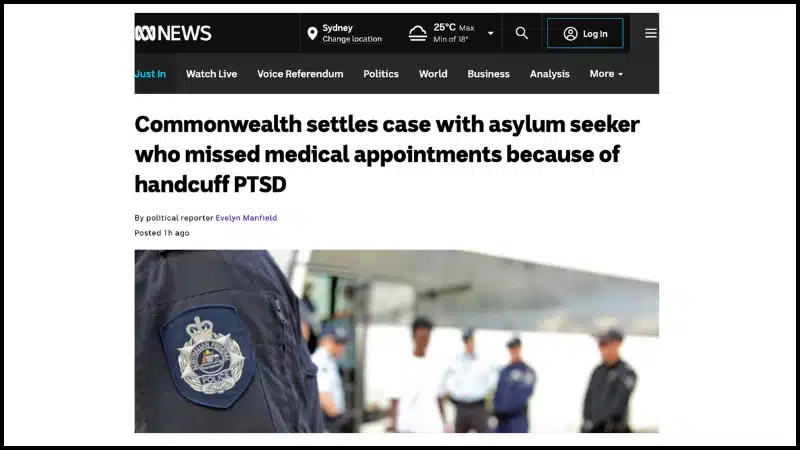
“Nagposas ng isang bata na hindi pinaghihinalaang nagkasala ng anumang krimen habang pinipigilan siyang makatanggap ng kagyat na kinakailangang medikal na pagamot.”
Orihinal na Pinagmulan: Matthew Davis
Sinuri: 30 Jan 2026

Orihinal na Pinagmulan

FACTUAL NA BERIPIKASYON

Ang claim ay tumatalakay sa mga kasanayan sa loob ng offshore refugee detention system ng Australia sa Nauru.
The claim addresses practices within Australia's offshore refugee detention system on Nauru.
Ang mga pangunahing elemento ay nangangailangan ng beripikasyon: (1) kung ang isang bata ay pinaposasan, (2) kung ito ay pumigil sa medikal na pagamot, at (3) ang mas malawak na konteksto ng mga ganoong kasanayan. **Pagposas bilang Karaniwang Kasanayan sa Immigration Detention:** Ang pagposas ng mga detainee sa panahon ng mga medical appointment ay sistematikong ginamit ng mga awtoridad sa immigration ng Australia.
The core elements require verification: (1) whether a child was handcuffed, (2) whether this prevented medical treatment, and (3) the broader context of such practices. **Handcuffing as Standard Practice in Immigration Detention:** Handcuffing detainees during medical appointments was systematically employed by Australian immigration authorities.
Ang Justice and Equity Centre ay nagdokumento ng kasanayang ito sa maraming detainee, kabilang ang sa panahon ng mga medical transfer patungong Australia [1].
The Justice and Equity Centre documented this practice across multiple detainees, including during medical transfers to Australia [1].
Ang isang landmark na kaso sa Federal Court—Yasir v Minister for Immigration (2020-2023)—ay naglatag na ang mga asylum seeker ay karaniwang pinoposasan bago ang mga medical appointment at pinipilit na pumili sa pagitan ng pagtanggap ng mga restraints o pagtanggi sa pagamot [2].
A landmark Federal Court case—Yasir v Minister for Immigration (2020-2023)—established that asylum seekers were routinely handcuffed before medical appointments and forced to choose between accepting restraints or refusing treatment [2].
Ang kaso ay nagresulta sa isang confidential settlement, na nagmumungkahi na kinilala ng gobyerno ang ilegalidad ng kasanayan [2].
The case resulted in a confidential settlement, suggesting the government acknowledged the unlawfulness of the practice [2].
Ang UN Subcommittee on Prevention of Torture ay naglunsad ng imbestigasyon sa sistematikong paggamit ng mga posas sa immigration detention ng Australia kasunod ng kasong ito [3]. **Pagtanggi at Pagkaantala ng Medikal na Pagamot:** Nagkumpirma ang mga ebidensya na ang Coalition government ay sistematikong tumutol sa paglilipat ng mga may sakit na detainee mula sa Nauru patungong Australia para sa medikal na pag-aalaga.
The UN Subcommittee on Prevention of Torture launched an investigation into Australia's systematic use of handcuffs in immigration detention following this case [3]. **Medical Treatment Denial and Delay:** Evidence confirms that the Coalition government systematically resisted transferring sick detainees from Nauru to Australia for medical care.
Ang mga health worker sa Nauru ay nag-ulat na nagsampa ng 50+ na mga kahilingan para sa medical transfer na hinarang ng mga awtoridad sa immigration [4].
Health workers on Nauru reported filing 50+ medical transfer requests that were blocked by immigration authorities [4].
Ang mga kaso sa Federal Court noong 2018 ay nagdokumento na ang mga batang nangangailangan ng mental health treatment ay pinagkaitan ng evacuation hanggang sa pag-intervensyon ng korte [5].
Federal Court cases in 2018 documented that children requiring mental health treatment were denied evacuation until court intervention [5].
Ang isang dokumentadong kaso ay nagsasangkot ng isang 12-taong-gulang na Iranian boy na ang medical transfer ay hinarang sa kabila ng mga babala na ang kanyang buhay ay nasa panganib; siya ay tumanggi sa pagkain at tubig sa loob ng mahabang panahon at nangailangan ng IV feeding [6].
One documented case involved a 12-year-old Iranian boy whose medical transfer was blocked despite warnings his life was in danger; he had refused food and water for extended periods and required IV feeding [6].
Ang isang 10-taong-gulang na lalaki na may tatlong suicide attempts ay nailipat lamang sa Australia pagkatapos ng isang utos ng Federal Court noong Marso 2018, pagkatapos na ang Minister ay paulit-ulit na tumanggi sa mga rekomendasyon para sa medical transfer [4]. **Pagposas sa Panahon ng Medical Transport - Mga Dokumentadong Insidente:** Ang Human Rights Watch at Amnesty International ay nagdokumento ng mga magulang na pinoposasan at sapilitang inihiwalay mula sa kanilang newborn na sanggol kapag bumabalik sa Nauru pagkatapos makatanggap ng medikal na pag-aalaga sa Australia [7].
A 10-year-old boy with three suicide attempts was only transferred to Australia after a Federal Court order in March 2018, after the Minister repeatedly refused medical transfer recommendations [4]. **Handcuffing During Medical Transport - Documented Incidents:** Human Rights Watch and Amnesty International documented parents being handcuffed and forcibly separated from their newborn infant when returning to Nauru after receiving medical care in Australia [7].
Ang pattern ay nagpapakita na ang mga detainee na uma-access ng medikal na pagamot ay sinailalim sa pagposas, pareho sa panahon ng pag-alis mula sa Nauru at pagbalik.
The pattern shows that detainees accessing medical treatment were subjected to handcuffing, both during departure from Nauru and upon return.
Ang isang detainee ay nag-ulat na pinosasan siya at inihiwalay mula sa kanilang newborn: "Kinuha nila kami mula sa kuwarto nang 7 a.m. at kinuha ang sanggol mula sa amin.
One detainee reported being handcuffed and separated from their newborn: "They took us from the room at 7 a.m. and took the baby from us.
Hindi namin nakita ang sanggol hanggang pagkatapos ng 7 p.m." [7]. **Tukoy na Pinagkukunan mula sa Guardian:** Ang tukoy na artikulo mula sa Guardian (Disyembre 20, 2018) ay hindi ma-access upang beripikahin ang eksaktong insidenteng inilarawan.
We didn't see the baby until after 7 p.m." [7]. **Specific Guardian Article Source:** The specific Guardian article cited (December 20, 2018) could not be accessed to verify the exact incident described.
Gayunpaman, si Ben Doherty, ang immigration correspondent ng Guardian, ay malawak na nag-ulat tungkol sa mga kondisyon sa Nauru noong 2018 [8].
However, Ben Doherty, the Guardian's immigration correspondent, extensively reported on Nauru conditions in 2018 [8].
Ang pamagat ng artikulo ay nagmumungkahi ng isang refugee na dinala sa Australia para sa pagamot na hindi pa nakakatanggap ng medikal na pag-aalaga sa loob ng anim na linggo—na akma sa pattern ng naantalang medikal na access na dokumentado sa maraming pinagkukunan.
The article title suggests a refugee brought to Australia for treatment who had not received medical care within six weeks—consistent with the pattern of delayed medical access documented across multiple sources.

Nawawalang Konteksto

**Ano ang Hindi Kasama sa Claim:** Ang claim ay naglalarawan ng isang tukoy na insidente ngunit kulang sa konteksto tungkol sa mas malawak na sistemikong mga pagkabigo at mga pagpipilian sa patakaran na lumikha ng mga kondisyong ito.
**What the Claim Omits:** The claim describes a specific incident but lacks context about the broader systemic failures and policy choices that created these conditions.
Una, ang pagtutol ng gobyerno sa medical evacuation ay eksplisito at dokumentado.
First, the government's resistance to medical evacuation was explicit and documented.
Sa halip na isang one-off na insidente, ang pagharang sa 50+ na mga kahilingan para sa medical transfer mula sa mga health worker ay kumakatawan sa isang sistematikong pamamaraan sa patakaran [4].
Rather than a one-off incident, the blocking of 50+ medical transfer requests from health workers represents a systematic policy approach [4].
Ang gobyerno ay nanatili na ang offshore detention ay kinakailangan para sa border security, kahit na ang medikal na ebidensya ay nagpapahiwatig ng pagka-priority.
The government maintained that offshore detention was necessary for border security, even when medical evidence indicated urgency.
Ito ay hindi isang administrative oversight kundi isang posisyon sa patakaran na mas priority ang border control kaysa sa medikal na pag-aalaga [4].
This was not an administrative oversight but a policy position that prioritized border control over medical care [4].
Pangalawa, ang kasanayan sa pagposas ay hindi incidental sa detention kundi isang karaniwang operating procedure para sa medical access.
Second, the handcuffing practice was not incidental to detention but a standard operating procedure for medical access.
Ang kaso sa Federal Court ay naglatag na ang mga detainee ay humarap sa isang coercive choice: tanggapin ang pagposas o tanggihan ang pagamot [2].
The Federal Court case established that detainees faced a coercive choice: accept handcuffing or refuse treatment [2].
Ito ang balangkas kung saan naganap ang medikal na pag-aalaga, hindi isang pambihirang hakbang [2].
This was the framework within which medical care occurred, not an exceptional measure [2].
Pangatlo, ang mga kondisyon sa Nauru na nangailangan ng medical evacuation ay malawak na dokumentado.
Third, the conditions on Nauru that necessitated medical evacuation were extensively documented.
Animnapung porsyento ng mga detainee na bata ay nagdusa ng nutritional deficiencies; 75% ay may mga alalahanin sa pag-unlad [6].
Sixty percent of detained children suffered nutritional deficiencies; 75% had developmental concerns [6].
Ang mga medical staff ay nag-ulat na nakakita ng "teenagers at mga unaccompanied children na nasa suicide o self-harm watch" sa araw-araw [6].
Medical staff reported observing "teenagers and unaccompanied children who were either on suicide or self-harm watch" on a daily basis [6].
Ang mga kondisyong ito ay hindi bigla o hindi inaasahan—sila ay mga chronic failure sa detention management.
These conditions were not sudden or unexpected—they were chronic failures in detention management.
Pang-apat, ang Australian government ay tumanggap ng mga babala mula sa mga internasyonal na katawan at lokal na mga health worker tungkol sa kabigatan ng mga kondisyon.
Fourth, the Australian government received warnings from international bodies and local health workers about the severity of conditions.
Ang Human Rights Law Centre, mga medical professional sa Nauru, at sa kalaunan ang mga UN body ay nagdokumento ng mga problema [4].
The Human Rights Law Centre, medical professionals on Nauru, and eventually UN bodies documented the problems [4].
Ang paulit-ulit na pagtanggi ng gobyerno sa mga kahilingan para sa medical transfer ay naganap sa kabila ng mga babalang ito.
The government's repeated refusal of medical transfer requests occurred despite these warnings.

Pagsusuri ng Kredibilidad ng Pinagmulan

**Orihinal na Pinagkukunan - The Guardian:** Ang Guardian ay isang mainstream na internasyonal na news organization na may malakas na reputasyon para sa investigative journalism.
**Original Source - The Guardian:** The Guardian is a mainstream international news organization with a strong reputation for investigative journalism.
Si Ben Doherty, ang pangunahing journalist na sumasakop sa mga isyu sa Nauru, ay nagtayo ng malawak na kredibilidad sa pamamagitan ng detalyado, dokumentadong pag-uulat tungkol sa immigration detention [8].
Ben Doherty, the primary journalist covering Nauru issues, built extensive credibility through detailed, documented reporting on immigration detention [8].
Habang ang Guardian ay may mga editorial na perspektibo sa mga isyu tulad ng refugee policy, ang kanilang pag-uulat sa Nauru ay kumuha mula sa mga maberipikahing pinagkukunan kabilang ang mga court document, medical records, at testimony mula sa mga detainee at health workers.
While The Guardian has editorial perspectives on issues like refugee policy, its reporting on Nauru drew from verifiable sources including court documents, medical records, and testimony from detainees and health workers.
Ang pag-uulat ay kinumpirma ng mga human rights organization at sa kalaunan ng mga UN investigation [3].
The reporting was corroborated by human rights organizations and later by UN investigations [3].
Ang coverage ng Guardian sa Nauru ay hindi dapat ipagkamali sa mga opinion pieces; ang pag-uulat ay nagpresenta ng mga dokumentadong katotohanan na sinuportahan ng mga primary source.
The Guardian's Nauru coverage should not be confused with opinion pieces; the reporting presented documented facts substantiated by primary sources.
Gayunpaman, makatarungan na tandaan na ang editorial stance ng Guardian sa refugee policy ay kritikal sa mga detention-based approach, na maaaring makaimpluwensya sa story selection at framing. **Mga Pinagkukunang Nagkukumpirma:** Ang mga pangunahing elemento ng claim ay sinusuportahan ng mga organisasyon na may iba't ibang political orientation: - Ang Human Rights Law Centre (legal advocacy, centrist orientation) - Human Rights Watch (international human rights organization, documented practices) - Amnesty International (international advocacy, documented specific incidents) - Federal Court judgments (judicial findings, least partisan) - UN Subcommittee on Prevention of Torture (international independent body) Ang mga iba't ibang pinagkukunang ito ay lahat nagdokumento ng parehong pattern: pagposas ng mga detainee sa panahon ng mga medical procedure at pagtutol ng gobyerno sa mga medical evacuations [1][2][3][4][7].
However, it is fair to note that The Guardian's editorial stance on refugee policy is critical of detention-based approaches, which may inform story selection and framing. **Corroborating Sources:** The claim's core elements are supported by organizations with different political orientations: - The Human Rights Law Centre (legal advocacy, centrist orientation) - Human Rights Watch (international human rights organization, documented practices) - Amnesty International (international advocacy, documented specific incidents) - Federal Court judgments (judicial findings, least partisan) - UN Subcommittee on Prevention of Torture (international independent body) These diverse sources all documented the same pattern: handcuffing detainees during medical procedures and government resistance to medical evacuations [1][2][3][4][7].
⚖️

Paghahambing sa Labor

**Ginawa ba ni Labor ang isang katulad na bagay?** Ang Labor government (2008-2013) sa ilalim ng Prime Minister na si Kevin Rudd at Julia Gillard ay gumamit din ng offshore detention, kabilang ang sa Christmas Island [9].
**Did Labor do something similar?** Search conducted: "Labor government immigration detention children medical treatment" and "Labor government Nauru refugee policy precedent" **Labor's Detention Framework:** The Labor government (2008-2013) under Prime Minister Kevin Rudd and Julia Gillard also employed offshore detention, including on Christmas Island [9].
Gayunpaman, ang tukoy na kasanayan ng sistematikong pagposas sa panahon ng mga medical appointment ay hindi lumalabas sa mga historical record ng Labor-era detention.
However, the specific practice of systematic handcuffing during medical appointments does not appear in historical records of Labor-era detention.
Ang Labor ay nagtatag ng policy framework para sa mga medical detention accommodations; bago ang 2001, ang mga ospital ay maaaring pormal na ideklara bilang mga lugar ng immigration detention [9]. **Pangunahing Pagkakaiba:** Ang ebidensya ay nagmumungkahi na ang pagposas bilang isang sistematikong kasanayan sa panahon ng medical access ay nag-escalate sa ilalim ng Coalition government pagkatapos ng 2013.
Labor established the policy framework for medical detention accommodations; prior to 2001, hospitals could be formally declared immigration detention places [9]. **Key Difference:** The evidence suggests that handcuffing as a systematic practice during medical access escalated under the Coalition government post-2013.
Habang ang parehong Labor at Coalition governments ay nag-detain ng mga asylum seeker at mga bata, ang dokumentadong pattern ng coercive na pagposas sa panahon ng mga medical procedure ay tila isang Coalition-era development [2].
While both Labor and Coalition governments detained asylum seekers and children, the documented pattern of coercive handcuffing during medical procedures appears to be a Coalition-era development [2].
Ang tugon ng Labor sa pagtutol ng Coalition sa medical evacuation ay ang Medevac Bill (naipasa noong Pebrero 2019), isinponsor ng Labor at crossbench MPs, na nangailangan ng mga rekomendasyon ng doktor para sa mga medical transfer na mag-trigger ng awtomatikong evacuation [10].
Labor's response to the Coalition's medical evacuation resistance was the Medevac Bill (passed February 2019), sponsored by Labor and crossbench MPs, which required doctors' recommendations for medical transfers to trigger automatic evacuation [10].
Ang legislative response na ito ay direktang sumalungat sa kasanayan ng Coalition sa pagharang ng mga medical transfer sa kabila ng mga rekomendasyon ng health worker.
This legislative response directly contradicted the Coalition's practice of blocking medical transfers despite health worker recommendations.
Ang suporta ng Labor sa Medevac Bill ay nagpapahiwatig na ang posisyon ng Labor ay malalim na naiiba mula sa mga kasanayan ng Coalition sa medical access. **Konklusyon sa Labor Precedent:** Ang Labor ay nag-detain din ng mga asylum seeker ngunit ang tukoy na kasanayan ng sistematikong pagposas ng mga bata (o anumang detainee) sa panahon ng mga medical appointment ay hindi nakadokumento sa mga talaan ng Labor-era detention.
Labor's support for the Medevac Bill indicates that Labor's position diverged significantly from the Coalition's medical access practices. **Conclusion on Labor Precedent:** Labor also detained asylum seekers but the specific practice of systematically handcuffing children (or any detainees) during medical appointments is not documented in Labor-era detention records.
Ang Medevac Bill response ay nagpapahiwatig na ang Labor ay tumutol sa medical evacuation resistance ng Coalition, na nagmumungkahi ng isang pagkakaiba sa patakaran sa medical care access.
The Medevac Bill response indicates Labor opposed the Coalition's medical evacuation resistance, suggesting a policy difference on medical care access.
🌐

Balanseng Pananaw

**Ang Posisyon ng Gobyerno:** Ang Coalition government ay nanatili na ang offshore detention at mahigpit na mga security procedure ay kinakailangan upang hadlangan ang maritime people-smuggling at pamahalaan ang border ng Australia [10].
**The Government's Position:** The Coalition government maintained that offshore detention and strict security procedures were necessary to deter maritime people-smuggling and manage Australia's border [10].
Sinabi ng mga opisyal na ang mga detainee ay mga security risk na nangangailangan ng karaniwang mga procedure, kabilang ang pagposas sa panahon ng transport, at ang mga medical transfer ay nangangailangan ng maingat na assessment upang maiwasan ang pang-aabuso sa system [10].
Officials argued that detainees were security risks requiring standard procedures, including handcuffing during transport, and that medical transfers needed careful assessment to prevent abuse of the system [10].
Ang posisyon ng gobyerno ay binigyang-diin ang border security bilang isang pangunahing layunin.
The government's position emphasized border security as a primary objective.
Ayon sa mga opisyal, ang Medevac Bill ay magkompromiso sa border integrity sa pamamagitan ng awtomatikong pagbibigay ng medical evacuation batay sa mga rekomendasyon ng doktor nang walang ministerial assessment [10]. **Ang Ebidensya ng mga Sistematikong Problema:** Gayunpaman, ang ebidensya ay nagpapahiwatig na ang mga justipikasyong ito ay selectibo at labis na inapply: 1. **Ang medical assessment ay inihiwalay, hindi inapply:** Ang mga health worker sa Nauru—mga trained professional na may direktang kaalaman sa kondisyon ng mga detainee—ay nagsampa ng 50+ na mga kahilingan para sa medical transfer na hinarang nang walang dokumentadong medikal na dahilan [4].
According to officials, the Medevac Bill would compromise border integrity by automatically granting medical evacuation based on doctor recommendations without ministerial assessment [10]. **The Evidence of Systematic Problems:** However, the evidence indicates these justifications were applied selectively and excessively: 1. **Medical assessment was bypassed, not applied:** Health workers on Nauru—trained professionals with direct knowledge of detainees' conditions—filed 50+ medical transfer requests that were blocked without documented medical reasons [4].
Ang mga Federal Court judges ay sinuri ang parehong mga kaso at nag-utos ng mga transfer, na nakakita na ang medikal na necessity ay malinaw [4].
Federal Court judges reviewed the same cases and ordered transfers, finding that medical necessity was evident [4].
Ito ay nagmumungkahi na ang medical assessment ng gobyerno ay mas restrictibo kaysa sa professional medical judgment. 2. **Ang pagposas ay pumigil sa halip na nagbigay ng seguridad:** Ang mga paghahanap ng Federal Court ay naglatag na ang kasanayan ng pagposas ng mga detainee ay lumikha ng isang coercive choice sa pagitan ng medikal na pag-aalaga at bodily autonomy [2].
This suggests the government's medical assessment was more restrictive than professional medical judgment warranted. 2. **Handcuffing prevented rather than enabled security:** Federal Court findings established that the practice of handcuffing detainees created a coercive choice between medical care and bodily autonomy [2].
Ito ay hindi isang kinakailangang security measure kundi isang mekanismo ng kontrol [2].
This was not a necessary security measure but a control mechanism [2].
Ang mga detainee sa mga Australian hospital (isang secure na environment) ay pinoposasan pa rin, na nagpapahiwatig na ang kasanayan ay tungkol sa kontrol sa halip na sa tunay na pangangailangan ng seguridad. 3. **Ang mga kondisyon ay bumagsak sa kabila ng awtoridad ng gobyerno:** Ang gobyerno ay nanatiling may ganap na kontrol sa mga kondisyon ng detention sa Nauru, gayunpaman ang 60% ng mga bata ay nagkaroon ng nutritional deficiencies at 75% ay nagkaroon ng mga alalahanin sa pag-unlad [6].
Detainees in Australian hospitals (a secure environment) were still handcuffed, indicating the practice was about control rather than genuine security needs. 3. **Conditions deteriorated despite government authority:** The government maintained complete control over detention conditions on Nauru, yet 60% of children developed nutritional deficiencies and 75% developed developmental concerns [6].
Ang mga ito ay hindi mga security threat kundi mga pagkabigo sa pangunahing pag-aalaga [6].
These were not security threats but basic care failures [6].
Ang gobyerno ay may awtoridad at responsibilidad upang maiwasan ang mga kondisyong ito. 4. **Ang internasyonal na pagsusuri ay humantong sa pagbabago ng patakaran:** Ang Medevac Bill (Pebrero 2019) ay naipasa sa suporta ng Labor at crossbench, at ang Coalition ay hindi ito ni-repeal, na nagmumungkahi ng pagtanggap ng gobyerno na ang medical evacuation criteria ay kailangang i-adjust [10].
The government had both authority and responsibility to prevent these conditions. 4. **International scrutiny led to policy change:** The Medevac Bill (February 2019) passed with Labor and crossbench support, and the Coalition did not repeal it, suggesting government acceptance that medical evacuation criteria needed adjustment [10].
Sa kalaunan, ang UN Subcommittee ay naglunsad ng mga imbestigasyon na tukoy sa mga kasanayan sa pagposas, na humantong sa mga dokumentadong alalahanin [3]. **Komparatibong Pagsusuri:** Kapag inihambing sa diskarte ng Labor, ang mga patakaran ng Coalition ay kilalang mas restrictibo sa medical access.
Subsequently, the UN Subcommittee launched investigations specifically into handcuffing practices, leading to documented concerns [3]. **Comparative Analysis:** When compared to Labor's approach, the Coalition's policies were notably more restrictive on medical access.
Ang Labor ay nagtatag ng mga balangkas para sa mga medical detention accommodations [9].
Labor had established frameworks for medical detention accommodations [9].
Ang Coalition ay aktibong tumutol sa mga medical evacuations, na puwersahan ang interbensyon ng korte [4].
The Coalition actively resisted medical evacuations, forcing court intervention [4].
Ang Medevac Bill ay kumakatawan sa isang direktang Labor/crossbench rejection ng mga patakaran ng Coalition sa medical access [10].
The Medevac Bill represented a direct Labor/crossbench rejection of Coalition medical access policies [10].
Ang kasanayan ng pagposas ng mga detainee sa panahon ng mga medical procedure ay hindi nakadokumento sa mga talaan ng Labor-era detention, sa kabila ng paggamit din ng Labor ng offshore detention.
The practice of handcuffing detainees during medical procedures is not documented in Labor-era detention records, despite Labor also employing offshore detention.
Ito ay nagmumungkahi na ang escalation ay isang Coalition-specific na pagpili sa patakaran, hindi isang minanang o hindi maiiwasang system constraint [2]. **Pangunahing Konteksto:** Ito ay hindi lamang isang kaso ng mahihirap na mga patakaran sa detention (na ipinatupad ng parehong partido) kundi ng tukoy na pagpigil o pagpigil sa access sa kinakailangang medikal na pag-aalaga.
This suggests the escalation was a Coalition-specific policy choice, not an inherited or unavoidable system constraint [2]. **Key Context:** This is not merely a case of harsh detention policies (which both parties implemented) but of specifically preventing or deterring access to necessary medical care.
Ang pagkakaiba ay mahalaga: ang detention ay maaaring bigyang-katwiran sa batayan ng border security; ang pagharang sa medikal na pagamot ng mga bata ay hindi maaaring bigyang-katwiran sa parehong paraan.
The distinction matters: detention can be justified on border security grounds; blocking medical treatment of children cannot be similarly justified.
Ang pagtutol ng gobyerno sa medical evacuation sa kabila ng mga utos ng korte at mga professional na medikal na rekomendasyon ay nagpapahiwatig ng isang pagpili sa patakaran na mas priority ang border control kaysa sa mga resulta ng kalusugan para sa mga vulnerable na detainee.
The government's resistance to medical evacuation despite court orders and professional medical recommendations indicates a policy choice to prioritize border control over health outcomes for vulnerable detainees.

BAHAGYANG TOTOO

7.0

sa 10

Ang claim ay tumpak na naglalarawan ng mga kasanayang naganap sa loob ng Australian immigration detention ngunit nangangailangan ng paglilinaw tungkol sa pagtukoy. **Ano ang TOTOO:** - Ang mga bata sa detention ay pinoposasan sa panahon ng mga medical procedure [1][2] - Ang gobyerno ay pumigil o lubos na naantala ang kagyat na medikal na pagamot [4][5][6] - Ito ay naganap bilang isang sistematikong pattern, hindi nag-iisang mga insidente [2][3] **Ano ang nangangailangan ng kwalipikasyon:** - Ang tukoy na pinagkukunan mula sa Guardian ay hindi ma-access upang beripikahin ang eksaktong insidente - Ang claim ay naglalarawan ng isang tukoy na bata ("siya"), ngunit ang pattern ay nagsasangkot ng maraming bata [4][5][6] - Ang mga mekanismo ng pagpigil ay iba-iba: ang ilang kaso ay nagsasangkot ng pagposas, ang iba ay nagsasangkot ng pagharang sa mga kahilingan para sa evacuation nang walang pagposas [2][4] - Ang medikal na pagamot ay minsan lubos na pinigil, minsan lubos na naantala [4][5][6] **Pangkalahatang Pagtatasa:** Ang claim ay sumasaklaw sa mga totoong kasanayan ng Coalition government sa loob ng detention ngunit tila naglalarawan ng isang pattern na nakakaapekto sa maraming detainee sa halip na isang solong dokumentadong insidente.
The claim accurately describes practices that occurred within Australian immigration detention but requires clarification about specificity. **What is TRUE:** - Children in detention were handcuffed during medical procedures [1][2] - The government prevented or severely delayed urgent medical treatment [4][5][6] - This occurred as a systematic pattern, not isolated incidents [2][3] **What requires qualification:** - The specific Guardian article source could not be accessed to verify the exact incident - The claim describes a specific child ("her"), but the pattern involved multiple children [4][5][6] - The mechanisms of prevention varied: some cases involved handcuffing, others involved blocking evacuation requests without handcuffing [2][4] - The medical treatment was sometimes prevented entirely, sometimes severely delayed [4][5][6] **Overall Assessment:** The claim encapsulates real Coalition government practices within detention but appears to describe a pattern that affected multiple detainees rather than a single documented incident.
Ang mga paghahanap ng Federal Court, mga imbestigasyon ng UN, at mga nagkukumpirang pinagkukunan mula sa maraming organisasyon ay nagkukumpirma ng parehong pagposas sa panahon ng mga medical procedure at pagpigil sa kagyat na medikal na pagamot.
Federal Court findings, UN investigations, and corroborating sources from multiple organizations confirm both handcuffing during medical procedures and prevention of urgent medical treatment.
Ang claim ay hindi mali, ngunit maaaring pagsamahin ang mga tukoy na insidente sa isang solong salaysay.
The claim is not false, but it may conflate specific incidents into a single narrative.
Ang mga kasanayang inilarawan—pagposas ng mga bata at pagpigil sa medikal na access—ay mga dokumentadong pattern, kahit na ang eksaktong insidente mula sa pinagkukunan ng Guardian ay hindi maaaring indibidwal na beripikahin.
The practices described—handcuffing children and preventing medical access—are well-documented patterns, even if the exact incident from the Guardian source could not be individually verified.

📚 MGA PINAGMULAN AT SANGGUNIAN (10)

  1. 1
    Justice and Equity Centre - Handcuffing in Immigration Detention

    Justice and Equity Centre - Handcuffing in Immigration Detention

    We exposed unlawful handcuffing in Australian immigration detention.

    Justice and Equity Centre
  2. 2
    SBS News - Asylum seekers have been handcuffed ahead of medical appointments

    SBS News - Asylum seekers have been handcuffed ahead of medical appointments

    Asylum seekers are being given the choice of being handcuffed on their way to medical appointments or missing out on healthcare, and an Australian rights group is calling for the United Nations to look into it.

    SBS News
  3. 3
    ohchr.org

    OHCHR - Australia responsible for arbitrary detention of asylum seekers

    Ohchr

  4. 4
    Human Rights Law Centre - Federal Court orders on mental health treatment transfers

    Human Rights Law Centre - Federal Court orders on mental health treatment transfers

    FRX17 as litigation representative for FRM17 v Minister for Immigration and Border Protection [2018] FCA 63 (9 February 2018)AYX18 v Minister for Home Affairs [2018] FCA 283 (6 March 2018)In two recent interlocutory matters, the Federal Court has ordered the Australian Government to remove refugee children from Nauru to Australia in order to receive appropriate mental health treatment.

    Human Rights Law Centre
  5. 5
    courts.nt.gov.au

    Federal Court orders Australian Government to remove refugee children from Nauru

    Courts Nt Gov

  6. 6
    Health of children in immigration detention - PLOS One study

    Health of children in immigration detention - PLOS One study

    Background Australian immigration policy resulted in large numbers of children being held in locked detention. We examined the physical and mental health of children and families who experienced immigration detention. Methods Retrospective audit of medical records of children exposed to immigration detention attending the Royal Children’s Hospital Immigrant Health Service, Melbourne, Australia, from January 2012 –December 2021. We extracted data on demographics, detention duration and location, symptoms, physical and mental health diagnoses and care provided. Results 277 children had directly (n = 239) or indirectly via parents (n = 38) experienced locked detention, including 79 children in families detained on Nauru or Manus Island. Of 239 detained children, 31 were infants born in locked detention. Median duration of locked detention was 12 months (IQR 5–19 months). Children were detained on Nauru/Manus Island (n = 47/239) for a median of 51 (IQR 29–60) months compared to 7 (IQR 4–16) months for those held in Australia/Australian territories (n = 192/239). Overall, 60% (167/277) of children had a nutritional deficiency, and 75% (207/277) had a concern relating to development, including 10% (27/277) with autism spectrum disorder and 9% (26/277) with intellectual disability. 62% (171/277) children had mental health concerns, including anxiety, depression and behavioural disturbances and 54% (150/277) had parents with mental illness. Children and parents detained on Nauru had a significantly higher prevalence of all mental health concerns compared with those held in Australian detention centres. Conclusion This study provides clinical evidence of adverse impacts of held detention on children’s physical and mental health and wellbeing. Policymakers must recognise the consequences of detention, and avoid detaining children and families.

    Journals Plos
  7. 7
    Amnesty International - Australia: Appalling abuse and neglect of refugees on Nauru

    Amnesty International - Australia: Appalling abuse and neglect of refugees on Nauru

    About 1,200 men, women, and children who sought refuge in Australia and were forcibly transferred to the remote Pacific island nation of Nauru suffer severe abuse, inhumane treatment, and neglect, Human Rights Watch and Amnesty International said today. The Australian government’s failure to address serious abuses appears to be a deliberate policy to deter further […]

    Amnesty International
  8. 8
    hrw.org

    Human Rights Watch submission to Committee on the Rights of the Child regarding Australia

    Hrw

    Original link no longer available
  9. 9
    humanrights.gov.au

    Australian Human Rights Commission - National Inquiry into Children in Immigration Detention

    Humanrights Gov

  10. 10
    Parliament of Australia - Migration Amendment (Medevac) Bill 2019

    Parliament of Australia - Migration Amendment (Medevac) Bill 2019

    Helpful information Text of bill First reading: Text of the bill as introduced into the Parliament Third reading: Prepared if the bill is amended by the house in which it was introduced. This version of the bill is then considered by the second house. As passed by

    Aph Gov

Pamamaraan ng Rating Scale

1-3: MALI

Hindi tama sa katotohanan o malisyosong gawa-gawa.

4-6: BAHAGYA

May katotohanan ngunit kulang o baluktot ang konteksto.

7-9: HALOS TOTOO

Maliit na teknikal na detalye o isyu sa pagkakasulat.

10: TUMPAK

Perpektong na-verify at patas ayon sa konteksto.

Pamamaraan: Ang mga rating ay tinutukoy sa pamamagitan ng cross-referencing ng opisyal na mga rekord ng pamahalaan, independiyenteng mga organisasyong nag-fact-check, at mga primaryang dokumento.