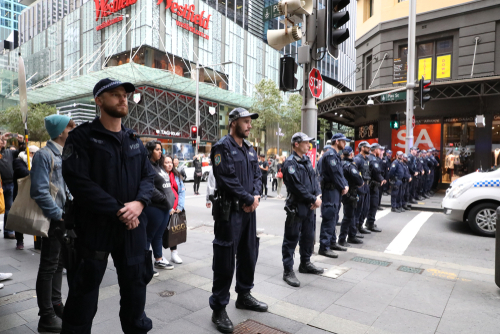
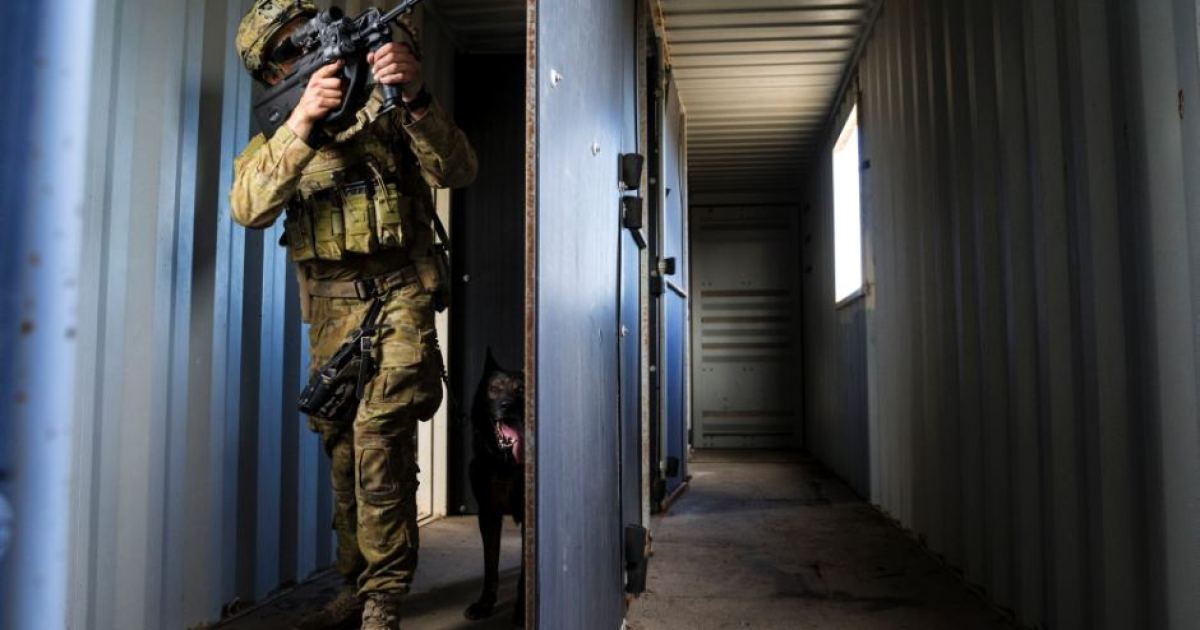
“Binigyan ang mga ministro ng kapangyarihang gamitin ang militar upang pigilan ang mga protestang domestiko at aksyon ng industriya, kasama ang mga kapangyarihang shoot-to-kill kapag ang imprastruktura ay nanganganib (tulad ng isang protestang pangkapaligiran na nagbabanta sa isang coal generator).”
Ang claim ay essentially **PARTIALLY TRUE** na may malaking kwalipikasyon.
The claim is essentially **PARTIALLY TRUE** with significant qualification.
Ang Coalition government ay nagpakilala ng lehislasyon noong 2018 na nagpalawak sa mga kapangyarihan ng military call-out, at ang mga kapangyarihang ito ay teknikal na umaabot sa higit pa sa terorismo sa mas malawak na mga scenario ng "domestic violence." Gayunpaman, ang framing sa claim ay misleading sa mga kritikal na paraan.
The Coalition government did introduce legislation in 2018 that broadened military call-out powers, and these powers did technically extend beyond terrorism to broader "domestic violence" scenarios.
### What Actually Happened
However, the framing in the claim is misleading in critical ways.
Ang Coalition ay nagpakilala ng **Defence Amendment (Call Out of the Australian Defence Force) Bill 2018** noong Hunyo 2018, na nagrepaso sa Part IIIAAA ng Defence Act 1903 [1].
### What Actually Happened
Ang lehislasyon ay tunay na bumaba sa threshold para sa pagdedeploy ng Australian Defence Force (ADF) sa domestiko [1]. **Key actual provisions:** 1. **Changed threshold**: Dating, ang militar ay maaari lamang tawagin kapag ang mga awtoridad ng estado/teritoryo ay "naubos na ang lahat ng iba pang mga pagpipilian." Ang bagong batas ay nagpayag ng call-out kapag ang ADF ay maaaring "pahusayin" ang kakayahan ng pulisya ng estado [1]. 2. **Shoot-to-kill provision exists, BUT with strict limitations**: Ang lehislasyon ay nagbigay sa mga miyembro ng ADF ng "limited shoot-to-kill powers" [1].
The Coalition introduced the **Defence Amendment (Call Out of the Australian Defence Force) Bill 2018** in June 2018, which revised Part IIIAAA of the Defence Act 1903 [1].
Gayunpaman, ang mga ito ay nilimitahan sa mga sitwasyon na kinasasangkutan ng "protection of life," "action against aircraft or vessel," at "protection of declared infrastructure" [1].
The legislation did lower the threshold for deploying the Australian Defence Force (ADF) domestically [1].
**Key actual provisions:**
1. **Changed threshold**: Previously, military could only be called upon when state/territory authorities had "exhausted all other options." The new bill allowed call-out when ADF could "enhance" the ability of state police [1].
2. **Shoot-to-kill provision exists, BUT with strict limitations**: The legislation did provide ADF members with "limited shoot-to-kill powers" [1].
Ang batas ay eksplisitong nangailangan na ang paggamit ng puwersa ay "reasonable and necessary" [1]. 3. **"Domestic violence" definition was constitutional, not new**: Ang terminong "domestic violence" ay nanggaling sa Section 119 ng Australian Constitution, na tumutukoy sa proteksyon laban sa "invasion and rebellion" [1].
However, these were constrained to situations involving "protection of life," "action against aircraft or vessel," and "protection of declared infrastructure" [1].
Ang ito ay hindi imbensyon ng Coalition—ito ay constitutional language tungkol sa pagpapanatili ng domestic order [1]. 4. **Environmental protests as application**: Ang Civil Liberties Australia CEO na si Bill Rowlings ay nagpahayag ng pag-aalala na ang mga tropa ay maaaring tawagan upang protektahan ang "declared infrastructure" tulad ng mga coal-fired power station sa panahon ng mga protestang pangkapaligiran [1].
The law explicitly required the use of force to be "reasonable and necessary" [1].
3. **"Domestic violence" definition was constitutional, not new**: The term "domestic violence" comes from Section 119 of the Australian Constitution, which refers to protection against "invasion and rebellion" [1].
Gayunpaman, ito ay isang hypothetical concern tungkol sa potensyal na paggamit ng batas, hindi isang ipinahayad na intensyon ng pamahalaan [1].
This was not a Coalition invention—it's constitutional language about maintaining domestic order [1].
4. **Environmental protests as application**: Civil Liberties Australia CEO Bill Rowlings did express concern that troops could be called to protect "declared infrastructure" like coal-fired power stations during environmental protests [1].
### What the Claim Overstates
However, this was a hypothetical concern about the bill's potential use, not a stated government intention [1].
1. **"Granted ministers to power"**: Ipinapahiwatig nito ang unilateral na ministerial authority.
### What the Claim Overstates
Sa katotohanan, tatlong mga ministro ang maaaring kumilos nang indibidwal (Prime Minister, Attorney-General, Defence Minister) o ang Governor-General ay maaaring aprubahan ang mga call-out [1].
1. **"Granted ministers to power"**: This suggests unilateral ministerial authority.
Ito ay parliamentary oversight, hindi unfettered ministerial power. 2. **"Quell domestic protests and industrial action"**: Ang lehislasyon ay eksplisitong nakaround sa terorismo at seryosong domestic violence, hindi sa pangkalahatang pagpigil ng protesta [2].
In reality, three ministers could act individually (Prime Minister, Attorney-General, Defence Minister) or the Governor-General could approve call-outs [1].
Sinabi ni Attorney-General Christian Porter na ang pagtawag ng mga tropa para sa isang "actual riot" ay "almost inconceivable" at "pretty fanciful" [2]. 3. **The specific environmental protest + coal generator scenario**: Ito ay isang hypothetical concern na itinaas ng mga tagapagtaguyod ng civil liberties, hindi isang ipinahayag na intensyon ng patakaran ng pamahalaan [1].
This is parliamentary oversight, not unfettered ministerial power.
2. **"Quell domestic protests and industrial action"**: The legislation was explicitly framed around terrorism and serious domestic violence, not general protest suppression [2].
Nawawalang Konteksto
### 1. **The Sydney Olympics Precedent**
### 1. **The Sydney Olympics Precedent**
Ang orihinal na mga kapangyarihan ng call-out ay unang ipinakilala ng **Labor government noong 1999-2000** bago ang Sydney Olympics [3].
The original call-out powers were first introduced by the **Labor government in 1999-2000** ahead of the Sydney Olympics [3].
Sinabi ng mga grupo ng civil liberties noong panahong iyon na ito ay "isang hindi kinakailangang over-reach na magbabago sa pundamental na papel ng militar," ngunit **sinuportahan ng Labor ang orihinal na kapangyarihan nang buong-buo, ibig sabihin walang epektibong oposisyon** [3].
Civil liberties groups said at the time it was "an unnecessary over-reach that would fundamentally change the role of the military," but **Labor supported the original power all-in, meaning there was no effective opposition** [3].
Ang mga pag-amyenda noong 2018 ay mga pagbabago sa isang framework na itinatag na ng Labor.
The 2018 amendments were modifications to a framework Labor had already established.
### 2. **The Lindt Café Siege Context**
### 2. **The Lindt Café Siege Context**
Ang mga pag-amyenda noong 2018 ay direktang hinimok ng Lindt Café siege noong Disyembre 2014 sa Sydney, kung saan ang gunman na si Man Haron Monis ay umagaw sa 18 na tao, na nagresulta sa 2 kamatayan [2].
The 2018 amendments were directly prompted by the December 2014 Lindt Café siege in Sydney, where gunman Man Haron Monis held 18 people hostage, resulting in 2 deaths [2].
Ang pulisya ay sinisi sa paghawak ng siege at ang tila pag-aatubiling tawagan ang special forces [2].
Police were criticized for handling of the siege and an apparent reluctance to call in special forces [2].
Naniniwala ang pamahalaan na ang mas maagang mga kapangyarihan ng call-out ay maaaring maiwasan ang trahedyang ito [2].
The government believed earlier call-out powers could have prevented this tragedy [2].
Mahalaga: **Ang NSW Government ay maaari nang humiling ng tulong mula sa ADF sa ilalim ng umiiral na batas** [3].
Critically: **The NSW Government could have already requested ADF assistance under the existing law** [3].
Ang tanong ay kung ang mas madali/mas mabilis na mga mekanismo ay kinakailangan para sa mga katulad na hinaharap na insidente.
The question was whether easier/faster mechanisms were needed for similar future incidents.
### 3. **Legal Oversight Remained**
### 3. **Legal Oversight Remained**
Sa kabila ng malawak na wika, ang lehislasyon ay nagpapanatili ng malalaking hadlang [1]: - Ang mga tauhan ng ADF ay nanatiling ilalim ng military command, hindi civilian police command [1] - Ang pulisya ng estado ay nanatiling kontrolado sa mga operasyon (maaaring gawin ng ADF ang mga gawain "hangga't makatuwiran") [1] - Ang Governor-General ay maaaring tanggihan ang mga utos ng call-out [1] - Ang parliamentary scrutiny ay nanatiling available [1]
Despite broad language, the legislation maintained substantial constraints [1]:
- ADF personnel remained under military command, not civilian police command [1]
- State police remained in control of operations (ADF could only carry out tasks "as far as reasonably practical") [1]
- The Governor-General could reject call-out orders [1]
- Parliamentary scrutiny remained available [1]
### 4. **"Shoot-to-kill" Terminology is Misleading**
### 4. **"Shoot-to-kill" Terminology is Misleading**
Ang lehislasyon ay gumamit ng terminong "limited shoot-to-kill powers," ngunit ito ay karaniwang military terminology para sa paggamit ng lethal force sa self-defense o proteksyon ng buhay, hindi mga kapangyarihan sa summary execution [1].
The legislation used the term "limited shoot-to-kill powers," but this is standard military terminology for use of lethal force in self-defense or protection of life, not summary execution powers [1].
Ang pulisya at militar ay may katumbas na awtorisasyon sa lethal force sa ilalim ng Australian law para sa mga tiyak na sitwasyon [1].
Police and military have equivalent lethal force authorization under Australian law for specific circumstances [1].
### 5. **Scope of "Domestic Violence" under Constitution**
### 5. **Scope of "Domestic Violence" under Constitution**
Ang pagpapalawak sa "domestic violence" ay hindi bago—ito ay constitutional language [1].
The expansion to "domestic violence" was not novel—this is constitutional language [1].
Ang Section 119 ng Constitution ay nililimitahan ang Commonwealth power sa proteksyon laban sa "invasion and rebellion" (domestic violence sa constitutional terms) [3].
Section 119 of the Constitution limits Commonwealth power to protection against "invasion and rebellion" (domestic violence in constitutional terms) [3].
Ang pangunahing tanong ay threshold: gaano kadaling maaaring tukuyin ang kapangyarihang ito?
The key question was threshold: how readily could this power be invoked?
Pagsusuri ng Kredibilidad ng Pinagmulan
**Kasama sa mga orihinal na pinagkunan:** 1. **Sydney Criminal Lawyers® blog** [1]: Ito ay isang law firm blog na pinapatakbo ng journalist na si Paul Gregoire.
**Original sources include:**
1. **Sydney Criminal Lawyers® blog** [1]: This is a law firm blog run by journalist Paul Gregoire.
Habang nanalo si Gregoire ng 2021 NSW Council for Civil Liberties Award, ang blog ay may malakas na civil liberties/libertarian perspective na binibigyang-diin ang worst-case interpretations ng security legislation [1].
While Gregoire won the 2021 NSW Council for Civil Liberties Award, the blog has a strong civil liberties/libertarian perspective that emphasizes worst-case interpretations of security legislation [1].
Ang analysis ay legally competent ngunit nag-frame ng mga isyu mula sa malakas na civil liberties viewpoint. 2. **The New Daily** [2]: Ito ay isang left-leaning/Labor-aligned na balita outlet.
The analysis is legally competent but frames issues from a strong civil liberties viewpoint.
2. **The New Daily** [2]: This is a left-leaning/Labor-aligned news outlet.
Ang artikulo ay sumangguni sa mga pahayag ni Attorney-General Porter at mga komento ni Defense Minister Payne ngunit binibigyang-diin ang mga nakababahalang aspeto ng lehislasyon [2]. 3. **ABC News opinion piece by Michael Bradley** [3]: Ito ay malinaw na naka-label na opinion ng isang managing partner sa law firm na Marque Lawyers.
The article references Attorney-General Porter's statements and Defense Minister Payne's comments but emphasizes concerning aspects of the legislation [2].
3. **ABC News opinion piece by Michael Bradley** [3]: This is clearly labeled opinion by a managing partner at law firm Marque Lawyers.
Itinaas ni Bradley ang mga lehitimong constitutional concern tungkol sa paghihiwalay ng military-domestic policing, ngunit ito ay opinion analysis, hindi straight reporting [3]. **Assessment**: Ang tatlong pinagkunan ay may mga ipinakikitang left-of-center na political leanings at malaking pokus sa worst-case scenarios at mga pag-aalala sa civil liberties.
Bradley raises legitimate constitutional concerns about military-domestic policing separation, but this is opinion analysis, not straight reporting [3].
**Assessment**: All three sources have demonstrated left-of-center political leanings and focus heavily on worst-case scenarios and civil liberties concerns.
Ang legal analysis ay pangkalahatang maayos, ngunit ang mga pinagkunan ay hindi komprehensibong tinalakay ang mga pagtatanggol ng pamahalaan o nagbigay ng balanseng risk assessment.
The legal analysis is generally sound, but the sources do not discuss government justifications comprehensively or provide balanced risk assessment.
⚖️
Paghahambing sa Labor
**Sumuporta ba ang Labor sa katulad na mga kapangyarihan?** Oo, mahalaga: **Ipinakilala ng Labor ang orihinal na mga kapangyarihan ng military call-out noong 1999-2000** para sa Sydney Olympics [3].
**Did Labor support similar powers?**
Yes, crucially: **Labor introduced the original military call-out powers in 1999-2000** for the Sydney Olympics [3].
Tandaang eksplisito ng abogadong si Michael Bradley: "Ang umiiral na batas ng call-out sa Defence Act ay nilikha nang madalian bago ang Sydney Olympics, at ito ay kontrobersyal noon.
Lawyer Michael Bradley explicitly notes: "The existing call-out law in the Defence Act was created in a rush ahead of the Sydney Olympics, and it was controversial then.
Sinabi ng mga abogado at grupo ng civil liberties noong panahong iyon na ito ay isang hindi kinakailangang over-reach na magbabago sa pundamental na papel ng militar. **Gayunpaman, sinuportahan ito ng Labor nang buong-buo, ibig sabihin walang epektibong oposisyon**" [3].
Lawyers and civil liberties groups said at the time it was an unnecessary over-reach that would fundamentally change the role of the military. **However, Labor supported it all-in, meaning there was no effective opposition**" [3].
Ito ay kritikal: Hindi imbento ng Coalition ang konsepto ng mga kapangyarihan ng military call-out para sa domestic use—ginawa ito ng Labor.
This is critical: The Coalition did not invent the concept of military call-out powers for domestic use—Labor did.
Binago at pinalawak ng Coalition ang mga kapangyarihan na itinatag na ng Labor at na kontrobersyal na noon pa. **Iba pang mga precedent ng Labor:** - Ang suporta ng Labor sa Howard-era para sa military involvement sa mga operasyon ng asylum seeker ay binanggit bilang isang mas maagang blur ng military-domestic boundaries [3] - Walang ebidensya na sinubukan ng Labor na ibasura ang orihinal na mga kapangyarihan ng call-out nang nasa oposisyon (2013-2022 sa ilalim ng Coalition government)
The Coalition modified and expanded powers that Labor had already established and that were already controversial.
**Other Labor precedents:**
- Labor's Howard-era support for military involvement in asylum seeker operations was cited as an earlier blur of military-domestic boundaries [3]
- No evidence that Labor subsequently tried to repeal the original call-out powers when in opposition (2013-2022 under Coalition government)
🌐
Balanseng Pananaw
### The Government's Case (Bihirang Banggitin sa Mga Pinagkunan)
### The Government's Case (Rarely Mentioned in Sources)
Ang argumento ng Coalition ay: 1. **Mahalaga ang bilis sa pagtugon sa terorismo**: Ang mga modernong pag-atake ng terorista (pag-atake ng kutsilyo, pagbambanggamit ng sasakyan, lone actors) ay maaaring matapos sa loob ng ilang minuto, na nangangailangan ng agarang pagtugon [3].
The Coalition argued that:
1. **Speed matters in terrorism response**: Modern terrorist attacks (knife attacks, vehicle ramming, lone actors) can be over in minutes, requiring immediate response [3].
Ang Lindt Café siege ay tumagal ng 16 na oras; ang mga modernong pag-atake ay maaaring hindi magbigay ng oras para sa mga estado na pormal na humiling ng tulong militar at harapin ang mga proseso ng bureaucracy [2]. 2. **May constitutional foundation**: Ang Section 119 ay nagbibigay na ng Commonwealth power na tumugon sa "domestic violence" (constitutional terminology para sa internal disorder) [3].
The Lindt Café siege lasted 16 hours; modern attacks may not allow time for states to formally request military aid and navigate bureaucratic processes [2].
2. **Constitutional foundation exists**: Section 119 already provides Commonwealth power to respond to "domestic violence" (constitutional terminology for internal disorder) [3].
Ang amyenda ay naglinaw kung kailan maaaring isagawa ang kapangyarihang ito, hindi kung maaari itong mag-eksistensya [3]. 3. **Ang aktwal na paggamit ay nanatiling limitado**: Kahit na may mga pag-amyenda, sinabi ni Attorney-General Porter na ang pagtawag ng mga tropa para sa isang "aktwal na riot" ay "almost inconceivable" [2].
The amendment clarified when this power could be exercised, not whether it could exist [3].
3. **Actual use remains constrained**: Even with the amendments, Attorney-General Porter said calling out troops for an "actual riot" would be "almost inconceivable" [2].
Ang mga kapangyarihan ay para sa terorismo at mga ekstremang emergency, hindi sa pangkaraniwang pagpigil ng protesta [2]. 4. **Ang mga awtoridad ng estado ay nananatiling kontrolado**: Sa kabila ng pederal na awtoridad ng call-out, ang pulisya ng estado ay nananatiling may operational control at hindi maaaring lampasan ng mga sundalo ang mga gawain na hiniling ng mga awtoridad ng estado [1].
The powers are for terrorism and extreme emergencies, not routine protest suppression [2].
4. **State authorities remain in control**: Despite federal call-out authority, state police retain operational control and soldiers cannot exceed tasks requested by state authorities [1].
### The Civil Liberties Concerns (Valid)
### The Civil Liberties Concerns (Valid)
Ang critique ay lehitimo rin: 1. **Ang threshold ay tunay na bumaba**: Ang paglipat mula "naubos na ang lahat ng mga pagpipilian" sa "maaaring pahusayin ang kakayahan" ay isang mahalagang pagbabago [1].
The critique is also legitimate:
1. **The threshold genuinely lowered**: Moving from "exhausted all options" to "could enhance capability" is a significant change [1].
Ang pagkakaroon ng mga tangke na available ay malinaw na "pahuhusay" ang kakayahan ng pulisya [3]. 2. **Ang precedent ay nagdudulot ng panganib**: Kapag naging malabo ang mga hangganan ng military-domestic policing, ang mga hinaharap na pamahalaan ay maaaring magpalawak ng paggamit.
Having tanks available obviously "enhances" police capability [3].
2. **Precedent creates danger**: Once military-domestic policing boundaries blur, future governments could expand usage.
Binanggit ng mga may-akda ang Turkey at Hungary bilang mga halimbawang nagbababala ng mga demokrasya kung saan ang mga hakbang na ito ay inabuso sa huli [1]. 3. **Ang proteksyon ng imprastruktura ay malabo**: Ang pagdedeklara ng imprastruktura at pagdedeploy ng mga tropa upang protektahan ito mula sa mga nagpoprotesta ay lumilikha ng mga pagkakataon para sa pang-aabuso, partikular sa paligid ng mga sensitibong target sa pulitika (coal plants, ports) [1]. 4. **Ang prinsipyo ng demokrasya ay nakataya**: Ang pundamental na paghihiwalay sa pagitan ng militar at domestic policing ay isang pangunahing prinsipyo ng demokrasya [3].
The authors cite Turkey and Hungary as cautionary examples of democracies where such measures were later abused [1].
3. **Infrastructure protection is vague**: Declaring infrastructure and deploying troops to protect it from protesters creates opportunities for abuse, particularly around politically sensitive targets (coal plants, ports) [1].
4. **Democratic principle at stake**: The fundamental separation between military and domestic policing is a key democratic principle [3].
Kapag iniwan, mahirap ibalik [3].
Once abandoned, it's difficult to restore [3].
### Who Was Right?
### Who Was Right?
Ito ay sa huli ay isang **values dispute, hindi isang factual one**. - **Kung inuuna mo ang bilis ng pagtugon sa emergency at national security**: Ang mga argumento ng pamahalaan para sa mas madaling call-out ay makatuwiran.
This is ultimately a **values dispute, not a factual one**.
- **If you prioritize emergency response speed and national security**: The government's arguments for easier call-out are reasonable.
Ang modernong terorismo ay mabilis at kumakalat. - **Kung inuuna mo ang mga constitutional constraint at precedent ng civil liberties**: Ang mga pag-aalala sa civil liberties ay lehitimo.
Modern terrorism is fast and distributed.
- **If you prioritize constitutional constraints and civil liberties precedent**: The civil liberties concerns are legitimate.
Ang pagbura ng mga hangganan ng military-domestic policing ay historikal na mapanganib. **The honest assessment**: Ang dalawang panig ay may mga depensiblang posisyon.
Blurring military-domestic policing lines is historically dangerous.
**The honest assessment**: Both sides have defensible positions.
Ang lehislasyon ay tunay na nagpalawak ng mga kapangyarihan ng military call-out sa labas ng orihinal na framing na partikular sa terorismo, at ito ay pinalawak sa "domestic violence" na malawak na tinukoy.
The legislation did genuinely broaden military call-out powers beyond the original terrorism-specific framing, and it did extend to "domestic violence" broadly defined.
Gayunpaman, ito ay hindi isang panukala para mag-deploy ng militar para sa pangkaraniwang pagpigil ng protesta, ni hindi ito natatangi—ang Labor ay nakaestablish na ng mga kapangyarihan ng military call-out.
However, it was not a proposal to deploy military for routine protest suppression, nor was it unique—Labor had already established military call-out powers.
Ang claim na maaaring ito ay magamit para sa mga protestang pangkapaligiran na nagbabanta sa mga coal generator ay **teknikal na posible sa ilalim ng wika ng lehislasyon** ngunit **operasyonal at pulitikal na hindi malamang** maliban kung isang pamahalaan ay sadyang pipiliing tawagin ito.
The claim that this could be used for environmental protests threatening coal generators is **technically possible under the legislation's language** but **operationally and politically unlikely** unless a government deliberately chose to invoke it.
BAHAGYANG TOTOO
6.0
sa 10
— Ang claim ay tumpak na naglalarawan sa teknikal na saklaw ng lehislasyon ngunit nagmislead sa pamamagitan ng pag-omisyon at framing. **What's true:** - Ang Coalition ay nagpakilala ng lehislasyon na nagpalawak sa mga kapangyarihan ng military call-out [1] - Ang mga kapangyarihang ito ay teknikal na umaabot sa higit pa sa terorismo sa mas malawak na "domestic violence" [1] - Ang mga protestang pangkapaligiran na nagta-target sa imprastruktura ay maaaring saklawin sa teoriya [1] - Ang awtorisasyon ng lethal force ay kasama [1] **What's misleading or omitted:** - Ang mga kapangyarihan ay nililimitahan ng constitutional definition, ministerial oversight, at Governor-General approval [1] - Ito ay isang pagpapalawak ng mga kapangyarihan **na orihinal na itinatag ng Labor** noong 1999-2000 [3] - Eksplisitong sinabi ng pamahalaan na ang mga tropa para sa karaniwang riot ay "inconceivable" [2] - Ang lehislasyon ay hinimok ng isang tiyak na trahedya (Lindt siege) kung saan ang mga umiiral na kapangyarihan ay maaaring nakatulong [2] - Ang mga pag-aalala sa civil liberties ay lehitimo ngunit kumakatawan sa isang values dispute, hindi ebidensya ng intensyon na abusuhin
— The claim accurately describes the legislation's technical scope but misleads through omission and framing.
**What's true:**
- The Coalition did introduce legislation broadening military call-out powers [1]
- These powers technically extend beyond terrorism to broader "domestic violence" [1]
- Environmental protests targeting infrastructure could theoretically be covered [1]
- Lethal force authorization was included [1]
**What's misleading or omitted:**
- Powers are constrained by constitutional definition, ministerial oversight, and Governor-General approval [1]
- This was an expansion of powers **Labor originally created** in 1999-2000 [3]
- Government explicitly stated troops for routine riots would be "inconceivable" [2]
- The legislation was prompted by a specific tragedy (Lindt siege) where existing powers might have helped [2]
- Civil liberties concerns are legitimate but represent a values dispute, not evidence of intended abuse
Huling Iskor
6.0
SA 10
BAHAGYANG TOTOO
— Ang claim ay tumpak na naglalarawan sa teknikal na saklaw ng lehislasyon ngunit nagmislead sa pamamagitan ng pag-omisyon at framing. **What's true:** - Ang Coalition ay nagpakilala ng lehislasyon na nagpalawak sa mga kapangyarihan ng military call-out [1] - Ang mga kapangyarihang ito ay teknikal na umaabot sa higit pa sa terorismo sa mas malawak na "domestic violence" [1] - Ang mga protestang pangkapaligiran na nagta-target sa imprastruktura ay maaaring saklawin sa teoriya [1] - Ang awtorisasyon ng lethal force ay kasama [1] **What's misleading or omitted:** - Ang mga kapangyarihan ay nililimitahan ng constitutional definition, ministerial oversight, at Governor-General approval [1] - Ito ay isang pagpapalawak ng mga kapangyarihan **na orihinal na itinatag ng Labor** noong 1999-2000 [3] - Eksplisitong sinabi ng pamahalaan na ang mga tropa para sa karaniwang riot ay "inconceivable" [2] - Ang lehislasyon ay hinimok ng isang tiyak na trahedya (Lindt siege) kung saan ang mga umiiral na kapangyarihan ay maaaring nakatulong [2] - Ang mga pag-aalala sa civil liberties ay lehitimo ngunit kumakatawan sa isang values dispute, hindi ebidensya ng intensyon na abusuhin
— The claim accurately describes the legislation's technical scope but misleads through omission and framing.
**What's true:**
- The Coalition did introduce legislation broadening military call-out powers [1]
- These powers technically extend beyond terrorism to broader "domestic violence" [1]
- Environmental protests targeting infrastructure could theoretically be covered [1]
- Lethal force authorization was included [1]
**What's misleading or omitted:**
- Powers are constrained by constitutional definition, ministerial oversight, and Governor-General approval [1]
- This was an expansion of powers **Labor originally created** in 1999-2000 [3]
- Government explicitly stated troops for routine riots would be "inconceivable" [2]
- The legislation was prompted by a specific tragedy (Lindt siege) where existing powers might have helped [2]
- Civil liberties concerns are legitimate but represent a values dispute, not evidence of intended abuse
Hindi tama sa katotohanan o malisyosong gawa-gawa.
4-6: BAHAGYA
May katotohanan ngunit kulang o baluktot ang konteksto.
7-9: HALOS TOTOO
Maliit na teknikal na detalye o isyu sa pagkakasulat.
10: TUMPAK
Perpektong na-verify at patas ayon sa konteksto.
Pamamaraan: Ang mga rating ay tinutukoy sa pamamagitan ng cross-referencing ng opisyal na mga rekord ng pamahalaan, independiyenteng mga organisasyong nag-fact-check, at mga primaryang dokumento.