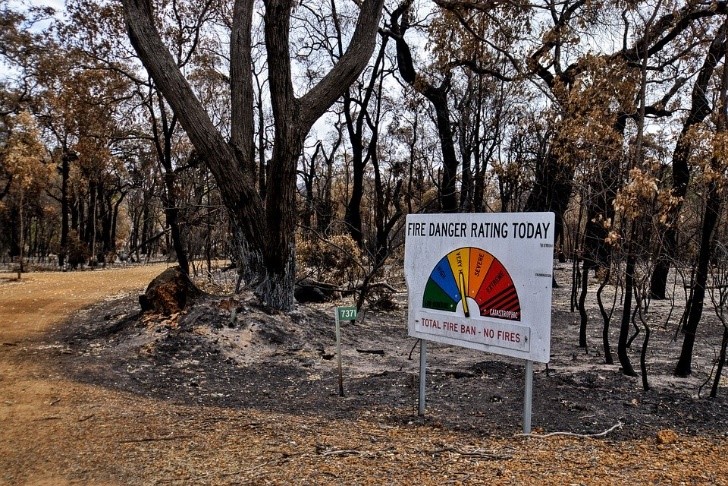
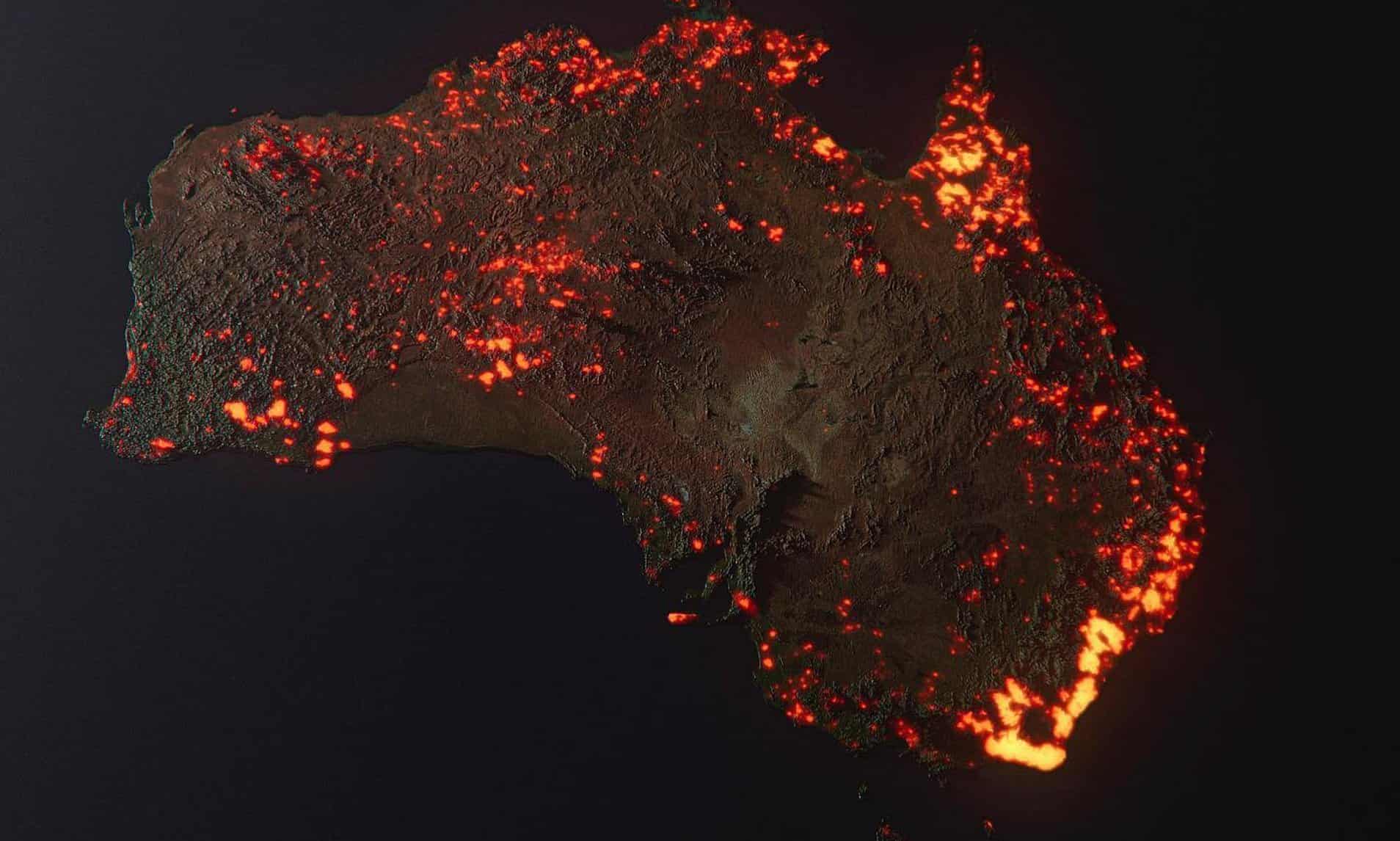
“Sinisi ang hindi karaniwang masamang panahon ng sunog sa kagubatan sa hindi pa naranasang pagsunog gamit ang apoy (arson), gayong ang ebidensya ay nagpapakita na karamihan sa mga sunog ay nagsimula sa kidlat.”
Ang pag-aangkin ay tama na kinilala ng Koalisyon na ang pagsunog gamit ang apoy ang sanhi ng krisis ng sunog sa kagubatan noong 2019-20.
The claim correctly identifies that the Coalition Government initially blamed arson for the 2019-20 bushfire crisis.
Sinabi ni Home Affairs Minister Peter Dutton sa isang panayam sa ABC TV noong Pebrero 5, 2020: "Nagsimula ito dahil may umilaw ng posporo.
Home Affairs Minister Peter Dutton stated in a February 5, 2020 ABC TV interview: "It started because somebody lit a match.
Ang ibig kong sabihin, mayroong 250 katao, sa aking pagkakaunawa, o higit pa, na sinampahan ng kasong pagsunog.
I mean there are 250 people as I understand it, or more, that have been charged with arson.
Hindi iyon climate change" [1].
That's not climate change" [1].
Gayunpaman, ang pangunahing pag-aangkin na karamihan sa mga sunog ay nagsimula sa kidlat, hindi sa pagsusunog gamit ang apoy, ay **substantial na sinuportahan ng ebidensya**. **Kidlat bilang Pangunahing Sanhi:** Ang imbestigasyon ng RMIT ABC Fact Check (inilathala noong Pebrero 17, 2020) ay nakakatuklas na "sa Victoria, ang mga tauhan ng serbisyo ng emergency ay nagpunyagi na ipaliwanag na ang mga pag-atake ng kidlat ang sanhi ng malalaking sunog — sa East Gippsland at hilagang-silangan" [2].
However, the core factual claim—that most fires were started by lightning, not arson—is **substantially supported by evidence**.
**Lightning as Primary Cause:**
The RMIT ABC Fact Check investigation (published Feb 17, 2020) found that "in Victoria, emergency services personnel have been at pains to point out that lightning strikes caused the big fires — in East Gippsland and the north-east" [2].
Gayundin, "sa NSW, ang mga tauhan ng serbisyo ng emergency ay tumuturo sa mga bagyo ng tuyong kidlat bilang sanhi ng karamihan sa malalaking sunog" [3].
Similarly, "in NSW, emergency services personnel have pointed to dry lightning storms as the cause of most of the big fires" [3].
Ayon sa FAQ ng Parliamentary Library tungkol sa mga sunog noong 2019-20, "ang Victorian Country Fire Authority (CFA) at ang NSW RFS" ay nagkumpirma na "karamihan sa mga sunog noong 2019–20 sa Victoria at NSW ay sanhi ng kidlat" [4].
According to the Parliamentary Library's 2019-20 bushfires FAQ, "the Victorian Country Fire Authority (CFA) and the NSW RFS" confirmed that "the majority of the 2019–20 fires in Victoria and NSW were caused by lightning" [4].
Ang CSIRO ay nagsasabing ang kidlat ay "karaniwang" sanhi ng mga sunog sa kagubatan: "Ang mga sunog sa kagubatan ay resulta ng kombinasyon ng panahon at vegetation (na kumikilos bilang panggatong para sa apoy), kasama ang paraan ng pagsisimula ng apoy — karaniwang dahil sa pag-atake ng kidlat" [5].
The CSIRO states that lightning is "most commonly" the cause of bushfires: "Bushfires are the result of a combination of weather and vegetation (which acts as a fuel for the fire), together with a way for the fire to begin – most commonly due to a lightning strike" [5].
Ang Geoscience Australia ay nagsasabi na ang kidlat ay "sumasaklaw sa humigit-kumulang kalahati ng lahat ng mga pagsiklab sa Australia" [6].
Geoscience Australia reports that lightning "accounts for about half of all ignitions in Australia" [6].
Isang pinagkukunan ay nakakita na ang kidlat ang responsable sa "mahigit 30% ng kabuuang mga pagsiklab ng apoy" sa Victoria at NSW noong 2019-2020 [7]. **Mga Labis na Pahayag tungkol sa Pagsusunog:** Ang pag-aangkin ni Dutton na 250 katao ang sinampahan ng kaso ng pagsusunog sa kasalukuyang krisis ay factually misleading.
One source found that lightning was responsible for "over 30% of the total fire outbreaks" in Victoria and NSW during 2019-2020 [7].
**Arson Numbers Exaggerated:**
Dutton's claim of 250 people charged with arson during the current crisis was factually misleading.
Ang imbestigasyon ng ABC Fact Check ay nakakatuklas na sa lahat ng estado at teritoryo mula Agosto 2019 hanggang Pebrero 2020: - NSW: 55 katao ang "humarap sa legal na aksyon" (hindi lahat sinampahan ng kaso; kasama ang mga babala) [8] - Victoria: Walang kaso na direktang konektado sa malalaking sunog (East Gippsland, North East) [9] - Queensland: 109 ang napag-alamang may kaso (73 ay mga menor de edad; ang datos ay hindi nagdidistinguish sa "recklessly" vs "deliberately") [10] - South Australia: 12 ang sinampahan ng kaso [11] - Western Australia: 10 ang sinampahan ng kaso [12] - Tasmania: 3 kaso at 3 babala sa mga kabataan [13] - ACT: 0 kaso para sa pagsusunog sa kagubatan [14] - NT: 6 ang sinampahan ng kaso [15] Nakapagkonklusyon ang ABC: "Kung isasama ang lahat ng ito sa konsiderasyon, ang mga numero ay nagpapakita na hindi hihigit sa 195 katao ang sinampahan ng kaso sa pagsimula ng apoy nang sinasadya o pabaya.
The ABC Fact Check investigation found that across all states and territories from August 2019 through February 2020:
- NSW: 55 people faced "legal action" (not all charged; includes cautions) [8]
- Victoria: No charges specifically linked to major fires (East Gippsland, North East) [9]
- Queensland: 109 dealt with (73 were juveniles; data doesn't distinguish "recklessly" vs "deliberately") [10]
- South Australia: 12 charged [11]
- Western Australia: 10 charged [12]
- Tasmania: 3 charges and 3 youth cautions [13]
- ACT: 0 charges for bushfire arson [14]
- NT: 6 charged [15]
The ABC concluded: "Taking all of this into consideration, the figures suggest that no more than 195 people have been either charged with deliberately or recklessly starting a fire.
Mahigit sa kalahati ng kabuuan (109) ay mula sa Queensland, kung saan walang pagkakaiba sa pagitan ng pagsisimula ng apoy nang pabaya o sinasadya" [16].
More than half the total (109) comes from Queensland, where there is no distinction between recklessly and deliberately lighting a fire" [16].
Nawawalang Konteksto
Ang pag-aangkin ay nagpapabaya sa ilang mahahalagang punto: **Kalikasan ng Malalaki vs Maliit na Sunog:** Ang pag-aangkin na sinisi ang pagsusunog ay hindi nagdidistinguish sa pagitan ng bilang ng sunog at laki ng sunog.
The claim omits several important points:
**Nature of Large vs Small Fires:** The claim that arson was blamed doesn't distinguish between fire *numbers* and fire *size*.
Bagama't ang ilang maliliit na sunog ay maaaring sinadya, ang mga malalaking sunog na nagdulot ng karamihan sa pinsala, kamatayan, at pagkawasak — ay pangunahing sanhi ng kidlat.
While some small fires may have been deliberately lit, the major catastrophic fires—which caused most damage, deaths, and devastation—were predominantly lightning-caused.
Ang mga sunog na nagsimula sa kidlat ay may posibilidad na masusunog sa malayong lugar (mas mahirap na maagang matuklasan) at kaya ay lumalaki [17].
Lightning-started fires tend to burn in remote terrain (harder to detect early) and thus grow larger [17].
Ang mga sunog na pagsusunog ay karaniwang nangyayari malapit sa mga lugar na may tao at mas maagang natutuklasan [18]. **Ang Papel ng Klima at Panahon:** Bagama't ang pag-aangkin ay tama na kinilala ang kidlat bilang pangunahing sanhi, binabalewala nito ang mga kritikal na nagpapalalang salik: ang panahon ng 2019-20 ay ang pinakamainit na taon sa talaan ng Australia (40% mas mababa sa karaniwang presipitasyon) at pinakamainit na taon sa talaan [19].
Arson fires typically occur near populated areas and are detected sooner [18].
**The Role of Climate and Weather:** While the claim correctly identifies lightning as the primary cause, it omits the critical amplifying factors: the 2019-20 season was Australia's driest year on record (40% below average rainfall) and warmest year on record [19].
Ang mga pambihirang kondisyon ng tagtuyot ay nagdulot ng hindi pangkaraniwang tuyo at madaling masunog na vegetation, anuman ang pinagmulan ng pagsiklab [20].
These exceptional drought conditions made vegetation unusually dry and flammable, regardless of ignition source [20].
Ang CSIRO at CSIRO-Bureau of Meteorology ay parehong nagbibigay-diin na ang pagbabago ng klima ay nagpahaba ng mga panahon ng sunog at nagdulot ng pagtaas sa pagiging matindi ng panahon ng sunog [21]. **Pagsusunog bilang Pangalawang Isyu:** Ang fact-checking ay nagpapakita na ang pagsusunog ay hindi maliit na problema — lamang hindi pangunahing nagtutulak sa "hindi pa naranasang" pagiging matindi.
The CSIRO and CSIRO-Bureau of Meteorology both emphasized that climate change had extended fire seasons and increased the frequency of extreme fire weather [21].
**Arson as Secondary Issue:** The fact-checking indicates arson was not insignificant—just not the primary driver of the "unprecedented" severity.
Tandaan ng ABC: "Ang pagsusunog sa kagubatan ay hindi maliit na problema.
The ABC noted: "Bushfire arson is not an insignificant problem.
Ngunit sa konteksto ng kasalukuyang krisis ng sunog sa kagubatan, walang ebidensya na ang pagsusunog ay labis na responsable, o kahit na bahagyang responsable" [22]. **Historical Data sa Pagsusunog:** Ang datos ng Victoria ay nagpakita na ang mga kasalanan na may layuning pagsusunog sa kagubatan ay aktwal na *bumaba* sa taon hanggang Setyembre 2019, at "mas mababa sa average ng 10 taon" [23].
But in the context of the current bushfire crisis, there is simply no evidence that arson was overwhelmingly responsible, or even moderately responsible" [22].
**Historical Arson Data:** Victorian data showed intentionally-caused bushfire offences actually *fell* in the year to September 2019, and were "well below the 10-year average" [23].
Ang datos ng NSW ay nagpakita ng katulad na mga pattern, na may mga numero na "mas mababa sa average ng 10 taon noong 2019, na nag-peak noong 2014" [24].
NSW data showed similar patterns, with numbers "below the 10-year average in 2019, having peaked in 2014" [24].
Ito ay sumisira sa mga pag-aangkin ng "hindi pa naranasang" pagsusunog.
This undermines claims of "unprecedented" arson.
Pagsusuri ng Kredibilidad ng Pinagmulan
**Mga Orihinal na Pinagkukunan na Ibinigay:** Ang unang pinagkukunan (artikulo ng ABC Fact Check) ay lubos na maaasahan.
**Original Sources Provided:**
The first source (ABC Fact Check article) is highly credible.
Ang fact-checking unit ng ABC, na ginawa ng mga mamamahayag ng RMIT, ay kilala bilang isa sa pinakamahigpit na fact-checking operations sa Australia.
The ABC's Fact Check unit, produced by RMIT journalists, is regarded as one of Australia's most rigorous fact-checking operations.
Ang artikulo ay malawak na may mga pinagkukunan na may direktang mga quote mula sa mga opisyal ng serbisyo ng emergency, datos ng pagpapatupad ng batas, at mga ekspertong siyentipiko sa sunog sa kagubatan [25].
The article is extensively sourced with direct quotes from emergency services officials, law enforcement data, and expert bushfire scientists [25].
Ang ikalawang pinagkukunan (artikulo ng micky.com.au tungkol sa digital strip search) ay walang kaugnayan sa sanhi ng sunog sa kagubatan at hindi maaasahang pinagkukunan para sa pag-aangking ito.
The second source (micky.com.au article about a digital strip search) has no relevance to bushfire causation and is not a credible source for this claim.
Ang pagkakasama nito ay nagpapahiwatig ng mahinang pananaliksik o sinadya na pagdagdag ng pinagkukunan.
Its inclusion suggests either poor research or deliberate source padding.
🌐
Balanseng Pananaw
**Perspektiba ng Koalisyon:** Ang pokus ng pamahalaan ng Koalisyon sa pagsusunog ay sumalamin sa paghuhulma ng batas at kaayusan ng krisis.
**Coalition's Perspective:**
The Coalition government's focus on arson reflected a law-and-order framing of the crisis.
Ang ilang lehitimong punto: (1) ang pagsusunog ay totoong problema na nangangailangan ng aksyon ng pulisya, (2) ang pamamahala ng panggatong at paghahanda sa emergency ay mahalaga anuman ang patakaran sa klima, (3) hindi lahat ng panahon ng sunog ay maiiwasan sa pamamagitan ng pagbabawas ng emisyon.
Some legitimate points: (1) arson is a real problem requiring police action, (2) fuel management and emergency preparedness matter regardless of climate policy, (3) not all fire seasons can be prevented by emissions reductions.
Si Peter Dutton, bilang Home Affairs Minister na namamahala sa pederal na pulisya, ay may mga institusyunal na dahilan para bigyang-diin ang anggulo ng batas at kaayusan.
Peter Dutton, as Home Affairs Minister overseeing federal police, had institutional reasons to emphasize the law-and-order angle.
Gayunpaman, ang ebidensya ay nagpapakita na ang pagbibigay-diin ng pamahalaan sa pagsusunog bilang pangunahing sanhi ay misleading.
However, the evidence shows the government's emphasis on arson as the primary cause was misleading.
Ang pag-aangkin ni Dutton na "250 sinampahan ng kaso" ay factually incorrect — ang aktwal na numero ay mas malapit sa 195, na may malaking double-counting at kasama ang mga menor de edad at mga hindi sinadya [29]. **Bakit Mahalaga Ito:** Ang paglilihis ng atensyon sa pagsusunog ay nagbaba ng boses sa mga hindi pa naranasang klimatikong kondisyon (pinakamainit na taon sa talaan, pinakamainit na taon sa talaan) na pundamental na nagbigay-daan sa krisis ng sunog sa kagubatan.
Dutton's "250 charged" figure was factually incorrect—the actual number was closer to 195, with significant double-counting and inclusion of juveniles and non-deliberate fires [29].
**Why This Matters:**
Misdirecting attention to arson downplayed the unprecedented climatic conditions (driest year on record, hottest year on record) that fundamentally enabled the bushfire crisis.
Tulad ng ipinaliwanag ng CSIRO: "Ang pagbabago ng klima ay hindi direktang nagdudulot ng mga sunog ngunit nagdulot ng pagtaas sa paglitaw ng matinding panahon ng sunog at sa haba ng panahon ng sunog sa malaking bahagi ng Australia mula noong 1950s" [30].
As the CSIRO explained: "Climate change doesn't cause fires directly but has caused an increase in the occurrence of extreme fire weather and in the length of the fire season across large parts of Australia since the 1950s" [30].
Tandaan ng analysis ng Parliamentary Library: "Anuman ang paraan ng pagsisimula ng mga sunog sa kagubatan, ang mas mainit, mas tuyong kondisyon ay nagpapalala sa kanilang epekto.
The Parliamentary Library's analysis noted: "Regardless of how bushfires are started, hotter, drier conditions are exacerbating their impact.
Dito pumapasok ang pagbabago ng klima" [31]. **Pangunahing Pagkilala:** Ang pag-iwas sa sunog sa pamamagitan ng pamamahala ng panggatong, paghahanda, at tugon sa emergency *ay* mahalaga, at ang Koalisyon ay nagmobilisa ng malalaking resources (6,500 ADF personnel ang ini-deploy) [32].
This is where climate change comes in" [31].
**Key Acknowledgment:** Fire prevention through fuel management, preparedness, and emergency response *are* important, and the Coalition did mobilize significant resources (6,500 ADF personnel deployed) [32].
Ang pagkakaiba-iba ay hindi kung mahalaga ang tugon sa emergency, kung hindi kung ang pagmiminimize sa mga salik ng klima ay sapat na tugon sa isang hindi pa naranasang krisis.
The disagreement was not whether emergency response matters, but whether downplaying climate factors was an adequate response to an unprecedented crisis.
BAHAGYANG TOTOO
7.0
sa 10
Ang pag-aangkin ay tama na kinilala na sinisi ng Koalisyon ang pagsusunog para sa panahon ng sunog sa kagubatan at na karamihan sa ebidensya ay nagpapakita na ang kidlat (hindi pagsusunog) ang pangunahing pinagmulan ng pagsiklab.
The claim correctly identifies that the Coalition blamed arson for the bushfire season and that most evidence shows lightning (not arson) was the primary ignition source.
Gayunpaman, ang pag-aangkin ay hindi kumpleto sa paghuhulma ng isyu sa pamamagitan ng pagmungkahi na ang "pagsisisi sa hindi pa naranasang pagsusunog" ng Koalisyon ay simpleng mali — kung saan sa katotohanan ang problema ay mas nuanced: (1) nangyari ang ilang pagsusunog ngunit hindi "hindi pa naranasang" (mas mababa sa mga makasaysayang average), (2) ang pagsusunog ay pangalawa sa kidlat para sa malalaking sunog, at (3) ang tunay na isyu ay ang hindi pa naranasang kondisyon ng tagtuyot at init na nagdulot ng matinding pinsala anuman ang sanhi.
However, the claim incompletely frames the issue by suggesting the Coalition's "blame on unprecedented arson" was simply false—when in fact the problem was more nuanced: (1) some arson occurred but was not "unprecedented" (below historical averages), (2) arson was secondary to lightning for major fires, and (3) the real issue was the unprecedented drought and heat conditions that made fires catastrophic regardless of cause.
Ang pag-aangkin ay kapaki-pakinabang na nagwasto sa isang misleading na kwento ng pamahalaan ngunit kulang sa pagbibigay-diin na ang mga salik ng klima/panahon (na binaba ng pamahalaan) ang tunay na mga hindi pa naranasang elemento ng panahon ng 2019-20.
The claim usefully corrects a misleading government narrative but undershoots by not emphasizing that climate/weather factors (which the government downplayed) were the true unprecedented elements of the 2019-20 season.
Huling Iskor
7.0
SA 10
BAHAGYANG TOTOO
Ang pag-aangkin ay tama na kinilala na sinisi ng Koalisyon ang pagsusunog para sa panahon ng sunog sa kagubatan at na karamihan sa ebidensya ay nagpapakita na ang kidlat (hindi pagsusunog) ang pangunahing pinagmulan ng pagsiklab.
The claim correctly identifies that the Coalition blamed arson for the bushfire season and that most evidence shows lightning (not arson) was the primary ignition source.
Gayunpaman, ang pag-aangkin ay hindi kumpleto sa paghuhulma ng isyu sa pamamagitan ng pagmungkahi na ang "pagsisisi sa hindi pa naranasang pagsusunog" ng Koalisyon ay simpleng mali — kung saan sa katotohanan ang problema ay mas nuanced: (1) nangyari ang ilang pagsusunog ngunit hindi "hindi pa naranasang" (mas mababa sa mga makasaysayang average), (2) ang pagsusunog ay pangalawa sa kidlat para sa malalaking sunog, at (3) ang tunay na isyu ay ang hindi pa naranasang kondisyon ng tagtuyot at init na nagdulot ng matinding pinsala anuman ang sanhi.
However, the claim incompletely frames the issue by suggesting the Coalition's "blame on unprecedented arson" was simply false—when in fact the problem was more nuanced: (1) some arson occurred but was not "unprecedented" (below historical averages), (2) arson was secondary to lightning for major fires, and (3) the real issue was the unprecedented drought and heat conditions that made fires catastrophic regardless of cause.
Ang pag-aangkin ay kapaki-pakinabang na nagwasto sa isang misleading na kwento ng pamahalaan ngunit kulang sa pagbibigay-diin na ang mga salik ng klima/panahon (na binaba ng pamahalaan) ang tunay na mga hindi pa naranasang elemento ng panahon ng 2019-20.
The claim usefully corrects a misleading government narrative but undershoots by not emphasizing that climate/weather factors (which the government downplayed) were the true unprecedented elements of the 2019-20 season.
Hindi tama sa katotohanan o malisyosong gawa-gawa.
4-6: BAHAGYA
May katotohanan ngunit kulang o baluktot ang konteksto.
7-9: HALOS TOTOO
Maliit na teknikal na detalye o isyu sa pagkakasulat.
10: TUMPAK
Perpektong na-verify at patas ayon sa konteksto.
Pamamaraan: Ang mga rating ay tinutukoy sa pamamagitan ng cross-referencing ng opisyal na mga rekord ng pamahalaan, independiyenteng mga organisasyong nag-fact-check, at mga primaryang dokumento.