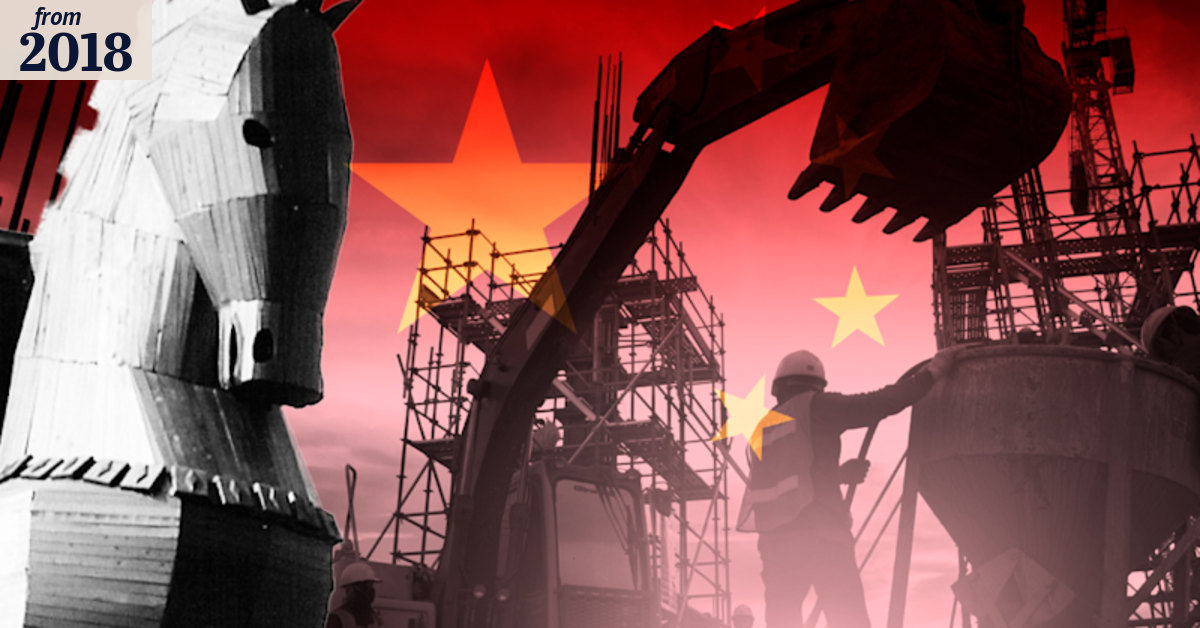
“Tinanggihang ilabas ang teksto ng isang multilateral na kasunduan sa kalakalan sa Tsina, na nagsasangkot sa paggasta ng pera ng gobyerno sa imprastruktura sa ibang bansa. Ang kakulangan sa transparency ay nagpalala sa kasalukuyang mga alalahanin tungkol sa pagpasan sa mga umuunlad na bansang ito ng hindi napapanatiling utang.”
Ang sentrong factual na claim ay tama: ang gobyerno ni Turnbull ay talagang tumangging ilabas ang isang Memorandum of Understanding (MOU) na pinitagan nila sa Tsina noong Setyembre 2017 na saklaw ang kooperasyon sa mga proyekto sa imprastruktura sa ilalim ng Belt and Road Initiative (BRI) [1].
The core factual claim is accurate: the Turnbull government did refuse to release a Memorandum of Understanding (MOU) it signed with China in September 2017 covering cooperation on Belt and Road Initiative (BRI) infrastructure projects [1].
Pumirma si Trade Minister Steven Ciobo sa MOU kasama ang chairman ng National Development and Reform Commission ng Tsina na si He Lifeng sa panahon ng kanyang pagbisita sa Beijing [1].
Trade Minister Steven Ciobo signed the MOU with China's National Development and Reform Commission chairman He Lifeng during a Beijing visit [1].
Ang kasunduan ay saklaw ang kooperasyon sa pagtatayo ng imprastruktura—mga kalsada, tulay, dam, at iba pang proyekto—sa mga third country, kabilang sa ilalim ng BRI [1].
The agreement covered cooperation on building infrastructure—roads, bridges, dams, and other projects—in third countries, including under the BRI [1].
Nang humingi ang mamamahayag na si David Wroe ng teksto sa ilalim ng Freedom of Information Act (FOI), tumanggi ang Department of Foreign Affairs and Trade (DFAT) na ilantad ito [1].
When journalist David Wroe requested the text under the Freedom of Information Act (FOI), the Department of Foreign Affairs and Trade (DFAT) refused disclosure [1].
Sinabi ng opisyal ng departamento na si Elly Lawson na ang mga MOU ay "itinuturing na confidential sa pagitan ng mga partido maliban kung may ibang kasunduan," at "wala namang ganoong kasunduan sa kasalukuyang kaso" sa Tsina para ilabas ito [1].
Department official Elly Lawson stated that MOUs were "held to be confidential between the parties unless otherwise agreed," and "there is no such agreement in the current case" with China to release it [1].
Hindi itinatanggi ng gobyerno ang mga facts na ito nang tanungin.
The government did not dispute these facts when asked.
Nawawalang Konteksto
Gayunpaman, ang claim ay hindi nagsasama ng mahalagang konteksto na makabuluhang nagbabago ng interpretasyon: **1.
However, the claim omits important context that significantly changes interpretation:
**1.
Karaniwang internasyonal na kasanayan sa mga MOU**: Ang posisyon ng opisyal ng DFAT ay sumalamin sa karaniwang diplomasya sa buong mundo.
Standard international practice on MOUs**: The DFAT official's position reflected standard diplomatic practice globally.
Ang mga MOU sa pagitan ng mga gobyerno ay karaniwang itinuturing na confidential maliban kung pumayag ang parehong partido na ilabas ang mga ito [1].
MOUs between governments are typically treated as confidential unless both parties agree to release them [1].
Ito ay normal sa lahat ng mga gobyerno, hindi kakaiba sa Coalition. **2.
This is normal across all governments, not unique to the Coalition.
**2.
Ang pagkakaiba ng New Zealand—ngunit may mahalagang qualifier**: Sa paliwanag ng claim, iminungkahi na ang Australia ay kakaiba sa pagiging lihim.
New Zealand contrast—but with important qualifier**: The claim implicitly suggests Australia was uniquely secretive.
Gayunpaman, habang ang New Zealand ay talagang naglabas ng kanilang BRI arrangement sa Tsina noong 27 Marso 2017, nang mailabas ang dokumento ay ipinakita nitong may minimal na detalye—ito ay isang maikli, pangkalahatang pahayag ng intensyon sa halip na isang komprehensibong kasunduan [3].
However, while New Zealand did release its BRI arrangement with China on 27 March 2017, the document when released showed minimal detail—it was a brief, general statement of intent rather than a comprehensive agreement [3].
Ang "transparency" ng New Zealand ay hindi nangahulugang mas marami ang inilantad tungkol sa aktwal na mga commitment o terms ng paggasta [3]. **3.
New Zealand's "transparency" did not mean much more was disclosed about actual commitments or spending terms [3].
**3.
Mga kondisyon ay naka-embed sa MOU**: Ang hindi nasasakop ng claim ay ang inaasahan ng DFAT na ang MOU ay maglalaman ng mga tinukoy na kondisyon ng Australia para sa kooperasyon sa BRI [1].
Conditions were embedded in the MOU**: What the claim misses is that DFAT expected the MOU to contain Australia's stated conditions for BRI cooperation [1].
Sinabi noon ni Foreign Minister Julie Bishop na ang mga kondisyon na ito ay kasama ang mga requirement na ang mga proyekto ay dapat "financially transparent, hindi involve ang korapsyon, tunay na tumutulong sa ibang bansa at hindi pinapasan sila ng hindi napapanatiling utang" [1].
Foreign Minister Julie Bishop had previously stated these conditions would include requirements that projects be "financially transparent, do not involve corruption, genuinely help other countries and do not burden them with unsustainable debt" [1].
Kahit hindi nailabas, sinasabi ng gobyerno na ang mga proteksyong ito ay umiiral sa MOU. **4.
Even unreleased, the government was asserting these protections existed in the MOU.
**4.
Walang aktwal na paggasta ng Australia ang naganap**: Mahalaga, walang ebidensya na ang MOU na ito ay humantong sa paggasta ng Australia ng pera ng gobyerno sa imprastruktura sa mga umuunlad na bansa.
No actual Australian spending resulted**: Critically, there's no evidence this MOU led to Australia spending government money on infrastructure in developing nations.
Ang MOU ay para sa "kooperasyon" at "pagkilala ng commercial opportunities," hindi para sa mga proyektong pinondohan ng gobyerno ng Australia [1].
The MOU was for "cooperation" and "identifying commercial opportunities," not Australian government-funded projects [1].
Ang sentrong assertion ng claim tungkol sa "paggasta ng pera ng gobyerno" ay nananatiling walang patunay. **5.
The claim's core assertion about "spending government money" remains unsubstantiated.
**5.
Nagkaroon ng parliamentary scrutiny**: Humiling ang foreign affairs spokeswoman ng Labor na si Penny Wong ng dokumento sa pamamagitan ng Senate Estimates at tumanggi rin sa parehong mga basehan [1], na nagpapakita na ang parliamentary oversight ay naganap kahit walang public disclosure. **6.
Parliamentary scrutiny occurred**: Labor's foreign affairs spokeswoman Penny Wong requested the document through Senate Estimates and was refused on the same grounds [1], indicating parliamentary oversight occurred even without public disclosure.
**6.
Walang ebidensya ng mga resulta ng pagpapasan ng utang**: Ang pangalawang assertion ng claim na ang arrangement na ito ay "pinapasan ang mga umuunlad na bansa ng hindi napapanatiling utang" ay walang ebidensya.
No evidence of debt-burdening outcomes**: The claim's secondary assertion about this arrangement "burdening developing nations with unsustainable debt" lacks evidence.
Ibinigay nito ang isang pangkalahatang alalahanin tungkol sa BRI sa buong mundo, hindi ang isang partikular na pagkukulang ng Coalition.
This describes a general concern about BRI globally, not a specific Coalition failure.
Pagsusuri ng Kredibilidad ng Pinagmulan
Ang SMH article ni David Wroe ay mula sa isang mainstream, reputable news organization (The Sydney Morning Herald).
The SMH article by David Wroe is from a mainstream, reputable news organization (The Sydney Morning Herald).
Gayunpaman, ang framing ay medyo one-sided—ipinapakita nito ang secrecy ng gobyerno bilang problema nang hindi sinisiyasat kung ang karaniwang kasanayan ng diplomatic sa confidential na mga MOU ay talagang hindi makatuwiran [1].
However, the framing is somewhat one-sided—it presents the government's secrecy as problematic without examining whether the standard diplomatic practice of confidential MOUs is actually unreasonable [1].
Hindi nag-cite ang article ng mga independiyenteng eksperto kung ang mga gobyerno ay karaniwang naglalabas ng mga ganitong MOU, ni hindi ito tinatalakay kung ang "paglantad" ng New Zealand ay talagang naglantad ng makabuluhang impormasyon [1].
The article cites no independent experts on whether governments typically release such MOUs, nor does it address whether New Zealand's "release" actually disclosed meaningful information [1].
⚖️
Paghahambing sa Labor
Ginanap ang paghahanap: "Labor government secret multilateral agreements, Labor FOI refusal trade agreements" Ang Labor ay palaging sumusuporta sa isang relatibong malawak na pakikipag-ugnayan sa transparency sa mga teksto ng Free Trade Agreement—ang mga ito AY inilalabas sa publiko kapag napirmahan na [4].
**Did Labor do something similar?**
Search conducted: "Labor government secret multilateral agreements, Labor FOI refusal trade agreements"
Labor has consistently supported a relatively expansive approach to trade agreement transparency through Free Trade Agreement texts—these ARE released publicly once signed [4].
Gayunpaman, ang mga MOU ay naiiba sa mga FTA: ang mga ito ay mga non-binding na pahayag ng intensyon sa halip na mga binding na trade commitment.
However, MOUs are different from FTAs: they are non-binding statements of intent rather than binding trade commitments.
Mahalaga, si Penny Wong (shadow foreign minister ng Labor) ang humiling ng parehong MOU sa pamamagitan ng Senate Estimates at tumanggap ng parehong pagtanggi [1].
Critically, Penny Wong (Labor's shadow foreign minister) requested the same MOU through Senate Estimates and received the same refusal [1].
Ipiniprisinta nito na ang Labor ay haharap sa parehong mga diplomatic constraints kung sila ay nasa gobyerno, dahil ang requirement ng confidentiality ay mula sa panig ng Tsina, hindi isang pagpili ng gobyerno ng Australia.
This suggests Labor would have faced the same diplomatic constraints had they been in government, as the confidentiality requirement was from China's side, not an Australian government choice.
Walang ebidensya na ang Labor ay mas transparent na paninindigan sa mga confidential na bilateral MOU o diplomasya sa Tsina.
No evidence exists of Labor taking a more transparent stance on confidential bilateral MOUs or diplomacy with China.
🌐
Balanseng Pananaw
**Ano ang sinabi ng gobyerno tungkol sa desisyong ito:** Sinabi ni Minister Ciobo na "ang parehong partido ay kinakailangang sumang-ayon na ilabas ang teksto ng MOU at ang Tsina ay hindi sumang-ayon na gawin ito" [1].
**What the government said about this decision:**
Minister Ciobo stated that "both parties are required to agree to release the text of the MOU and China has not agreed to do so" [1].
Ipinapahiwatig nito na ang kakulangan sa paglantad ay hindi purong pagpili ng gobyerno ng Australia kundi isang mutual agreement requirement.
This indicates the lack of disclosure was not purely an Australian government choice but a mutual agreement requirement.
Ang Tsina—bilang ang ibang partido sa kasunduan—ay kailangang pumayag na mailabas.
China—as the other party to the deal—would need to consent to release.
Ang posisyon ng DFAT na ang paglantad nang walang pagsang-ayon ng Tsina ay "sisira sa relasyon ng gobyerno sa Tsina at sa ibang mga gobyerno at internasyonal na organisasyon kung kanino nagtapos ng MOU ang Australia" ay sumasalamin sa mga lehitimong diplomatic concerns [1].
DFAT's position that disclosing without China's consent would "damage the government's relationship with China and with other governments and international organisations with whom Australia has concluded MOUs" reflects legitimate diplomatic concerns [1].
Ang mga gobyerno sa buong mundo ay umaasa sa confidentiality kapag nagnegosasyon ng sensitibong kasunduan; ang paglabag sa tiwalang iyon ay papahinain ang mga hinaharap na negosasyon. **Mga alalahanin ng mga kritiko:** Ang kakulangan sa transparency ay pinipigilan ang Parlamento at mga mamamayan na suriin ang mga terms ng kasunduan [1].
Governments worldwide rely on confidentiality when negotiating sensitive agreements; breaking that trust would undermine future negotiations.
**Critics' concerns:**
The lack of transparency prevents Parliament and citizens from scrutinizing the agreement's terms [1].
Kung ang MOU ay naglalaman ng mga problematic na commitment, ang secrecy ay pinipigilan ang accountability.
If the MOU contains problematic commitments, secrecy prevents accountability.
Ito ay isang lehitimong democratic concern. **Pangangatuwiran sa patakaran:** Ang tinukoy na pakikitungo ng Australia ay ang makipagkooperasyon sa Tsina sa BRI ngunit may mga kondisyon na protektahan ang mga umuunlad na bansa mula sa hindi napapanatiling utang [1].
This is a valid democratic concern.
**Policy rationale:**
Australia's stated approach was to cooperate with China on BRI but with conditions protecting developing nations from unsustainable debt [1].
Kung ang mga kondisyon na ito ay talagang nasa (hindi nailabas na) MOU ay hindi maaaring independiyenteng ma-verify, na lumilikha ng lehitimong duda. **Gaano kalimitado ang kasanayang ito?** Ang mga MOU ng gobyerno, partikular sa sensitibong mga isyung heopolitikal, ay karaniwang confidential sa mga demokrasya.
Whether these conditions were actually in the (unreleased) MOU cannot be independently verified, creating legitimate doubt.
**How common is this practice?**
Government MOUs, particularly on sensitive geopolitical matters, are routinely confidential across democracies.
Ang U.S., UK, at ibang mga bansa ay madalas na nagbibigay ng "confidentiality agreements" kapag tumatanggi sa mga FOI request para sa bilateral na mga MOU [4]. **Gayunpaman—mahalagang caveat:** Ang pagdepende ng Australia sa pagtanggi ng Tsina bilang basihan ay nagtataas ng isang tanong: Dapat bang tanggihan ng Australia na pumirma sa isang kasunduan na hindi nito mailantad sa sarili nitong Parlamento?
The U.S., UK, and other nations frequently cite "confidentiality agreements" when refusing FOI requests for bilateral MOUs [4].
**However—important caveat:**
Australia's reliance on China's refusal as justification raises a question: Should Australia have simply declined to sign an agreement it wouldn't release to its own Parliament?
Ipinapakita nito ang isang tensyon sa pagitan ng diplomatic necessity at democratic accountability, ngunit ito ay isang structural issue na nakakaapekto sa lahat ng mga gobyerno sa pakikipag-usap sa Tsina, hindi kakaiba sa Coalition.
This points to a tension between diplomatic necessity and democratic accountability, but it's a structural issue affecting all governments' dealings with China, not unique to the Coalition.
BAHAGYANG TOTOO
6.0
sa 10
Ang claim ay factually accurate tungkol sa pagtanggi ng gobyerno na ilabas ang teksto ng MOU.
The claim is factually accurate regarding the government's refusal to release the MOU text.
Gayunpaman, ito ay misleading sa tatlong aspeto: 1. **Karakterisa ang normal na diplomasya bilang misconduct**: Ang confidentiality ng mga MOU ay karaniwang internasyonal na kasanayan, hindi ebidensya ng katiwalian [1]. 2. **Kulang sa ebidensya ng inaangking pinsala**: Ang claim ay nagsasabi ng paggasta ng gobyerno sa imprastruktura na "pinapasan ang mga umuunlad na bansa ng hindi napapanatiling utang," ngunit walang ebidensyang ibinigay na ang MOU ay humantong sa anumang paggasta ng Australia o arrangement ng pagpapasan ng utang [1]. 3. **Hindi isinama ang aktwal na constraint**: Ang pagtanggi ay dahil sa hindi pagsang-ayon ng Tsina na ilabas, hindi purong pagkukulang ng Australia sa transparency, bagama't maaaring argumentuhin na hindi sana pumirma ang Australia sa isang lihim na kasunduan na hindi nila mailantad [1].
However, it's misleading in three respects:
1. **Characterizes normal diplomacy as misconduct**: The confidentiality of MOUs is standard international practice, not evidence of impropriety [1].
2. **Lacks evidence of claimed harm**: The claim asserts government spending on infrastructure that "burdens developing nations with unsustainable debt," but provides no evidence the MOU led to any Australian spending or debt-burdening arrangements [1].
3. **Omits the actual constraint**: The refusal was due to China's non-consent to release, not purely an Australian transparency failure, though one could argue Australia shouldn't have signed a secret agreement it couldn't disclose [1].
Ang sentrong wastong kritika—na ang mga confidential na kasunduan ay pinapahina ang parliamentary accountability—ay wasto ngunit naaangkop sa lahat ng mga gobyerno sa paghawak ng sensitibong diplomasya sa mga authoritarian na rehimen.
The core valid criticism—that confidential agreements undermine parliamentary accountability—is valid but applies to all governments' handling of sensitive diplomacy with authoritarian regimes.
Huling Iskor
6.0
SA 10
BAHAGYANG TOTOO
Ang claim ay factually accurate tungkol sa pagtanggi ng gobyerno na ilabas ang teksto ng MOU.
The claim is factually accurate regarding the government's refusal to release the MOU text.
Gayunpaman, ito ay misleading sa tatlong aspeto: 1. **Karakterisa ang normal na diplomasya bilang misconduct**: Ang confidentiality ng mga MOU ay karaniwang internasyonal na kasanayan, hindi ebidensya ng katiwalian [1]. 2. **Kulang sa ebidensya ng inaangking pinsala**: Ang claim ay nagsasabi ng paggasta ng gobyerno sa imprastruktura na "pinapasan ang mga umuunlad na bansa ng hindi napapanatiling utang," ngunit walang ebidensyang ibinigay na ang MOU ay humantong sa anumang paggasta ng Australia o arrangement ng pagpapasan ng utang [1]. 3. **Hindi isinama ang aktwal na constraint**: Ang pagtanggi ay dahil sa hindi pagsang-ayon ng Tsina na ilabas, hindi purong pagkukulang ng Australia sa transparency, bagama't maaaring argumentuhin na hindi sana pumirma ang Australia sa isang lihim na kasunduan na hindi nila mailantad [1].
However, it's misleading in three respects:
1. **Characterizes normal diplomacy as misconduct**: The confidentiality of MOUs is standard international practice, not evidence of impropriety [1].
2. **Lacks evidence of claimed harm**: The claim asserts government spending on infrastructure that "burdens developing nations with unsustainable debt," but provides no evidence the MOU led to any Australian spending or debt-burdening arrangements [1].
3. **Omits the actual constraint**: The refusal was due to China's non-consent to release, not purely an Australian transparency failure, though one could argue Australia shouldn't have signed a secret agreement it couldn't disclose [1].
Ang sentrong wastong kritika—na ang mga confidential na kasunduan ay pinapahina ang parliamentary accountability—ay wasto ngunit naaangkop sa lahat ng mga gobyerno sa paghawak ng sensitibong diplomasya sa mga authoritarian na rehimen.
The core valid criticism—that confidential agreements undermine parliamentary accountability—is valid but applies to all governments' handling of sensitive diplomacy with authoritarian regimes.
Hindi tama sa katotohanan o malisyosong gawa-gawa.
4-6: BAHAGYA
May katotohanan ngunit kulang o baluktot ang konteksto.
7-9: HALOS TOTOO
Maliit na teknikal na detalye o isyu sa pagkakasulat.
10: TUMPAK
Perpektong na-verify at patas ayon sa konteksto.
Pamamaraan: Ang mga rating ay tinutukoy sa pamamagitan ng cross-referencing ng opisyal na mga rekord ng pamahalaan, independiyenteng mga organisasyong nag-fact-check, at mga primaryang dokumento.