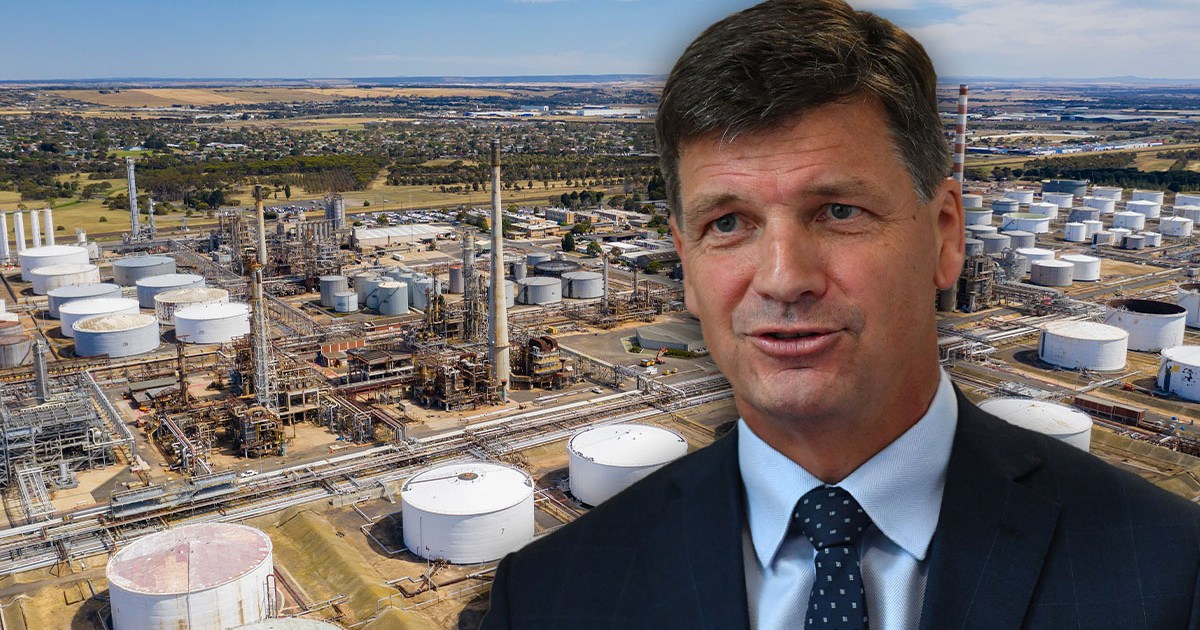
“Nagbayad ng $2 billion para tulungan ang mga pribadong oil refinery na para sa kita na manatiling bukas, na sabi nila ay makakatipid lamang ang mga konsyumer ng 1 sentimo kada litro sa pag-full tank ng kanilang sasakyan.”
Inanunsyo ng Coalition government ang fuel security package noong Mayo 2021 na may halagang humigit-kumulang $2.3-2.4 billion [1].
The Coalition government did announce a fuel security package in May 2021 valued at approximately $2.3-2.4 billion [1].
Ang package na ito ay idinisenyo para suportahan ang dalawang natitirang oil refinery ng Australia (Ampol's Lytton refinery sa Queensland at Viva Energy's Geelong refinery sa Victoria) sa pamamagitan ng Fuel Security Services Payment (FSSP), na nagsimula noong Hulyo 1, 2021 [2][3].
This package was designed to support Australia's two remaining oil refineries (Ampol's Lytton refinery in Queensland and Viva Energy's Geelong refinery in Victoria) through the Fuel Security Services Payment (FSSP), which commenced on 1 July 2021 [2][3].
Ang partikular na istruktura ng package ay kinabibilangan ng: - Hanggang $2.047 billion sa mga subsidyo ng Fuel Security Services Payment hanggang 2030 [4] - Hanggang $302 million para sa mga upgrade ng refinery infrastructure [1] - $50.7 million para sa pagpapatupad ng mga stock holding obligations [1] - Kabuuang potensyal na halaga: humigit-kumulang $2.39 billion [1] Gayunpaman, ang claim tungkol sa "1 sentimo kada litro na pagtitipid" ay nangangailangan ng maingat na pagsusuri.
The specific structure of the package included:
- Up to $2.047 billion in Fuel Security Services Payment subsidies through to 2030 [4]
- Up to $302 million for refinery infrastructure upgrades [1]
- $50.7 million to implement stock holding obligations [1]
- Total potential cost: approximately $2.39 billion [1]
However, the claim about "1 cent per litre savings" requires careful unpacking.
Ang figure na "1 sentimo kada litro" ay HINDI tumutukoy sa pagtitipid ng konsyumer mula sa subsidyo.
The "1 cent per litre" figure does NOT refer to consumer savings from the subsidy.
Sa halip, ito ay tumutukoy sa pagsusuri ng gobyerno tungkol sa mangyayari kung ang LAHAT ng Australian refineries ay magsasara [5].
Rather, it refers to government analysis about what would happen if ALL Australian refineries closed entirely [5].
Ayon sa 2019 Liquid Fuel Security Review, kung magsasara ang lahat ng natitirang refineries ng Australia, tataas ang mga presyo sa pandaigdigan ng humigit-kumulang 0.8 sentimo kada litro dahil sa nabawasang regional refining capacity [5].
According to the 2019 Liquid Fuel Security Review, if all of Australia's remaining refineries closed, international prices would increase by approximately 0.8 cents per litre due to reduced regional refining capacity [5].
Ito ay napakaibang proposisyon mula sa paghahayag na ang $2 billion na subsidyo ay makakatipid sa mga konsyumer ng 1 sentimo kada litro.
This is a very different proposition from claiming the $2 billion subsidy saves consumers 1 cent per litre.
Nawawalang Konteksto
Ang claim ay naglalaho ng ilang mahalagang contextual na punto: **1.
The claim omits several critical contextual points:
**1.
Ang Istruktura at Layunin ng mga Subsidyo:** Ang mga subsidyo ay eksplisitong idinisenyo bilang production payments tuwing loss-making periods lamang.
The Structure and Purpose of Subsidies:**
The subsidies were explicitly designed as production payments during loss-making periods only.
Ayon sa pagsusuri ng The New Daily, ang mga production subsidies ay nagkakahalaga ng hanggang 1.8 sentimo kada litro "kapag mababa ang profit margins, bumababa sa zero kapag ang margins ay lumampas sa $10.20" [1].
According to The New Daily's analysis, the production subsidies were worth up to 1.8 cents per litre "when profit margins are low, decreasing to zero when margins exceed $10.20" [1].
Ang maximum na subsidyo ay mababayaran lamang sa humigit-kumulang 30% ng oras, at walang subsidyo ang mababayaran sa humigit-kumulang 45% ng oras [1].
The maximum subsidy would only be paid approximately 30% of the time, and no subsidy would be paid about 45% of the time [1].
Ito ay hindi isang blanket na $2 billion na handout sa mga kumpanya ng langis, kundi isang conditional na payment mechanism. **2.
This is not a blanket $2 billion handout to oil companies, but rather a conditional payment mechanism.
**2.
National Security Justification:** Ang opisyal na justification ng Coalition ay fuel security.
National Security Justification:**
The Coalition's official justification was fuel security.
Mauubusan ang Australia ng domestically-refined petrol sa loob ng isang buwan kung ang global supply chains ay huminto, ayon sa mga figure ng gobyerno mula 2019 [6].
Australia would run out of domestically-refined petrol within a month if global supply chains ground to a halt, according to government figures from 2019 [6].
Sa mayroong dalawang refineries na natitira (mula sa limang dekada), ito ay inihain bilang kritikal na national security concern [1][3]. **3.
With only two refineries remaining (down from five a decade earlier), this was presented as a critical national security concern [1][3].
**3.
Expert Disagreement sa Price Impact:** Nagtalunan ang mga eksperto tungkol sa aktwal na epekto sa konsyumer.
Expert Disagreement on Price Impact:**
Experts disagreed about the actual consumer impact.
Habang ang ilang eksperto (kabilang ang ACCC Chair na si Rod Sims) ay nagpahayag ng pagkabahala na ang pagsu-subsidize ng domestic refineries ay makaka-disadvantage sa mas murang international importers at potensyal na tumaas ang presyo, ang iba tulad ni Tony Wood mula sa Grattan Institute ay nagsabi na mahirap matukoy ang aktwal na epekto sa presyo at sinabing "it would be a 'long bow' to suggest importers will behave less competitively" [1].
While some experts (including ACCC Chair Rod Sims) expressed concern that subsidizing domestic refineries could disadvantage cheaper international importers and potentially increase prices, others like Tony Wood from the Grattan Institute noted it was hard to determine the actual price impact and said "it would be a 'long bow' to suggest importers will behave less competitively" [1].
Ang claim ay naghahain ng expert disagreement bilang settled fact. **4.
The claim presents expert disagreement as settled fact.
**4.
Alternative Policy Options na Tiningnan:** Ang gobyerno ay unang tiningnan ang pagpopondo ng mga subsidyo sa pamamagitan ng isang industry levy (tax) ngunit ini-scrap ang plano dahil ito ay magkakaroon ng mas malaking epekto sa bowser prices kaysa sa direct subsidy model [1].
Alternative Policy Options Considered:**
The government initially considered funding subsidies through an industry levy (tax) but scrapped that plan because it would have had a larger impact on bowser prices than the direct subsidy model [1].
Ito ay nagpapakita na ang mga policy trade-offs ay tiningnan. **5.
This shows policy trade-offs were considered.
**5.
Aktwal na Consumer Impact ay Nananatiling Hindi Tiyak:** Ang artikulo ng The New Daily ay eksplisitong nagsasabing "experts said the plan...won't make petrol any cheaper and could even boost prices by disadvantaging cheaper imported product" [1].
Actual Consumer Impact Remains Uncertain:**
The New Daily article explicitly states "experts said the plan...won't make petrol any cheaper and could even boost prices by disadvantaging cheaper imported product" [1].
Gayunpaman, ito ay prediction/speculation, hindi established fact.
However, this is prediction/speculation, not established fact.
Walang ebidensya na nagsasabing ang mga subsidyo ay aktwal na nagpataas ng presyo pagkatapos ng pagpapatupad.
No evidence suggests the subsidies actually did increase prices after implementation.
Pagsusuri ng Kredibilidad ng Pinagmulan
Ang orihinal na pinagmulan ay The New Daily, isang left-leaning digital news outlet na itinatag noong 2014 [7].
The original source is The New Daily, a left-leaning digital news outlet founded in 2014 [7].
Habang ito ay nag-uulat ng mainstream news, mayroon itong progressive/Labor-aligned na editorial perspective.
While it does report mainstream news, it has a progressive/Labor-aligned editorial perspective.
Ang artikulo ni Matthew Elmas ay naglalaman ng komentaryo mula sa maraming ekspertong pinagkukunan kabilang ang The Australia Institute (isang progressive think tank), ang Grattan Institute, at ang ACCC [1]. **Credibility Assessment:** - Ang The New Daily ay isang lehitimong news organization na may propesyonal na editorial standards - Ang artikulo ay nagsasipi ng mga awtoritatibong pinagkukunan (ACCC, Grattan Institute, mga pahayag ng gobyerno) - Gayunpaman, ang framing ng artikulo ay nagbibigay-diin sa mga kritisisme ("Absurd," "could rise") sa halip na balanseng paghahain ng mga trade-offs - Ang artikulo mismo ay umaamin na ang ilang eksperto (tulad ni Tony Wood) ay hindi tiyak tungkol sa epekto sa presyo - Ang progressive alignment ng outlet ay nangangahulugang ito ay inaasahang nagbibigay-diin sa mga kritisisme sa mga patakaran ng Coalition Ang artikulo ay tumpak sa mga factual detail sa pag-uulat ng halaga ng subsidyo at mga pananaw ng eksperto, ngunit ang framing nito ay selectively critical sa halip na tunay na balansed.
The article by Matthew Elmas includes commentary from multiple expert sources including The Australia Institute (a progressive think tank), the Grattan Institute, and the ACCC [1].
**Credibility Assessment:**
- The New Daily is a legitimate news organization with professional editorial standards
- The article cites authoritative sources (ACCC, Grattan Institute, government statements)
- However, the article's framing emphasizes criticisms ("Absurd," "could rise") rather than balanced presentation of trade-offs
- The article itself acknowledges that some experts (like Tony Wood) are less certain about price impacts
- The outlet's progressive alignment means it predictably emphasizes criticisms of Coalition policies
The article is factually accurate in its reporting of the subsidy amounts and expert views, but its framing is selectively critical rather than truly balanced.
⚖️
Paghahambing sa Labor
**Nagawa ba ni Labor ang katulad na bagay?** Nagsagawa ng search: "Labor government fuel security refineries Australia policy" Si Labor ay hindi nagpatupad ng katumbas na fuel security subsidy program para sa oil refineries sa mga panahon na magagamit para sa paghahambing.
**Did Labor do something similar?**
Search conducted: "Labor government fuel security refineries Australia policy"
Labor has not implemented an equivalent fuel security subsidy program for oil refineries during the periods available for comparison.
Ang Fuel Security Services Payment ay pangunahing kamakailang patakaran ng Coalition sa lugar na ito.
The Fuel Security Services Payment is the Coalition's primary recent policy in this area.
Gayunpaman, mayroong mga kaugnay na patakaran ni Labor na maihahambing: - Ang energy policy ni Labor ay nagbibigay-diin sa renewable energy at climate action sa halip na fossil fuel subsidies [8] - Ang Albanese Labor government (na umupo noong 2022 pagkatapos ipatupad ang subsidyo na ito) ay hindi nag-extend ng FSSP ngunit hindi rin ito agad na tinapos, na nagmumungkahi ng bipartisan concern tungkol sa fuel security [9] - Parehong major parties ang nagpakita ng pagkabahala tungkol sa fuel security, ngunit si Labor ay hinabol ito sa pamamagitan ng iba't ibang mga mekanismo (pagbibigay-diin sa renewable energy, electric vehicles, fuel reserves) **Comparison:** Mukhang ito ay isang Coalition-specific na approach sa fuel security.
However, there are relevant Labor policies to compare:
- Labor's energy policy emphasizes renewable energy and climate action rather than fossil fuel subsidies [8]
- The Albanese Labor government (which took office in 2022 after this subsidy was implemented) has not extended the FSSP but also has not immediately terminated it, suggesting bipartisan concern about fuel security [9]
- Both major parties have shown concern about fuel security, but Labor has pursued this through different mechanisms (emphasis on renewable energy, electric vehicles, fuel reserves)
**Comparison:** This appears to be a Coalition-specific policy approach to fuel security.
Ang approach ni Labor ay nagbigay-diin sa demand reduction (electric vehicles) at renewable energy sa halip na supply-side fossil fuel subsidies.
Labor's approach has emphasized demand reduction (electric vehicles) and renewable energy rather than supply-side fossil fuel subsidies.
Ang Grattan Institute analyst na sinipi sa artikulo ay kritiko sa Coalition dahil hindi ito nagpopondo ng electric vehicles, na magpapataas din ng fuel security sa pamamagitan ng demand reduction [1].
The Grattan Institute analyst quoted in the article criticized the Coalition for not funding electric vehicles, which would also enhance fuel security through demand reduction [1].
🌐
Balanseng Pananaw
**Ang Kaso Laban sa Subsidyo:** Ang mga kritiko ng subsidyo ay may mga lehitimong punto.
**The Case Against the Subsidy:**
The subsidy critics make legitimate points.
Kinikilala ng mga international energy expert sa buong political spectrum na ang domestic refineries ay hindi competitive sa ekonomiya sa mas murang imported fuel dahil sa mas murang labor ng Asia at mas magandang refining margins [1].
International energy experts across the political spectrum acknowledge that domestic refineries are economically non-competitive with cheaper imported fuel due to Asia's cheaper labor and better refining margins [1].
Ang subsidyo ay sadyang nagbabayad sa mga kumpanya para mag-operate ng mga pasilidad na kung hindi ay magsasara dahil nawawalan ng pera sa competitive markets.
The subsidy essentially pays companies to operate facilities that would otherwise close because they lose money in competitive markets.
Ito ay kumakatawan sa malaking suporta ng taxpayer (higit $2 billion) para mapanatili ang domestic refining capacity pangunahing para sa national security sa halip na economic efficiency.
This represents significant taxpayer support ($2+ billion) to maintain domestic refining capacity primarily for national security rather than economic efficiency.
Bukod pa rito, sinabi ni Tony Wood mula sa Grattan Institute na ang pagsu-subsidize ng mga refinery para gumawa ng mas mataas na kalidad na fuel ay strategic na kuwestiyonable dahil "by the time they have fuel standards in place we'll have stopped using fuel cars" [1].
Furthermore, the Grattan Institute's Tony Wood argued that subsidizing refineries to produce higher-quality fuels is strategically questionable because "by the time they have fuel standards in place we'll have stopped using fuel cars" [1].
Ito ay nagmumungkahi na ang mga subsidyo ay maaaring hindi kumakatawan sa mabuting long-term value para sa pera ng taxpayer. **Ang Justification ng Gobyerno:** Ang Coalition ay nagsabing ang fuel security ay isang lehitimong national security concern.
This suggests the subsidies may not represent good long-term value for taxpayer money.
**The Government's Justification:**
The Coalition argued that fuel security is a legitimate national security concern.
Ang pagiging ganap na dependent ng Australia sa imported fuel ay kumakatawan sa isang strategic vulnerability.
Australia becoming entirely dependent on imported fuel represents a strategic vulnerability.
Kung ang global supply chains ay ma-disrupt (dahil sa digmaan, natural disaster, o trade sanctions), haharapin ng Australia ang isang fuel crisis sa loob ng ilang linggo.
If global supply chains were disrupted (by war, natural disaster, or trade sanctions), Australia would face a fuel crisis within weeks.
Bagama't mukhang hypothetical, seryoso nang itinuring ang fuel security kaya ang Albanese Labor government ay hindi tinapos ang program sa kabila ng preference nito para sa renewable energy.
While this may seem hypothetical, fuel security was taken seriously enough that the Albanese Labor government has not terminated the program despite its preference for renewable energy.
Bukod pa rito, ang istruktura ng subsidyo ay partikular na idinisenyo para pababain ang permanenteng gastos—ang mga bayad ay nangyayari lamang tuwing loss-making periods, hindi bilang isang permanenteng arrangement.
Additionally, the subsidy structure was specifically designed to minimize permanent costs—payments only occur during loss-making periods, not as a permanent arrangement.
Ang maximum na bayad na 1.8 sentimo kada litro ay mangyayari lamang kapag ang refining margins ay bumaba sa ibaba ng profitable levels [1]. **Ang Price Impact ay Nananatiling Hindi Tiyak:** Bagama't ang artikulo ng The New Daily ay nagmumungkahi na ang mga subsidyo ay "maaaring magtaas" ng presyo, ito ay speculative.
The maximum payment of 1.8 cents per litre would only occur when refining margins fell below profitable levels [1].
**Price Impact Remains Uncertain:**
While The New Daily's article suggests the subsidies "could increase" prices, this is speculative.
Tandaan ni Tony Wood mula sa Grattan na kung ang mga importer ay aktwal na magpapababa ng competitiveness dahil sa mga subsidyo ay hindi malinaw [1].
Tony Wood from Grattan noted that whether importers will actually reduce competitiveness due to subsidies is unclear [1].
Sa katotohanan, ang mga presyo ng petrol ay mas apektado ng global oil prices kaysa sa marginal na pagbabago sa domestic refining capacity [10].
In reality, petrol prices are influenced by global oil prices far more than by marginal changes in domestic refining capacity [10].
Walang ebidensya na nagsasabing ang mga subsidyo ay demonstrably nagpataas ng presyo ng petrol pagkatapos ng pagpapatupad. **Nawawalang Policy Alternative:** Ang artikulo ay nagbibigay-diin na ang gobyerno ay hindi nagpopondo ng electric vehicles o demand-side fuel security measures.
No evidence suggests the subsidies demonstrably increased petrol prices post-implementation.
**Missing Policy Alternative:**
The article highlights that the government did not fund electric vehicles or demand-side fuel security measures.
Si Labor ay sumunod sa direksyon na ito sa mas malaking EV incentives, na nagmumungkahi na ito ay isang lehitimong policy choice point sa pagitan ng mga partido. **Key context:** Ito ay HINDI natatangi sa Coalition—ang fossil fuel subsidies ay karaniwan sa buong mundo.
Labor has since moved in this direction with greater EV incentives, suggesting this is a legitimate policy choice point between the parties.
**Key context:** This is NOT unique to the Coalition—fossil fuel subsidies are common globally.
Gayunpaman, bilang isang subsidyo para mapanatili ang uncompetitive domestic industry capacity, ito ay mas kontrobersyal at mas hindi karaniwan kaysa sa direct fossil fuel production subsidies o fuel price caps.
However, as a subsidy to maintain uncompetitive domestic industry capacity, it is more controversial and less common than direct fossil fuel production subsidies or fuel price caps.
Ang core tension ay sa pagitan ng economic efficiency (biliin ang murang imports) at national security (mapanatili ang domestic capacity).
The core tension is between economic efficiency (buy cheap imports) and national security (maintain domestic capacity).
BAHAGYANG TOTOO
6.0
sa 10
Ang Coalition ay nagbayad ng humigit-kumulang $2 billion (mas tumpak na $2.39 billion) para mapanatili ang mga oil refinery na bukas.
The Coalition did pay approximately $2 billion (more precisely $2.39 billion) to keep oil refineries open.
Gayunpaman, ang claim tungkol sa "1 sentimo kada litro na pagtitipid" ay malaki ang misrepresentasyon kung ano talaga ang sinabi ng mga eksperto.
However, the claim about "1 cent per litre savings" significantly misrepresents what experts actually said.
Ang figure na 1 sentimo ay tumutukoy sa kung ano ang mangyayari kung ang LAHAT ng refineries ay magsasara—hindi sa pagtitipid ng konsyumer mula sa subsidyo.
The 1 cent figure refers to what would happen if ALL refineries closed entirely—not to consumer savings from the subsidy.
Talaga namang nagtalunan ang mga eksperto kung ang mga subsidyo ay gagawa ng mas murang petrol o mas mahal.
Experts actually disagreed about whether the subsidies would make petrol cheaper or more expensive.
Tama ang artikulo na tukuyin ang subsidyo bilang kontrobersyal at arguably inefficient, ngunit ang framing na ang mga konsyumer ay "makakatipid lamang ng 1 sentimo" ay nakakalito dahil iyon ay hindi kung ano talaga ang layunin ng patakaran o kung ano ang inihula ng mga eksperto na mangyayari.
The article correctly identifies the subsidy as controversial and arguably inefficient, but the framing that consumers will "save only 1 cent" is misleading because that's not what the policy was designed to do or what experts predicted would happen.
Huling Iskor
6.0
SA 10
BAHAGYANG TOTOO
Ang Coalition ay nagbayad ng humigit-kumulang $2 billion (mas tumpak na $2.39 billion) para mapanatili ang mga oil refinery na bukas.
The Coalition did pay approximately $2 billion (more precisely $2.39 billion) to keep oil refineries open.
Gayunpaman, ang claim tungkol sa "1 sentimo kada litro na pagtitipid" ay malaki ang misrepresentasyon kung ano talaga ang sinabi ng mga eksperto.
However, the claim about "1 cent per litre savings" significantly misrepresents what experts actually said.
Ang figure na 1 sentimo ay tumutukoy sa kung ano ang mangyayari kung ang LAHAT ng refineries ay magsasara—hindi sa pagtitipid ng konsyumer mula sa subsidyo.
The 1 cent figure refers to what would happen if ALL refineries closed entirely—not to consumer savings from the subsidy.
Talaga namang nagtalunan ang mga eksperto kung ang mga subsidyo ay gagawa ng mas murang petrol o mas mahal.
Experts actually disagreed about whether the subsidies would make petrol cheaper or more expensive.
Tama ang artikulo na tukuyin ang subsidyo bilang kontrobersyal at arguably inefficient, ngunit ang framing na ang mga konsyumer ay "makakatipid lamang ng 1 sentimo" ay nakakalito dahil iyon ay hindi kung ano talaga ang layunin ng patakaran o kung ano ang inihula ng mga eksperto na mangyayari.
The article correctly identifies the subsidy as controversial and arguably inefficient, but the framing that consumers will "save only 1 cent" is misleading because that's not what the policy was designed to do or what experts predicted would happen.
Hindi tama sa katotohanan o malisyosong gawa-gawa.
4-6: BAHAGYA
May katotohanan ngunit kulang o baluktot ang konteksto.
7-9: HALOS TOTOO
Maliit na teknikal na detalye o isyu sa pagkakasulat.
10: TUMPAK
Perpektong na-verify at patas ayon sa konteksto.
Pamamaraan: Ang mga rating ay tinutukoy sa pamamagitan ng cross-referencing ng opisyal na mga rekord ng pamahalaan, independiyenteng mga organisasyong nag-fact-check, at mga primaryang dokumento.