Bahagyang Totoo

Rating: 6.0/10

Labor
6.1

Ang Claim

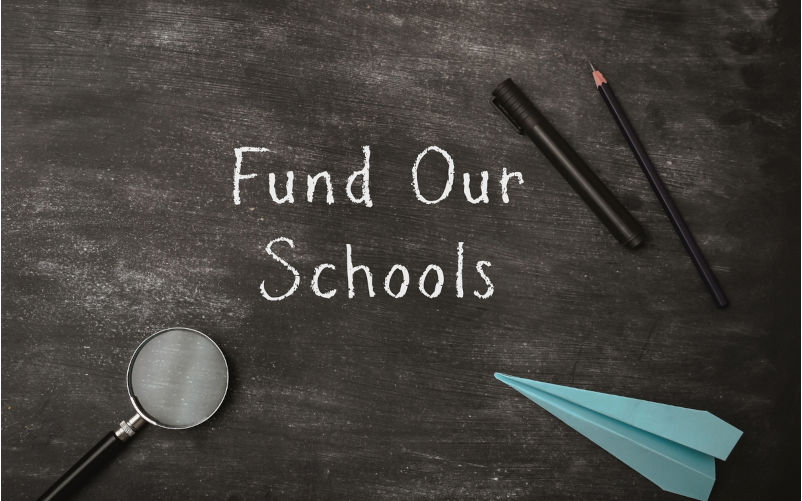
“Lahat ng pampublikong paaralan ay nasa landas patungo sa buong pondo ng Gonski, $16.5 bilyon sa loob ng 10 taon”
Orihinal na Pinagmulan: Albosteezy

Orihinal na Pinagmulan

FACTUAL NA BERIPIKASYON

Ang Labor government ay tunay na nagkomit ng $16.5 bilyon sa karagdagang Commonwealth funding sa pampublikong paaralan sa loob ng 10 taon [1].
The Labor government has indeed committed $16.5 billion in additional Commonwealth funding to public schools over 10 years [1].
Noong 2024, ang Albanese Labor Government ay nakipagkasundo sa bawat estado at teritoryo na ilagay ang lahat ng pampublikong paaralan sa isang "landas patungo sa buong at patas na pondo" tulad ng itinakda sa review ni David Gonski noong 2011 [2].
In 2024, the Albanese Labor Government reached agreements with every state and territory to put all public schools on a "path to full and fair funding" as set out in David Gonski's 2011 review [2].
Ang mekanismo ng pondo ay gumagana sa sumusunod na paraan: ang Commonwealth ay magbibigay ng karagdagang 5 porsiyento ng Schooling Resource Standard (SRS) sa lahat ng estado at teritoryo, pataasin ang kontribusyon ng Commonwealth mula 20 porsiyento hanggang 25 porsiyento ng SRS pababa ng 2034 [3].
The funding mechanism works as follows: the Commonwealth will provide an additional 5 per cent of the Schooling Resource Standard (SRS) to all states and territories, lifting the Commonwealth's contribution from 20 per cent to 25 per cent of the SRS by 2034 [3].
Para sa Northern Territory, ang kontribusyon ng Commonwealth ay tataas hanggang 40 porsiyento pababa ng 2029 [4].
For the Northern Territory, the Commonwealth's contribution will increase to 40 per cent by 2029 [4].
Ito ay kumakatawan sa malaking pagtaas, kung saan ang mga pampublikong paaralan ay sa average ay tumanggap ng 70 porsiyentong pagtaas sa Commonwealth funding kada estudyante kapag lubos nang na-implementa [5].
This represents a significant increase, with public schools on average receiving a 70 per cent increase in Commonwealth funding per student when fully implemented [5].
Ang lehislasyon na nagtataguyod ng "Better and Fairer Schools Agreement" ay ipinakilala at ang lahat ng estado at teritoryo ay pumirma sa bagong kasunduan sa pagpopondo ng paaralan pababa ng huling Marso 2025 [6].
The legislation establishing the "Better and Fairer Schools Agreement" was introduced and all states and territories signed on to the new school funding agreement by late March 2025 [6].

Nawawalang Konteksto

**"Landas patungo" "Buong" Pondo:** Ang kritikal na salita sa claim ay "landas." Ang gobyerno ay hindi nagbibigay ng buong pondo ng Gonski ngayon—ito ay nagkokomit sa isang "landas" na makakarating sa buong pondo sa 2034, isang buong dekada ang layo [7].
**"Path to" ≠ "Full" Funding:** The critical word in the claim is "path." The government is not providing full Gonski funding now—it's committing to a "path" that reaches full funding in 2034, a full decade away [7].
Ito ay nagrereframe ng isang pangmatagalang pangako bilang isang agarang achievement. **Ang Kasalukuyang Funding Gap ay Nananatili:** Mula sa Gonski Review noong 2012, tanging 3% ng mga estudyante sa pampublikong paaralan sa Australia ang tumatanggap ng minimum funding standard na inirekomenda ng Gonski [8].
This reframes a long-term commitment as an immediate achievement. **Current Funding Gap Persists:** Since the Gonski Review in 2012, only 3% of public school students in Australia receive the minimum funding standard recommended by Gonski [8].
Hanggang ngayon, humigit-kumulang 2% ng mga pampublikong paaralan ang tumatanggap ng halagang karapat-dapat nila batay sa Schooling Resource Standard, pangunahin dahil ang mga state at teritoryong gobyerno ay hindi nag-ambag ng kanilang buong share [9].
To date, approximately 2% of public schools receive the amount they are entitled to based on the Schooling Resource Standard, largely because state and territory governments have not contributed their full share [9].
Ang wika ng claim ay naglilihim na ang mga pampublikong paaralan ay nananatiling malaking underfunded ngayon. **Backloaded Funding Schedule:** Ang pagtaas ng Commonwealth ay "malubhang backloaded hanggang sa huling limang taon sa NSW, Queensland at South Australia" [10], na nangangahulugan na karamihan sa mga paaralan ay hindi makakakita ng malalaking karagdagang pondo sa mga susunod na taon.
The claim's language obscures that public schools remain significantly underfunded today. **Backloaded Funding Schedule:** The Commonwealth increase is "heavily backloaded until the last five years in NSW, Queensland and South Australia" [10], meaning most schools won't see substantial additional funding for years.
Ito ay hindi ang agarang relief na inihahayag ng framing. **Patuloy na Responsibilidad ng Estado:** Kahit pababa ng 2034, ang mga estado at teritoryo ay nananatiling responsable para sa 75% ng SRS funding [11].
This is not the immediate relief the framing suggests. **Ongoing State Responsibility:** Even by 2034, states and territories remain responsible for 75% of the SRS funding [11].
Ito ay depende lubusan sa pangako ng state government.
This depends entirely on state government commitment.
Ang nakaraang mga dekada ay nagpapakita na ito ay isang malaking panganib—ang mga estado ay patuloy na nabigo na matugunan ang kanilang mga obligasyon sa pagpopondo mula 2012 [12]. **Isyu ng Equity sa Pribadong Paaralan:** Ang modelo ng Gonski ay dinisenyo bilang sector-blind, na naglalayong pondohan ng pareho ang pampubliko at pribadong paaralan batay sa pangangailangan ng estudyante.
Previous decades demonstrate this is a significant risk—states have consistently failed to meet their funding obligations since 2012 [12]. **Private School Equity Issue:** The Gonski model was designed as sector-blind, aimed at funding both public and private schools equitably based on student need.
Gayunpaman, pababa ng 2022, ang 1,550 pribadong paaralan (56.3% ng lahat ng pribadong paaralan) ay tumatanggap ng mas maraming pondo ng gobyerno kada estudyante kaysa sa mga katumbas na pampublikong paaralan [13].
However, by 2022, 1,550 private schools (56.3% of all private schools) were receiving more government funding per student than comparable public schools [13].
Ito ay kumakatawan sa isang malaking distorsyon ng orihinal na prinsipyo ng Gonski.
This represents a significant distortion of the original Gonski principle.

💭 KRITIKAL NA PANANAW

Ang claim ay pinagsasama ang isang 10-taong pangako sa kasalukuyang achievement.
The claim conflates a 10-year commitment with present-day achievement.
Habang ang karagdagang $16.5 bilyon na pondo ay malaki at ang kasunduan ay kumakatawan sa pag-unlad pagkatapos ng mga taon ng stalled negotiations, ilang kritikal na isyu ang nananatili: **Mga Alalahanin sa Timeline:** Tinukoy ni Gonski mismo ang minimum na antas ng pondo noong 2012.
While the $16.5 billion additional funding is substantial and the agreement represents progress after years of stalled negotiations, several critical issues remain: **Timeline Concerns:** Gonski himself identified the minimum funding level in 2012.
Ang katotohanan na ang gobyerno ay umaangkin ng kredito sa paglalagay ng mga paaralan sa isang "landas" patungo sa buong pondo noong 2024—12 taon pagkatapos at buong implementasyon ay 10 taon pa ang layo (2034)—ay nagpapahiwatig ng mabagal na bilis ng reporma.
The fact that the government is claiming credit for putting schools on a "path" to full funding in 2024—12 years later and with full implementation still 10 years away (2034)—indicates the slow pace of reform.
Ang mga estudyanteng kasalukuyang nasa paaralan ay gagradweyt bago dumating ang mga pondong ito nang lubusan [14]. **Panganib sa Implementasyon:** Ang tagumpay ng pangakong ito ay depende lubusan sa mga state at teritoryong gobyerno na sumunod sa kanilang mga obligasyon sa pagpopondo.
Students currently in school will have graduated before these funds fully arrive [14]. **Implementation Risk:** The success of this commitment depends entirely on state and territory governments following through on their funding obligations.
Sa ilalim ng Coalition governments (2013-2022), ang pagpopondo ng paaralan ay naging "mas entrenched" sa inequality [15].
Under Coalition governments (2013-2022), school funding became "more entrenched" in inequality [15].
Walang garantiya na ang mga Labor state government ay mas magkakomisyon sa pagsara ng 5% funding gap na nananatili kahit sa kanilang sariling administrasyon [16]. **Problema sa Pribadong Paaralan:** Ang orihinal na modelo ng Gonski ay iminungkahi na alisin ang mga subsidyo sa pribadong paaralan upang i-redirect ang mga pondo sa pampublikong paaralan.
There is no guarantee Labor state governments will be more committed to closing the 5% funding gap that persists even in their own administrations [16]. **Private School Problem:** The original Gonski model proposed removing private school subsidies to redirect funds to public schools.
Sa halip, ang mga pribadong paaralan ay tumanggap ng lumalaking suporta mula sa gobyerno.
Instead, private schools have received increasing government support.
Ang bifurcation ng pagpopondo ay nangangahulugan na ang pagtaas ng pondo ng pampublikong paaralan ay maaaring hindi mag-translate sa tunay na equity—ang mga paaralan na may mas kaunting disadvantaged students ay mas mahusay na resourced habang ang mga paaralan na may high-need populations ay nananatiling underfunded kaugnay sa kanilang aktwal na gastos [17]. **Nag-iiba ang Aktwal na Impact:** Para sa ilang paaralan, ang 70% average na pagtaas sa Commonwealth funding kada estudyante ay kumakatawan sa tunay na relief.
The bifurcation of funding means the public school funding increase may not translate to genuine equity—schools with fewer disadvantaged students are better resourced while schools with high-need populations remain underfunded relative to their actual costs [17]. **Real Impact Varies:** For some schools, the 70% average increase in Commonwealth funding per student represents genuine relief.
Gayunpaman, ang mga paaralan na bahagyang funded na malapit sa SRS level ay makakakita ng minimal na pag-unlad.
However, schools already partially funded near the SRS level will see minimal improvement.
Ang mga paaralan na may mataas na konsentrasyon ng disadvantaged students—ang mga nangangailangan ng pinakamaraming karagdagang suporta—ay madalas na makakakita ng minimal na pagtaas dahil malapit na sila sa kanilang SRS level [18]. **Framing vs Reality:** Ang mga government media releases ay gumagamit ng wika tulad ng "lahat ng pampublikong paaralan ngayon ay nasa isang landas patungo sa buong at patas na pondo" [2], na teknikal na tama ngunit misleading.
Schools with high concentrations of disadvantaged students—those needing the most additional support—often see minimal increases because they're already closer to their SRS level [18]. **Framing vs Reality:** Government media releases use language like "all public schools now on a path to full and fair funding" [2], which is technically accurate but misleading.
Ito ay nagmungkahi ng agarang aksyon kapag sa katunayan: (a) ang pondo ay nananatiling mas mababa sa mga antas ng Gonski ngayon, (b) ang buong pondo ay 10 taon ang layo, at (c) ang mga nakaraang gobyerno ay nabigo na matugunan ang katulad na mga pangako.
It suggests immediate action when in reality: (a) funding remains below Gonski levels today, (b) full funding is 10 years away, and (c) past governments failed to meet similar commitments.
Ayon sa mga akademiko sa edukasyon, ang modelo ng pagpopondo ng paaralan sa Australia ay "catastrophically broken," kung saan ang mga prinsipyo ng Gonski ay minsa na ang patuloy na preferential treatment ng mga pribadong paaralan at political interference sa mga desisyon ng state funding [19].
Education academics note that Australia's school funding model is "catastrophically broken," with Gonski principles undermined by continued preferential treatment of private schools and political interference in state funding decisions [19].

BAHAGYANG TOTOO

6.0

sa 10

Teknikal na tama tungkol sa $16.5 bilyon na pangako at "landas" patungo sa buong pondo, ngunit ang framing ay misleading.
Technically accurate about the $16.5 billion commitment and "path" to full funding, but the framing is misleading.
Ang gobyerno ay hindi nag-implementa ng buong pondo ng Gonski; ito ay nagkomit sa isang landas patungo dito pababa ng 2034.
The government has not implemented full Gonski funding; it has committed to a path toward it by 2034.
Ang claim ay naglilihim na ang mga pampublikong paaralan ay nananatiling malaking underfunded ngayon at na ang 10 karagdagang taon ng paghihintay ay sumasalungat sa orihinal na 2012 Gonski recommendation.
The claim obscures that public schools remain significantly underfunded today and that 10 additional years of waiting contradicts the original 2012 Gonski recommendation.

📚 MGA PINAGMULAN AT SANGGUNIAN (16)

  1. 1
    pm.gov.au

    All Australian public schools now on a path to full and fair funding

    The Albanese Labor Government has now reached agreements with every state and territory to put all public schools in the country on a path to full and fair funding.The Government promised to work with states and territories to put all schools on a path to full and fair funding as set out in David Gonski’s review. We have now delivered that promise.As part of these Agreements, the Commonwealth will provide an additional 5 per cent of the Schooling Resource Standard (SRS) to all states and territories, with the exception of the Northern Territory.

    Prime Minister of Australia
  2. 2
    ministers.education.gov.au

    All Australian public schools now on a path to full and fair funding

    Ministers Education Gov

  3. 3
    pm.gov.au

    Australian and Northern Territory Governments agree to fully and fairly fund all NT public schools

    All Northern Territory public schools will be fully and fairly funded by the Australian and Northern Territory Governments following a historic agreement signed today. Both Governments have signed a Statement of Intent to increase funding for all public schools in the Northern Territory to 100 per cent of the Schooling Resource Standard (SRS), by 2029.This means Northern Territory public schools will reach the full and fair funding level two decades earlier than they would under current settings.

    Prime Minister of Australia
  4. 4
    All Australian public schools now on a path to full and fair funding

    All Australian public schools now on a path to full and fair funding

    All Australian public schools now on a path to full and fair funding

    Alp Org
  5. 5
    New Schools Agreements Show Public Schools Will Remain Underfunded in 2034

    New Schools Agreements Show Public Schools Will Remain Underfunded in 2034

    Saveourschools Com
  6. 6
    epaa.asu.edu

    The Gonski Review and the Schooling Resource Standard

    Epaa Asu

  7. 7
    qtu.asn.au

    The failure to implement Gonski and the stress caused for state schools

    Qtu Asn

    Original link no longer available
  8. 8
    New school funding agreements deny full funding for public schools

    New school funding agreements deny full funding for public schools

    The claim by the prime minister, premiers and their education ministers that public schools will be fully funded by 2034 is a blatant falsehood.

    Pearls and Irritations
  9. 9
    Schools agreement provides NSW $4.8 billion extra for public schools over a decade

    Schools agreement provides NSW $4.8 billion extra for public schools over a decade

    Queensland remains the only state still to join the agreement, which ties federal funding to schools to specific measures, such as phonics checks.

    The Conversation
  10. 10
    Big problems for public school funding

    Big problems for public school funding

    NSW Government, federal government, and private schools continue to blame-shift public school underfunding.

    Central News
  11. 11
    MAJORITY OF PRIVATE SCHOOLS GET MORE PUBLIC FUNDING THAN COMPARABLE PUBLIC SCHOOLS

    MAJORITY OF PRIVATE SCHOOLS GET MORE PUBLIC FUNDING THAN COMPARABLE PUBLIC SCHOOLS

    The extent of inequity in Australia’s school funding has been revealed in new research, showing that more than half of private schools in Australia now receive more combined Government funding (Commonwealth and State) per student than public schools of similar size, location and with similar student needs.

    Aeufederal Org
  12. 12
    Waiting for Gonski

    Waiting for Gonski

    UNSW Press
  13. 13
    Australian Labor government's school funding model entrenches underfunding and inequality

    Australian Labor government's school funding model entrenches underfunding and inequality

    With private schools continuing to enjoy lavish government funding, the Australian school system remains among the world’s most socially polarised and unequal.

    World Socialist Web Site
  14. 14
    aeuvic.asn.au

    Time is up – fair funding for public schools needs immediate action

    Aeuvic Asn

  15. 15
    Australia's school funding model 'catastrophically broken'

    Australia's school funding model 'catastrophically broken'

    A surge in government spending on private schools is failing millions of public school children, say the Greens

    Theeducatoronline
  16. 16
    Underfunded? Overfunded? How school funding works in Australia

    Underfunded? Overfunded? How school funding works in Australia

    During the election we can expect to hear about school funding. This is one of the most contentious areas of education policy – and one voters care deeply about.

    The Conversation

Pamamaraan ng Rating Scale

1-3: MALI

Hindi tama sa katotohanan o malisyosong gawa-gawa.

4-6: BAHAGYA

May katotohanan ngunit kulang o baluktot ang konteksto.

7-9: HALOS TOTOO

Maliit na teknikal na detalye o isyu sa pagkakasulat.

10: TUMPAK

Perpektong na-verify at patas ayon sa konteksto.

Pamamaraan: Ang mga rating ay tinutukoy sa pamamagitan ng cross-referencing ng opisyal na mga rekord ng pamahalaan, independiyenteng mga organisasyong nag-fact-check, at mga primaryang dokumento.