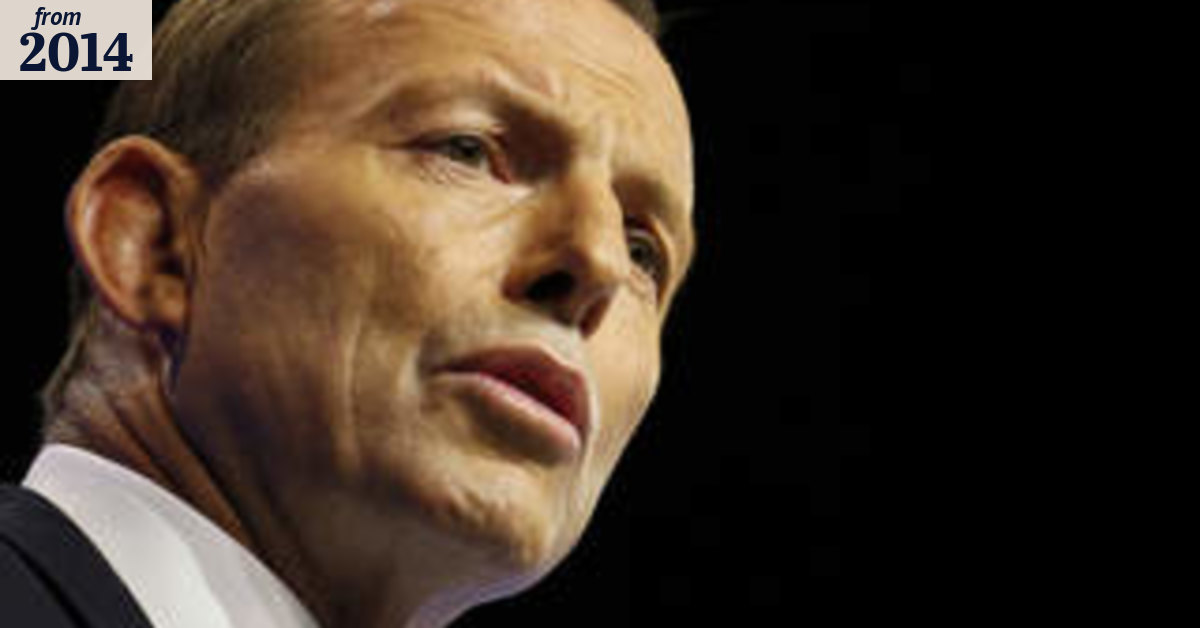
In his speech, Abbott stated: "In the decade prior to the Crisis, consistent surpluses and a preference for business helped my country, Australia, to become one of the world's best-performing economies.
He also said: "The reason for spending soon passed but the spending didn't stop because, when it comes to spending, governments can be like addicts in search of a fix" [2].
However, regarding the claim that this violated "international conventions," there is no evidence of any breach of binding international law, treaty obligations, or formal diplomatic conventions.
The Vienna Convention on Diplomatic Relations (1961) governs diplomatic relations between states and does not regulate the content of political speeches by heads of government [3].
The principle of non-intervention in international law applies to states intervening in the internal affairs of other states, not to domestic political criticism by a country's own leader [4].
The claim omits several important contextual elements:
1. **Nature of the speech**: Abbott's address was focused on economic philosophy and G20 priorities, not solely a partisan attack.
The speech was titled "This Year's G20: Getting the Fundamentals Right" and covered topics including free trade, infrastructure investment, tax policy, and financial regulation [1].
2. **Timing and role**: Australia was preparing to chair the G20 summit in Brisbane later in 2014.
Opposition Leader Bill Shorten called it an "embarrassing performance" and accused Abbott of "playing domestic politics on the international stage" [2].
Shadow Treasurer Chris Bowen said Abbott appeared "addicted to being leader of the opposition and hasn't adjusted to being prime minister" [2].
4. **The "convention" is a tradition, not law**: The Sydney Morning Herald reported that Abbott "broke with the convention of avoiding domestic point-scoring while on the international stage" [6].
The original source provided is the Sydney Morning Herald (SMH), a mainstream Australian newspaper with a generally reputable record for political reporting.
The article accurately reported Abbott's remarks but characterized them as breaking a "convention."
The claim's framing appears to amplify the SMH's characterization of a "convention" into "international conventions" (plural, and with greater legal weight), which is misleading.
**Did Labor do something similar?**
Search conducted: "Kevin Rudd Julia Gillard criticized opposition Coalition international forum overseas"
Finding: No specific instances of Labor leaders making comparable criticisms of the Coalition during international speeches were found in available sources.
* * * *
However, the claim is not about whether Labor did the same thing, but whether Abbott violated "international conventions."
Historical precedent shows that political leaders commonly contrast their policies with predecessors abroad:
- U.S. presidents frequently criticize previous administrations' policies during foreign trips
- New governments routinely distinguish their approach from previous governments at international forums
- The World Economic Forum itself is a venue where leaders present competing economic philosophies
While Labor figures characterized Abbott's remarks as inappropriate for an international venue [2], several factors provide important context:
1. **Substance vs. style**: Abbott's criticism was embedded within a broader economic philosophy speech about government spending, taxation, and market principles.
The speech outlined Australia's G20 agenda and priorities [1].
2. **Policy debate, not personal attack**: Abbott criticized Labor's policy approach to the GFC ("spend our way to prosperity"), not individual Labor figures.
This distinction matters in assessing whether this crossed diplomatic boundaries.
3. **No international law violation**: There is no evidence that any international treaty, convention, or binding diplomatic protocol was violated.
The principle of non-intervention in international law does not apply to a head of government criticizing their own predecessor's domestic policies [4].
4. **Political tradition vs. legal obligation**: While there may be an unwritten tradition of avoiding overtly partisan domestic criticism on foreign trips, this is a matter of diplomatic courtesy and political judgment, not legal compliance.
5. **Labor's own perspective**: Former Treasurer Wayne Swan acknowledged that Abbott's view "ignores the analysis of economists, Treasury, the International Monetary Fund, the World Bank and the G20" [6], suggesting Abbott's criticism was of economic policy, which is a legitimate subject for international economic forums.
**Key context:** This was not a violation of international conventions - it was a departure from an unwritten political tradition.
While Abbott did criticize Labor's GFC response during his Davos speech, this did not constitute a violation of any binding international convention, treaty, or diplomatic protocol.
The principle of non-intervention in international law concerns state-to-state intervention, not domestic political criticism by a country's own leader.
The Sydney Morning Herald described Abbott as breaking a "convention" - referring to an unwritten political tradition of avoiding domestic point-scoring abroad, not a formal international convention as the claim suggests.
While Abbott did criticize Labor's GFC response during his Davos speech, this did not constitute a violation of any binding international convention, treaty, or diplomatic protocol.
The principle of non-intervention in international law concerns state-to-state intervention, not domestic political criticism by a country's own leader.
The Sydney Morning Herald described Abbott as breaking a "convention" - referring to an unwritten political tradition of avoiding domestic point-scoring abroad, not a formal international convention as the claim suggests.