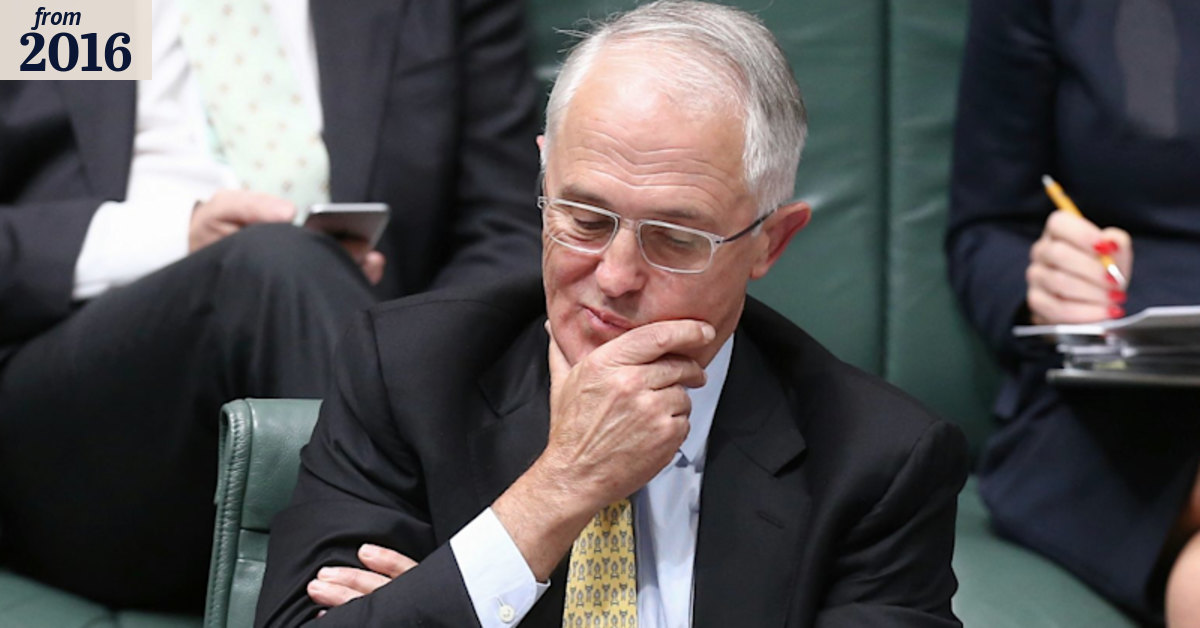
In March 2016, the Australian Public Service Commission (APSC), reporting to Minister for Women Michaelia Cash, directed that domestic violence leave clauses be removed from enterprise agreements across the Commonwealth public service [1].
首相 nounShushou 府 Fu ( ( Department nounDepartment of nounOf the nounThe Prime nounPrime Minister nounMinister and nounAnd Cabinet nounCabinet ) ) 、 , 人間 nounNingen サービス nounService 省 Shou ( ( Department nounDepartment of nounOf Human nounHuman Services nounServices ) ) 、 , 豪州 nounGoushuu 税務 nounZeimu 局 nounKyoku ( ( Australian nounAustralian Taxation nounTaxation Office nounOffice ) ) など particleNado 、 , 最大 nounSaidai 30 noun30 の possessiveNo 公共 nounKoukyou サービス nounService 雇用 nounKoyou 機関 nounKikan に direction/targetNi 対し verbTaishi 、 , 個別 nounKobetsu の possessiveNo ドメスティック Domestic バイオレンス nounViolence 休暇 nounKyuuka 条項 nounJoukou を object-markerWo 削除 nounSakujo する verbSuru よう You 指示 nounShiji さ verbSa れ auxiliary-verbRe まし auxiliary-verbMashi た auxiliary-verbTa [ [ 1 noun1 ]。 ??
Up to 30 public service employers, including the Department of the Prime Minister and Cabinet, the Department of Human Services, and the Australian Taxation Office, were instructed to remove specific domestic violence leave provisions from their agreements [1].
The APSC classified domestic violence leave as an "enhancement" to workplace conditions, which were prohibited under the government's enterprise bargaining framework at the time [1].
However, the government maintained that employees experiencing domestic violence could still access "miscellaneous leave" provisions with manager approval [1].
A PM&C spokeswoman confirmed these arrangements were not being changed, though they did not constitute a specific, guaranteed entitlement to domestic violence leave [1].
The claim omits several important contextual elements:
**Alternative leave provisions existed:** While specific domestic violence leave clauses were removed, the government maintained that employees could access miscellaneous leave provisions if they were victims of domestic violence, subject to managerial approval [1].
The distinction was between a specific, guaranteed entitlement and discretionary leave.
**Enterprise bargaining framework context:** The removal was part of a broader government policy prohibiting "enhancements" to workplace conditions during the enterprise bargaining round [1].
This was a government-wide position on public sector wage negotiations, not specifically targeted at domestic violence leave in isolation.
**Pre-existing limited coverage:** Some agencies, such as the former FaHCSIA (Department of Families, Housing, Community Services and Indigenous Affairs), had existing provisions allowing departmental heads to approve leave in certain circumstances, though these were also being removed as "enhancements" [1].
The article includes responses from the government (PM&C and Senator Cash's office), union perspectives (CPSU), and expert commentary from academics and White Ribbon Australia, suggesting a reasonable attempt at balance [1].
**Did Labor do something similar?**
Search conducted: "Labor government domestic violence leave public service policy"
**Finding:** The Rudd/Gillard Labor government (2007-2013) did **not** implement universal paid domestic violence leave for public servants or the broader workforce during their term in office [2][3].
* * * *
Domestic violence leave was not established as a universal National Employment Standard until the **Albanese Labor government** passed legislation in 2022, entitling all employees (including casuals) to 10 days of paid family and domestic violence leave [4][5].
**Comparison:**
- **Coalition (2016):** Removed specific domestic violence leave clauses from enterprise agreements, arguing employees could use miscellaneous leave instead
- **Labor Rudd/Gillard (2007-2013):** Did not implement universal paid domestic violence leave during their government
- **Labor Albanese (2022):** Introduced 10 days paid family and domestic violence leave as a universal entitlement for all employees
The claim implies a uniquely negative Coalition action, but the historical reality is that universal paid domestic violence leave was not implemented by either major party until 2022.
**Criticisms of the Coalition position:**
Unions and domestic violence advocates, including White Ribbon Australia, criticized the removal of specific domestic violence leave clauses [1].
Dr Sue Williamson, a lecturer in human resource management at UNSW Canberra, noted that the approach appeared to undermine the government's stated commitment to reducing violence against women [1].
Critics argued that specific, guaranteed entitlements were preferable to discretionary miscellaneous leave, as they provided certainty for employees experiencing domestic violence and reduced the burden of having to explain traumatic circumstances to managers [1].
**Government justification:**
The Coalition maintained that the removal was not a reduction in support for domestic violence victims but a procedural matter under enterprise bargaining rules prohibiting enhancements [1].
The "no enhancements" policy was part of a broader framework for managing public sector wage growth and conditions during a period of budget consolidation following the Global Financial Crisis.
**Comparative context:**
This was not a uniquely Coalition position.
The significant policy advancement on this issue came with the Albanese government in 2022 [4][5], representing a cross-party shift in workplace entitlements over time rather than a Coalition-specific regression.
**Key context:** The removal of specific domestic violence leave clauses was a factual event, but the framing that this represented uniquely poor treatment of public servants by the Coalition is misleading given Labor's equivalent failure to implement such entitlements during their previous government.
The core factual claim is accurate: the Coalition did direct the removal of domestic violence leave clauses from public service enterprise agreements in 2016, classifying them as prohibited "enhancements" under the bargaining framework [1].
This was part of a broader enterprise bargaining policy, not an isolated attack on domestic violence victims
The claim frames this as a Coalition-specific failure, when in fact it reflected the state of workplace entitlements across both major parties until 2022.
The core factual claim is accurate: the Coalition did direct the removal of domestic violence leave clauses from public service enterprise agreements in 2016, classifying them as prohibited "enhancements" under the bargaining framework [1].
This was part of a broader enterprise bargaining policy, not an isolated attack on domestic violence victims
The claim frames this as a Coalition-specific failure, when in fact it reflected the state of workplace entitlements across both major parties until 2022.