
The Claim
“Spent $55 million to resettle just two refugees in Cambodia.”
Original Sources Provided
✅ FACTUAL VERIFICATION
The core factual elements of this claim are accurate. The Australia-Cambodia refugee resettlement agreement, signed in September 2014, involved Australia providing approximately $55 million to Cambodia—comprising $40 million in additional aid and $15 million for resettlement support services through the International Organization for Migration [1][2]. According to a Senate estimates hearing in October 2016, Labor Senator Tim Watt confirmed the $55 million figure was "earmarked for the agreement, divided between $40 million in aid and about $15 million for the actual resettlement" [1].
The number of refugees resettled was indeed minimal. Initially, four refugees were relocated to Cambodia in June 2015. However, by March 2016, two of those refugees had left—one returned to Myanmar, and an Iranian couple returned to their homeland [2]. This left only two refugees permanently resettled under the deal at the time the claim was made. By 2017, reports indicated only one refugee remained in Cambodia from the original group [3].
The cost-per-refugee calculation (approximately $27.5 million per person) is mathematically accurate based on the $55 million total and two resettled refugees.
Missing Context
The broader refugee policy context is absent from the claim. The Cambodia deal was part of Australia's offshore processing policy, which was originally established by the Howard government (Coalition) as the "Pacific Solution" in 2001, closed by the Rudd Labor government in 2008, then reopened by the Gillard Labor government in 2012 [4][5]. The offshore detention centers on Nauru and Manus Island were operational under both Labor and Coalition governments.
The purpose of the deal is not explained. The Cambodia arrangement was intended as a "third country resettlement" option for refugees who had been processed on Nauru and found to be genuine refugees, but whom Australia would not resettle due to the policy that "if you arrive by boat then you can either return to your country of origin or be resettled in a third country" [2]. Nauru only offered temporary resettlement, creating a need for permanent resettlement locations.
Not all $55 million was drawn down at the time of the claim. According to Department of Immigration officials at Senate estimates, while $55 million was earmarked, "not all of which has been drawn down" [1]. The actual expenditure on resettlement assistance at that time was reported as $4.77 million [1].
The deal was eventually superseded. In September 2016, the Turnbull government (Coalition) secured a more substantial refugee resettlement agreement with the United States, agreed to by the Obama administration, which ultimately resettled over 1,000 refugees from Nauru and Manus Island [6][7].
Cambodia was a voluntary resettlement option. Refugees were not forced to go to Cambodia; they volunteered for the program. The Iranian couple who left Cambodia in March 2016 "can elect to return to their country of origin at any time, which is what an Iranian couple in Cambodia decided to do recently" according to Immigration Minister Peter Dutton's office [2].
Source Credibility Assessment
The original source provided is The Guardian Australia, a mainstream media outlet with generally reliable reporting standards. The Guardian has a center-left editorial stance and has been critical of Australia's offshore processing policies under both Labor and Coalition governments [8]. The specific article cited includes direct quotes from Immigration Minister Peter Dutton defending the deal, providing some balance.
The Guardian's reporting on refugee issues is generally factually accurate but often framed from a perspective critical of restrictive asylum policies. This article follows that pattern—while reporting Dutton's defense, the headline and framing emphasize the criticism of the deal's cost-effectiveness.
Additional sources consulted include:
- UNSW Kaldor Centre for International Refugee Law: Academic research center, highly credible for refugee law and policy analysis [1][3]
- ABC News: Australia's public broadcaster, mainstream and generally balanced [6]
- SBS News: Publicly funded multicultural broadcaster, credible reporting [5]
- Migration Policy Institute: Independent US-based think tank, credible on migration issues [3]
Labor Comparison
Did Labor do something similar?
Search conducted: "Labor government refugee resettlement policy Manus Island Nauru comparison"
Finding: Labor not only supported offshore processing but reopened it and faced similar resettlement challenges.
The Rudd Labor government closed the Howard-era Pacific Solution in 2008. However, following increased boat arrivals, the Gillard Labor government reopened the Nauru and Manus Island detention centers in 2012 [4][5]. Labor's immigration spokesperson Richard Marles criticized the Cambodia deal as "botched" and an "abject failure" [2], but this criticism exists within the context that:
Labor created the same policy problem: Labor reopened offshore processing in 2012, creating the population of refugees on Nauru who needed third-country resettlement [4][5].
Labor faced the same resettlement challenge: When Labor reopened Nauru and Manus in 2012, they also needed to find third countries willing to resettle refugees, as Australia maintained the policy of not resettling boat arrivals. Labor was unable to secure any third-country resettlement agreements during their 2012-2013 period in government [5].
Labor supported the Cambodia deal initially: The Cambodia agreement was signed in September 2014, just over a year after the Coalition took office. Labor criticized its implementation but did not fundamentally oppose the concept of third-country resettlement, as they had pursued similar arrangements themselves [2].
Both parties spent billions on offshore processing: Both Labor and Coalition governments have spent billions of dollars on offshore processing infrastructure and operations on Nauru and Manus Island over the past two decades [5].
The US resettlement deal was secured by Coalition: The more successful US resettlement arrangement was negotiated by the Turnbull Coalition government in September 2016 [6][7].
Balanced Perspective
While the $55 million Cambodia deal delivered poor value for money with minimal refugee resettlement outcomes, several important contextual factors should be considered:
Policy rationale: The deal was part of maintaining Australia's border protection policy, which successive governments (both Labor and Coalition) have argued is necessary to prevent deaths at sea from dangerous boat journeys. The policy relies on denying resettlement in Australia to boat arrivals, which inherently requires finding alternative resettlement locations [2][5].
Voluntary nature: Refugees were not forced to go to Cambodia; they chose to volunteer for the program as a pathway off Nauru. The fact that most refugees chose not to take up the offer, and some who did later returned home, indicates the program's unattractiveness—but also that refugees had agency in their decisions [2][3].
Cambodia's unsuitability: Critics noted that Cambodia was a problematic resettlement destination due to poverty, human rights concerns, lack of refugee resettlement experience, and absence of education, work opportunities, or language training for refugees [2][3]. These criticisms are valid but do not negate that the government was attempting to find resettlement options for a population created by bipartisan-supported policies.
Historical pattern: The difficulty finding third countries willing to resettle Australia's offshore refugees has been a persistent challenge for both parties. Labor reopened Nauru and Manus in 2012 without securing any resettlement agreements; the Coalition secured Cambodia (failed) and eventually the US deal (more successful) [5][6][7].
Cost comparisons: While $55 million for two refugees is poor value, the broader offshore processing program has cost billions under both parties. The Cambodia deal represents a small fraction of total offshore processing expenditure since 2012 [5].
Key context: This policy failure is not unique to the Coalition—it reflects a bipartisan policy framework (offshore processing without Australian resettlement) that creates the need for third-country arrangements. Both parties have struggled to find willing resettlement partners.
TRUE
6.0
out of 10
The factual elements are accurate: approximately $55 million was committed to the Cambodia deal, and only two refugees were permanently resettled. The cost-per-refugee was indeed extraordinarily high. However, the claim omits critical context: (1) this was part of a bipartisan offshore processing policy that Labor also supported and reopened; (2) the deal was voluntary for refugees; (3) not all funds had been drawn down; and (4) the Coalition later secured the more successful US resettlement deal. The claim frames this as a Coalition-specific failure when it reflects broader challenges inherent in the offshore processing policy supported by both major parties.
Final Score
6.0
OUT OF 10
TRUE
The factual elements are accurate: approximately $55 million was committed to the Cambodia deal, and only two refugees were permanently resettled. The cost-per-refugee was indeed extraordinarily high. However, the claim omits critical context: (1) this was part of a bipartisan offshore processing policy that Labor also supported and reopened; (2) the deal was voluntary for refugees; (3) not all funds had been drawn down; and (4) the Coalition later secured the more successful US resettlement deal. The claim frames this as a Coalition-specific failure when it reflects broader challenges inherent in the offshore processing policy supported by both major parties.
📚 SOURCES & CITATIONS (9)
-
1

FactCheck Q&A: how much was spent on the Cambodia refugee deal and how many were settled
The Andrew & Renata Kaldor Centre for International Refugee Law at UNSW Sydney is the world's leading research centre dedicated to the study of international refugee law.
UNSW Sites -
2

Blow to Australia's $55 million Cambodia deal as two more refugees quit
A married Iranian couple who were once refugees at Nauru have left Cambodia, in a further sign Australia's...
Newcastleherald Com -
3
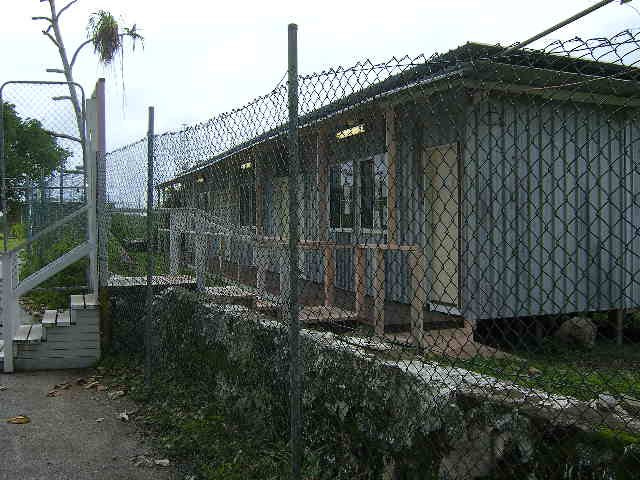
The Australia-Cambodia Refugee Relocation Agreement: Unique but Does Little to Improve Protection
Two years on, the Australia-Cambodia refugee relocation agreement—the first of its kind involving a traditional resettlement country relocating refugees to a country with no resettlement track record—has proven to be underwhelming in its outcomes. Only five refugees have been voluntarily relocated under the deal, of whom just one remains in Cambodia. This article explores where the deal went wrong and what lies ahead for Australia’s detained asylum seekers.
migrationpolicy.org -
4

Manus and Nauru mobile
Refugee Action Coalition | Refugee Action Coalition Sydney (RAC) is a community activist organisation campaigning for the rights of refugees in Australia since 1999. -
5

Australian refugee deal a failure: Cambodian official
A top Cambodian government official has dubbed the refugee resettlement program with Australia a failure.
SBS News -
6

What We Know About the Refugee Resettlement Deal Obama Forged With Australia
Within days of Donald Trump’s election, the Australian government forged a refugee resettlement deal with the United States under President Barack Obama.
ABC News -
7PDF
The Australia-United States Refugee Resettlement Deal
Unsw Edu • PDF Document -
8

$55m Cambodia deal that resettled two refugees a 'good outcome' says Dutton
The minister brushes off criticism that the resettlement scheme represents a waste of taxpayers’ money
the Guardian -
9
Claude Code
Claude Code is an agentic AI coding tool that understands your entire codebase. Edit files, run commands, debug issues, and ship faster—directly from your terminal, IDE, Slack or on the web.
AI coding agent for terminal & IDE | Claude
Rating Scale Methodology
1-3: FALSE
Factually incorrect or malicious fabrication.
4-6: PARTIAL
Some truth but context is missing or skewed.
7-9: MOSTLY TRUE
Minor technicalities or phrasing issues.
10: ACCURATE
Perfectly verified and contextually fair.
Methodology: Ratings are determined through cross-referencing official government records, independent fact-checking organizations, and primary source documents.