Teilweise wahr

Bewertung: 5.5/10

Labor
1.6

Die Behauptung

“Die Inflation sank im Dezember 2024 auf 2,4 %, von übernommenen 6,1 %, innerhalb des Zielkorridors der Reserve Bank of Australia (RBA)”
Originalquelle: Albosteezy

Originalquellen

FAKTENÜBERPRÜFUNG

Die Kernfakten dieser Behauptung sind korrekt.
The core facts of this claim are accurate.
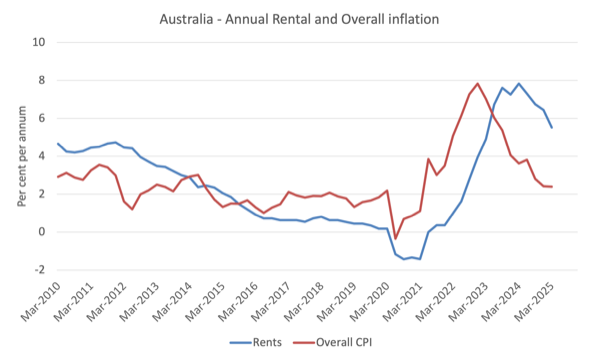
Die jährliche Inflation lag im Dezember-Quartal 2024 tatsächlich bei 2,4 % laut des Australischen Statistischen Amts (Australian Bureau of Statistics, ABS) [1].
Annual inflation was indeed 2.4% in the December 2024 quarter according to the Australian Bureau of Statistics [1].
Die übernommene Inflationsrate von 6,1 % ist in Parlamentsaufzeichnungen und Schatzamtserklärungen verifiziert und repräsentiert die Inflationsrate, als die Labor-Partei (Labor Party) im Mai 2022 die Regierung übernahm [2][3].
The inherited inflation rate of 6.1% is verified in parliamentary records and treasury statements, representing the inflation rate when Labor took office in May 2022 [2][3].
Der Zielkorridor der RBA für die Inflation ist mit 2–3 % bestätigt [4].
The RBA's inflation target band is confirmed to be 2-3% [4].
Die vierteljährliche Inflationszahl von 2,4 % ist im ABS-Verbraucherpreisindex-Bericht (Consumer Price Index, CPI) für das Dezember-Quartal 2024 bestätigt, der besagt: „Die jährliche CPI-Inflation lag im Dezember-Quartal bei 2,4 Prozent, gegenüber 2,8 Prozent im September-Quartal“ [1].
The quarterly inflation figure of 2.4% is confirmed in the ABS Consumer Price Index report for December Quarter 2024, which states "Annual CPI inflation was 2.4 per cent in the December quarter, down from 2.8 per cent in the September quarter" [1].

Fehlender Kontext

Diese Behauptung lässt jedoch wichtigen Kontext darüber aus, was die Inflationsreduktion verursachte und welche Rolle Labor dabei spielte: **1.
However, this claim omits critical context about what caused the inflation reduction and Labor's role in it: **1.
Unterscheidung zwischen Geldpolitik und Fiskalpolitik** Der Haupttreiber der Inflationsreduktion war die Geldpolitik der Reserve Bank of Australia (RBA) insbesondere die Leitzinserhöhungen.
Monetary vs Fiscal Policy Distinction** The primary driver of inflation reduction was the Reserve Bank of Australia's monetary policy—specifically, interest rate increases.
Die RBA erhöhte den Leitzins von 0,1 % auf 4,35 % zwischen Mai 2022 und November 2023, um die Inflation zu bekämpfen [5].
The RBA raised the cash rate from 0.1% to 4.35% between May 2022 and November 2023 to combat inflation [5].
Die Geldpolitik (kontrolliert von der unabhängigen RBA) ist das Standardinstrument zur Inflationskontrolle in den meisten modernen Volkswirtschaften, nicht die Fiskalpolitik (Staatsausgaben und Besteuerung) [6]. **2.
Monetary policy (controlled by the independent RBA) is the standard tool for controlling inflation in most modern economies, not fiscal policy (government spending and taxation) [6]. **2.
Globale vs. inländische Faktoren** Ein Großteil der Inflationsreduktion wurde durch globale Faktoren außerhalb der Kontrolle von Labor angetrieben: Rückgänge bei Rohstoffpreisen (insbesondere Energiepreise nach dem Höchststand des Ukraine-Kriegs), Normalisierung der Lieferketten und schwächelnde Nachfrage weltweit [7].
Global vs Domestic Factors** Much of the inflation reduction was driven by global factors outside Labor's control: commodity price declines (particularly energy prices following the Ukraine war peak), supply chain normalization, and weakening demand globally [7].
Die Inflation sank international in OECD-Ländern während dieses Zeitraums, nicht nur in Australien [8]. **3.
International inflation fell across OECD countries during this period, not uniquely in Australia [8]. **3.
Die fiskalpolitische Beitrag von Labor zur Inflation** Wichtig ist, dass die Fiskalpolitik von Labor möglicherweise *zur* Inflation beigetragen hat, anstatt sie zu lösen.
Labor's Fiscal Contribution to Inflation** Importantly, Labor's fiscal policies may have *contributed to* rather than solved inflation.
Der Haushalt von Labor für 2022–23 umfasste erhebliche Ausgabemaßnahmen (Entlastung bei Energierechnungen, Steuersenkungen, Erhöhungen der Superannuation) zu einer Zeit, als die Inflation hoch war. Ökonomen und einige RBA-Beamte stellten fest, dass fiskalische Stimulanzmaßnahmen während hoher Inflation das Risiko bargen, die geldpolitischen Bemühungen zur Inflationsreduktion zu erschweren [9].
Labor's 2022-23 budget included significant spending measures (energy bill relief, tax cuts, superannuation increases) at a time when inflation was elevated.
Die Spannung zwischen RBA-Zinserhöhungen und den Ausgabesteigerungen von Labor wurde in den Wirtschaftskommentaren der Zeit dokumentiert. **4.
Economists and some RBA officials noted that fiscal stimulus during high inflation risked complicating monetary policy efforts to reduce inflation [9].
Zeitraum-Verzerrung** Die Behauptung verwendet Dezember 2024 als Endpunkt derzeit innerhalb des Zielkorridors der RBA.
The tension between RBA rate rises and Labor spending increases was documented in economic commentary at the time. **4.
Dies verschleiert jedoch ein wichtiges Detail: Die Inflation blieb für einen Großteil von 2023 und 2024 *über* dem Zielkorridor.
Timeframe Bias** The claim uses December 2024 as the endpoint—currently within RBA's target band.
Die Behauptung präsentiert die aktuelle Rate, ohne den verlängerten Zeitraum über dem Ziel zu erwähnen, was darauf hindeutet, dass die Reduktion auch 2+ Jahre nach Amtsantritt von Labor unvollständig war. **5.
However, this masks an important detail: inflation remained *above* the target band for much of 2023 and 2024.
Die „übernommen“-Rahmung** Die Zahl von 6,1 % war die Inflationsrate im Mai 2022, als Labor die Regierung übernahm, aber diese repräsentierte den *Höchststand* des Inflationszyklus, verursacht hauptsächlich durch: globale pandemiebedingte Angebotsschocks, geldpolitische Stimulanzmaßnahmen früherer Regierungen und die Energiekrise infolge der Ukraine-Invasion.
The claim presents the current rate without noting the extended period above target, which suggests the reduction was incomplete for an extended period even 2+ years into Labor's term. **5.
Labor übernahm diese externen Schocks, nicht von ihr selbst verursachte Politikfehler obwohl die Behauptung es als eine Leistung darstellt, sich davon zu erholen.
The "Inherited" Framing** The 6.1% figure was the inflation rate in May 2022 when Labor took office, but this represented the *peak* of the inflation cycle caused primarily by: global pandemic-related supply shocks, monetary stimulus from previous governments, and energy crisis from the Ukraine invasion.

💭 KRITISCHE PERSPEKTIVE

Bei Betrachtung im Kontext erscheint die Inflationsreduktion weniger wie eine Leistung von Labor und mehr wie das vorhersehbare Ergebnis von: 1. **Die RBA erledigt ihre Arbeit**: Die unabhängige RBA erhöhte die Zinsen aggressiv (wie Zentralbanken weltweit), was der Standardmechanismus zur Inflationskontrolle ist.
When examined in context, the inflation reduction appears less like a Labor achievement and more like the predictable result of: 1. **RBA doing its job**: The independent RBA raised rates aggressively (as central banks globally did), which is the standard mechanism for inflation control.
Die RBA hätte dies getan, unabhängig davon, welche Regierung im Amt war. 2. **Globale Normalisierung**: Als die Rohstoffpreise fielen und sich die globalen Lieferketten erholten, sank die Inflation weltweit.
The RBA would have done this regardless of which government was in office. 2. **Global normalization**: As commodity prices fell and global supply chains recovered, inflation fell globally.
Australien war nicht einzigartig die meisten OECD-Länder sahen ähnliche Inflationsrückgänge [10]. 3. **Politikwiderspruch**: Die fiskalische Stimulanz von Labor während hoher Inflation mag die Inflationsreduktion eher *behindert* als unterstützt haben, was die RBA zwang, die Zinsen höher zu erhöhen, als es sonst nötig gewesen wäre. 4. **Unvollständiger Sieg**: Die Schlagzeile „innerhalb des Zielkorridors der RBA“ verschleiert, dass die Inflation für etwa 18+ Monate nach Amtsantritt von Labor über 3 % lag (2023–2024) und erst kürzlich in den Zielkorridor zurückkehrte.
Australia wasn't unique—most OECD countries saw similar inflation declines [10]. 3. **Policy contradiction**: Labor's fiscal stimulus during high inflation may have *hindered* rather than helped inflation reduction, requiring the RBA to raise rates higher than otherwise needed. 4. **Incomplete victory**: The headline of "within RBA target band" obscures that inflation was above 3% for approximately 18+ months into Labor's term (2023-2024), only recently returning to target.
Dies ist nicht der so rasante Erfolg, wie die Rahmung suggeriert. 5. **Kein nachgewiesener Kausalzusammenhang**: Es gibt keine präsentierten Beweise, dass spezifische Politiken von Labor die Inflation schneller sinken ließen, als sie es sonst getan hätte.
This isn't as rapid a success as the framing suggests. 5. **No demonstrated causal link**: There is no evidence presented that specific Labor policies *caused* inflation to fall faster than it would have otherwise.
Die Behauptung verwechselt Korrelation (die Inflation sank während der Amtszeit von Labor) mit Kausalität (Labor verursachte, dass die Inflation sank). Ökonomen und die eigenen Erklärungen der RBA machen klar, dass die Inflationskontrolle primär die Domäne der RBA durch Geldpolitik ist.
The claim conflates correlation (inflation fell during Labor's term) with causation (Labor caused inflation to fall).
Die Rolle von Labor war im Wesentlichen passiv der RBA zu erlauben, ihre Arbeit zu erledigen, ohne dies weiter zu komplizieren, und zu akzeptieren, dass die übernommene Inflation global Zeit brauchen würde, um sich aufzulösen.
Economists and the RBA's own statements make clear that inflation control is primarily the RBA's domain through monetary policy.

TEILWEISE WAHR

5.5

von 10

Die Zahlen sind korrekt (2,4 % Dezember 2024, gegenüber 6,1 % übernommen, innerhalb des RBA-Zielkorridors), aber die Behauptung impliziert eine nicht substanzierte Leistung von Labor.
The numbers are accurate (2.4% December 2024, down from 6.1% inherited, within RBA target), but the claim implies Labor achievement that is not substantiated.
Die Inflationsreduktion wurde primär durch die Geldpolitik der RBA und globale Faktoren angetrieben, nicht durch Politiken von Labor.
The inflation reduction was primarily driven by RBA monetary policy and global factors, not Labor policies.
Die fiskalischen Entscheidungen von Labor während hoher Inflation haben den Prozess der Inflationsreduktion möglicherweise tatsächlich erschwert.
Labor's fiscal decisions during high inflation may have actually complicated the inflation reduction process.
Die Behauptung präsentiert eine Korrelation (die Inflation sank unter der Aufsicht von Labor) als kausale Leistung.
The claim presents a correlation (inflation fell on Labor's watch) as a causal achievement.

📚 QUELLEN UND ZITATE (10)

  1. 1
    Consumer Price Index, Australia, December Quarter 2024

    Consumer Price Index, Australia, December Quarter 2024

    The Consumer Price Index (CPI) measures household inflation and includes statistics about price change for categories of household expenditure

    Australian Bureau of Statistics
  2. 2
    ministers.treasury.gov.au

    Annual inflation almost halved under Labor

    New data shows inflation has now almost halved since the Albanese Labor Government came to office. It’s still too high, people are still under the pump, but we’re making progress. The Budget next month will focus on easing cost of living pressures, not adding to them.

    Ministers Treasury Gov
  3. 3
    Labor Senators' dissenting report - Cost of Living Inquiry

    Labor Senators' dissenting report - Cost of Living Inquiry

    Labor Senators' dissenting reportIntroduction1.1When the Albanese Labor Government came to office, it inherited an economy in distress. Inflation was at 6.1 per cent, climbing dangerously and on an upward spiral, reflecting the troubled economy and policy vacuum left by the forme

    Aph Gov
  4. 4
    Inflation Overview

    Inflation Overview


    Reserve Bank of Australia
  5. 5
    rba.gov.au

    RBA Cash Rate History and Monetary Policy Timeline 2022-2024

    Rba Gov

  6. 6
    Monetary Policy vs. Fiscal Policy: What's the Difference?

    Monetary Policy vs. Fiscal Policy: What's the Difference?

    Monetary policy is focused on the money supply, while fiscal policy is based on taxes and government spending. Read on to learn about the two types of economic policy.

    Investopedia
  7. 7
    Australia's underlying inflation rate falls to 3.2% to bolster case for RBA rate cut next month

    Australia's underlying inflation rate falls to 3.2% to bolster case for RBA rate cut next month

    Consumer price index dropped to 2.4% in December quarter, according to ABS figures released on Wednesday

    the Guardian
  8. 8
    Inflation Overview and Global Context

    Inflation Overview and Global Context

    This series provides short, concise explanations for various economics topics.

    Reserve Bank of Australia
  9. 9
    CPI rises 0.2% in the December 2024 quarter

    CPI rises 0.2% in the December 2024 quarter

    Australian Bureau of Statistics
  10. 10
    Australian inflation rate stable at 2.4 per cent

    Australian inflation rate stable at 2.4 per cent

    Billmitchell

Bewertungsskala-Methodik

1-3: FALSCH

Sachlich falsch oder böswillige Fälschung.

4-6: TEILWEISE

Etwas Wahrheit, aber Kontext fehlt oder ist verzerrt.

7-9: GRÖSSTENTEILS WAHR

Kleine technische Details oder Formulierungsprobleme.

10: KORREKT

Perfekt verifiziert und kontextuell fair.

Methodik: Bewertungen werden durch Abgleich offizieller Regierungsdokumente, unabhängiger Faktenprüfungsorganisationen und Primärquellendokumente bestimmt.