
The Claim
“Changed the ministerial code of conduct so ministers no longer have to sell shares which create a conflict of interest.”
Original Sources Provided
✅ FACTUAL VERIFICATION
The claim is PARTIALLY TRUE but oversimplifies the changes. In December 2013, Prime Minister Tony Abbott did release new ministerial standards that altered requirements regarding share ownership for ministers. News reports from multiple outlets including SBS News, news.com.au, and 9News confirmed that the Abbott government relaxed rules regarding federal ministers' business interests, allowing them to hold company shares under certain conditions [1][2][3].
However, the claim's phrasing "no longer have to sell shares which create a conflict of interest" is imprecise. The Abbott code did not eliminate all requirements to divest shares that created conflicts - rather, it changed the threshold and mechanisms for determining when shares must be divested. The specific changes related to ownership of shares in publicly listed companies [1][2].
Missing Context
1. The Howard Government Precedent (1996-2007)
The claim omits crucial historical context: under former Prime Minister John Howard's ministerial code of conduct, ministers were "simply required to sell shares in companies that came under their area of portfolio responsibility" [4]. This was a more permissive standard than what Rudd later implemented. The Abbott changes in 2013 partially returned to a framework more similar to the Howard era approach.
2. The Rudd Labor Government's Stricter 2007 Code
Kevin Rudd's Labor government introduced significantly stricter "Standards of Ministerial Ethics" in December 2007, which the Abbott code replaced. Under Rudd's code, ministers were "banned from owning shares unless they are held in superannuation funds, publicly-listed funds or in a trust where the minister has no influence over investment decisions" [4]. This was described at the time as requiring ministers "to conduct themselves to a higher standard of conduct than had been the case in the past" [5].
3. The 2013 Changes Were Not a Complete Elimination of Conflict Rules
The Abbott code still contained provisions addressing conflicts of interest. Section 8.2 required that "Ministers should ensure that dealings with lobbyists are conducted consistently with the Lobbying Code of Conduct, so that they do not give rise to a conflict between public duty and private interest" [6]. The changes specifically addressed pecuniary interests and shareholdings but did not wholesale remove conflict of interest requirements.
Source Credibility Assessment
The original source is The Guardian (2013), a mainstream media organization with a center-left editorial stance. The Guardian is generally credible but has been critical of conservative governments. The article in question was a news report from 2013 documenting actual policy changes. While the factual reporting is reliable, the framing emphasizes the "winding back" of standards without fully contextualizing that this represented a return toward Howard-era standards rather than an unprecedented relaxation.
Labor Comparison
Did Labor do something similar?
Search conducted: "Labor government ministerial code of conduct share ownership changes comparison"
Finding: Labor's Rudd government actually implemented the stricter code that Abbott later modified. In 2007, Rudd introduced the "Standards of Ministerial Ethics" which explicitly banned ministers from owning most individual shares [4][5]. This was a significant tightening compared to both the preceding Howard government and the subsequent Abbott government.
Key comparison points:
- Howard (1996-2007): Ministers only had to divest shares in companies directly related to their portfolio [4]
- Rudd/Gillard Labor (2007-2013): Ministers banned from owning most individual shares; only superannuation, publicly-listed funds, or blind trusts allowed [4][5]
- Abbott Coalition (2013-2015): Relaxed to allow shareholdings in publicly listed companies [1][2]
Assessment: Labor's approach was demonstrably stricter on this specific issue. The Abbott changes represented a weakening of the standards Labor had implemented, but a return closer to Howard-era norms. This is not a case of both parties having equivalent standards - there was a genuine policy difference with Labor taking a stricter position.
Balanced Perspective
The Policy Rationale:
While critics viewed the Abbott changes as reducing accountability, the government likely justified the changes on practical grounds. Absolute bans on individual share ownership can be difficult for ministers who enter parliament with established investment portfolios. The Howard-era approach of case-by-case portfolio-based divestment may have been seen as more workable while still addressing direct conflicts.
International Context:
Australian ministerial standards are comparable to other Westminster systems. Most comparable democracies manage ministerial conflicts through disclosure and recusal mechanisms rather than outright bans on share ownership. The Rudd approach was actually more restrictive than many international counterparts.
The Unaddressed Issue:
The real test of any ministerial code is not the text but the enforcement. As Julia Gillard noted in 2007 regarding the Howard government: "What happened with the Howard government code of conduct... it stopped living and breathing and became empty words on a sheet of paper, and even the most clear breaches of the code were no longer the subject of any punishment" [4]. The effectiveness of Abbott's code depended on whether it was actually enforced when breaches occurred.
Subsequent History:
The Abbott code was later modified by Malcolm Turnbull in 2018 following the Barnaby Joyce affair, with changes focusing on relationships with staffers rather than shareholdings [7]. This suggests the share ownership issue, while contentious, was not the only or most prominent ethical concern that emerged during the Coalition years.
PARTIALLY TRUE
5.0
out of 10
The core fact is correct: the Abbott government did change the ministerial code of conduct in December 2013 to allow ministers to hold shares in publicly listed companies, relaxing the stricter Rudd-era ban on most individual shareholdings. However, the claim is misleading in implying this was an unprecedented weakening of standards. In reality, it represented a partial return to the approach used under John Howard's government (1996-2007), where ministers only had to divest shares directly related to their portfolio. The Rudd Labor government had implemented unusually strict standards in 2007, and Abbott's changes moved back toward the longer-standing Howard approach. The claim would be more accurate if it acknowledged this was a reversion to prior Coalition practice rather than a novel erosion of standards.
Final Score
5.0
OUT OF 10
PARTIALLY TRUE
The core fact is correct: the Abbott government did change the ministerial code of conduct in December 2013 to allow ministers to hold shares in publicly listed companies, relaxing the stricter Rudd-era ban on most individual shareholdings. However, the claim is misleading in implying this was an unprecedented weakening of standards. In reality, it represented a partial return to the approach used under John Howard's government (1996-2007), where ministers only had to divest shares directly related to their portfolio. The Rudd Labor government had implemented unusually strict standards in 2007, and Abbott's changes moved back toward the longer-standing Howard approach. The claim would be more accurate if it acknowledged this was a reversion to prior Coalition practice rather than a novel erosion of standards.
📚 SOURCES & CITATIONS (7)
-
1
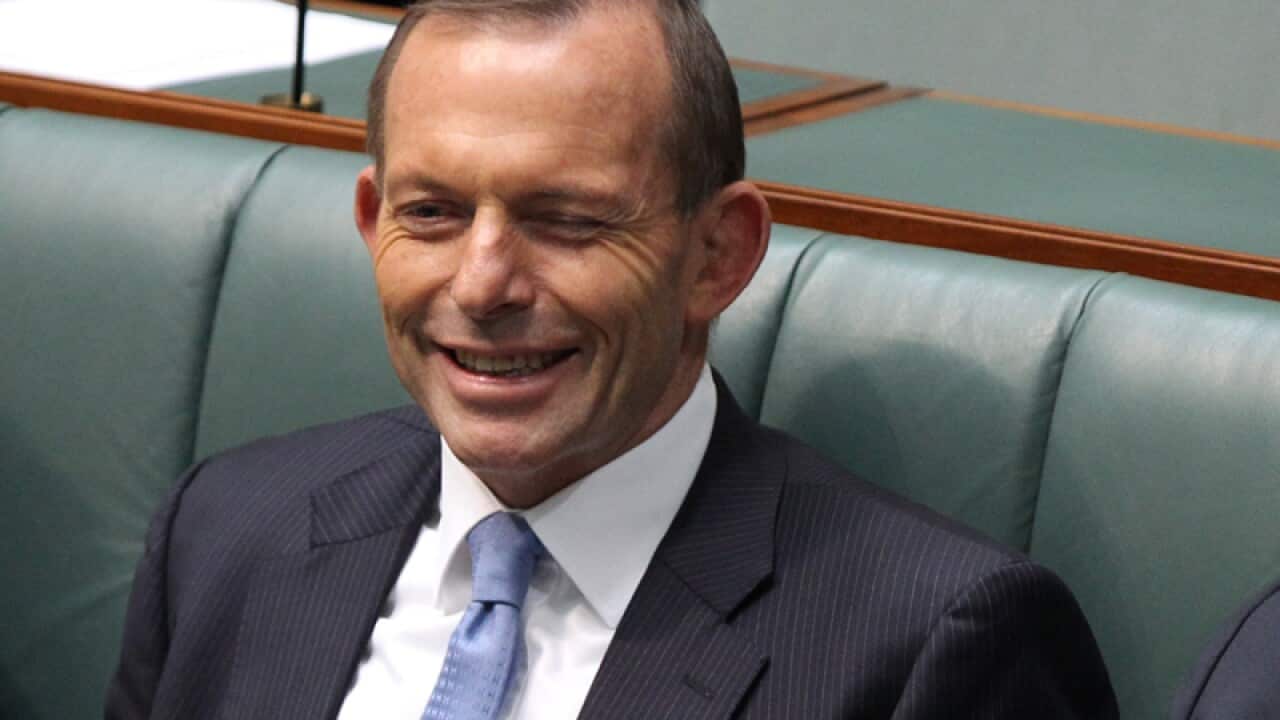
Abbott eases ministerial rules
The code of conduct around ministerial standards has been relaxed, and now allows federal ministers to hold shares in companies.
SBS News -
2
Abbott eases ministerial rules
News Com
-
3

Abbott eases ministerial rules
The code of conduct around ministerial standards has been relaxed, and now allows federal ministers to hold...
9News -
4

Rudd tightens ministerial code
Ministers' shareholdings and their employment after leaving office will be restricted under new transparency measures imposed by Prime Minister Kevin Rudd.
The Sydney Morning Herald -
5PDF
Standards of Ministerial Ethics - Accountability Round Table
Accountabilityrt • PDF Document -
6

Tony Abbott: Statement Of Ministerial Standards
Full text and PDF download of Prime Minister Tony Abbott's Statement of Ministerial Standards.
AustralianPolitics.com -
7
Malcolm Turnbull bans ministers from sex with staffers, but resists calls to ask Barnaby Joyce to resign
Ministers will be banned from having sexual relationships with staffers under a rethink of the code of conduct announced by Malcolm Turnbull today, but the PM is resisting calls to ask Barnaby Joyce to resign.
Abc Net
Rating Scale Methodology
1-3: FALSE
Factually incorrect or malicious fabrication.
4-6: PARTIAL
Some truth but context is missing or skewed.
7-9: MOSTLY TRUE
Minor technicalities or phrasing issues.
10: ACCURATE
Perfectly verified and contextually fair.
Methodology: Ratings are determined through cross-referencing official government records, independent fact-checking organizations, and primary source documents.