
The Claim
“Threatened queer detainees in PNG by saying they will be reported to local police if they engage in homosexual acts. Homosexuality is illegal in PNG. Such threats mean refugees fleeing persecution because of their sexual orientation are not able to make their asylum claim without fear of arrest. This counts as human rights abuse because it violates the principle of non-refoulement and strips people of their right to safely make a claim for asylum. The government has refused to comment further.”
Original Sources Provided
✅ FACTUAL VERIFICATION
The core allegations in this claim are supported by multiple authoritative sources.
The Threats Reported: According to an Amnesty International report published in December 2013, the most senior Australian immigration official on Manus Island, Renate Croker, reportedly told gay asylum seekers that if any sexual relations occurred, they would "automatically be reported" to PNG police [1]. The Amnesty report notes: "It is not clear what her statements are based on, as the [PNG] Criminal Code does not require mandatory reporting" [1].
PNG's Anti-Homosexuality Laws: Male same-sex sexual activity is indeed illegal in Papua New Guinea under the Criminal Code 1974, carrying a maximum penalty of up to 14 years' imprisonment [2][3]. The law was inherited from Australia during the colonial period when Australian criminal law (based on the Queensland Criminal Code) was imposed on PNG [2]. Notably, PNG retained these provisions after gaining independence in 1975, the same year Australian states began decriminalizing same-sex activity [3]. While the law is rarely enforced, arrests have occurred in 2015 and 2022 [3].
Government Response: Immigration Minister Scott Morrison did not respond to specific questions posed by Guardian Australia about the treatment of gay asylum seekers on Manus [1]. Morrison dismissed Amnesty's recommendation to halt offshore processing but stated: "Where practical, suggestions raised to improve the operations of our offshore processing centres will be given proper consideration" [1].
Non-Refoulement Obligations: The principle of non-refoulement, enshrined in Article 33 of the 1951 Refugee Convention, prohibits returning refugees to a country where they face threats to their life or freedom [4][5]. Australia is a party to this convention and bound by these obligations [4].
Missing Context
Timing and Political Context: This incident occurred in December 2013, approximately three months after the Abbott Coalition government took office in September 2013. However, the Manus Island Regional Processing Centre had been reopened in 2012 under the previous Rudd Labor government [6][7]. The first asylum seekers arrived at the reopened facility in November 2012, nearly a year before this incident [6].
Labor's Role in Establishing the Policy: The offshore processing policy was reinstated by the Labor government on 19 July 2012, when then-Prime Minister Kevin Rudd announced that asylum seekers arriving by boat would be sent to Manus Island or Nauru and would "never be settled in Australia" [6][7]. The center was opened by the Australian government on 22 October 2001 during the Howard Coalition government, closed by the Rudd Labor government in 2008, then reopened by the Gillard Labor government in 2012 [6].
Limited Prosecutions in PNG: While homosexuality is technically illegal in PNG, enforcement is rare. The Human Dignity Trust reports there had been no known prosecutions between at least 2011 and 2022, apart from a single case in 2015 where a man received a suspended sentence [2]. The US Department of State reported no prosecutions against LGBTQ persons in PNG during 2012, 2020, or 2023 [2]. This doesn't negate the threat's severity, but provides context about actual risk levels.
Official's Position vs. Government Policy: The claim attributes the threat to "the government" broadly. However, the Amnesty report attributes the statement to a specific individual official (Renate Croker) rather than a formal government policy. The distinction between an individual official's remarks and official government policy is not clearly established.
Source Credibility Assessment
The Guardian: The original source is The Guardian, a mainstream international news outlet with a center-left editorial stance. The Guardian articles cited are factual reporting based on the Amnesty International report, not opinion pieces. The reporter, Oliver Laughland, is a professional journalist. The Guardian is generally considered credible for factual reporting, though like all media, has editorial perspectives.
Amnesty International: Amnesty International is a well-established human rights organization with a track record of documenting human rights violations globally. While Amnesty has advocacy positions (pro-human rights, anti-detention), their reports are typically well-sourced and based on direct observation. The report cited ("This is breaking people") was based on a five-day visit to the offshore center in November 2013 [1].
Human Dignity Trust: An organization focused on decriminalizing homosexuality worldwide. Their country profiles are research-based and cite legal sources.
US State Department: The annual Country Reports on Human Rights Practices are government-produced and generally considered authoritative for factual information about country conditions.
Labor Comparison
Did Labor do something similar?
The Labor government under Kevin Rudd and Julia Gillard was responsible for reopening the offshore processing centers on Manus Island and Nauru in 2012 [6][7]. The specific incident involving threats to gay asylum seekers occurred in December 2013, after the Coalition took power, but the infrastructure and policy framework were established by Labor.
Key timeline:
- July 2012: Rudd Labor government announces offshore processing restart
- November 2012: First asylum seekers arrive at reopened Manus facility
- September 2013: Abbott Coalition government elected
- December 2013: Amnesty report documenting threats to gay asylum seekers published
Labor's policy of sending asylum seekers to PNG occurred while homosexuality was illegal there - this was not a condition created by the Coalition. Both major Australian parties have implemented offshore detention policies that placed LGBTQ+ asylum seekers in countries with anti-homosexuality laws.
Non-refoulement obligations: Both Labor and Coalition governments have been criticized by human rights organizations for potential non-refoulement violations. The UNHCR published a report in November 2013 (one month before the Amnesty report) also documenting international human rights law violations at Manus Island [1].
Balanced Perspective
Criticisms of the Incident: The reported threat to report gay asylum seekers to PNG police, if accurate, represents a serious human rights concern. LGBTQ+ asylum seekers fleeing persecution due to their sexual orientation were allegedly threatened with reporting to police in a country where homosexual acts carry up to 14 years imprisonment. This created a climate of fear that could prevent legitimate asylum claims from being made.
Contextual Considerations: The specific threat was reportedly made by an individual official rather than representing formal written policy. However, the government declined to specifically address these allegations when questioned, which compounds concerns about accountability. The broader policy context - sending asylum seekers to a country that criminalizes homosexuality - raises systemic human rights questions about offshore processing regardless of which party implemented it.
Comparative Context: This is not unique to the Coalition government. The Labor government reopened Manus Island in 2012, sending asylum seekers to the same facility in the same country with the same laws. Human rights concerns about offshore detention have been raised consistently across both Labor and Coalition governments. The 2014 Guardian article (one of the original sources) was published during the Abbott government but documented conditions that developed under both administrations.
Government Response: The lack of specific response to questions about gay asylum seekers, while providing a general statement about reviewing suggestions "where practical," suggests insufficient attention to this specific human rights concern. However, the claim that "the government has refused to comment further" is technically accurate but contextually limited - the government did provide a general response to the broader Amnesty report.
PARTIALLY TRUE
6.0
out of 10
The core factual elements are supported: an Australian immigration official reportedly threatened to report gay asylum seekers to PNG police; homosexuality is illegal in PNG (up to 14 years imprisonment); and the government did not specifically respond to questions about this issue. However, the framing as a Coalition-specific "human rights abuse" lacks important context. The Manus Island facility was reopened by the previous Labor government in 2012, and sending asylum seekers to PNG while homosexuality remained illegal there was a bipartisan policy. The incident occurred three months after the Coalition took office in a facility and under a policy framework established by Labor. The claim correctly identifies a serious human rights concern but unfairly attributes the systemic issue solely to the Coalition when both major parties have implemented offshore detention policies that placed LGBTQ+ asylum seekers at risk.
Final Score
6.0
OUT OF 10
PARTIALLY TRUE
The core factual elements are supported: an Australian immigration official reportedly threatened to report gay asylum seekers to PNG police; homosexuality is illegal in PNG (up to 14 years imprisonment); and the government did not specifically respond to questions about this issue. However, the framing as a Coalition-specific "human rights abuse" lacks important context. The Manus Island facility was reopened by the previous Labor government in 2012, and sending asylum seekers to PNG while homosexuality remained illegal there was a bipartisan policy. The incident occurred three months after the Coalition took office in a facility and under a policy framework established by Labor. The claim correctly identifies a serious human rights concern but unfairly attributes the systemic issue solely to the Coalition when both major parties have implemented offshore detention policies that placed LGBTQ+ asylum seekers at risk.
📚 SOURCES & CITATIONS (7)
-
1

Gay asylum seekers told they could be reported to PNG police, Amnesty says
Immigration official on Manus reportedly said police would automatically be informed of any gay sexual relations
the Guardian -
2

Papua New Guinea Country Profile
Papua New Guinea criminalises same-sex sexual activity between. Sentences include a maximum penalty of fourteen years’ imprisonment.
Human Dignity Trust -
3
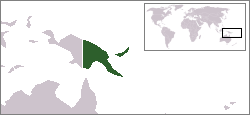
LGBTQ rights in Papua New Guinea
Wikipedia -
4
Australia's international obligations
Humanrights Gov
-
5
The 1951 Refugee Convention
Unhcr
-
6
Manus Regional Processing Centre
En Wikipedia
-
7

A history of Manus Island and what's next for refugees
Nearly all 742 residents are intending to remain at the PNG detention centre, established in 2001.
SBS News
Rating Scale Methodology
1-3: FALSE
Factually incorrect or malicious fabrication.
4-6: PARTIAL
Some truth but context is missing or skewed.
7-9: MOSTLY TRUE
Minor technicalities or phrasing issues.
10: ACCURATE
Perfectly verified and contextually fair.
Methodology: Ratings are determined through cross-referencing official government records, independent fact-checking organizations, and primary source documents.