
The Claim
“Provoked Indonesia so much that they put their air force on standby at the border.”
Original Sources Provided
✅ FACTUAL VERIFICATION
The claim has a factual basis. In January 2014, Indonesia did deploy military assets to its southern border with Australia following tensions over Australia's border protection policies. According to The Guardian and The Jakarta Post, Indonesian warships including frigates, fast torpedo craft, fast missile craft, and corvettes were moved toward the Australian border [1][2]. Air Commodore Hadi Tjahjanto confirmed that four Air Force defense radars in Timika, Merauke, Saumlaki, and Buraen were monitoring the border, and the 11th squadron of 16 Russian-made Sukhoi Su-27/30 Flankers at Makassar air base were on standby ready to respond to any border violations [2][3]. The Sukhoi aircraft, with a range of approximately 3,000km, could reach the border (about 1,000km away) in just over an hour at Mach 1 [2].
The deployment was a direct response to Australia's admission that its naval vessels had "inadvertently" breached Indonesian territorial sovereignty multiple times while conducting Operation Sovereign Borders - the Coalition's policy of turning back asylum seeker boats [1][4]. Indonesia's President Susilo Bambang Yudhoyono had already suspended military and intelligence cooperation with Australia following revelations that Australian intelligence had spied on the President and his inner circle in late 2013 [5][6].
Missing Context
The claim omits several critical pieces of context:
The naval incursions were acknowledged as inadvertent. Australia apologized "unreservedly" for the breaches, with Immigration Minister Scott Morrison admitting Australian vessels had entered Indonesian waters multiple times unintentionally while conducting turnback operations [1][4]. The incursions occurred during complex naval operations at sea, not as deliberate violations of Indonesian sovereignty.
Operation Sovereign Borders was a direct response to a humanitarian crisis. The Coalition's hardline border protection policy was implemented following a surge in asylum seeker boat arrivals that had resulted in over 1,000 deaths at sea during the previous Labor government's term [7]. Between 2008 and 2013, approximately 50,000 people arrived by boat, and more than 1,100 died in maritime disasters including the tragic Christmas Island boat disaster [7].
Indonesia had already suspended cooperation over spying revelations. The military deployment occurred against a backdrop of existing diplomatic tension - not solely because of Operation Sovereign Borders. In November 2013, documents leaked by Edward Snowden revealed that Australian intelligence had attempted to monitor the phones of President Yudhoyono, his wife, and senior ministers [5][6]. Prime Minister Tony Abbott's refusal to apologize for the spying (which occurred under the previous Rudd Labor government) had already triggered a freeze in diplomatic, military, and intelligence cooperation before the naval border tensions escalated [5][6].
The Indonesian MP calling Australia the "greatest threat" was not representative of official government policy. While MP Susaningtyas Handayani Kertopati made provocative statements, Indonesian Foreign Minister Marty Natalegawa publicly stated the warship deployment was "not intended to be provocative" and insisted ties with Australia remained in good shape [8].
Source Credibility Assessment
The Guardian (original source):
The Guardian is a mainstream, internationally recognized news organization with generally high journalistic standards. However, it is editorially center-left and has been consistently critical of Australia's offshore detention and turnback policies. The article in question is factual reporting citing Indonesian military sources, but the framing and headline emphasize the provocative nature of Indonesia's response without equal weight on Australia's justification for its border policies [1].
The Jakarta Post:
Indonesia's leading English-language newspaper, providing credible on-the-ground reporting from Indonesian military sources. Their reporting confirms the warship and air force deployment details [2].
ABC News:
Australia's public broadcaster, generally regarded as authoritative and balanced in its reporting on border protection issues [4].
Labor Comparison
Did Labor have similar tensions with Indonesia over border protection?
Yes, Labor governments faced comparable challenges with Indonesia over asylum seeker policy:
Kevin Rudd's "Indonesia Solution": In 2013, Prime Minister Kevin Rudd attempted to negotiate an "Indonesia Solution" for asylum seekers, which included proposals for regional processing centers. However, Rudd publicly attacked Tony Abbott's plan to "turn back the boats" as risking diplomatic conflict with Indonesia - the same policy area that caused tensions under the Coalition [9].
The Bali Process: Both Labor and Coalition governments participated in the Bali Process on People Smuggling, Trafficking in Persons and Related Transnational Crime, established in 2002. Both parties sought Indonesian cooperation on border security with varying degrees of success.
Labor's PNG Solution: In 2013, the Rudd Labor government announced that no asylum seekers arriving by boat would be resettled in Australia, instead sending them to Papua New Guinea for processing - a policy that also generated regional tensions and required Indonesian cooperation [10].
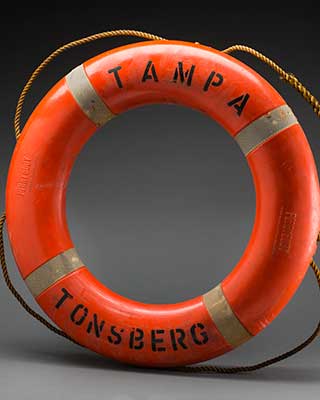
Historical context: The Howard government (Coalition) previously had significant tensions with Indonesia over the Tampa affair in 2001, when Australia refused entry to a Norwegian freighter carrying rescued asylum seekers. The Labor Opposition at the time did not oppose Howard's subsequent border protection legislation [11].
Key finding: Tensions with Indonesia over asylum seeker policy and border protection have been a recurring feature of Australian governments regardless of political party. Both major parties have faced challenges balancing domestic political pressures for border security with maintaining positive relations with Indonesia.
Balanced Perspective
While the claim that Indonesia put its air force on standby is factually accurate, it presents only one side of a complex diplomatic situation without acknowledging:
Australia's legitimate security concerns: The Coalition's Operation Sovereign Borders was responding to a genuine humanitarian crisis that had seen over 1,000 people drown trying to reach Australia during the Labor years. Stopping deaths at sea was a central justification for the policy [7].
The inadvertent nature of the incursions: Australia acknowledged and apologized for the naval breaches, which occurred during complex maritime operations rather than as deliberate violations [1][4].
Pre-existing diplomatic freeze: The military deployment occurred in the context of an already suspended relationship due to the spying scandal from the Rudd government era, not solely because of Operation Sovereign Borders [5][6].
Both parties have faced similar challenges: Labor's own attempts to manage asylum seeker flows through regional solutions also required navigating complex diplomatic relationships with Indonesia and other regional partners [9][10].
The framing of the claim implies a uniquely provocative stance by the Coalition government. However, the historical record shows that managing the Australia-Indonesia relationship around asylum seeker and border protection issues has been challenging for governments of both major parties.
PARTIALLY TRUE
6.0
out of 10
The claim that Indonesia put its air force on standby at the border is factually correct - Indonesia did deploy warships and place Sukhoi fighter aircraft on standby in January 2014. However, the claim omits critical context including: (1) the naval incursions were acknowledged as inadvertent with full apologies issued; (2) the military deployment occurred in the context of an existing diplomatic freeze over spying revelations from the previous Labor government; (3) Operation Sovereign Borders was responding to a genuine humanitarian crisis of deaths at sea that had escalated under Labor; and (4) both major parties have faced comparable diplomatic challenges with Indonesia over border protection policy.
Final Score
6.0
OUT OF 10
PARTIALLY TRUE
The claim that Indonesia put its air force on standby at the border is factually correct - Indonesia did deploy warships and place Sukhoi fighter aircraft on standby in January 2014. However, the claim omits critical context including: (1) the naval incursions were acknowledged as inadvertent with full apologies issued; (2) the military deployment occurred in the context of an existing diplomatic freeze over spying revelations from the previous Labor government; (3) Operation Sovereign Borders was responding to a genuine humanitarian crisis of deaths at sea that had escalated under Labor; and (4) both major parties have faced comparable diplomatic challenges with Indonesia over border protection policy.
📚 SOURCES & CITATIONS (11)
-
1

theguardian.com
Sukhoi Su-27/30 Flankers are ready to fly to the border if an Australian ship is detected in Indonesian waters
the Guardian -
2

thejakartapost.com
With Canberra pressing ahead with its hard-line policy of turning back asylum seekers to Indonesian waters, Jakarta told its neighbor on Wednesday the policy could lead to violations of Indonesiaâs sovereignty and that it had increased security on its borders to prevent incursions
The Jakarta Post -
3
en.wikipedia.org
Wikipedia
-
4
abc.net.au
The Australian Government has apologised to Indonesia after admitting vessels operating under its border protection policy had "inadvertently" breached Indonesian territorial sovereignty "on several occasions".
Abc Net -
5
smh.com.au
Prime Minister Tony Abbott has refused to apologise for the Rudd government spying on the Indonesian President, Susilo Bambang Yudhoyono, despite an escalating feud with Jakarta.
The Sydney Morning Herald -
6
abc.net.au
Australia's diplomatic row with Indonesia shows no sign of abating, with Prime Minister Tony Abbott refusing to apologise over revelations that Australia tried to tap president Susilo Bambang Yudhoyono's phone. Making a statement to Parliament on Tuesday, after Indonesia's ambassador had left Canberra airport to return to Jakarta, Mr Abbott said he "regretted" the rift, but said he did not think Australia had anything to apologise for. In reply, an Indonesian presidential spokesman said Mr Yudhoyono "regretted" Mr Abbott's response. Jakarta says it is giving Mr Abbott two days to explain Australia's actions, and has warned that cooperation on issues including border security and asylum seekers is at risk. Earlier Mr Yudhoyono took to Twitter to accuse Mr Abbott of "belittling" the issue, saying: "The actions of US and Australia have very much wounded the strategic partnership with Indonesia."
Abc Net -
7

michaelwest.com.au
From 300 boat arrivals in 2013 to four last year. Yet the business of putting refugees on boats in Indonesia still appears to be thriving.
Michael West -
8

theguardian.com
Marty Natalegawa says move is not intended to be provocative and insists ties with Australia are in good shape
the Guardian -
9

gulfnews.com
Leaders meet as boat carrying about 80 asylum seekers runs into trouble
Gulf News: Latest UAE news, Dubai news, Business, travel news, Dubai Gold rate, prayer time, cinema -
10

sbs.com.au
The bigger picture with the latest news from Australia and across the world. Download the new SBS News app now.
SBS News -
11
nma.gov.au
2001: Australian troops take control of <em>Tampa</em> carrying rescued asylum-seekers
Nma Gov

Rating Scale Methodology
1-3: FALSE
Factually incorrect or malicious fabrication.
4-6: PARTIAL
Some truth but context is missing or skewed.
7-9: MOSTLY TRUE
Minor technicalities or phrasing issues.
10: ACCURATE
Perfectly verified and contextually fair.
Methodology: Ratings are determined through cross-referencing official government records, independent fact-checking organizations, and primary source documents.