
The Claim
“Removed climate change from the agenda of the 2014 international G20 summit.”
Original Sources Provided
✅ FACTUAL VERIFICATION
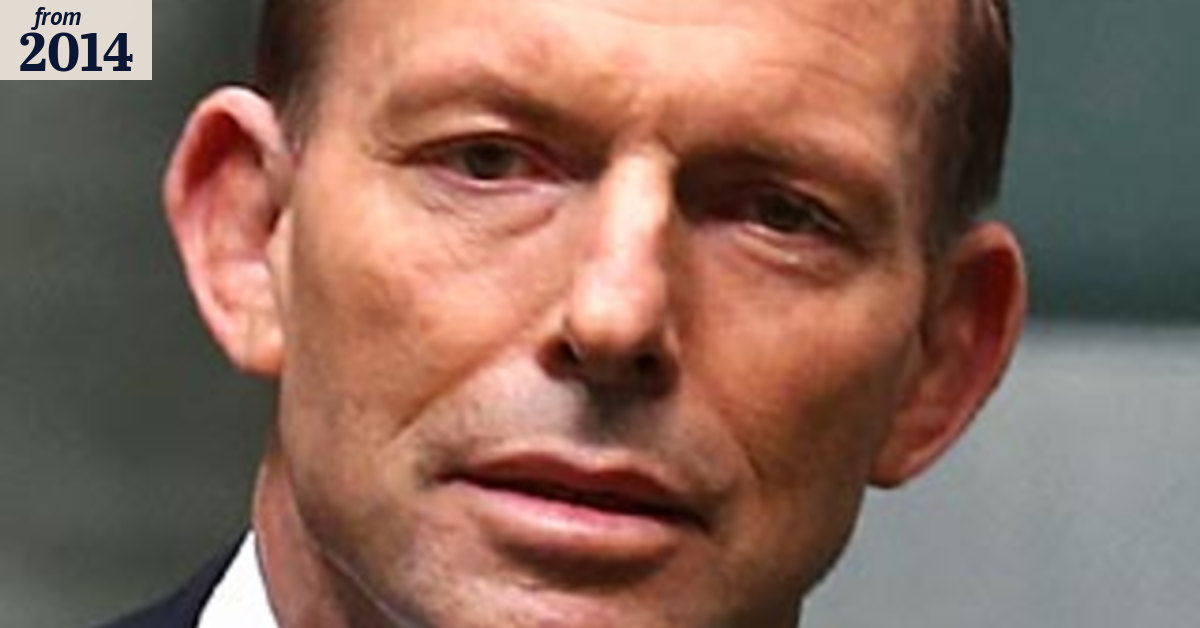
The claim contains elements of truth but misrepresents the final outcome. In June 2014, Prime Minister Tony Abbott did state that climate change would not be on the G20 agenda, arguing the summit should focus on economic issues [1]. Abbott said: "It's also important to ensure that these international meetings don't cover all subjects and illuminate none" and "The focus of the G20 will overwhelmingly be our economic security, our financial stabilisation, the importance of private sector-led growth" [1].
However, the claim omits the critical fact that climate change WAS ultimately included on the G20 agenda. Following significant international pressure from the US, EU, and other G20 members, Australia backed down and included climate change in the final Brisbane Summit communiqué [2][3]. The final G20 Leaders' Communiqué from November 15-16, 2014 explicitly included a full paragraph on climate change (paragraph 19), stating: "We support strong and effective action to address climate change" and committing to work toward a Paris 2015 climate agreement [4].
The G20 summit also produced an Energy Efficiency Action Plan and endorsed principles on energy collaboration that included climate considerations [4][5].
Missing Context
The claim omits several critical facts:
Abbott backed down under pressure: By October 2014, Australia agreed to include climate change on the agenda after facing "tough diplomatic pressure from the US administration" and other international leaders [2]. US Ambassador John Berry stated that climate change was an issue that "the United States will raise in every international forum" [2].
Abbott's reasoning: While misguided in the eyes of critics, Abbott's rationale was that the G20 should focus on core economic issues like growth, jobs, and financial stability - he argued climate change was better suited to other forums like the UNFCCC process [1].
Domestic policy context: Abbott had just fulfilled his election promise to abolish the carbon tax in July 2014 [2]. His position on the G20 agenda was consistent with his domestic climate policy of "Direct Action" rather than carbon pricing.
Final outcome: The G20 Brisbane 2014 summit produced substantive climate-related outcomes including commitments to the UNFCCC process, support for the Green Climate Fund, and energy efficiency initiatives [4].
Source Credibility Assessment
The original source provided is GlobalPost, specifically an article titled "11 ways prime minister tony abbott ruining australia and threatening the planet." According to Media Bias/Fact Check, GlobalPost covers a wide range of original news with minimal use of loaded language and sources to credible outlets such as Reuters and Human Rights Watch [6]. However, the specific article cited appears to be an opinion/commentary piece with a clear negative framing of Abbott, suggesting potential bias in presentation. The article title itself indicates a critical/opinion stance rather than neutral reporting.
Labor Comparison
Did Labor handle international climate summits differently?
Search conducted: "Kevin Rudd Copenhagen climate summit 2009 Kyoto Protocol ratification"
Finding: Labor governments under Kevin Rudd and Julia Gillard took markedly different approaches to international climate engagement:
Kevin Rudd (2007-2010): Made ratifying the Kyoto Protocol his first official act as Prime Minister in December 2007, stating it demonstrated his government's "commitment to tackling climate change" [7][8]. Rudd attended the 2009 Copenhagen climate summit personally.
However, Rudd's Copenhagen efforts failed: The 2009 Copenhagen summit, which Rudd attended with high expectations, "collapsed" and was considered a major disappointment in international climate negotiations [9]. Rudd subsequently abandoned his domestic Carbon Pollution Reduction Scheme (CPRS) after it failed to pass the Senate.
Julia Gillard (2010-2013): Implemented a carbon pricing scheme in 2012 and maintained international climate engagement, though the policy proved politically costly.
Comparison: While Labor governments were more rhetorically committed to climate action at international forums, they also faced significant setbacks. The Copenhagen failure under Rudd was arguably more damaging to international climate progress than Abbott's G20 reluctance, which was ultimately reversed. Labor's approach was more proactive but faced domestic political challenges; Abbott's approach was initially resistant but ultimately yielded to international pressure.
Balanced Perspective
Tony Abbott's initial attempt to exclude climate change from the G20 agenda was consistent with his government's domestic climate policy approach and his view that the G20 should focus narrowly on economic growth issues [1]. This position was criticized domestically by Labor and the Greens, with the Grattan Institute's Tony Wood noting that "climate change was clearly an economic issue" and should be on the agenda [1].
However, the claim misrepresents the outcome. While Abbott initially resisted, international pressure - particularly from the United States - led Australia to include climate change in the final G20 agenda [2][3]. The final communiqué included a full paragraph on climate change and commitments to the Paris 2015 process [4].
When compared to Labor, the difference is one of approach rather than complete opposition to climate action. Labor under Rudd made climate a signature issue, ratifying Kyoto immediately and attending Copenhagen, but ultimately failed to achieve significant outcomes at Copenhagen or pass domestic legislation [9]. Abbott's government was rhetorically less committed but ultimately still included climate in the G20 outcomes after pressure.
Key context: This was not entirely unique - governments often adjust summit agendas based on host priorities and international pressure. Abbott's reluctance was consistent with his domestic policy position at the time (having just abolished the carbon tax), but the claim ignores that he ultimately backed down and climate change WAS discussed and included in the final G20 outcomes.
MISLEADING
4.0
out of 10
The claim is misleading because it presents Abbott's initial position (June 2014) as the final outcome, when in fact climate change WAS ultimately included on the G20 agenda following international pressure. The final Brisbane Summit communiqué included substantive climate commitments. While Abbott did initially attempt to exclude the topic - a position consistent with his domestic policy approach and which drew criticism - the claim omits the critical context that he backed down and the G20 did discuss and commit to climate action [1][2][3][4].
Final Score
4.0
OUT OF 10
MISLEADING
The claim is misleading because it presents Abbott's initial position (June 2014) as the final outcome, when in fact climate change WAS ultimately included on the G20 agenda following international pressure. The final Brisbane Summit communiqué included substantive climate commitments. While Abbott did initially attempt to exclude the topic - a position consistent with his domestic policy approach and which drew criticism - the claim omits the critical context that he backed down and the G20 did discuss and commit to climate action [1][2][3][4].
📚 SOURCES & CITATIONS (9)
-
1
smh.com.au
PM downplays likelihood of climate change being discussed at a G20 leaders' summit hosted by Australia, suggesting it does not fit the meeting's economic focus.
The Sydney Morning Herald -
2

climatechangenews.com
NEWS: Tony Abbott grudgingly inserts paragraph on climate change, in line with international demands
Climate Home News -
3
news.com.au
News Com
-
4PDF
brisbane g20 leaders summit communique14
G20 • PDF Document -
5

g7g20-documents.org
G7g20-documents -
6
mediabiasfactcheck.com
LEFT-CENTER BIAS These media sources have a slight to moderate liberal bias. They often publish factual information that utilizes loaded words (wording
Media Bias/Fact Check -
7

kevinrudd.com
Australia has ratified the Kyoto Protocol. Prime Minister Kevin Rudd signed the instrument of ratification of the Kyoto Protocol in his first act after being sworn in this morning.The ratification will come into force in 90 days."This is the first official act of the new Australian Government,
Kevin Rudd -
8
pmtranscripts.pmc.gov.au
Pmtranscripts Pmc Gov
-
9

insidestory.org.au
Philip Chubb’s insider account of the demise of Kevin Rudd’s climate scheme is essential reading, says Andrew Dodd
Inside Story
Rating Scale Methodology
1-3: FALSE
Factually incorrect or malicious fabrication.
4-6: PARTIAL
Some truth but context is missing or skewed.
7-9: MOSTLY TRUE
Minor technicalities or phrasing issues.
10: ACCURATE
Perfectly verified and contextually fair.
Methodology: Ratings are determined through cross-referencing official government records, independent fact-checking organizations, and primary source documents.