
The Claim
“Broke an election promise to not cut ABC funding, by cutting all funding to the Australia Network (part of the ABC).”
Original Sources Provided
✅ FACTUAL VERIFICATION
The claim that the Coalition broke an election promise not to cut ABC funding is substantially accurate based on multiple authoritative sources.
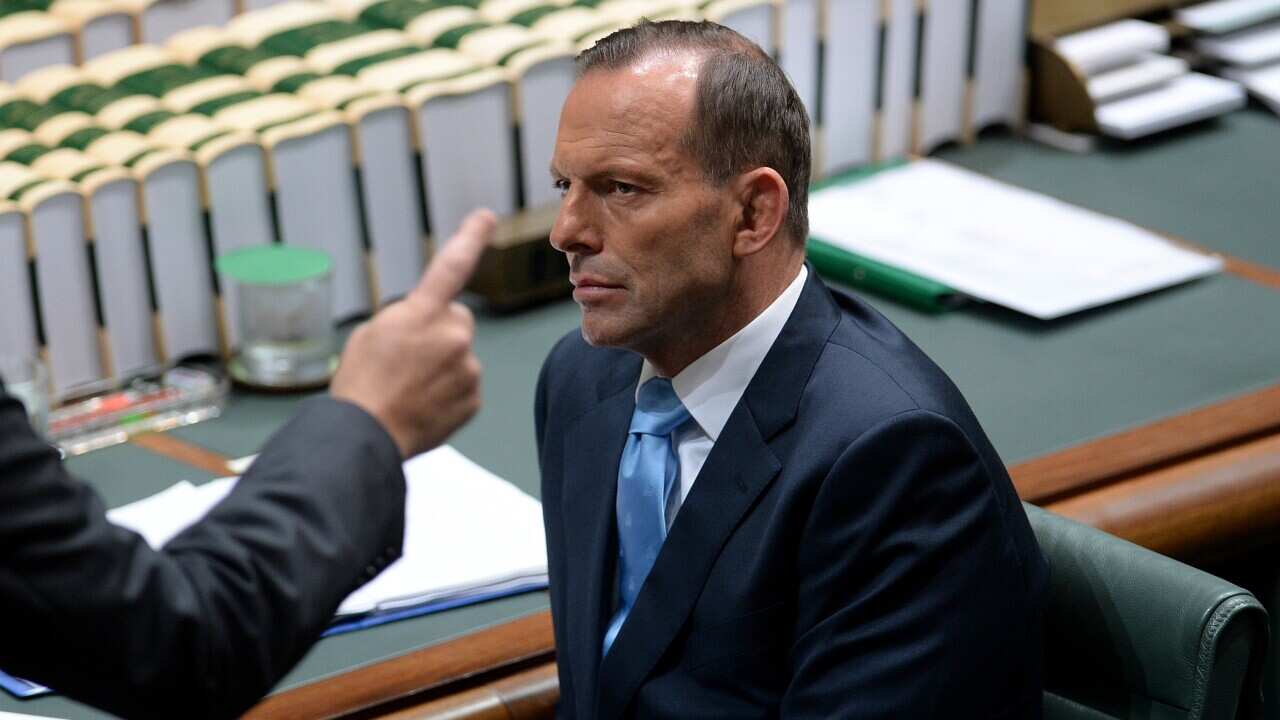
On the eve of the September 2013 election, during a live interview with SBS from Penrith football stadium, Tony Abbott explicitly stated: "No cuts to education, no cuts to health, no change to pensions, no change to the GST and no cuts to the ABC or SBS." [1] This statement was made directly to the electorate on September 6, 2013.
In the May 2014 federal budget, the Coalition government announced two significant cuts to the ABC:
Operational funding cuts: The government cut ABC and SBS base funding by 1% ($43.5 million over four years). ABC Managing Director Mark Scott stated the total impact would be approximately $120 million over four years when including other measures [2].
Australia Network termination: The government cancelled the ABC's $220 million, 10-year contract to run the Australia Network, barely a year into the contract. The Australia Network was an international television broadcasting service reaching 46 Asia Pacific countries [3].
ABC's Fact Check unit, part of ABC News itself, assessed this promise as broken, stating: "This promise was broken when the Government announced cuts to the ABC worth $35.5 million over four years in the 2014-15 budget, as well as announcing the termination of the ABC's Australia Network contract, saving the Government $197 million over nine years." [1]
Further cuts of $254 million over five years were announced in November 2014, and additional smaller cuts followed in the 2016-17 budget [1].
Missing Context
The claim omits several important contextual elements:
Government's post-hoc justification: After the cuts were announced, Prime Minister Abbott stated his promise should be "understood in context" and claimed: "We never promised special treatment for the ABC or SBS. The government was simply applying to the ABC the kind of efficiency dividend it was applying to almost every other part of government." [4]
Partial mitigation by Turnbull: Communications Minister Malcolm Turnbull reportedly "fought off" even larger cuts that the government's expenditure review committee had pushed for—apparently seeking a 10% reduction (approximately $250 million over four years). The 1% base funding cut was described as a "down-payment" on efficiency measures [2].
Australia Network performance concerns: There were legitimate questions about the Australia Network's value and performance. Foreign Minister Julie Bishop had previously expressed concerns that the service was failing to meet its charter obligations and not delivering cost-effective public diplomacy [5]. The tender process for the Australia Network had also been controversial, with Sky News having unsuccessfully contested the ABC's winning bid.
Broader budget context: The 2014 budget was framed as an "emergency repair" budget following what the government characterized as fiscal mismanagement by the previous Labor government. The cuts were part of wider austerity measures affecting multiple sectors including foreign aid ($7.6 billion cuts over five years), health, and education [6].
Source Credibility Assessment
The original sources provided with the claim are from mainstream Australian media:
- Sydney Morning Herald (SMH): A major Fairfax publication with a center-left editorial leaning. Generally reputable but has acknowledged political perspective.
- The Australian: News Corp publication with center-right leaning. Also generally reputable with different editorial perspective.
The SMH article cited is a comment/opinion piece rather than straight news reporting, which may introduce subjectivity. However, the factual assertions about the promise and subsequent cuts are corroborated by:
- ABC's own Fact Check unit (neutral arbiter)
- Parliamentary records
- Budget papers
- Government ministers' own statements
The claim's factual basis is independently verifiable and not dependent on potentially biased sources.
Labor Comparison
Did Labor do something similar?
Search conducted: "Labor government ABC funding cuts history"
Finding: No direct equivalent of breaking an explicit "no cuts" promise was found, but Labor's record on ABC funding shows complex patterns:
Under Labor governments (2007-2013), ABC funding generally increased, though not always at rates keeping pace with inflation or operational cost increases. The Australia Network contract itself was awarded to the ABC in 2011 under the Gillard Labor government after a controversial tender process [3].
Labor governments maintained the Australia Network service throughout their tenure and were responsible for the 10-year contract that the Coalition terminated.
However, Labor governments did not make an explicit, high-profile "no cuts to ABC" election promise in the manner Abbott did in 2013.
Comparative context: Breaking explicit election promises is not unique to either party. The Abbott government's 2014 budget contained multiple broken promises including cuts to health, education, and pensions—areas where Abbott had also made explicit commitments [6].
Balanced Perspective
While the claim that Abbott broke his promise is factually accurate, several contextual factors complicate the narrative:
The government's position: Abbott argued post-election that his promise was made in the context of not seeking "special treatment" for the ABC—that is, not shielding it from efficiency measures applied across government. He challenged then-Opposition Leader Bill Shorten to promise to restore funding if Labor won government, suggesting the cuts were part of a necessary fiscal correction [4].
Australia Network's specific circumstances: The termination of the Australia Network funding may be distinguished from core ABC domestic operations. The service had faced criticism about its effectiveness as a public diplomacy tool. However, this distinction is somewhat academic since the Australia Network was an ABC operation and its funding cancellation directly affected the broadcaster's overall budget and operations.
Scale of cuts: While the cuts were real and significant, they were less severe than what some government members had reportedly advocated for. Malcolm Turnbull's intervention reduced the cuts from a proposed 10% to 1% of base funding [2].
Historical pattern: Both major parties have historically used ABC funding as a political football, though typically without making explicit "no cuts" promises. The Coalition's history includes notable tensions with the ABC, including Fraser's 1976 cuts and Howard-era pressures.
Key context: This was not unique behavior in Australian politics—breaking election promises has occurred under governments of both parties. However, the explicit nature of Abbott's promise ("no cuts to the ABC or SBS" made on election eve) combined with the swift reversal (cuts announced eight months later) made this particularly notable.
TRUE
8.0
out of 10
The claim is factually accurate. Tony Abbott explicitly promised "no cuts to the ABC or SBS" on the eve of the September 2013 election. Within eight months, his government announced cuts to ABC operational funding and terminated the Australia Network contract. These actions directly contradicted the election promise. While the government offered post-hoc justifications about "efficiency dividends" and denied promising "special treatment," the plain meaning of Abbott's original statement is unambiguous, and ABC's own Fact Check unit assessed this promise as broken. The Australia Network was indeed part of ABC operations, and its funding cancellation represented a real cut to the broadcaster's budget.
Final Score
8.0
OUT OF 10
TRUE
The claim is factually accurate. Tony Abbott explicitly promised "no cuts to the ABC or SBS" on the eve of the September 2013 election. Within eight months, his government announced cuts to ABC operational funding and terminated the Australia Network contract. These actions directly contradicted the election promise. While the government offered post-hoc justifications about "efficiency dividends" and denied promising "special treatment," the plain meaning of Abbott's original statement is unambiguous, and ABC's own Fact Check unit assessed this promise as broken. The Australia Network was indeed part of ABC operations, and its funding cancellation represented a real cut to the broadcaster's budget.
📚 SOURCES & CITATIONS (6)
-
1
Promise check: No cuts to the ABC - ABC News Fact Check
On the eve of the September 2013 election, Tony Abbott promised that there would be no cuts to the ABC or SBS under a Coalition government. The Government broke these promises when it handed down its first budget in May. Communications Minister Malcolm Turnbull has now announced further cuts, calling on Mr Abbott's pre-election pledge to be "understood in context".
Abc Net -
2
Budget 2014: ABC, SBS funding cut, Australia Network contract cancelled
The Federal Government will cut the funding of the ABC and SBS by 1 per cent as well as cancel the ABC's contract to run Australia Network.
Abc Net -
3

Scrapping the Australia Network affects more than the ABC
The termination in the 2014 budget of the ABC’s international television broadcasting contract to run the federal government’s Australia Network service, barely a year into its ten-year term, was hardly…
The Conversation -
4
No special treatment promised to ABC: PM
Prime Minister Tony Abbott says no public sector - including the ABC and SBS - is exempt from the search for savings.
SBS News -
5
Julie Bishop fears Australia Network failing to meet charter
Theaustralian Com
-
6
Then and now: the Abbott government's broken promises
On the eve of the 2013 federal election Tony Abbott promised no cuts to education, health, or the ABC and SBS, and no changes to pensions. Fairfax Media looks at how those promises fared in the Abbott government's first budget.
The Sydney Morning Herald
Rating Scale Methodology
1-3: FALSE
Factually incorrect or malicious fabrication.
4-6: PARTIAL
Some truth but context is missing or skewed.
7-9: MOSTLY TRUE
Minor technicalities or phrasing issues.
10: ACCURATE
Perfectly verified and contextually fair.
Methodology: Ratings are determined through cross-referencing official government records, independent fact-checking organizations, and primary source documents.