
The Claim
“Simultaneously increased the cost of petrol and cut funding for public transport. The government argued that disadvantaged people can't afford cars anyway, so they won't be hurt by the changes.”
Original Sources Provided
✅ FACTUAL VERIFICATION
Fuel Excise Indexation
The Abbott government's 2014 federal budget did reintroduce twice-yearly indexation of the fuel excise to CPI, effective from 1 August 2014 (later adjusted to 10 November 2014) [1]. This increased the base rate from 38.14¢ to 38.6¢ per litre. Indexation had been frozen in 2001 by the Howard government [1]. The measure was expected to raise $3.7 billion over its first four years [1].
The revenue was specifically earmarked for road infrastructure projects including WestConnex in Sydney, Melbourne's East West Link, the Ipswich Motorway upgrade, and the Toowoomba Second Range Crossing [1]. The budget established a "Fuel Indexation (Road Funding) Special Account" to direct revenue to road projects [2].
Joe Hockey's Controversial Comments
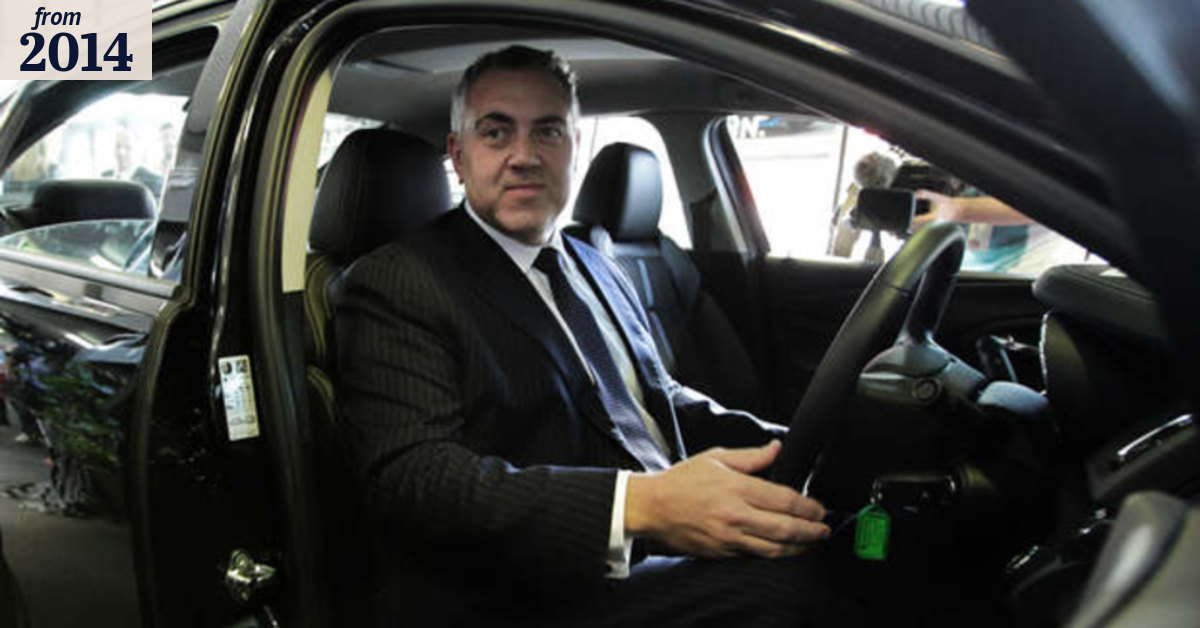
On August 13, 2014, Treasurer Joe Hockey made controversial comments defending the fuel excise increase during an ABC Radio interview:
"The people that actually pay the most are higher income people, with an increase in fuel excise… The poorest people either don't have cars or actually don't drive very far in many cases" [3].
Hockey issued a media release the following day citing Australian Bureau of Statistics (ABS) data showing that the highest 20% of households by income pay over three times more in fuel tax than the lowest 20% [3]. He subsequently apologized for the comments on August 15, 2014, after Prime Minister Tony Abbott refused to back them [3].
Public Transport Funding Assessment
The claim that the government "cut funding for public transport" requires nuance. The 2014 budget heavily prioritized road infrastructure over public transport, but this represented a continuation of existing federal funding patterns rather than explicit cuts to established public transport programs [1]. The budget allocated significant new funding to road projects while public transport received comparatively less attention in the infrastructure package [1].
Missing Context
Treasury's Flawed Data Analysis
The ABC Fact Check investigation revealed that Hockey's analysis relied on flawed methodology [3]. Treasury included "not stated" and "not applicable" Census responses (approximately 1.5 million households) in the "no car" category, artificially inflating the percentage of low-income households without vehicles [3].
When using more appropriate ABS data, only about 15% of households in the lowest socioeconomic band had no car, compared to Treasury's claim of over 30% [3]. Monash University research found that 78% of low-income households in Melbourne had at least one car, with 22% having two or more vehicles [3].
Geographical Disadvantage
The claim omits critical research showing that low-income households in outer suburban areas often face "forced car ownership" due to poor public transport access [4]. Professor Graham Currie's research found that low-income households on Melbourne's urban fringe make longer trips (16.4km average) than inner-area residents (6.4km), due to limited public transport options [3]. Nearly 90% of growth area residents used cars to travel to work [3].
Regressive Impact of Fuel Tax
While Hockey claimed the fuel tax was "progressive," independent analysis found it was actually regressive [3]. The 2009-10 ABS Household Expenditure Survey showed that petrol consumed 4.5% of income for low-income households versus only 1.4% for high-income households - making the tax burden three times heavier proportionally on the poor [3]. Even when measured against total spending rather than income, the tax was at best proportional, not progressive [3].
The Howard Government Precedent
The claim omits that fuel excise indexation had been frozen since 2001 under the Howard government (Coalition), meaning the 2014 measure simply restored a practice that had existed before [1]. This was not a new tax but reinstating an adjustment mechanism that had been suspended for 13 years.
Source Credibility Assessment
The original sources are all from the Sydney Morning Herald (SMH), a mainstream Fairfax newspaper with center-left editorial leanings [5].
- SMH articles (2014): These are news reports and opinion pieces from a reputable mainstream outlet. While SMH has been editorially critical of Coalition governments, the factual reporting on the budget measures and Hockey's comments is consistent across multiple independent sources including ABC News and SBS [3][6].
- No partisan advocacy sources: Unlike some claims in this dataset that cite explicitly partisan websites, these sources are from established Australian media with professional journalism standards.
Labor Comparison
Did Labor do something similar?
Fuel excise history: The freezing of fuel excise indexation began under the Howard Coalition government in 2001, not Labor [1]. The Rudd and Gillard Labor governments (2007-2013) maintained this freeze during their terms - meaning they did not increase fuel excise through indexation either. In this sense, Labor's approach was similar to the Coalition's pre-2014 position.
Public transport vs roads priority: Both major Australian parties have historically prioritized roads funding over public transport at the federal level. Federal infrastructure spending under Labor governments also heavily favored road projects, though the 2014 budget's explicit tying of fuel excise revenue exclusively to roads was a distinctive feature.
Controversial comments by Labor figures: While no direct equivalent to Hockey's specific comments exists, Labor politicians have made other controversial statements about cost-of-living pressures that were criticized as out-of-touch. However, no senior Labor minister made claims specifically asserting that poor people don't own cars.
Comparative Verdict
The fuel excise indexation was a Coalition-specific budget measure that Labor opposed. However, Labor had maintained the freeze for six years without restoring indexation. Both parties have prioritized roads over public transport in federal infrastructure spending. The claim's framing suggests unique Coalition negligence, but the pattern of prioritizing car infrastructure is bipartisan at the federal level.
Balanced Perspective
Government's Stated Rationale
The Abbott government argued that:
- The fuel excise revenue was necessary to fund "productivity-boosting roads Australia needs" [2]
- The budget faced a "difficult" fiscal situation requiring revenue measures [2]
- The roads infrastructure would benefit all Australians, particularly in growth areas
The 2014 budget was explicitly framed as a "budget repair" exercise responding to perceived deficit crisis, with Joe Hockey declaring "the age of entitlement is over" [1].
Legitimate Criticisms
Critics validly pointed out that:
- Hockey's comments were factually misleading according to ABC Fact Check [3]
- The fuel tax disproportionately impacts low-income households as a percentage of income [3]
- Outer suburban residents - often lower-income - are "forced" into car ownership due to poor public transport, making them particularly vulnerable to fuel price increases [4]
- The budget broke pre-election promises including "no cuts to health, no cuts to education" [1]
The Full Context
The claim captures genuine controversy but omits important context. Hockey's comments were widely criticized as insensitive and factually questionable - the ABC Fact Check found them "misleading" [3]. However, the budget measure itself (fuel excise indexation) was a restoration of a previous practice rather than a new tax.
The "cut to public transport funding" framing is somewhat misleading - the budget heavily favored roads over public transport, but this was more about relative priorities than explicit cuts. The federal government has limited direct responsibility for public transport (primarily a state responsibility), so this was arguably a continuation of federal infrastructure spending patterns under both parties.
Hockey apologized for his comments, and the controversy contributed to the budget's poor reception and ultimately to Tony Abbott's replacement as Prime Minister in September 2015 [1].
PARTIALLY TRUE
6.0
out of 10
The core factual elements are accurate: the Coalition did increase fuel costs through excise indexation in the 2014 budget, and Joe Hockey did make the controversial and widely-criticized comments about poor people not owning cars or driving far. These comments were found to be "misleading" by ABC Fact Check [3].
However, the claim lacks important context:
- The fuel excise measure was a restoration of indexation frozen since 2001 (by the previous Coalition government), not a new tax
- The "public transport funding cuts" framing overstates the situation - the budget prioritized roads over public transport, but this reflects bipartisan federal infrastructure patterns rather than unique Coalition cuts
- Labor also maintained the fuel excise freeze during their 2007-2013 government
- The claim omits that Hockey apologized for his comments
The claim accurately identifies a genuine controversy and insensitive remarks by the Treasurer, but presents the situation as uniquely problematic Coalition behavior when the underlying infrastructure spending priorities and fuel excise freeze were bipartisan patterns.
Final Score
6.0
OUT OF 10
PARTIALLY TRUE
The core factual elements are accurate: the Coalition did increase fuel costs through excise indexation in the 2014 budget, and Joe Hockey did make the controversial and widely-criticized comments about poor people not owning cars or driving far. These comments were found to be "misleading" by ABC Fact Check [3].
However, the claim lacks important context:
- The fuel excise measure was a restoration of indexation frozen since 2001 (by the previous Coalition government), not a new tax
- The "public transport funding cuts" framing overstates the situation - the budget prioritized roads over public transport, but this reflects bipartisan federal infrastructure patterns rather than unique Coalition cuts
- Labor also maintained the fuel excise freeze during their 2007-2013 government
- The claim omits that Hockey apologized for his comments
The claim accurately identifies a genuine controversy and insensitive remarks by the Treasurer, but presents the situation as uniquely problematic Coalition behavior when the underlying infrastructure spending priorities and fuel excise freeze were bipartisan patterns.
📚 SOURCES & CITATIONS (10)
-
1

2014 Australian federal budget - Wikipedia
Wikipedia -
2
Excise Tariff Amendment (Fuel Indexation) Bill 2014 - Parliament of Australia
Aph Gov
Original link no longer available -
3
Fact check: Joe Hockey's 'poor people' don't have cars, don't drive far claim misleading
The Treasurer has come under fire for being out of touch after saying the Government's planned fuel tax increase wouldn't hurt poorer Australians. "They say you've got to have wealthier people or middle-income people pay more. Well, change to the fuel excise does exactly that. The poorest people either don't have cars or actually don't drive very far in many cases," Joe Hockey said. Fact Check investigates.
Abc Net -
4
The relationship between transport and disadvantage in Australia
Aifs Gov
-
5
Critics attack Joe Hockey's claim poorest don't drive cars as completely fallacious
Treasurer Joe Hockey is facing a fresh round of criticism for being out of touch and not understanding the impact of his budget on the less well off after suggesting “poorest people either don't have cars or actually don't drive very far in many cases”.
The Sydney Morning Herald -
6

FactCheck: do poor people drive less?
Treasurer Joe Hockey drew a stream of criticism for his "poor people don't own cars comment", so how accurate is his statement?
SBS News -
7PDF
Alarming Trends in the Growth of Forced Car Ownership in Melbourne
Monash • PDF Document -
8
Joe Hockey media release August 13, 2014
Jbh Ministers Treasury Gov
-
9
Australian Bureau of Statistics, 'Car Nation', Australian Social Trends July 2013
Australian Social Trends, July 2013
-
10
ABS 2009-10 Household Expenditure Survey Australia
Household Expenditure Survey, Australia: Summary of Results, 2009-10
Rating Scale Methodology
1-3: FALSE
Factually incorrect or malicious fabrication.
4-6: PARTIAL
Some truth but context is missing or skewed.
7-9: MOSTLY TRUE
Minor technicalities or phrasing issues.
10: ACCURATE
Perfectly verified and contextually fair.
Methodology: Ratings are determined through cross-referencing official government records, independent fact-checking organizations, and primary source documents.