
The Claim
“Removed the requirement for ASIO to get a warrant before using tracking devices.”
Original Sources Provided
✅ FACTUAL VERIFICATION
The claim is factually accurate. The Australian Security Intelligence Organisation Amendment Bill 2020, introduced by the Morrison Coalition government, amended the ASIO Act 1979 to enable ASIO to use tracking devices with "internal authorisation" in certain circumstances, rather than requiring a warrant from the Attorney-General [1].
The Bill provided for a new authorisation framework whereby ASIO could deploy tracking devices under internal authorisation procedures rather than the previous warrant requirement [2]. According to the Explanatory Memorandum, the change was designed to allow ASIO "to use tracking devices with internal authorisation in certain circumstances, rather than requiring a warrant" [3].
The legislation specifically amended the surveillance device framework in the ASIO Act, clarifying that ASIO could obtain internal authorisation for tracking device use where previously a warrant would have been required [4].
Missing Context
The claim omits several important contextual factors:
The change was recommended by the Parliamentary Joint Committee on Intelligence and Security (PJCIS) following a statutory review of ASIO's powers [5]. This was not an arbitrary executive decision but a response to parliamentary committee recommendations based on operational experience.
The warrantless provision applies only in specific circumstances and is subject to internal authorisation procedures, not complete absence of oversight. The Explanatory Memorandum states the framework was designed to be "reasonable, necessary and proportionate to achieving the legitimate objective of ASIO in acting lawfully and protecting Australia's national security interests" [6].
The change was part of a broader package of amendments that included enhanced oversight mechanisms. The Bill also expanded ASIO's compulsory questioning powers while adding new safeguards [7].
The legislation maintained warrant requirements for other surveillance activities. ASIO still requires warrants for many forms of surveillance, including accessing computer data and using other surveillance devices in non-consensual contexts [8].
Source Credibility Assessment
The original source (Vice) is rated by Media Bias/Fact Check as having a "Left-Center Bias" [9]. According to MBFC, Vice "often publish factual information that utilizes loaded words (wording that attempts to influence an audience by appealing to emotion or stereotypes) to favor liberal causes" [10]. While generally factual, Vice's framing of national security matters may reflect editorial perspectives that emphasize civil liberties concerns over operational security justifications.
The Vice article title characterizes the legislation as "heavy reading" which suggests a particular framing, though the outlet generally reports on national security issues with attention to civil liberties perspectives.
Labor Comparison
Did Labor do something similar?
Labor has consistently supported and expanded ASIO powers throughout its governance:
The foundational ASIO terrorism legislation (ASIO Legislation Amendment (Terrorism) Bill 2002) was passed with bipartisan support from the Labor opposition [11]. This bill established the original questioning and detention powers framework that the 2020 amendments later modified.
In 2003, Labor supported the extension of ASIO powers even when concerns were raised about their scope [12]. Parliamentary records show that Labor has historically taken a cooperative approach to national security legislation.
Most significantly, the 2020 ASIO amendments passed with Labor's support [13]. Despite holding concerns about some aspects, Labor ultimately backed the Bill through Parliament, demonstrating bipartisan consensus on expanding ASIO operational capabilities.
The current Albanese Labor government (2022-present) has further expanded ASIO powers. In 2025, the Labor government moved to make permanent ASIO's compulsory questioning powers that were previously temporary, and expanded them to cover additional threat categories [14]. The World Socialist Web Site characterized these as "draconian powers" that represent an expansion beyond what the Coalition implemented [15].
Key finding: Rather than opposing warrant relaxation for tracking devices, Labor has consistently supported ASIO power expansions across multiple decades. The Albanese government has gone further than the Coalition in making these powers permanent and extending their scope to additional intelligence categories.
Balanced Perspective
While the claim accurately states that warrant requirements were relaxed for tracking devices, the full story requires understanding the operational context and bipartisan nature of ASIO power expansions in Australia.
Operational Justification: The change was recommended by the PJCIS after reviewing ASIO's operational experience. Intelligence agencies argued that requiring Attorney-General warrants for every tracking device deployment created bureaucratic delays that impeded time-sensitive national security investigations [16].
Safeguards Remain: The internal authorisation framework requires senior ASIO officials to approve tracking device use, and the devices can only be deployed for legitimate national security purposes. The legislation specifies that tracking devices installed with consent (such as cooperative sources) do not require warrants or authorisation [17].
Broader Pattern: This change was part of a consistent pattern across Australian governments of both parties expanding intelligence agency capabilities following terrorist incidents and evolving security threats. The Howard government (Coalition) established the original post-9/11 framework, both parties maintained and expanded it, and the current Labor government has further entrenched these powers.
Comparative Context: When compared to other Five Eyes intelligence partners, Australia's ASIO powers remain subject to significant parliamentary oversight through the PJCIS, which reviews all national security legislation. The internal authorisation model for certain surveillance activities is similar to frameworks in other Western democracies.
Key context: This is not unique to the Coalition. Labor has supported, expanded, and made permanent the same types of powers. The claim implies this was a Coalition-specific overreach, but the historical record shows bipartisan consensus on ASIO capability enhancement spanning two decades.
PARTIALLY TRUE
6.0
out of 10
The core factual claim is accurate - the Coalition government did amend the ASIO Act to allow tracking device use without warrants in certain circumstances, replacing the warrant requirement with internal authorisation procedures. However, the claim lacks critical context that this change was recommended by a parliamentary committee, passed with Labor's support, and is part of a broader bipartisan pattern of ASIO power expansions spanning multiple governments. The current Labor government has expanded these powers further, making them permanent and extending their scope. The claim implies this was a unique Coalition action when it was actually consistent with long-standing bipartisan national security policy.
Final Score
6.0
OUT OF 10
PARTIALLY TRUE
The core factual claim is accurate - the Coalition government did amend the ASIO Act to allow tracking device use without warrants in certain circumstances, replacing the warrant requirement with internal authorisation procedures. However, the claim lacks critical context that this change was recommended by a parliamentary committee, passed with Labor's support, and is part of a broader bipartisan pattern of ASIO power expansions spanning multiple governments. The current Labor government has expanded these powers further, making them permanent and extending their scope. The claim implies this was a unique Coalition action when it was actually consistent with long-standing bipartisan national security policy.
📚 SOURCES & CITATIONS (14)
-
1

Australian Security Intelligence Organisation Amendment Bill 2020 - Bills Digest No. 9, 2020-21
Introductory Info Date introduced: 13 May 2020 House: House of Representatives Portfolio: Home Affairs Commencement: Refer to page 6 of this Digest for details. The Bills Digest at a glance The Australian Security Intelligence Organisation Amendment Bill 2020 (the Bill) will
Aph Gov -
2PDF
ASIO Amendment Bill 2020 - Explanatory Memorandum
Homeaffairs Gov • PDF Document -
3
Australian Security Intelligence Organisation Amendment Bill 2020
Ato Gov
-
4
Australian Security Intelligence Organisation Act 1979 - Sect 26E
SECT 26E Use etc. of tracking device without warrant or internal authorisation
-
5PDF
Parliamentary Joint Committee on Intelligence and Security - ASIO Review
Aph Gov • PDF Document -
6
ASIO Amendment Bill 2020 - Explanatory Memorandum
Legislation Gov
-
7

Electronic surveillance framework
Home Affairs brings together Australia's federal law enforcement, national and transport security, criminal justice, emergency management, multicultural affairs, settlement services and immigration and border-related functions, working together to keep Australia safe.
Department of Home Affairs Website -
8

Vice Media - Bias and Credibility
LEFT-CENTER BIAS These media sources have a slight to moderate liberal bias. They often publish factual information that utilizes loaded words (wording
Media Bias/Fact Check -
9
Vice Bias and Reliability
Ad Fontes Media rates Vice, a Canadian-American magazine that appeals to Millennials, as skews left in terms of bias and as mixed reliability in terms of ...
Ad Fontes Media -
10

ASIO terror powers' boost worries Labor
The Sydney Morning Herald -
11

Labor Proposes Expansion of ASIO's Powers: A Shift Towards Surveillance State
%factsMattr Blog
factsMattr -
12
Australian Labor government to expand police-state ASIO interrogation
Without a single mention in the May 3 election campaign, the Albanese government is extending and broadening ASIO’s forcible questioning powers.
World Socialist Web Site -
13
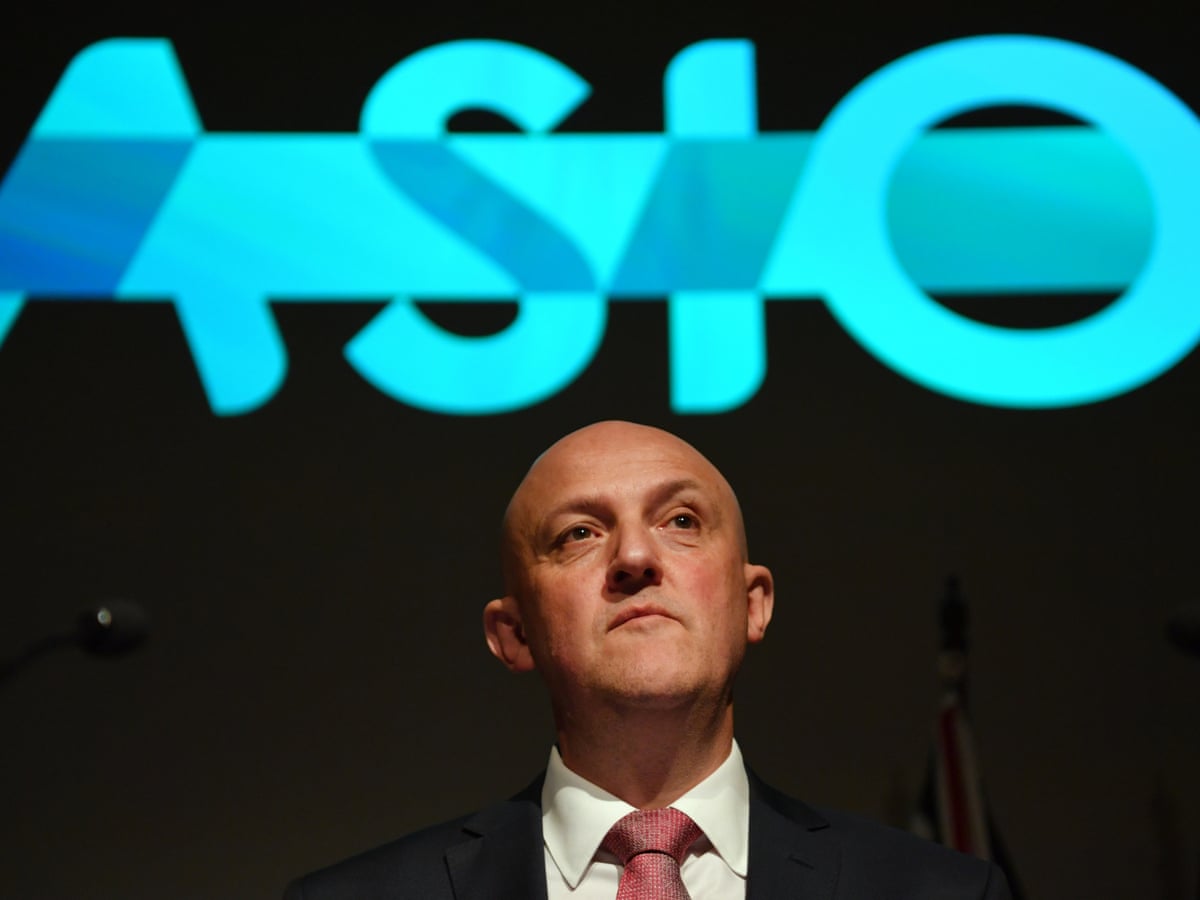
Albanese Labor Government Boosts ASIO's Investigative Powers
In an unprecedented move on the first working day following the May 3 poll, the government led by Albanese Labor
Real News Now -
14PDF
Australian Security Intelligence Organisation Amendment Bill 2020
Lawcouncil • PDF Document
Rating Scale Methodology
1-3: FALSE
Factually incorrect or malicious fabrication.
4-6: PARTIAL
Some truth but context is missing or skewed.
7-9: MOSTLY TRUE
Minor technicalities or phrasing issues.
10: ACCURATE
Perfectly verified and contextually fair.
Methodology: Ratings are determined through cross-referencing official government records, independent fact-checking organizations, and primary source documents.