
The Claim
“Used veto powers to block a UN resolution calling to the end of Israel's occupation of Palestine.”
Original Sources Provided
✅ FACTUAL VERIFICATION
Core Fact Check:
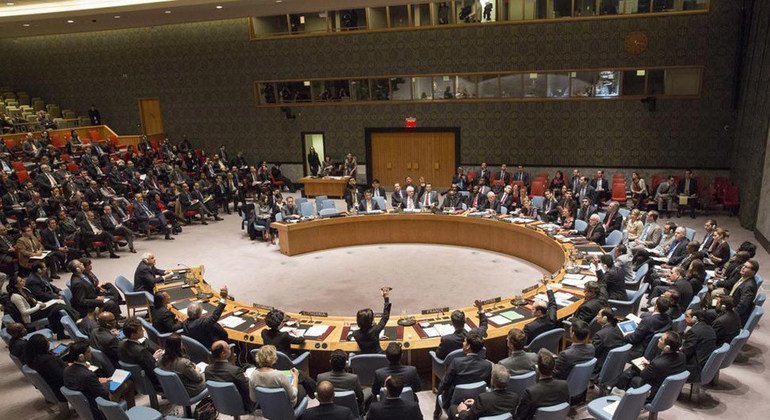
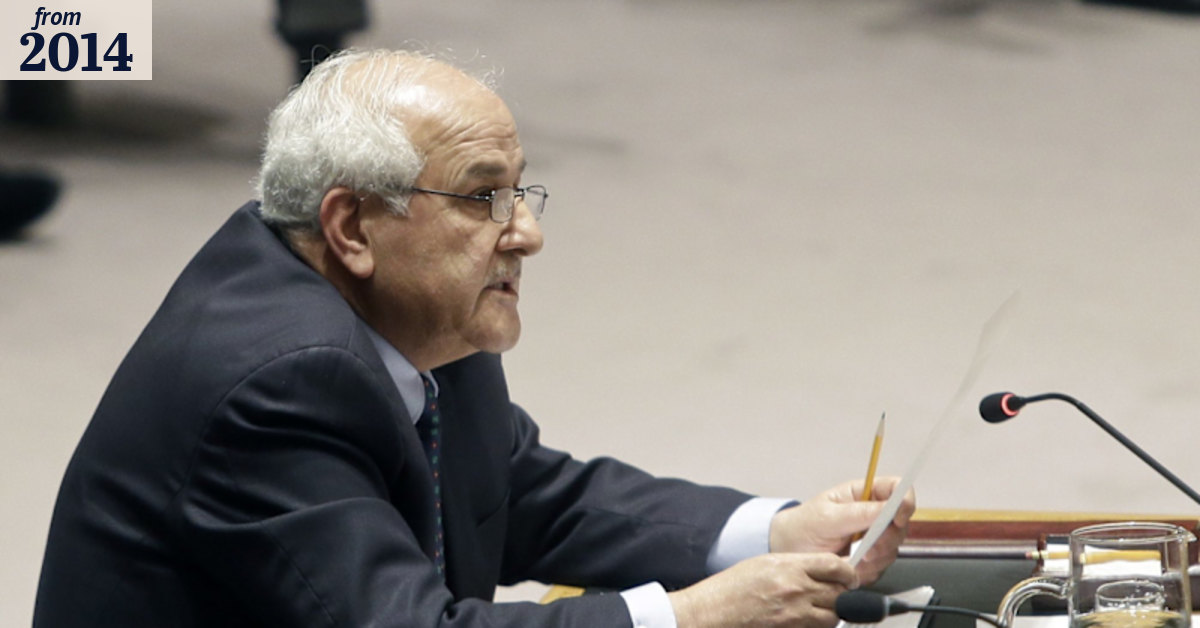
On December 30, 2014, Australia did vote "no" (against) a UN Security Council draft resolution demanding Israel end its occupation of Palestinian territories within two years [1][2]. However, the claim contains a fundamental factual error regarding Australia's powers at the UN.
Australia Does NOT Have Veto Powers:
Australia was serving as a temporary, non-permanent member of the UN Security Council during 2013-2014 [3]. Only the five permanent members (P5) of the UN Security Council - China, France, Russia, the United Kingdom, and the United States - possess veto powers [4]. Non-permanent members like Australia have voting rights but absolutely no veto authority.
What Actually Happened:
The UN Security Council vote on December 30, 2014, failed to adopt the Palestinian statehood resolution because:
- Only 8 of 15 members voted in favor (9 votes were required for adoption) [1][5]
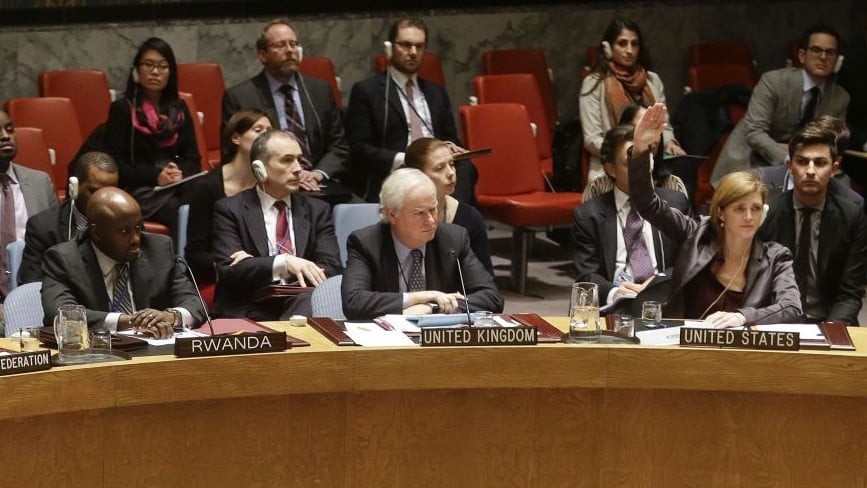
- Australia and the United States voted against [1][2]
- Five countries abstained (including the United Kingdom and Rwanda) [1][6]
- The US would have vetoed the resolution if it had achieved 9 votes, but a veto was unnecessary since the resolution failed to gain majority support [1]
The Resolution's Content:
The Jordanian-sponsored resolution (presented on behalf of Arab nations) would have:
Missing Context
Australia's First-Ever "No" Vote:
This was the first time Australia had voted against a proposed resolution during its two-year term on the Security Council [3]. Australia had previously abstained on contentious issues rather than voting "no."
Australia's Official Explanation:
Australia's Permanent Representative to the UN, Gary Quinlan, explained the vote by stating the resolution "lacks balance and seeks to impose a solution put forward by one party alone" and that "final status issues can only be resolved between the two sides" [2][3]. He reiterated Australia's commitment to a two-state solution but argued the resolution would not advance the peace process [3].
The Vote Was Already Doomed:
Even without Australia's "no" vote, the resolution would have failed due to insufficient support (only 8 votes instead of the required 9). Australia's vote was symbolic rather than decisive [1][6].
Timing Context:
The vote occurred just before Australia and Rwanda were to complete their temporary Council terms in December 2014. Incoming members New Zealand, Malaysia, and Venezuela were believed to be more sympathetic to the Palestinian position [3].
Arab World Reaction:
The Palestinian representative in Australia, Izzat Abdulhadi, expressed disappointment, stating the vote would "affect relations with Palestine and the Arab world" and that he expected Australia to "at least" abstain [2].
Source Credibility Assessment
Original Source: RT (Russia Today)
The original source provided with the claim is RT (Russia Today), a Russian state-funded media outlet [7][8][9].
- Media Bias/Fact Check rates RT as "Questionable" based on "promoting pro-Russian propaganda, conspiracy theories, numerous failed fact checks, and a lack of author transparency" [7]
- AllSides notes RT "has been accused frequently for spreading misinformation" and is funded by the Russian government [8]
- Academic research identifies RT as "an important part of Russian foreign policy and key global sources of disinformation" [9]
RT's reporting on this issue appears to have been misleading by suggesting or allowing readers to infer that Australia had veto powers, which is factually incorrect.
Labor Comparison
Did Labor do something similar?
The Labor Governments (Rudd 2007-2010, Gillard 2010-2013) took notably different positions on Israel-Palestine issues:
UN General Assembly Votes:
Under Labor, Australia changed its voting pattern on several recurring UN General Assembly resolutions concerning Palestine [10]:
- November 2008: Changed vote from "abstain" to "in favour" on resolution affirming the Geneva Convention applies to Occupied Palestinian Territory
- November 2008: Changed vote from "against" to "in favour" on resolution stating Israeli settlements are "illegal and an obstacle to peace"
- December 2009: Changed vote from "abstain" to "in favour" on resolution affirming Palestinian right to self-determination
2012 UNGA Palestine Status Vote:
On November 29, 2012, the UN General Assembly voted to accord Palestine "non-member observer state" status. The Labor government abstained on this vote after internal Cabinet debate [10]. Notably, Shadow Foreign Minister Julie Bishop stated the Coalition would have voted "no" [10], demonstrating a clear partisan divide on this issue.
Language on Israeli Settlements:
Labor government officials, including Australia's UN Ambassador Gary Quinlan, explicitly referred to Israeli settlements as "illegal" under international law [10]. This marked the first time such language had been used by an Australian government since the mid-1990s.
Key Difference:
The Labor government never faced a similar UN Security Council vote on Palestinian statehood during its term (2007-2013), so a direct comparison on the specific action is not possible. However, Labor's overall approach was more sympathetic to Palestinian positions in UN forums compared to both the preceding Howard government and the subsequent Abbott government [10].
Balanced Perspective
Understanding Australia's Position:
Australia has historically been one of Israel's strongest supporters internationally. The Coalition government's vote aligned with Australia's traditional foreign policy position and its alliance with the United States, which also voted "no" [2][3].
Legitimate Policy Rationale:
The Australian government argued that:
- The resolution was "one-sided" and lacked balance [3]
- Peace could only be achieved through direct negotiations between parties, not through imposed solutions [2][3]
- The resolution ignored legitimate Israeli security concerns [3]
- Australia remained committed to a two-state solution achieved through negotiation [3]
US Position Alignment:
The US Ambassador to the UN, Samantha Power, called the resolution "deeply imbalanced" and stated it established "unconstructive deadlines" [5]. Australia's vote aligned with this position, though both countries provided separate justifications for their "no" votes [3].
This Was NOT Unique to Coalition:
While the specific Security Council vote occurred under the Abbott Coalition government, Australia's pro-Israel voting pattern at the UN has been consistent across both Coalition and Labor governments historically, though Labor shifted toward more balanced positions during 2007-2013 [10]. The Coalition government returned to Howard-era approaches on these issues [10].
The Veto Mischaracterization:
The claim's assertion that Australia "used veto powers" is factually incorrect. Australia has never possessed veto power at the UN Security Council. The confusion may stem from:
- Misunderstanding the difference between permanent and non-permanent Council members
- The fact that both Australia and the US voted "no"
- Partisan sources (RT) potentially framing the narrative to maximize criticism
FALSE
3.0
out of 10
This claim is factually incorrect on its central assertion. Australia does not possess and has never possessed veto powers at the UN Security Council. Only the five permanent members (US, UK, France, Russia, China) have veto authority [4].
While Australia did vote "no" against the Palestinian statehood resolution on December 30, 2014, this was a standard vote, not a veto [1][2][3]. The resolution failed because it received only 8 votes in favor (needing 9), not because of any Australian action [1][5].
The claim also misrepresents the nature of Australia's vote by using the inflammatory and inaccurate term "veto powers." The original source (RT) is a questionable source known for propaganda and misinformation [7][8][9], which may explain the factual distortion.
Final Score
3.0
OUT OF 10
FALSE
This claim is factually incorrect on its central assertion. Australia does not possess and has never possessed veto powers at the UN Security Council. Only the five permanent members (US, UK, France, Russia, China) have veto authority [4].
While Australia did vote "no" against the Palestinian statehood resolution on December 30, 2014, this was a standard vote, not a veto [1][2][3]. The resolution failed because it received only 8 votes in favor (needing 9), not because of any Australian action [1][5].
The claim also misrepresents the nature of Australia's vote by using the inflammatory and inaccurate term "veto powers." The original source (RT) is a questionable source known for propaganda and misinformation [7][8][9], which may explain the factual distortion.
📚 SOURCES & CITATIONS (10)
-
1
UN Security Council action on Palestinian statehood blocked
Falling short of the required number of positive votes and faced with a veto from one of its permanent members, the United Nations Security Council today failed to adopt a draft resolution that would have affirmed the “urgent need” to reach within 12 months a peaceful solution to the situation in the Middle East and would have paved the way to a Palestinian state with East Jerusalem as its capital.
UN News -
2

Australia Votes 'No' On Palestinian Draft Resolution at UNSC
Australia joined the United States in voting “no” on a UN Security Council draft resolution on Palestine.
Thediplomat -
3
Australia votes against Palestinian UN resolution on Israel
Australia has voted against a proposal in the United Nations Security Council demanding Israel end the occupation of Palestinian territories within two years.
The Sydney Morning Herald -
4
UN Security Council - Veto Power
Un
Original link unavailable — view archived version -
5

Security Council rejects Palestinian statehood
The U.N. Security Council, in a close 8-2 vote with five abstentions, on Tuesday voted down a Palestinian statehood resolution.
CNN -
6
Palestinian statehood resolution fails at UN Security Council
US veto not needed as motion falls one vote short, with last-minute Nigerian change of heart. France among 8 votes in favor; US, Australia against, five abstain
Timesofisrael -
7

RT News Bias and Credibility - Media Bias/Fact Check
QUESTIONABLE SOURCE A questionable source exhibits one or more of the following: extreme bias, consistent promotion of propaganda/conspiracies, poor or no
Media Bias/Fact Check -
8
RT Media Bias - AllSides
Allsides
-
9
Does Russian Propaganda Lead or Follow?
Journals Sagepub
-
10PDF
Australia and the Middle East conflict: the Rudd and Gillard Governments (2007-13)
Core Ac • PDF DocumentOriginal link unavailable — view archived version
Rating Scale Methodology
1-3: FALSE
Factually incorrect or malicious fabrication.
4-6: PARTIAL
Some truth but context is missing or skewed.
7-9: MOSTLY TRUE
Minor technicalities or phrasing issues.
10: ACCURATE
Perfectly verified and contextually fair.
Methodology: Ratings are determined through cross-referencing official government records, independent fact-checking organizations, and primary source documents.