
The Claim
“Lied about the cost of the price on Carbon.”
Original Sources Provided
✅ FACTUAL VERIFICATION
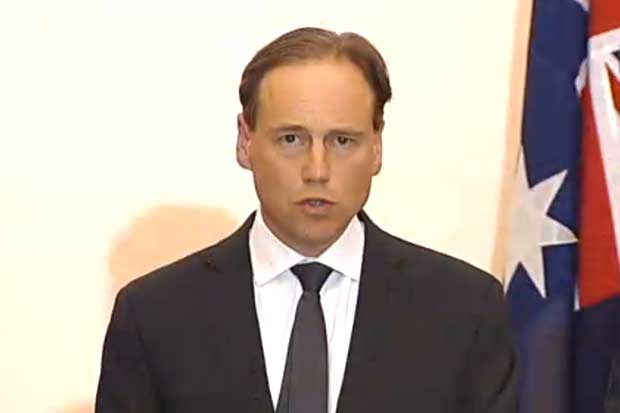
The claim relates to statements made by Environment Minister Greg Hunt in April 2015 comparing the cost of Labor's carbon pricing scheme with the Coalition's Emissions Reduction Fund (ERF) under the "Direct Action" policy.
Hunt's Specific Claim:
In April 2015, following the first ERF reverse auction, Greg Hunt claimed: "Labor's carbon tax reduced emissions at over $1,300 per tonne [while] the Emissions Reduction Fund auction price averages $13.95 per tonne. That's right, Labor's failed carbon tax was more than 93 times more expensive" [1].
The Actual Carbon Price:
The Gillard Labor government's carbon pricing scheme, established under the Clean Energy Act 2011, set the carbon price at:
The price was scheduled to transition to a market-linked emissions trading scheme in 2015, which would have linked to the European system trading at approximately $10 per tonne at that time [1].
Expert Assessment of Hunt's Claim:
Three independent experts consulted by New Matilda dismissed Hunt's $1,300 per tonne claim:
Professor Frank Jotzo (ANU): "That's about as wrong as you can possibly get it. The most important thing to get straight in terms of misinformation and misleading comments there yesterday was Minister Hunt's assertion that the carbon price was $1,300 per tonne" [1].
John Connor (CEO, Climate Institute): Described Hunt's price comparisons as "comparing apples and fridges" [1].
Gujji Muthuswamy (Monash University): Called it "comparing apples and oranges" [1].
What the $1,300 Figure Actually Represented:
The $1,300 figure appears to have been derived from dividing the total revenue raised by the carbon price ($6 billion over two years) by only the emissions reductions directly attributed to the carbon price in the electricity sector (11-17 million tonnes according to Professor Jotzo's ANU study) [1]. This is a fundamentally flawed calculation because:
- It ignores that the carbon price was a broad-based economy-wide mechanism affecting over 60% of the economy [1]
- It conflates revenue raised with abatement cost - the carbon price generated revenue that went to the budget, whereas the ERF was a cost to taxpayers
- It cherry-picks only the electricity sector abatement rather than economy-wide effects
Comparative Performance:
- Carbon pricing scheme (2012-2014): Emissions from covered companies dropped 7% upon introduction [2]
- The carbon price raised approximately $6 billion in revenue for the federal budget over its two-year operation [1]
- Professor Jotzo's ANU study found the carbon price achieved 11-17 million tonnes of abatement in the electricity sector alone [1]
- ERF first auction: $660 million of taxpayer funds purchased 47 million tonnes of abatement [1]
Missing Context
The Carbon Price Was Revenue-Positive:
The claim omits that Labor's carbon pricing scheme was a revenue-raising measure. The carbon price generated approximately $6 billion in revenue for the federal budget [1]. As Professor Jotzo noted: "Now you have taxpayers' money being used to pay for emission reductions rather than money coming in to the federal budget from emissions" [1].
Policy Design Differences:
The carbon price and ERF operated on fundamentally different mechanisms:
- Carbon price: A broad-based market mechanism affecting over 60% of the economy, creating economy-wide price signals to drive innovation and behavioral change [1]
- ERF: A grant-based system where taxpayers pay polluters to reduce emissions through reverse auctions [1]
Scope and Scale:
The carbon price covered "a cap on pollution for over 60% of the economy" [1], while the ERF provided "patchy, one-off cuts to emissions" [1] with no guarantee of meeting Australia's 5% reduction target by 2020 [1].
No Safeguard Mechanism:
The government's promised "safeguard mechanism" - designed to prevent big emitters from increasing emissions and undermining ERF abatements - was effectively removed in a March 2015 discussion paper [1]. This meant there was no carbon cap, allowing big polluters to continue "business as usual" [1].
Source Credibility Assessment
New Matilda (Original Source):
- Profile: Independent online publication launched in 2004, focusing on investigative journalism and analysis
- Ownership: Owned and edited by Walkley Award and Human Rights Award winning journalist Chris Graham
- Political Alignment: Generally progressive/left-leaning, independent media outlet
- Approach: The article cites multiple independent academic experts and presents their direct quotes, enhancing credibility
- Potential Bias: As an independent outlet with progressive leanings, it may present analysis favoring climate action policies
- Expert Sourcing: The article's strength lies in its consultation of three independent experts from ANU, Monash University, and The Climate Institute - organizations with established credibility in climate economics [1]
Labor Comparison
Did Labor make misleading cost claims about carbon pricing?
Search conducted: "Labor government carbon price cost projections Treasury estimates accuracy"
Finding: The Labor government, through Treasury modeling, projected carbon price impacts that generally aligned with the actual $23-24 per tonne price. There is no evidence of Labor claiming the carbon price was significantly lower than it actually was - the published price was transparent and statutory [2].
However, Labor did face criticism for:
- Pre-election commitment: Julia Gillard stated before the 2010 election "there will be no carbon tax under the government I lead," which the Coalition heavily criticized when a carbon pricing scheme was later introduced [2]
- Cost impact projections: Treasury modeling projected minimal economic impact, but critics disputed these projections
Key Distinction: While both sides made contested claims about climate policy, Hunt's $1,300 per tonne claim appears to represent a more significant factual distortion because:
Balanced Perspective
Coalition's Position:
The Coalition government, through Minister Hunt, sought to demonstrate the cost-effectiveness of its Direct Action policy compared to Labor's carbon pricing scheme. The ERF did achieve a lower per-tonne auction price ($13.95) compared to the statutory carbon price ($23-24) [1].
Legitimate Defense of Hunt's Comparison:
From a certain perspective, if one calculates total revenue divided by a narrow subset of directly attributable abatement, a higher effective cost figure can be derived. The government could argue this represents a more honest accounting of costs.
Why Experts Rejected This Defense:
- Methodologically flawed: The comparison used incompatible metrics - "comparing apples and fridges" [1]
- Misleading framing: Presenting $1,300 as "the carbon price" was factually incorrect when the statutory price was $23 [1]
- Ignored revenue: The carbon price generated $6 billion in budget revenue; the ERF cost taxpayers $660 million [1]
- Different scope: The carbon price drove economy-wide change; the ERF created patchy, one-off cuts [1]
Comparative Context:
This incident reflects a broader pattern in Australian climate politics where both sides have contested the costs and effectiveness of climate policies. The Coalition criticized Labor's carbon price as a "great big tax"; Labor criticized the ERF as ineffective and expensive.
Independent Expert Consensus:
The three experts consulted (from ANU, Monash, and The Climate Institute) all independently concluded Hunt's claim was misleading [1]. This suggests the criticism was not purely partisan but reflected genuine methodological concerns from climate economists.
MISLEADING
3.0
out of 10
Greg Hunt's claim that Labor's carbon tax cost "$1,300 per tonne" was factually misleading. The actual statutory carbon price was $23-24 per tonne [2]. The $1,300 figure was derived through a non-standard calculation that:
- Divided total revenue by only electricity sector abatement (ignoring economy-wide effects)
- Conflated revenue-raising and expenditure-based mechanisms [1]
- Was dismissed by multiple independent experts as "nonsense" and "quite outrageously misleading" [1]
While politicians frequently make contested claims about policy effectiveness, presenting $1,300 as the cost "per tonne" when the actual price was $23 represents a significant distortion that misrepresented the fundamental economics of the carbon pricing scheme.
Final Score
3.0
OUT OF 10
MISLEADING
Greg Hunt's claim that Labor's carbon tax cost "$1,300 per tonne" was factually misleading. The actual statutory carbon price was $23-24 per tonne [2]. The $1,300 figure was derived through a non-standard calculation that:
- Divided total revenue by only electricity sector abatement (ignoring economy-wide effects)
- Conflated revenue-raising and expenditure-based mechanisms [1]
- Was dismissed by multiple independent experts as "nonsense" and "quite outrageously misleading" [1]
While politicians frequently make contested claims about policy effectiveness, presenting $1,300 as the cost "per tonne" when the actual price was $23 represents a significant distortion that misrepresented the fundamental economics of the carbon pricing scheme.
📚 SOURCES & CITATIONS (2)
-
1
A Simple Guide To Understanding Greg Hunt's 'Nonsense' Carbon Con
Environment Minister Greg Hunt is doing a stellar job of muddying the rising, warming waters which threaten to submerge the government’s “inadequate” climate policies, but experts say his claims are “quite outrageously misleading”. After half a decade of rhetoric the government’s Emissions Reduction Fund (ERF), the centre-piece of its ‘Direct Action’ climate policy, has facedMore
New Matilda -
2
Carbon Pricing in Australia
Wikipedia
Rating Scale Methodology
1-3: FALSE
Factually incorrect or malicious fabrication.
4-6: PARTIAL
Some truth but context is missing or skewed.
7-9: MOSTLY TRUE
Minor technicalities or phrasing issues.
10: ACCURATE
Perfectly verified and contextually fair.
Methodology: Ratings are determined through cross-referencing official government records, independent fact-checking organizations, and primary source documents.