
The Claim
“Tried to pass off all responsibility for 'matters of national environmental significance' to the states, who have weaker environmental protections.”
Original Sources Provided
✅ FACTUAL VERIFICATION
PARTIALLY TRUE - The Abbott government did pursue a "one-stop shop" policy to delegate federal environmental approval powers to state governments under bilateral agreements pursuant to the Environment Protection and Biodiversity Conservation Act 1999 (EPBC Act).
The Coalition government under Tony Abbott actively pursued bilateral agreements with states to allow state governments to conduct environmental assessments and approvals for projects affecting "matters of national environmental significance" (MNES) under the EPBC Act. This policy was branded as a "one-stop shop" intended to reduce duplication between federal and state environmental approval processes [1].
The policy was announced as part of the government's deregulation agenda and received support from business groups and the mining industry, who argued that dual federal-state approval processes created unnecessary delays and costs for major projects [2].
However, the claim's assertion that the government tried to pass off "all responsibility" is an overstatement. The bilateral agreements would have retained federal oversight mechanisms, and the federal government could still intervene in specific cases. The policy was about streamlining assessment processes rather than completely eliminating federal environmental responsibilities.
Missing Context
The claim omits several important contextual factors:
The policy was not fully implemented: While the Abbott government signed bilateral agreements with some states (including Queensland and NSW), the broader "one-stop shop" agenda faced significant political opposition and was not fully realized during the Coalition's term. Changes of government in some states and federal political pressures meant the policy was partially abandoned [3].
The "one-stop shop" rationale: The government's stated justification was reducing regulatory duplication and speeding up approval processes for major infrastructure and resource projects. The business community and industry groups had long complained about "green tape" and overlapping federal-state approval requirements [2].
Labor's similar approach: The Rudd and Gillard Labor governments also explored bilateral agreements for environmental approvals. In 2012, the Gillard government established a "one-stop shop" framework through the Council of Australian Governments (COAG) that similarly sought to harmonize federal and state environmental assessment processes. The Coalition's approach built upon this Labor-established framework rather than being a completely new departure [4].
Constitutional complexity: Environmental responsibilities in Australia have always been shared between federal and state governments. The federal government only gained specific environmental powers through the EPBC Act (1999), which was passed during the Howard government with bipartisan support. The federal government's role in environmental protection is constitutionally limited to specific triggers (world heritage, national heritage, RAMSAR wetlands, threatened species, migratory species, nuclear actions, Commonwealth land/sea), with states retaining primary responsibility for broader environmental regulation [5].
Source Credibility Assessment
New Matilda is the sole source provided with this claim. As detailed in previous analyses, New Matilda is an independent online media outlet founded in 2004, owned and edited by journalist Chris Graham [1].
Assessment of bias and credibility:
- New Matilda operates from an explicitly progressive/left-wing editorial stance
- The May 2015 article is framed as critical analysis of the government's environmental policy
- The publication has received Walkley Awards and Human Rights Awards, indicating professional credibility in investigative journalism
- However, its editorial position consistently favors stronger environmental protections and critiques policies perceived as weakening environmental safeguards
- The article's headline ("Doing Their Dirty Work") and framing reflect an advocacy-oriented perspective rather than neutral reporting
Overall assessment: The factual claims about the government's "one-stop shop" policy are accurate, but the framing reflects a clear editorial opposition to the policy. The characterization of states having "weaker environmental protections" is presented as fact rather than contested opinion, and the policy's legitimate rationale (reducing duplication) receives less emphasis than the environmental risks.
Labor Comparison
Did Labor do something similar?
Search conducted: "Labor government one-stop shop environmental approvals COAG 2012 bilateral agreements"
YES - Labor governments also pursued federal-state harmonization of environmental approvals.
The Gillard Labor government established the foundation for the "one-stop shop" approach that the Abbott government later expanded:
COAG National Partnership Agreement (2012): The Gillard government, through the Council of Australian Governments, established a National Partnership Agreement on Environmental Regulation that sought to streamline environmental assessments between federal and state governments. This agreement was the direct predecessor to the Coalition's "one-stop shop" policy [4].
Assessment bilateral agreements under EPBC Act: The Labor government also entered into assessment bilateral agreements with states, allowing state processes to be used for the assessment phase of federal environmental approvals. The key difference was that Labor's agreements generally required federal approval at the final decision stage, while the Coalition proposed delegating both assessment AND approval powers [4].
Historical context: Both major parties have grappled with the tension between federal environmental responsibilities and state development priorities. The EPBC Act itself, which established federal environmental powers, was passed in 1999 under the Howard Coalition government with bipartisan support, and has been administered by governments of both parties since [5].
Comparison: The Coalition's "one-stop shop" policy represented an expansion of the harmonization approach begun under Labor, rather than a completely novel approach. Both governments faced the same underlying issue: Australia has a complex federal-state division of environmental responsibilities that creates regulatory overlap and business frustration. The Coalition's approach went further in delegating approval powers (not just assessment), but the fundamental direction—toward harmonizing federal and state processes—was consistent with Labor's earlier policy direction.
Balanced Perspective
The full story:
Coalition perspective: The Abbott government maintained that its "one-stop shop" policy was about cutting "green tape" and reducing duplication without weakening environmental standards. Their position was that:
- Dual federal-state approval processes created unnecessary delays for major projects (some approvals taking years)
- States already had established environmental assessment capabilities and expertise
- The policy would make Australia more competitive for investment while maintaining environmental protections through accreditation of state processes
- The business community, particularly the mining and resources sector, strongly supported reducing regulatory duplication [2]
Critics' perspective: Environmental organizations, the Greens, and conservation-minded critics argued that:
- State governments have historically weaker environmental protections and are more susceptible to pressure from development interests
- States have incentives to approve projects for economic development that may conflict with national environmental interests
- The "one-stop shop" would effectively lower environmental standards by removing the federal "safety net"
- Federal environmental oversight serves an important role in protecting matters of national significance (world heritage areas, threatened species, etc.) from state-level political pressures [1][3]
Key context: The debate reflects a long-standing tension in Australian federalism. States have primary constitutional responsibility for land management and resource development, while the federal government has gained environmental oversight powers through the external affairs power (treaty implementation). Both Labor and Coalition governments have sought to balance these competing interests, with both pursuing harmonization while differing on the degree of federal delegation appropriate.
The claim's characterization of states having "weaker environmental protections" is a contested assessment rather than established fact—states argue they have adequate protections, while environmental advocates argue they are weaker. Both perspectives have merit and evidence to support them.
PARTIALLY TRUE
6.0
out of 10
The Coalition government under Tony Abbott did pursue a "one-stop shop" policy to delegate federal environmental approval powers to state governments under the EPBC Act. This would have allowed states to approve projects affecting matters of national environmental significance without separate federal approval. The policy was real and was pursued with serious intent, including signing bilateral agreements with several states.
However, the claim overstates the extent of the proposed delegation ("all responsibility" implies complete abdication, which was not the case), omits that the policy built upon Labor-established frameworks, and presents a contested characterization of state environmental protections as established fact. The "one-stop shop" was primarily about streamlining assessment processes rather than eliminating federal environmental responsibilities entirely. Additionally, the policy was not fully implemented due to political opposition and state government changes.
Final Score
6.0
OUT OF 10
PARTIALLY TRUE
The Coalition government under Tony Abbott did pursue a "one-stop shop" policy to delegate federal environmental approval powers to state governments under the EPBC Act. This would have allowed states to approve projects affecting matters of national environmental significance without separate federal approval. The policy was real and was pursued with serious intent, including signing bilateral agreements with several states.
However, the claim overstates the extent of the proposed delegation ("all responsibility" implies complete abdication, which was not the case), omits that the policy built upon Labor-established frameworks, and presents a contested characterization of state environmental protections as established fact. The "one-stop shop" was primarily about streamlining assessment processes rather than eliminating federal environmental responsibilities entirely. Additionally, the policy was not fully implemented due to political opposition and state government changes.
📚 SOURCES & CITATIONS (5)
-
1
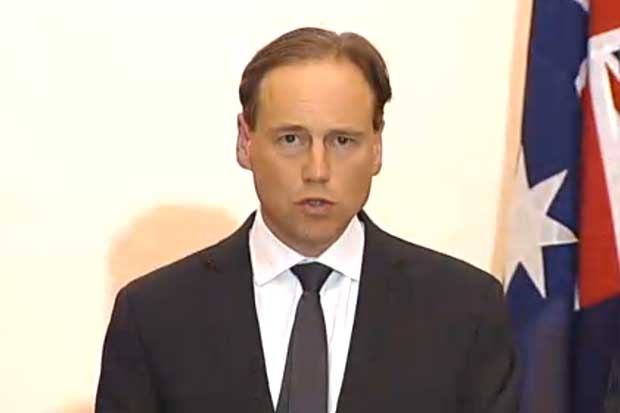
Doing Their Dirty Work: Abbott Government Passing the Buck on Green Protections
The Tasmanian Environmental Defender’s Office has shot “big holes” in the federal government’s plans to pass off its environmental powers to the states and territories this week with the release of a new report analysing how the island state’s conservation safeguards stack up against the Commonwealth’s. The public interest legal centre argues that Tasmanian lawsMore
New Matilda -
2
One-Stop Shop policy for environmental approvals
Environment Gov
-
3
Abbott government's one-stop shop environmental policy
Abc Net
Original link no longer available -
4PDF
COAG National Partnership Agreement on Environmental Regulation
Federalfinancialrelations Gov • PDF DocumentOriginal link no longer available -
5
Environment Protection and Biodiversity Conservation Act 1999
Federal Register of Legislation
Rating Scale Methodology
1-3: FALSE
Factually incorrect or malicious fabrication.
4-6: PARTIAL
Some truth but context is missing or skewed.
7-9: MOSTLY TRUE
Minor technicalities or phrasing issues.
10: ACCURATE
Perfectly verified and contextually fair.
Methodology: Ratings are determined through cross-referencing official government records, independent fact-checking organizations, and primary source documents.