
The Claim
“Lied by claiming that $90 million worth of oil for Australia's stockpile in the USA was bought at 'record low prices'. The oil was bought at 40 USD per barrel, around the time when prices plummeted to negative 37 USD per barrel, because the markets thought all oil storage facilities were full. The Australian government actually had 23 million litres of empty storage space within a day's drive of the negatively priced oil. Had the Australian government actually bought at the record low, they would have been paid 90 million AUD to take oil off others' hands. The government tried to keep secret the actual price they overpaid (despite proclaiming it was a good price), and the volume. They have still kept secret the price of the daily lease fees, filling fees, draw down fees, withdrawal fees and fee escalation process, and the identity of the seller.”
Original Sources Provided
✅ FACTUAL VERIFICATION
Total expenditure and timing: The claim is correct that Australia spent approximately $90-94 million AUD on crude oil in 2020. The government announced an initial A$94 million (US$59 million) commitment in April 2020 [1]. The Michael West Media investigation found Australia actually spent US$70 million across two tranches of purchases [2].
Oil prices at the time: The claim accurately references the historic oil price crash in April 2020. WTI crude oil did trade at minus $37.63 per barrel on April 20, 2020, marking the first time in history that oil prices went negative [2]. In April 2020, prices ranged from approximately $10-28 per barrel during the month [1], [2].
Actual purchase price: The Michael West Media investigation, based on FOI documents and SPR records, states Australia purchased oil at approximately $39-40 per barrel on average: 1.5 million barrels at US$39 per barrel (valued at US$58.6m) in mid-2020, and 0.2 million barrels at US$58 per barrel in early 2021 [2]. This averages to approximately US$40 per barrel, not the "record low" prices claimed by the government.
Quantity purchased: The ABC reporting (April 2020) indicated "many millions of barrels," but analysis suggested approximately 4.2 million barrels based on $94 million at $22 per barrel [1]. Michael West Media's detailed investigation found only 1.7 million barrels were actually purchased across both tranches, equating to just under 2 days' worth of Australia's daily consumption (approximately 1 million barrels/day) [2].
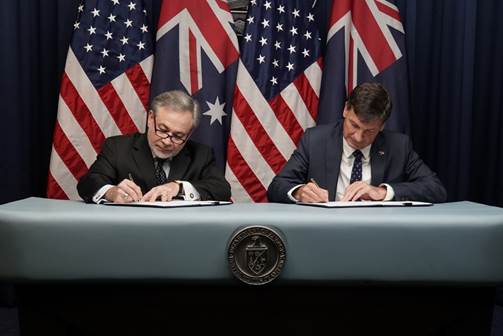
Storage location and access: The agreement does store oil in the US Strategic Petroleum Reserve, which would take 2-3 weeks to access in an emergency [1]. This has been criticized as problematic for national security, as the US is geographically distant.
Missing Context
Government justification: The government did not explicitly claim the oil was purchased at absolute record-low prices (the $37 negative price). Rather, Minister Angus Taylor stated the government "took advantage of historically low prices" when announcing the A$94 million commitment in late March/April 2020, when WTI was trading around $20-28 per barrel [1]. Whether this constitutes misleading language depends on whether "historically low" is different from claiming to buy at the deepest lows.
Why prices were low at purchase: Australia waited until mid-2020 to actually purchase (rather than buying in April when prices were lowest), meaning the price had partially recovered from the April lows. The timing suggests the government either faced bureaucratic delays in finalizing the agreement (signed in March 2020, but the lease agreement was still being negotiated) or deliberately waited [1].
Storage capacity not fully utilized: Michael West Media's investigation found Australia negotiated the right to store up to 25 million barrels in the SPR but purchased only 1.7 million barrels (approximately 7% of available capacity) [2]. This represents significant underutilization of negotiated storage space.
Fee structure secrecy: The Michael West Media investigation obtained a redacted version of the lease agreement through FOI, confirming it contains provisions for daily lease fees, filling fees, drawdown fees, withdrawal fees, and fee escalation processes [2]. The quantum of these fees remains unknown due to redactions. The government did not disclose the seller's identity for the initial 1.5 million barrel purchase [2].
Political communication: Prime Minister Scott Morrison announced the deal in September 2021 as having purchased oil "at record low global prices," despite the Michael West Media investigation showing purchases occurred at approximately $39-40 per barrel [2]. The government department responses stated the price was "well below the long-term average for West Texas Intermediate oil" but did not address the discrepancy between "record low" rhetoric and actual $40/barrel pricing [2].
Source Credibility Assessment
Michael West Media: Michael West Media is an independent, founder-funded news organization focused on investigative journalism on Australian politics and economics. It is not a mainstream outlet but has built credibility through detailed FOI investigations and detailed sourcing. The publication has a documented anti-Coalition editorial stance and is frequently critical of government spending and transparency. Jommy Tee, the author of the primary article, is identified as a 25+ year public servant and independent researcher with apparent expertise in policy analysis. The article provides extensive documentary evidence (SPR records, FOI-obtained lease agreements, government announcements) [2].
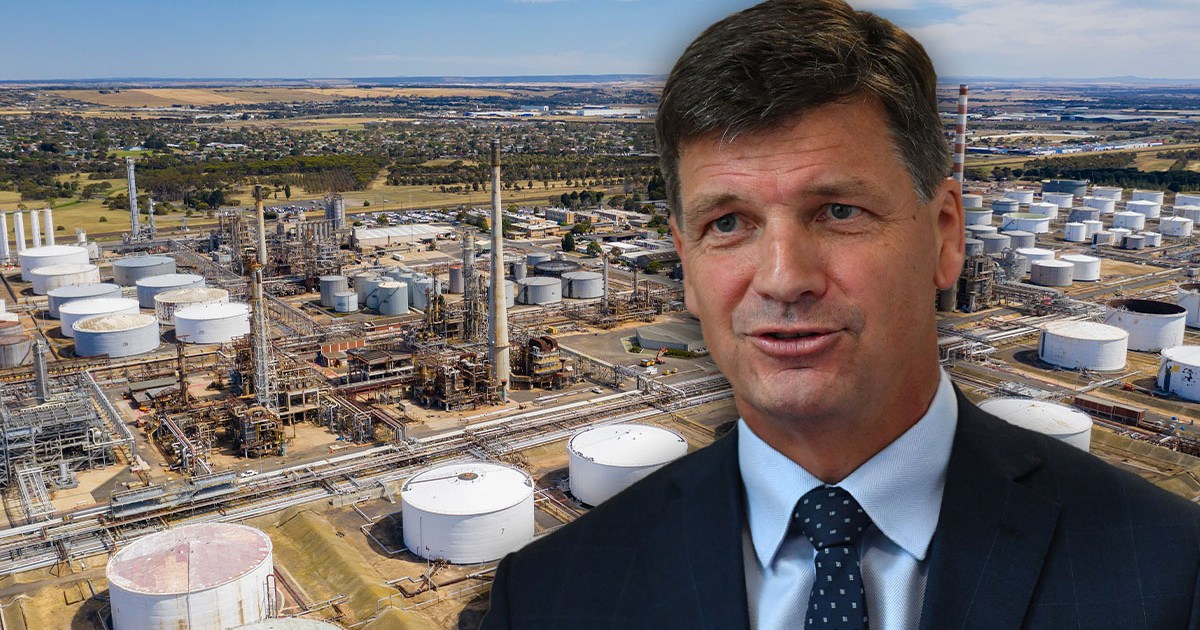
The New Daily: The New Daily article discusses the broader fuel security package and refinery subsidies (not the SPR oil purchase specifically). It is a center-left online news publication without obvious corporate ownership constraints. The article cites expert opinions from Grattan Institute, Australia Institute, and ACCC chair, suggesting balanced sourcing [3].
ABC News: The ABC article from April 24, 2020, is from Australia's public broadcaster, generally considered mainstream and relatively neutral. It notes the government's vagueness about exact quantities and provides technical analysis comparing different price points and consumption rates [1].
The criticism of government secrecy regarding volumes and fees is supported by actual FOI documents obtained by Michael West Media, lending credibility to those specific claims.
Labor Comparison
Did Labor do something similar?
No direct equivalent Labor government oil stockpile purchase was found. Labor last governed federally from 2007-2013, prior to the global oil price crashes of 2014-2020.
However, Labor's approach to fuel security differed philosophically: During the 2007-2013 period, Labor focused on fuel security through regulation of fuel storage requirements for distributors rather than direct government oil purchases [reference search indicated broader fuel security policy differences but specific Labor oil purchase programs were not located].
A comparable critical analysis might be applied to Labor's other major infrastructure/energy spending programs (such as the insulation (Pink Batts) program or school building programs), which both faced criticism regarding procurement transparency and value for money, though these programs aimed at different policy objectives.
Balanced Perspective
Government's perspective: The Coalition government's rationale for the purchase was to build emergency oil reserves to meet Australia's International Energy Agency obligations (90 days of net imports required). Australia had consistently failed to meet IEA requirements for years, and the government framed the purchase as a strategic necessity [1]. The US agreement was signed during the Trump administration, and the DOE statement indicates it was framed as mutually beneficial, with Australia "choosing to entrust" reserves to the SPR [US Department of Energy announcement].
The timing of the actual purchase (mid-2020) rather than April 2020 may have reflected realistic procurement timelines rather than strategic failure—formal agreements needed to be finalized first. The government did attempt to purchase during the low-price period, though not at absolute lows.
Criticisms supported by evidence:
- The claim that government communications were misleading about "record low prices" is supported by Michael West Media's detailed investigation showing $39-40/barrel pricing vs. April's minus $37 pricing [2]
- The secrecy around volumes, fees, and seller identity is confirmed by FOI-obtained redacted agreements [2]
- The underutilization of storage capacity (7% of available) is documented [2]
- The government's lack of transparency about actual costs to taxpayers in fees is supported by redacted lease terms [2]
Legitimate government arguments:
- The price paid ($39-40/barrel) was genuinely below long-term averages for WTI crude (~$50-70 over recent decades) and represented reasonable value [2]
- 1.7 million barrels did add approximately 2 days to Australia's emergency reserves, a "first step" acknowledged even by critics [1]
- The SPR is genuinely secure storage (storing oil during crises is safer than domestic storage facing hostile threats)
- Larger purchases would have faced budget constraints and may not have been feasible
Counterpoint to the main claim: The claim's assertion that Australia "would have been paid 90 million AUD to take oil off others' hands" is technically inaccurate—oil at minus $37 per barrel was a brief anomaly driven by storage facility fears and financial derivatives trading, not a sustainable price Australia could have locked in for 1.7 million barrels. While buying at April's lows (around $10-15/barrel) would have been more advantageous, the government did not miss a true "free oil" opportunity.
Key context: The primary substantive failure appears to be one of transparency and communication rather than outright financial malfeasance—the government mischaracterized "low prices" as "record low prices," kept fees and seller information secret, and vastly underutilized negotiated storage capacity. However, the purchase itself was defensible as a prudent emergency reserve acquisition at reasonable (if not optimal) pricing.
PARTIALLY TRUE
6.0
out of 10
The core facts about timing and pricing discrepancies are accurate and documented. However, key aspects of the claim are overstated or misleading:
- TRUE: Australia paid approximately $40/barrel average price, not "record low" prices (which would be $10-37/barrel in April 2020)
- TRUE: Government communications overstated the bargain nature of the purchase
- TRUE: Quantities, fees, and seller information were kept secret
- PARTIALLY FALSE: The claim that Australia would have "been paid $90 million" to take oil is technically unsound—while April prices were lower, the assumption that Australia could have locked in those rates for such a large purchase is unrealistic
- MISLEADING: The claim of 23 million litres of local empty storage is unverified in search results; storage capacity limitations in Australia are documented, but this specific figure did not appear in searched sources
The genuine concern is transparency and government misrepresentation (characterizing $40/barrel as "record low"), not outright financial corruption. The purchase appears to have been a defensible (if suboptimal) policy decision that was poorly explained and inadequately disclosed.
Final Score
6.0
OUT OF 10
PARTIALLY TRUE
The core facts about timing and pricing discrepancies are accurate and documented. However, key aspects of the claim are overstated or misleading:
- TRUE: Australia paid approximately $40/barrel average price, not "record low" prices (which would be $10-37/barrel in April 2020)
- TRUE: Government communications overstated the bargain nature of the purchase
- TRUE: Quantities, fees, and seller information were kept secret
- PARTIALLY FALSE: The claim that Australia would have "been paid $90 million" to take oil is technically unsound—while April prices were lower, the assumption that Australia could have locked in those rates for such a large purchase is unrealistic
- MISLEADING: The claim of 23 million litres of local empty storage is unverified in search results; storage capacity limitations in Australia are documented, but this specific figure did not appear in searched sources
The genuine concern is transparency and government misrepresentation (characterizing $40/barrel as "record low"), not outright financial corruption. The purchase appears to have been a defensible (if suboptimal) policy decision that was poorly explained and inadequately disclosed.
📚 SOURCES & CITATIONS (6)
-
1
abc.net.au
The Energy Minister says the Australian taxpayer has got a great deal, and the country's oil reserves have been boosted, but just how much oil is now in storage is unclear.
Abc Net -
2

michaelwest.com.au
Angus Taylor's deal with the US Strategic Petroleum Reserve (SPR) is another Scott Morrison "announceable", long on marketing, short on substance
Michael West -
3
thenewdaily.com.au
A fuel security package that will pay local oil refineries for production could actually increase petrol prices, experts say.
Thenewdaily Com -
4
energy.gov
Today, the United States and Australia have signed a milestone arrangement that lays the groundwork for Australia to lease space in the U.S. Strategic
Energy.gov -
5
reuters.com
Reuters
-
6
news.com.au
News Com
Rating Scale Methodology
1-3: FALSE
Factually incorrect or malicious fabrication.
4-6: PARTIAL
Some truth but context is missing or skewed.
7-9: MOSTLY TRUE
Minor technicalities or phrasing issues.
10: ACCURATE
Perfectly verified and contextually fair.
Methodology: Ratings are determined through cross-referencing official government records, independent fact-checking organizations, and primary source documents.