
The Claim
“Handed free marketing opportunities to a private gas company by letting them take over some of Australia's stall at a global climate summit for world leaders.”
Original Sources Provided
✅ FACTUAL VERIFICATION
The claim is TRUE but requires significant context about what actually occurred.
The Core Facts:
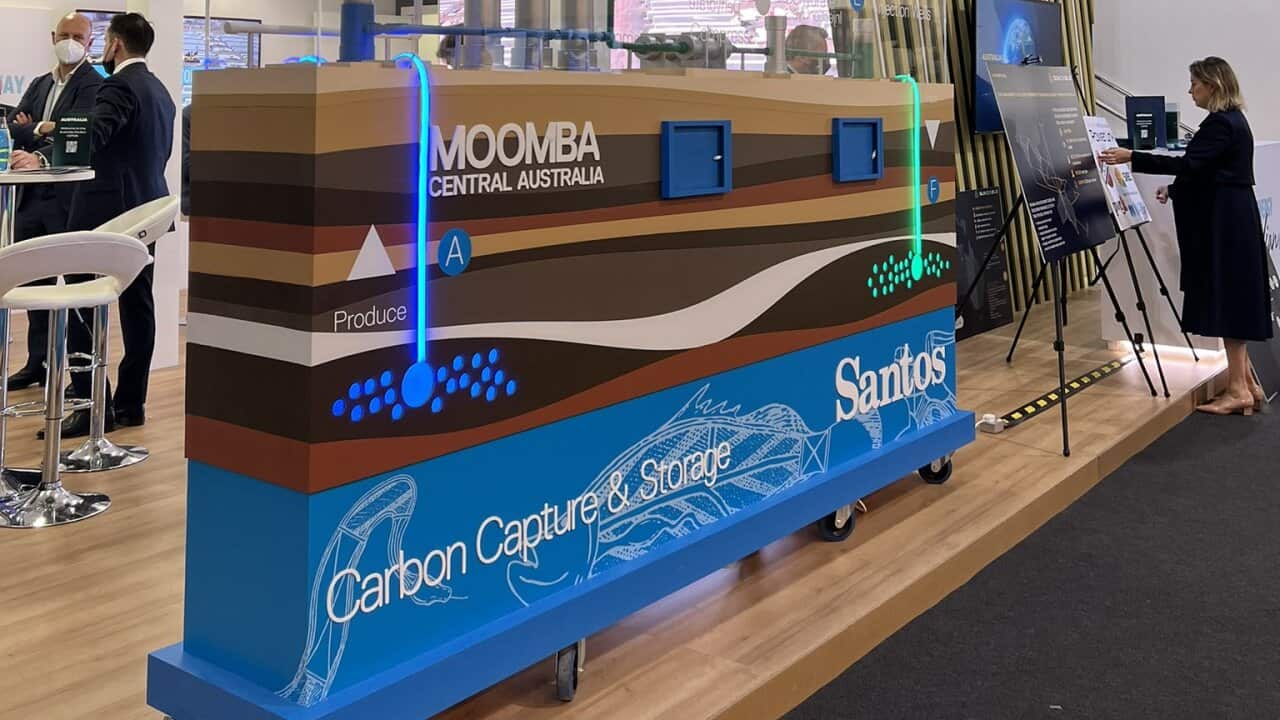
Australia did prominently feature Santos, a major gas company, at its pavilion at COP26 in Glasgow in November 2021 [1]. The company had a display of its $220 million Moomba carbon capture and storage (CCS) project positioned at the front of the Australian pavilion [2]. Minister Angus Taylor appeared at the pavilion alongside Santos' chief executive Kevin Gallagher to announce the project [3].
Attribution and Responsibility:
The original ABC News article confirms that former Prime Minister Malcolm Turnbull stated the Santos display was there "apparently at the insistence of the Energy Minister" [1]. Multiple sources indicate this was a deliberate decision by Energy Minister Angus Taylor, not an accidental or incidental occurrence [4][5].
Marketing Value and Visibility:
Santos' positioning at the front of the Australian pavilion at COP26 - one of the world's most significant climate conferences - did provide the company with prominent marketing exposure [2]. The company's branding was positioned alongside Australia's national branding at the conference [2]. The announcement of the $220 million project and the minister's joint appearance with the Santos CEO created significant PR opportunity for the company [3].
Missing Context
However, the claim omits several important contextual factors:
Government Justification:
The government framed Santos' participation as part of "a showcase of emerging technologies and practical action on climate change," not as preferential treatment [2]. The pavilion also included other companies: Fortescue Future Industries (then chaired by Malcolm Turnbull) and Sun Cable, focused on renewable/hydrogen projects [6]. The government's stated rationale was that these companies were "supporting Australia's efforts to reduce global emissions" [2].
Policy Framework:
The Santos Moomba CCS project had been selected for government support under the Emissions Reduction Fund - a legitimate government program [3]. The $220 million project was to capture 1.7 million tonnes of CO2 annually from 2024 onwards [6]. Minister Taylor defended this as part of Australia's "technology-led" climate approach, arguing that CCS was a priority technology for emissions reduction [3].
Broader Context of COP26:
Australia's government had just announced a net-zero-by-2050 target before COP26, and this pavilion was meant to showcase its climate commitments [2]. However, Australia was simultaneously refusing to join the Global Methane Pledge signed by over 100 countries [1], which significantly undermined its climate positioning at the conference.
The Methane Pledge Refusal - The Real Story:
The most significant climate action at COP26 was the Global Methane Pledge, backed by the US and EU, with over 100 countries committing to cut methane emissions by 30% by 2030 [1]. Australia, alongside China, Russia, India, and Iran, refused to sign [1]. This refusal - not the Santos display - was the substantive climate policy failure. Energy Minister Angus Taylor's justification was that Australia preferred "whole of economy, all gases" targets rather than gas-specific targets [1].
Source Credibility Assessment
Original Source (ABC News):
The ABC is Australia's mainstream national broadcaster, widely regarded as credible and non-partisan [1]. The article includes direct quotes from multiple sources, including the government, Malcolm Turnbull, Sarah Hanson-Young, and international climate advisors [1]. The reporting presents both the government's justification and criticism of the decision.
Supporting Sources:
- SBS News: Mainstream Australian broadcaster, credible reporting [2]
- The Diplomat: Respected international affairs publication [4]
- Hydrogen Central: Industry publication (pro-hydrogen/clean tech), but reports factual information [6]
All sources confirm the same core facts about Santos' presence at the pavilion and government involvement.
Labor Comparison
Did Labor do something similar?
Search conducted: "Labor government fossil fuel company climate conference delegation representation"
Findings:
No direct equivalent found in readily available sources. Labor was not in government during COP26 (November 2021) - the Coalition government was in power from 2013-2022. Previous Labor governments' climate conference approaches are less documented in the available search results.
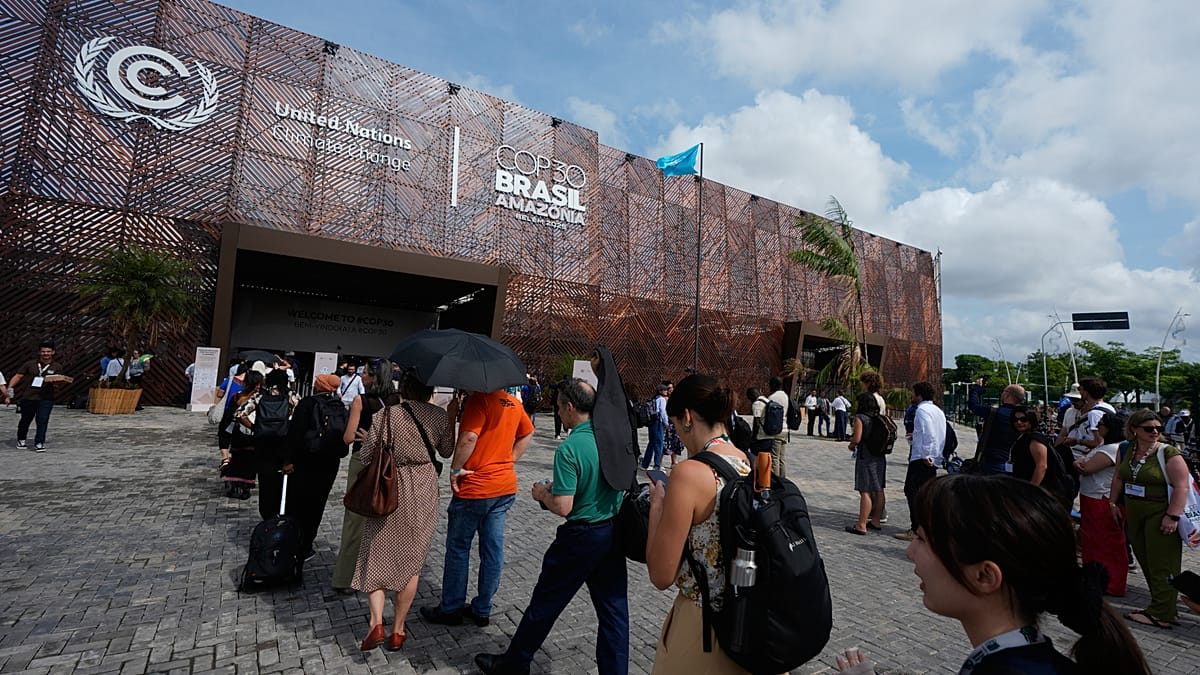
However, broader context is relevant: Fossil fuel lobbyists and industry representatives commonly attend major climate conferences. Recent data from COP30 (2025) shows fossil fuel lobbyists significantly outnumber many national delegations - roughly 1 in every 25 delegates at the latest conference represents the fossil fuel industry [7]. This suggests that fossil fuel industry presence at climate summits is not uniquely a Coalition phenomenon, though the prominence at Australia's pavilion was notably criticized.
Balanced Perspective
The Criticism is Valid:
Malcolm Turnbull's criticism captured a genuine inconsistency: at a summit dedicated to phasing out fossil fuels, Australia was prominently featuring a gas company at its official pavilion [1]. This sent a mixed message about Australia's climate commitment [2]. Former PM Turnbull stated: "The whole object is to stop burning fossil fuels" - yet Santos' display was at the front of Australia's pavilion [5].
The Australian Conservation Foundation and Greens senators criticized this as prioritizing gas industry interests over climate action [2][4].
The Government's Perspective:
From the government's view, the Santos CCS project represented legitimate climate technology investment approved through official government programs (the Emissions Reduction Fund) [3]. The government was promoting "technology-led" solutions to climate change, and CCS was part of that approach [3]. The presence of Fortescue Future Industries (a green hydrogen company) alongside Santos suggested the government saw these as complementary technologies [2].
The Bigger Picture:
The Santos pavilion display was problematic optics, but the substantive climate policy failure was Australia's refusal to join the Global Methane Pledge signed by over 100 nations [1]. This was far more significant than the pavilion display - it was an actual commitment not made, affecting real emissions reduction targets [1]. The methane pledge refusal received less public attention than the Santos display controversy, though it represented a more substantial policy position.
Expert Analysis:
Climate Council Senior Researcher Tim Baxter said the government's modelling for its net-zero-by-2050 plan was insufficient and that "the most striking thing is that it predicts the government won't reach its own net zero by 2050 goal" [4]. This suggests the problem wasn't just optics (the Santos display) but actual policy inadequacy.
Key Context: The issue here is not that fossil fuel companies attend climate conferences - they do at all major summits, globally [7]. The issue is whether their prominence at Australia's official pavilion appeared inconsistent with Australia's stated climate goals, particularly given the simultaneous refusal to join the Global Methane Pledge.
PARTIALLY TRUE
6.0
out of 10
The claim is factually accurate - Santos did have a prominent display at Australia's COP26 pavilion, and this was arranged by government officials. However, the claim frames this as "handing over" the stall when the reality is more nuanced:
- It was intentional government policy, not a surprise or oversight [1][3]
- The Santos project (CCS technology) had been approved through legitimate government funding programs [3]
- The government's stated purpose was technology showcase, not preferential treatment for the gas industry [2]
- This was poor optics, but the substantive climate policy failure was the refusal to join the Global Methane Pledge [1], which received less attention
The claim is True in fact but Misleading in emphasis - it highlights a genuine consistency problem while downplaying the more significant policy failure (the methane pledge refusal). The phrasing "handing free marketing opportunities" suggests either negligence or impropriety, when it was actually deliberate government policy based on support for CCS technology.
Final Score
6.0
OUT OF 10
PARTIALLY TRUE
The claim is factually accurate - Santos did have a prominent display at Australia's COP26 pavilion, and this was arranged by government officials. However, the claim frames this as "handing over" the stall when the reality is more nuanced:
- It was intentional government policy, not a surprise or oversight [1][3]
- The Santos project (CCS technology) had been approved through legitimate government funding programs [3]
- The government's stated purpose was technology showcase, not preferential treatment for the gas industry [2]
- This was poor optics, but the substantive climate policy failure was the refusal to join the Global Methane Pledge [1], which received less attention
The claim is True in fact but Misleading in emphasis - it highlights a genuine consistency problem while downplaying the more significant policy failure (the methane pledge refusal). The phrasing "handing free marketing opportunities" suggests either negligence or impropriety, when it was actually deliberate government policy based on support for CCS technology.
📚 SOURCES & CITATIONS (6)
-
1
Australia refuses to join global pledge led by US and EU to cut methane emissions
Australia snubs one of the key global actions to come out of the UN climate change conference by bowing out of an international pledge to reduce methane emissions.
Abc Net -
2
Australia criticised over prominence of fossil fuel company display at COP26 stall
The presence of a fossil fuel giant’s logo next to Australia’s name at the crucial climate summit hasn't gone unnoticed.
SBS News -
3

Australia puts Santos, Fossil Fuel Company, Front and Centre at Cop26, but it also Showcases Hydrogen
Australia puts Santos, fossil fuel company, front and centre at Cop26, but it also showcases hydrogen. The Australian government has been
Hydrogen Central -
4
Australia Disappoints at COP26
Australian leaders appear thankful that the global commitments at COP26 weren’t more ambitious.
Thediplomat -
5PDF
Santos' CCS Scam
Australiainstitute Org • PDF Document -
6
Fossil fuel lobbyists outnumber most delegations at COP30 climate talks in Brazil
Analysis finds 1,600 fossil fuel representatives at UN climate summit in Brazil, outnumbering almost every country delegation.
euronews
Rating Scale Methodology
1-3: FALSE
Factually incorrect or malicious fabrication.
4-6: PARTIAL
Some truth but context is missing or skewed.
7-9: MOSTLY TRUE
Minor technicalities or phrasing issues.
10: ACCURATE
Perfectly verified and contextually fair.
Methodology: Ratings are determined through cross-referencing official government records, independent fact-checking organizations, and primary source documents.