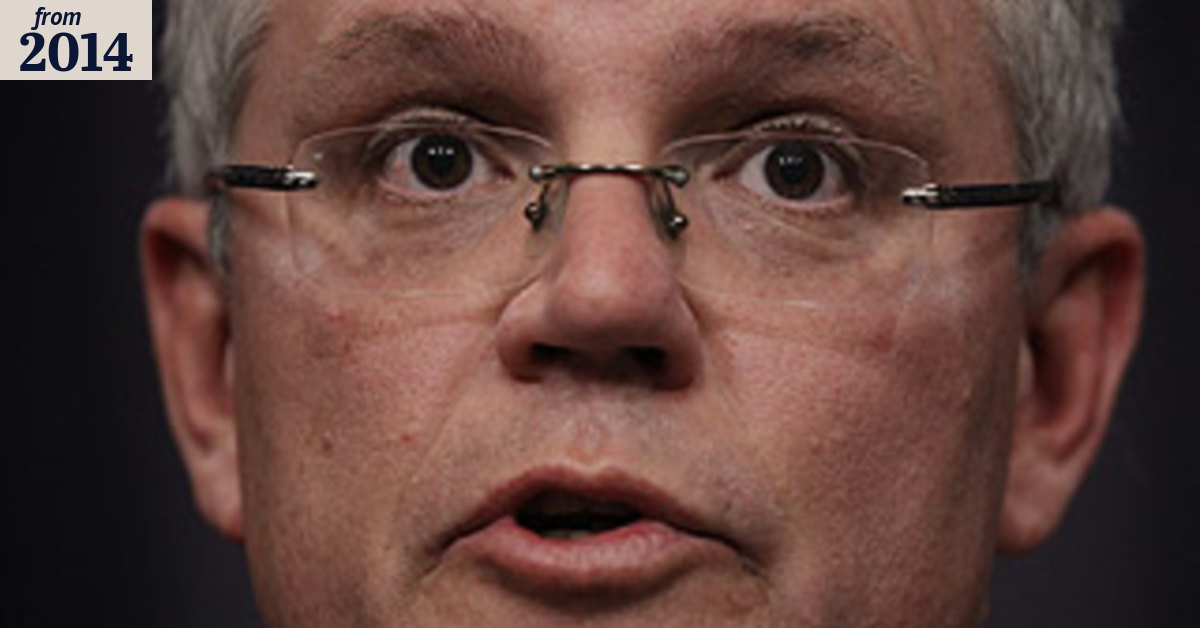
In May 2014, Immigration Minister Scott Morrison did personally intervene to cut $560,000 in funding allocated to the Refugee Council of Australia (RCOA) in the federal budget released just weeks earlier on May 13, 2014 [1][2].
Morrison stated publicly: "It's not my view, or the government's view that taxpayer funding should be there for what is effectively an advocacy group...
The Refugee Council of Australia, established in 1981, is a peak body representing a network of 185 organizations, 800 individual members, and thousands of supporters [2].
The Howard government withdrew the council's core funding in 2002 following the Tampa affair, and it was only restored when Labor won power in 2007 [1][2].
Morrison Morrison 明確 míng què 表示 biǎo shì , , 他 tā 「 「 正在 zhèng zài 將資金 jiāng zī jīn 安排 ān pái 恢 huī 復 fù 到 dào Howard Howard 政府 zhèng fǔ 時期 shí qī 的 de 狀態 zhuàng tài 」 」 [ [ 1 1 ] ] 。 。
Morrison explicitly stated he was "returning the funding arrangements to those that were in place under the Howard government" [1].
這確立 zhè què lì 了 le 一個 yī gè 明確 míng què 的 de 黨 dǎng 派 pài 模式 mó shì , , 即針 jí zhēn 對 duì 難民 nán mín 倡議 chàng yì 組織 zǔ zhī 的 de 資金 zī jīn 問題 wèn tí , , 此 cǐ 模式 mó shì 跨越 kuà yuè 了 le 多屆 duō jiè 政府 zhèng fǔ 。 。
This establishes a clear partisan pattern regarding funding for refugee advocacy organizations that spans multiple governments.
While the $560,000 amount is small in federal budget terms, the government framed this as part of broader fiscal consolidation efforts following their 2013 election victory on a platform of budget repair.
### ### 倡議 chàng yì 與 yǔ 服務 fú wù 提供 tí gōng 的 de 辯論 biàn lùn
The claim does not acknowledge the substantive policy debate about whether taxpayer funds should support advocacy organizations versus direct service delivery.
Morrison's rationale—that government should not fund organizations that primarily advocate against government policy—reflects a longstanding conservative position on NGO funding, not a unique or unprecedented action.
來源可信度評估
### ### Sydney Sydney Morning Morning Herald Herald ( ( SMH SMH ) )
### Sydney Morning Herald (SMH)
主要 zhǔ yào 來源 lái yuán 是 shì Sydney Sydney Morning Morning Herald Herald , , 這是 zhè shì 一份 yī fèn 由 yóu Nine Nine Entertainment Entertainment Co Co . . 擁有 yōng yǒu 的 de 澳洲 ào zhōu 主流 zhǔ liú 大報 dà bào 。 。
The primary source is the Sydney Morning Herald, a major Australian mainstream newspaper owned by Nine Entertainment Co.
SMH is generally regarded as center-left in its editorial stance but maintains professional journalistic standards.
Sarah Sarah Whyte Whyte ( ( 前 qián 堪培拉 kān péi lā 辦 bàn 公室 gōng shì 的 de 政治 zhèng zhì 記者 jì zhě ) ) 撰寫 zhuàn xiě 的 de 文章 wén zhāng 呈現 chéng xiàn 了 le 事實 shì shí 報導 bào dǎo , , 並 bìng 直接 zhí jiē 引用 yǐn yòng Morrison Morrison 和 hé 難民 nán mín 理事 lǐ shì 會 huì 執行長 zhí xíng zhǎng Paul Paul Power Power 的 de 言論 yán lùn , , 展現 zhǎn xiàn 了 le 合理 hé lǐ 的 de 平衡 píng héng [ [ 1 1 ] ] 。 。
The article by Sarah Whyte (former political reporter in the Canberra bureau) presents factual reporting with direct quotes from both Morrison and Refugee Council CEO Paul Power, demonstrating reasonable balance [1].
Credibility: **High** - Mainstream media outlet with professional standards, though with acknowledged center-left leanings.
### ### Green Green Left Left
### Green Left
第二 dì èr 個 gè 來源 lái yuán 是 shì Green Green Left Left ( ( 前身 qián shēn 為 wèi Green Green Left Left Weekly Weekly ) ) , , 它 tā 自稱 zì chēng 為 wèi 「 「 澳洲 ào zhōu 社會 shè huì 主義報紙 zhǔ yì bào zhǐ 」 」 , , 並且 bìng qiě 是 shì Socialist Socialist Alliance Alliance 的 de 事 shì 實上 shí shàng 機關 jī guān 報 bào [ [ 3 3 ] ] 。 。
The second source is Green Left (formerly Green Left Weekly), which describes itself as an "Australian socialist newspaper" and is the de facto newspaper of the Socialist Alliance [3].
According to Media Bias/Fact Check, Green Left "exclusively favor[s] the left" with "moderate use of loaded words" and an explicit mission to serve "anti-capitalist and socialist movements" [3].
**Did Labor do something similar?**
Search conducted: "Labor government cuts to advocacy NGO funding" and "Labor government refugee council funding history"
Finding: Labor restored the Refugee Council's funding in 2007 after the Howard government had cut it in 2002 [1][2].
* * * *
However, Labor governments have also reduced or restructured NGO funding when it aligned with their policy objectives.
More importantly, the Albanese Labor government (2022-present) has been criticized by refugee advocates for maintaining or deepening cuts to asylum seeker support programs.
According to the Asylum Seeker Resource Centre, Labor has "continued the Morrison Government's legacy of drastic cuts to social support for people seeking asylum, with a budget decrease of 54% for 2024-2025" [4].
Government funding for the Status Resolution Support Services (SRSS) program shrank from $300 million to $16.4 million over nine years spanning both Coalition and Labor governments [5].
This indicates that while Labor has typically been more supportive of refugee advocacy organizations rhetorically, both major parties have implemented significant cuts to asylum seeker and refugee support funding when in government.
While critics characterized the 2014 funding cut as "petty and vindictive" and an attempt to "silence critics" [2], the government provided a coherent (if contested) rationale based on:
1. **Precedent**: Returning to Howard-era funding arrangements where advocacy NGOs did not receive core government funding
2. **Principle**: The view that taxpayer funds should not support organizations that primarily exist to criticize government policy
3. **Fiscal consolidation**: Contributing to broader budget repair efforts, however symbolically
The Refugee Council's own CEO acknowledged that "the relationship between the refugee sector and government was probably at its lowest point ever" [1], suggesting the funding cut occurred within a broader context of deteriorating relations between the refugee advocacy sector and the Coalition government, rather than being an isolated punitive action.
When compared to the Howard government's complete withdrawal of core funding in 2002, Morrison's action—while significant—was not unprecedented in Coalition refugee policy.
Similarly, Labor's more recent continuation of asylum seeker support cuts demonstrates that fiscal constraints and policy priorities often override party rhetoric on refugee issues.
**Key context:** This was **not unique** to the Coalition.