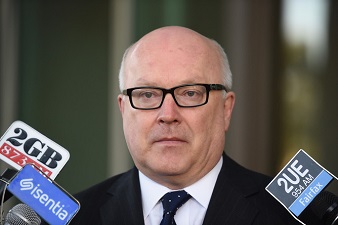
The Coalition government did introduce the National Security Legislation Amendment Act (No. 1) 2014, which included Section 35P creating new disclosure offences related to ASIO "Special Intelligence Operations" (SIOs) [1].
該 gāi 罪行 zuì xíng 設立 shè lì 了 le : :
The offences established:
- **5 years imprisonment** for disclosing information relating to an SIO (Section 35P(1)) [2]
- **10 years imprisonment** for aggravated disclosure where the disclosure endangers health/safety or prejudices an SIO (Section 35P(2)) [2]
The claim accurately describes the maximum penalties.
According to The Conversation's legal analysis, the offences apply to "any person, not just intelligence officers or government contractors" and critically, "There is no exemption for information disclosed in the public interest" [1].
Section 35P was specifically designed to protect SIO secrecy, not primarily to target whistleblowing about general intelligence activities [1].
這證實 zhè zhèng shí 了 le 論述 lùn shù 所稱 suǒ chēng 未納入 wèi nà rù 反 fǎn 貪腐 tān fǔ 豁免 huò miǎn 的 de 說法 shuō fǎ 。 。
Separate provisions in Schedule 6 of the same Act were the actual "anti-whistleblower" measures targeting intelligence officers who disclose classified information [1].
然而 rán ér , , 論述 lùn shù 中關 zhōng guān 於 yú 「 「 類似 lèi shì Edward Edward Snowden Snowden 的 de 洩密 xiè mì 」 」 的 de 說法 shuō fǎ 部分 bù fèn 不準確 bù zhǔn què 。 。
The Law Council of Australia confirmed in their 2015 submission to the Independent National Security Legislation Monitor (INSLM) that "The effect of the provisions is that nothing can be disclosed publicly about a SIO, including if it has been conducted illegally, or an innocent person is killed or tortured" [2].
Regarding the recklessness requirement: the offence requires a person be "reckless as to whether the information relates to an SIO" - meaning aware of a "substantial risk" that information relates to an SIO [1].
The Section 35P(2) requires more than mere disclosure:** The 10-year penalty only applies to aggravated offences where the disclosure endangers health/safety or prejudices an SIO, or where the person is reckless about such consequences [1][2].
Attorney-General consent requirement:** On 30 October 2014, the Attorney-General issued a Ministerial Direction that prosecutions of journalists under Section 35P require the Attorney-General's written consent [2].
This provides a significant safeguard, though the Law Council correctly noted this relies on "executive discretion" rather than statutory protection [2].
**3.
The provisions built on existing frameworks:** The SIO scheme was based on existing "controlled operations" regimes for the AFP in the Crimes Act 1914 [1].
Section 35P exacerbated existing dangers to journalists from Section 79 of the Crimes Act, which already allowed 7 years imprisonment for receiving classified information in espionage circumstances [1].
**4.
Amendments were later made:** Following the INSLM's 2015 report, the Turnbull Government accepted recommendations to amend Section 35P in 2016, adding further protections for journalists [3][4].
**5.
The context of the legislation:** These laws were introduced in July 2014 during heightened concerns about terrorism and foreign fighters returning from Syria/Iraq.
The government argued they were necessary for operational security during undercover counter-terrorism operations.
來源可信度評估
原始 yuán shǐ 資料 zī liào 來源 lái yuán 包括 bāo kuò : :
The original sources include:
- **The Age and SMH**: Fairfax Media publications (now Nine) generally rated as "left-center" bias by Media Bias/Fact Check with factual reporting [5].
- - * * * * The The Age Age 及 jí SMH SMH * * * * : : Fairfax Fairfax Media Media 出版物 chū bǎn wù ( ( 現為 xiàn wèi Nine Nine ) ) , , Media Media Bias Bias / / Fact Fact Check Check 評定 píng dìng 為 wèi 「 「 偏左 piān zuǒ 中間 zhōng jiān 」 」 偏見 piān jiàn , , 屬事實 shǔ shì shí 報導 bào dǎo [ [ 5 5 ] ] 。 。
These are mainstream reputable outlets.
- **Vice**: Generally credible but with a more alternative/activist editorial stance
- **Canberra Times**: Regional Fairfax publication with similar credibility to The Age/SMH
The sources are legitimate mainstream media, not partisan advocacy sites.
The legal concerns they raised were echoed by the Law Council of Australia [2] and legal academics writing in The Conversation [1], confirming the substantive issues were real and professionally validated.
However, the sources reflect the initial critical reaction to the legislation and don't capture the subsequent amendments or the fact that no prosecutions have occurred.
- - * * * * Canberra Canberra Times Times * * * * : : 地區性 dì qū xìng Fairfax Fairfax 出版物 chū bǎn wù , , 可信度 kě xìn dù 與 yǔ The The Age Age / / SMH SMH 相若 xiāng ruò 這些 zhè xiē 來源 lái yuán 是 shì 合法 hé fǎ 的 de 主流 zhǔ liú 媒體 méi tǐ , , 而 ér 非黨 fēi dǎng 派 pài 倡導 chàng dǎo 網站 wǎng zhàn 。 。 它們 tā men 提出 tí chū 的 de 法律 fǎ lǜ 關切 guān qiè 獲 huò 澳洲 ào zhōu 法律 fǎ lǜ 理事 lǐ shì 會 huì [ [ 2 2 ] ] 及 jí 在 zài The The Conversation Conversation 撰文 zhuàn wén 的 de 法律 fǎ lǜ 學者 xué zhě 呼應 hū yīng [ [ 1 1 ] ] , , 證實 zhèng shí 質性 zhì xìng 問題 wèn tí 是 shì 真 zhēn 實且 shí qiě 經專業驗證 jīng zhuān yè yàn zhèng 的 de 。 。 然而 rán ér , , 這些 zhè xiē 來源 lái yuán 反映 fǎn yìng 了 le 對 duì 立法 lì fǎ 的 de 最初 zuì chū 批判性 pī pàn xìng 反應 fǎn yīng , , 未涵 wèi hán 蓋後續 gài hòu xù 修正案 xiū zhèng àn 或 huò 尚未 shàng wèi 有 yǒu 起訴 qǐ sù 案例 àn lì 的 de 事實 shì shí 。 。
**Did Labor do something similar?**
The Rudd and Gillard Labor governments (2007-2013) also expanded national security and intelligence powers, though the specific SIO regime was introduced under the Coalition.
* * * *
Labor governments prosecuted whistleblowers and restricted intelligence disclosures:
- Labor introduced the Public Interest Disclosure Act 2013, which the Law Council noted provided "lesser" protection for intelligence officers compared to law enforcement officers [2]
- Under Labor, the "Witness K" prosecution began in 2013 regarding the alleged revelation of ASIS operations against Timor-Leste during 2004 oil treaty negotiations (during the Howard Coalition government, but prosecution initiated under Rudd) [6]
- Labor governments maintained and utilized existing espionage and secrecy offences under the Crimes Act
The fundamental approach to national security secrecy has been bipartisan.
The specific Section 35P mechanism was Coalition-introduced, but Labor has not opposed the underlying principles of intelligence operation secrecy - they supported the 2014 legislation through the Parliamentary Joint Committee on Intelligence and Security process.
While civil liberties groups, media unions (MEAA), and legal bodies legitimately raised serious concerns about Section 35P's impact on press freedom [3][4], the full context shows:
**Legitimate concerns confirmed:**
- No public interest exemption exists in the legislation [1][2]
- Journalists could theoretically face imprisonment for reporting on SIO-related misconduct [1]
- The "chilling effect" on investigative reporting of intelligence agencies is real [3]
- The Law Council explicitly stated the provisions could prevent disclosure of illegal activity or deaths during operations [2]
**Counterbalancing factors:**
- The laws were introduced during a specific counter-terrorism context (2014 foreign fighter concerns)
- Attorney-General consent requirements provide a prosecutorial safeguard [2]
- The provisions were subsequently reviewed and amended based on the INSLM's recommendations [4]
- No actual prosecutions of journalists have occurred under Section 35P
- Similar secrecy provisions already existed for other law enforcement operations [1]
**Comparative analysis:** The core issue of balancing national security secrecy against press freedom and anti-corruption transparency is not unique to the Coalition.
The bipartisan consensus on intelligence secrecy suggests this reflects systemic governance challenges rather than Coalition-specific authoritarianism.
The factual elements are accurate: the Coalition did introduce Section 35P with penalties of 5-10 years imprisonment for SIO-related disclosures, no anti-corruption exemptions exist, and reporting on deaths during security operations could theoretically be criminalized.
The "Edward Snowden type leaks" characterization is misleading because Section 35P targeted SIO operational secrecy specifically, not general intelligence whistleblowing [1].
論述 lùn shù 亦 yì 遺漏 yí lòu 了 le 司法部 sī fǎ bù 長 zhǎng 同意 tóng yì 保障 bǎo zhàng 、 、 後 hòu 續 xù 修正案 xiū zhèng àn 以及 yǐ jí 尚未 shàng wèi 有 yǒu 起訴 qǐ sù 案例 àn lì 的 de 事實 shì shí 。 。
The claim also omits the Attorney-General consent safeguard, subsequent amendments, and the fact that no prosecutions have occurred.
The framing suggests a unique Coalition authoritarianism that doesn't account for bipartisan consensus on intelligence secrecy or Labor's own whistleblower prosecutions.
The factual elements are accurate: the Coalition did introduce Section 35P with penalties of 5-10 years imprisonment for SIO-related disclosures, no anti-corruption exemptions exist, and reporting on deaths during security operations could theoretically be criminalized.
The "Edward Snowden type leaks" characterization is misleading because Section 35P targeted SIO operational secrecy specifically, not general intelligence whistleblowing [1].
論述 lùn shù 亦 yì 遺漏 yí lòu 了 le 司法部 sī fǎ bù 長 zhǎng 同意 tóng yì 保障 bǎo zhàng 、 、 後 hòu 續 xù 修正案 xiū zhèng àn 以及 yǐ jí 尚未 shàng wèi 有 yǒu 起訴 qǐ sù 案例 àn lì 的 de 事實 shì shí 。 。
The claim also omits the Attorney-General consent safeguard, subsequent amendments, and the fact that no prosecutions have occurred.
The framing suggests a unique Coalition authoritarianism that doesn't account for bipartisan consensus on intelligence secrecy or Labor's own whistleblower prosecutions.