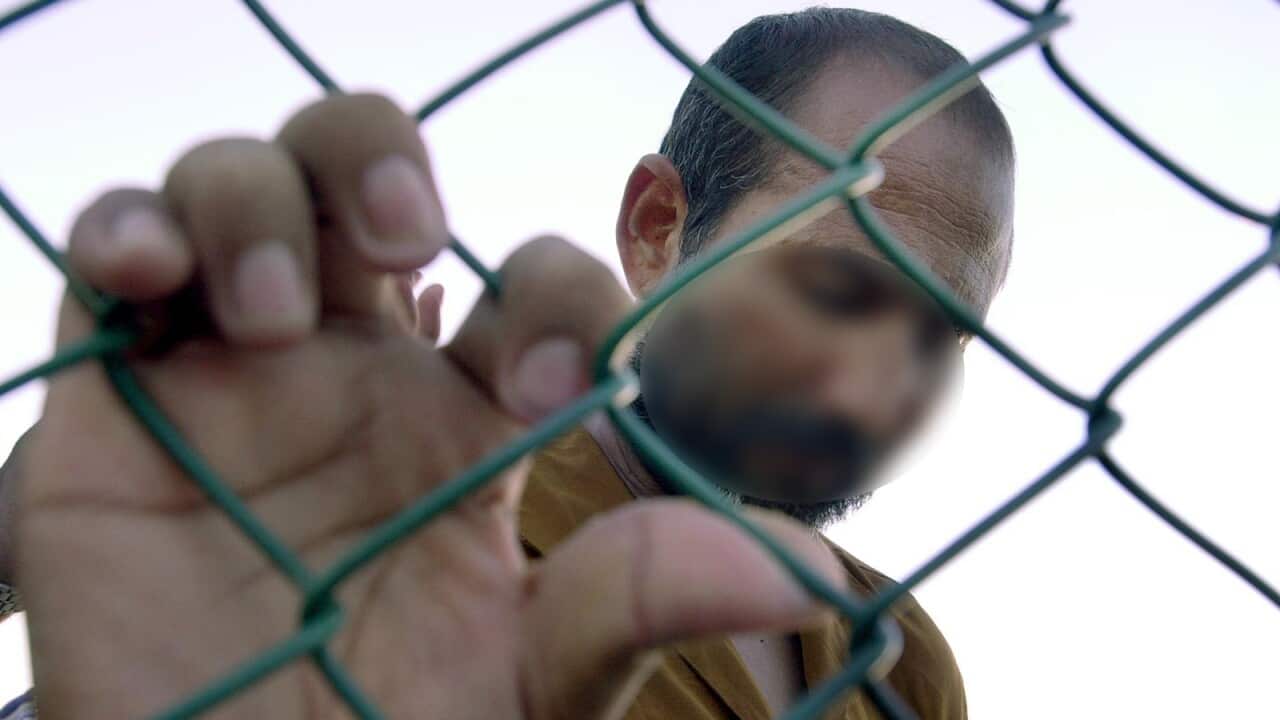
The claim refers to Hamid Kehazaei, a 24-year-old Iranian asylum seeker who died on September 5, 2014, after developing septicaemia from an infected cut on his foot at the Manus Island detention centre [1].
事件 shì jiàn 的 de 核心 hé xīn 事實 shì shí 如下 rú xià : :
The core facts of the incident are:
- Kehazaei cut his foot at the detention centre three weeks prior to his death [1]
- He developed septicaemia (bloodstream infection) from the wound [1]
- He was transferred from Manus Island to Port Moresby and then to Brisbane's Mater Hospital for treatment [1]
- He suffered a heart attack and was declared brain dead on September 1, 2014 [1]
- His family consented to withdrawal of life support, and he died on September 5, 2014 [1]
However, the claim that medical treatment was "refused" is **not accurate**.
Medical documents obtained by The Guardian and ABC revealed:
- Kehazaei first presented with an infected blister on his left shin and fever on August 23, 2014 [2]
- On August 25, International Health and Medical Services (IHMS) recommended his "urgent transfer" to Port Moresby [2]
- His transfer was delayed for 19 hours due to visa requirements to enter Papua New Guinea [2]
- The antibiotics needed to treat his infection had run out on Manus Island [2]
- By August 26, his condition had deteriorated significantly, with laboured breathing and dangerously low blood pressure [2]
The Queensland coroner later found that "a series of medical and communication errors led to the death" and that it was preventable [3].
Bureaucratic delays, not refusal:** The delay was caused by visa processing requirements for entry into Papua New Guinea, not an explicit refusal of medical care by Australian authorities [2].
An IHMS whistleblower, Dr John Vallentine, had warned in April 2013 about inadequate medical equipment and supplies on Manus Island, including missing antibiotics, oxygen, blood transfusion capabilities, and pediatric emergency facilities [4].
**3.
Offshore detention policy origins:** The Manus Island detention centre was reopened in August 2012 under the **Labor Gillard government** as part of the "Pacific Solution" phase two [5].
The original source provided is ABC News, which is Australia's national public broadcaster and generally considered a reputable, mainstream news source with high journalistic standards.
ABC ABC 對此 duì cǐ 事件 shì jiàn 的 de 報導 bào dǎo 事實 shì shí 準確 zhǔn què , , 包括 bāo kuò 移民部 yí mín bù 長 zhǎng Scott Scott Morrison Morrison 的 de 官方 guān fāng 聲明 shēng míng 、 、 醫療 yī liáo 細節 xì jié 以及 yǐ jí 難民倡 nán mín chàng 導者 dǎo zhě 的 de 觀點 guān diǎn [ [ 1 1 ] ] 。 。
The ABC's reporting on this incident was factual and included official statements from Immigration Minister Scott Morrison, medical details, and perspectives from refugee advocates [1].
Additional sources consulted include The Guardian, Sydney Morning Herald, and parliamentary records - all mainstream media outlets with established credibility.
**Did Labor do something similar?**
Search conducted: "Labor government asylum seeker offshore detention medical deaths" and "Labor Manus Nauru reopened 2012"
**Finding:** Yes, Labor established the policy framework that directly contributed to this death:
1. **Labor reopened offshore detention:** In August 2012, Prime Minister Julia Gillard reopened the Manus Island and Nauru detention centres that had been closed by the Rudd government in 2008 [5].
* * * *
Kehazaei was sent to Manus under this reinstated policy.
2. **Labor's "no advantage" policy:** Labor implemented a policy that asylum seekers arriving by boat on or after August 13, 2012, would be sent to Nauru or Manus Island for processing and, if found to be refugees, would be required to remain there indefinitely [5].
3. **Deaths at sea under Labor:** The 2010 Christmas Island boat disaster (SIEV-221) occurred under Labor, killing 50 asylum seekers when their vessel was smashed against rocks [7].
This was described as "the worst civilian maritime disaster in Australia in more than a century" [7].
4. **SIEV X (2001, Howard government):** While preceding Labor, the SIEV X tragedy killed 353 asylum seekers (mainly women and children) when a boat sank en route to Australia [8].
5. **Subsequent deaths under Coalition:** The Omid Masoumali case (2016) - a refugee who self-immolated on Nauru - was also found by the Queensland coroner to have died from inadequate medical care [9].
**Key distinction:** While both parties implemented offshore detention policies that led to deaths, the specific claim about Kehazaei relates to medical delays within a system that Labor had re-established.
However, the framing of this as the Coalition "refusing" medical treatment oversimplifies a complex situation:
**Legitimate criticisms:**
- Medical records confirm treatment was delayed due to visa processing issues [2]
- The Manus Island clinic lacked adequate supplies, including the necessary antibiotics [2]
- Whistleblowers had warned about medical deficiencies before this death occurred [4]
- The Queensland coroner found the death was preventable and resulted from medical and communication errors [3]
- Dr Peter Young, former IHMS mental health director, stated the death highlighted "systemic failure" in offshore detention medical care [2]
**Context and mitigating factors:**
- Kehazaei did receive medical attention, and a transfer was eventually arranged - the issue was delay, not refusal [1][2]
- The government committed to a clinical review and cooperated with the coronial investigation [1]
- The offshore detention system and its inherent medical access problems were inherited from Labor's 2012 policy restart [5]
- The remote location of Manus Island created inherent logistical challenges for emergency medical care
**Comparative analysis:**
This death occurred within a bipartisan policy framework.
* * * * 合理 hé lǐ 的 de 批評 pī píng : : * * * *
The Labor Gillard government reopened Manus Island in 2012, and the Coalition continued operating it.
Both governments have overseen asylum seeker deaths - Labor through the 2010 Christmas Island disaster (50 deaths) and establishment of the offshore system; the Coalition through deaths in offshore facilities including Kehazaei and Barati.
The claim implies this was a unique Coalition failure, but offshore detention deaths have occurred under both major parties' policies, suggesting this is a systemic issue with the offshore detention model itself rather than specific to one government's approach.
Medical treatment was not "refused" - rather, a critically ill asylum seeker experienced dangerous delays in being transferred to adequate medical facilities due to bureaucratic visa processing requirements and systemic supply shortages.
However, the framing as a "refusal" of treatment is inaccurate and omits critical context that the offshore detention system responsible for this death was re-established by the Labor government in 2012, and that asylum seeker deaths have tragically occurred under both parties' policies.
Medical treatment was not "refused" - rather, a critically ill asylum seeker experienced dangerous delays in being transferred to adequate medical facilities due to bureaucratic visa processing requirements and systemic supply shortages.
However, the framing as a "refusal" of treatment is inaccurate and omits critical context that the offshore detention system responsible for this death was re-established by the Labor government in 2012, and that asylum seeker deaths have tragically occurred under both parties' policies.