The Department of Immigration and Border Protection (under Immigration Minister Peter Dutton) commissioned and produced a telemovie titled *Journey* at a total cost of approximately **$6 million** (specifically $5.97 million) [1].
The cost breakdown, confirmed by government tender documents and Senate estimates, was:
- **$4.34 million** paid to Put It Out There Pictures (Sydney-based production company) for film production [1]
- **$1.63 million** paid to Lapis Communications for promotion and advertising [1]
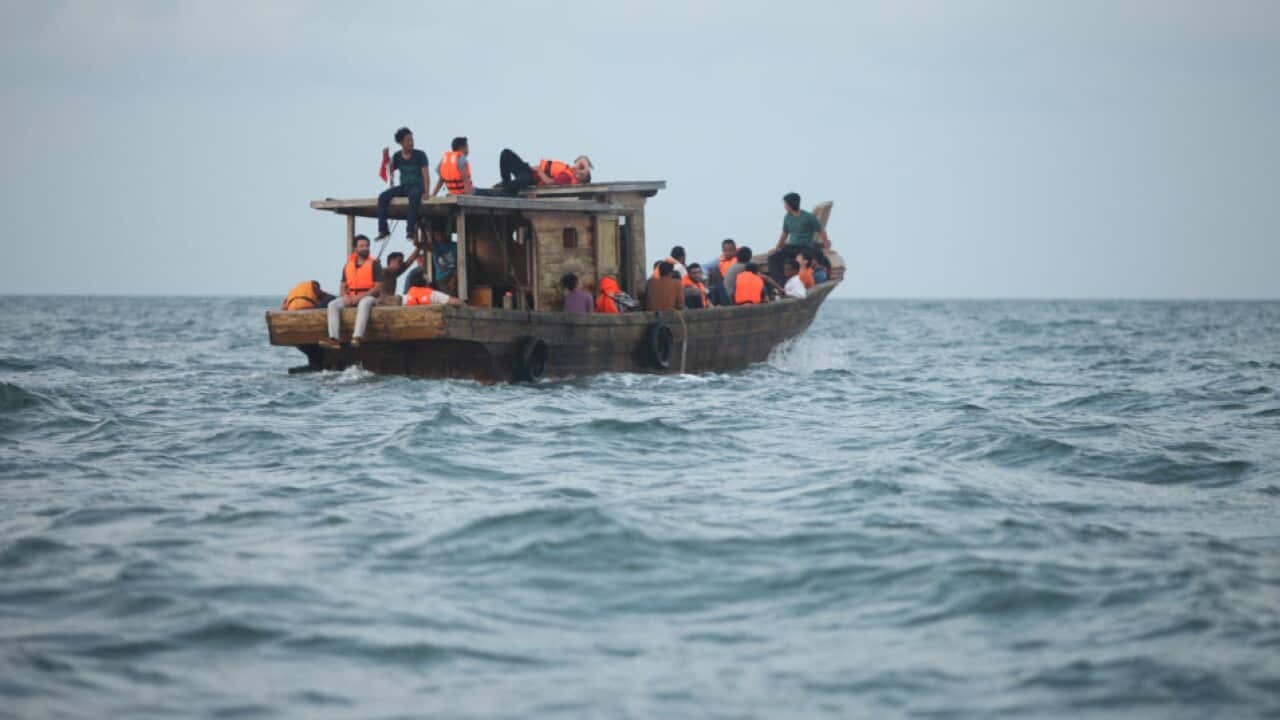
The 90-minute telemovie was filmed across three countries with cast and crew from 13 countries.
- - * * * * 434 434 萬 wàn 澳元 ào yuán * * * * 支付 zhī fù 給 gěi Put Put It It Out Out There There Pictures Pictures ( ( 悉尼 xī ní 製 zhì 作 zuò 公司 gōng sī ) ) 用 yòng 於電 yú diàn 影 yǐng 製 zhì 作 zuò [ [ 1 1 ] ]
It premiered on Afghan television in March 2016, and was also screened in Pakistan, Iran, and Iraq [1][2].
Regarding the language availability claim: The film was produced in and made available in **Dari, Pashto, Urdu, Arabic, and Farsi** - languages spoken in the target source countries [1][3].
This was an intentional decision since the target audience was potential asylum seekers in Afghanistan, Iran, Pakistan, and Iraq, not English-speaking audiences.
The claim omits that this telemovie was part of a larger, ongoing communication campaign under "Operation Sovereign Borders." The Department stated the film was a "key part" of their anti-people smuggling strategy and was designed to reach a potential audience of 50 million people [1][2].
According to the Sydney Morning Herald's reporting: "It's not the first time the department has strayed into drama. **Under Labor, it commissioned a radio drama, but that was much less expensive**" [1].
This demonstrates that using dramatic media for deterrence messaging was not unique to the Coalition - though the scale and cost differed significantly.
The film was specifically targeted at populations in Afghanistan, Iran, Iraq, and Pakistan - where the languages used (Dari, Pashto, Urdu, Arabic, Farsi) are spoken.
The government defended the expenditure as necessary for "saving lives" by discouraging dangerous boat journeys.
### ### 4 4 . . 政策 zhèng cè 正當性 zhèng dāng xìng
The production company's website stated the film aimed to "educate and inform audiences in source countries about the futility of investing in people smugglers, the perils of the trip, and the hardline policies that await them if they do reach Australian waters" [1][2].
* * * * Canberra Canberra Times Times * * * * - - 原始 yuán shǐ 來源 lái yuán 引用 yǐn yòng 的 de 是 shì Fairfax Fairfax Media Media 的 de Canberra Canberra Times Times ( ( 現為 xiàn wèi Nine Nine Entertainment Entertainment 的 de 一部分 yī bù fèn ) ) 。 。
**Canberra Times** - The original source referenced is Fairfax Media's Canberra Times (now part of Nine Entertainment).
Fairfax Fairfax Media Media 通常 tōng cháng 被 bèi 認為 rèn wèi 是 shì 信譽 xìn yù 良好 liáng hǎo 的 de 主流 zhǔ liú 媒體 méi tǐ 機構 jī gòu , , 儘 jǐn 管 guǎn Canberra Canberra Times Times 的 de 發行量 fā xíng liàng 小 xiǎo 於 yú Sydney Sydney Morning Morning Herald Herald 或 huò The The Age Age 。 。
Fairfax was generally considered a reputable mainstream media organization, though the Canberra Times had a smaller circulation than the Sydney Morning Herald or The Age.
The article appears to have been syndicated or similar to the SMH reporting.
**YouTube** - A YouTube link without specific context makes this source difficult to assess for credibility.
**Did Labor do something similar?**
**Yes - though at a smaller scale.**
According to Sydney Morning Herald reporting on this exact issue: "It's not the first time the department has strayed into drama.
* * * *
Under Labor, it commissioned a radio drama, but that was much less expensive" [1].
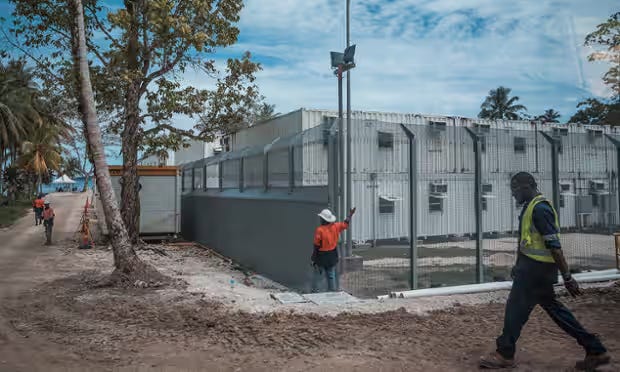
Additionally, the **Rudd Labor government introduced the "PNG Solution" in July 2013**, which was the foundational policy that established that asylum seekers arriving by boat would never be settled in Australia [4][5].
* * * *
This policy was later continued and reinforced by the Coalition's "Operation Sovereign Borders."
The use of communication campaigns to deter asylum seekers was not a Coalition invention - both major Australian parties have employed deterrence messaging, though the specific $6 million telemovie represented a significant escalation in spending and production values compared to previous efforts.
Labor's offshore detention policy (which began in 2012-2013) cost over **$1 billion annually** by 2015-2016 [4], far exceeding the cost of this telemovie, demonstrating that deterrence-based approaches were bipartisan, even if the specific methods differed.
人權 rén quán 組織 zǔ zhī 和 hé 難民倡 nán mín chàng 導者 dǎo zhě 提出 tí chū 了 le 合理 hé lǐ 的 de 擔憂 dān yōu : :
Human rights organizations and refugee advocates raised legitimate concerns:
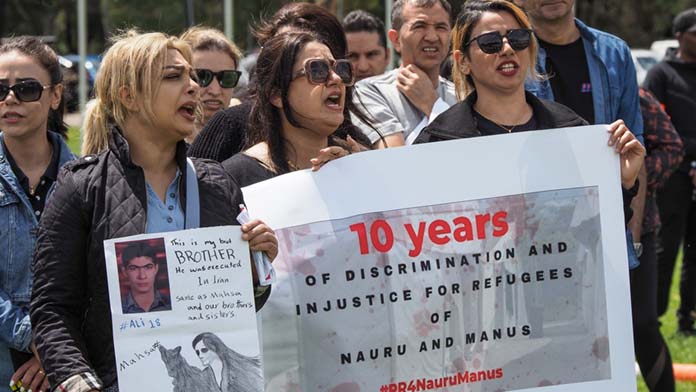
- **Amnesty International** criticized the expenditure, with Refugee Coordinator Graham Thom stating: "That money could have been spent to address the root causes of why people are forced to flee their homes, used to support people in transit, or put towards increasing and improving the efficiency of resettling people to Australia" [2][3].
- **Refugee Council of Australia** CEO Paul Power agreed that the money could have been better spent on practical support for displaced people [2].
- **Comparative budget context**: The film's budget exceeded the combined budgets of iconic Australian films *Priscilla Queen of the Desert* (~$2M), *Wolf Creek* (~$1M), and *The Castle* ($750,000) - even when adjusted for inflation (combined ~$5.8M in 2016 dollars) [1].
- **Producer's own words**: Trudi-Ann Tierney, the director of Put It Out There Pictures, previously described her work on Afghan television as "propaganda" and part of "psychological operations" in her book *Making Soapies in Kabul* [1].
The Coalition government defended the expenditure with several arguments:
- **Life-saving intent**: The stated purpose was to prevent deaths at sea by discouraging people from attempting dangerous boat journeys with people smugglers.
- **Research-based approach**: The Department cited "independent research in these countries has revealed misunderstandings and false rumours about Australia's policy, and a perception that Australia remains a preferred destination country for those seeking to travel illegally by boat" [1][2].
- **Effectiveness**: The government claimed "initial feedback from viewers has been positive" [1].
- **Scale of reach**: With a potential audience of 50 million and screenings across multiple countries, the per-viewer cost was relatively low.
- **Innovation**: The Department described this as the first time such "innovative methods" had been used to reach the target audience directly [3].
- - * * * * 製 zhì 作 zuò 人 rén 自己 zì jǐ 的 de 話 huà * * * * : : Put Put It It Out Out There There Pictures Pictures 董事 dǒng shì Trudi Trudi - - Ann Ann Tierney Tierney 此前 cǐ qián 在 zài 其 qí 著作 zhù zuò 《 《 在 zài 喀布 kā bù 爾 ěr 製 zhì 作 zuò 肥皂 féi zào 劇 jù 》 》 中將 zhōng jiāng 她 tā 在 zài 阿富汗 ā fù hàn 電視台 diàn shì tái 的 de 工作 gōng zuò 描述 miáo shù 為 wèi 「 「 宣傳 xuān chuán 」 」 和 hé 「 「 心理 xīn lǐ 戰 zhàn 」 」 的 de 一部分 yī bù fèn [ [ 1 1 ] ] 。 。
Both major Australian parties have pursued deterrence-based asylum seeker policies.
### ### 政府 zhèng fǔ 的 de 正 zhèng 當性 dāng xìng
The Rudd Labor government (2013) and the Abbott/Turnbull Coalition governments (2013-2022) both maintained that asylum seekers arriving by boat would not be settled in Australia.
The telemovie represented a continuation and intensification of this bipartisan deterrence approach, using a higher-budget dramatic format.
**Key context:** This was **not unique to the Coalition** - deterrence messaging was a bipartisan approach, though the specific high-cost telemovie format was a Coalition initiative that significantly exceeded previous Labor efforts.
The claim accurately states that the Coalition government spent approximately $6 million on a telemovie (*Journey*) intended to deter asylum seekers, and that no English dubbing or subtitles were available (by design, since the target audience spoke other languages).
The dramatic framing omits that this was part of a larger, ongoing anti-people smuggling strategy that had bipartisan elements
The claim is factually accurate on the core elements but lacks important context about precedent and the bipartisan nature of Australia's asylum seeker deterrence approach.
The claim accurately states that the Coalition government spent approximately $6 million on a telemovie (*Journey*) intended to deter asylum seekers, and that no English dubbing or subtitles were available (by design, since the target audience spoke other languages).
The dramatic framing omits that this was part of a larger, ongoing anti-people smuggling strategy that had bipartisan elements
The claim is factually accurate on the core elements but lacks important context about precedent and the bipartisan nature of Australia's asylum seeker deterrence approach.