The cancellation of AIR 7003 Phase 1 (the SkyGuardian armed remotely piloted aircraft program) was indeed revealed during a Senate Estimates hearing on April 1, 2022 [1][2].
The Department of Defence official Matt Yannopoulos disclosed the decision during questioning about budget allocations, specifically when asked about increased funding to the Australian Defence Force's cyber capabilities [2].
**Timeline and Facts:**
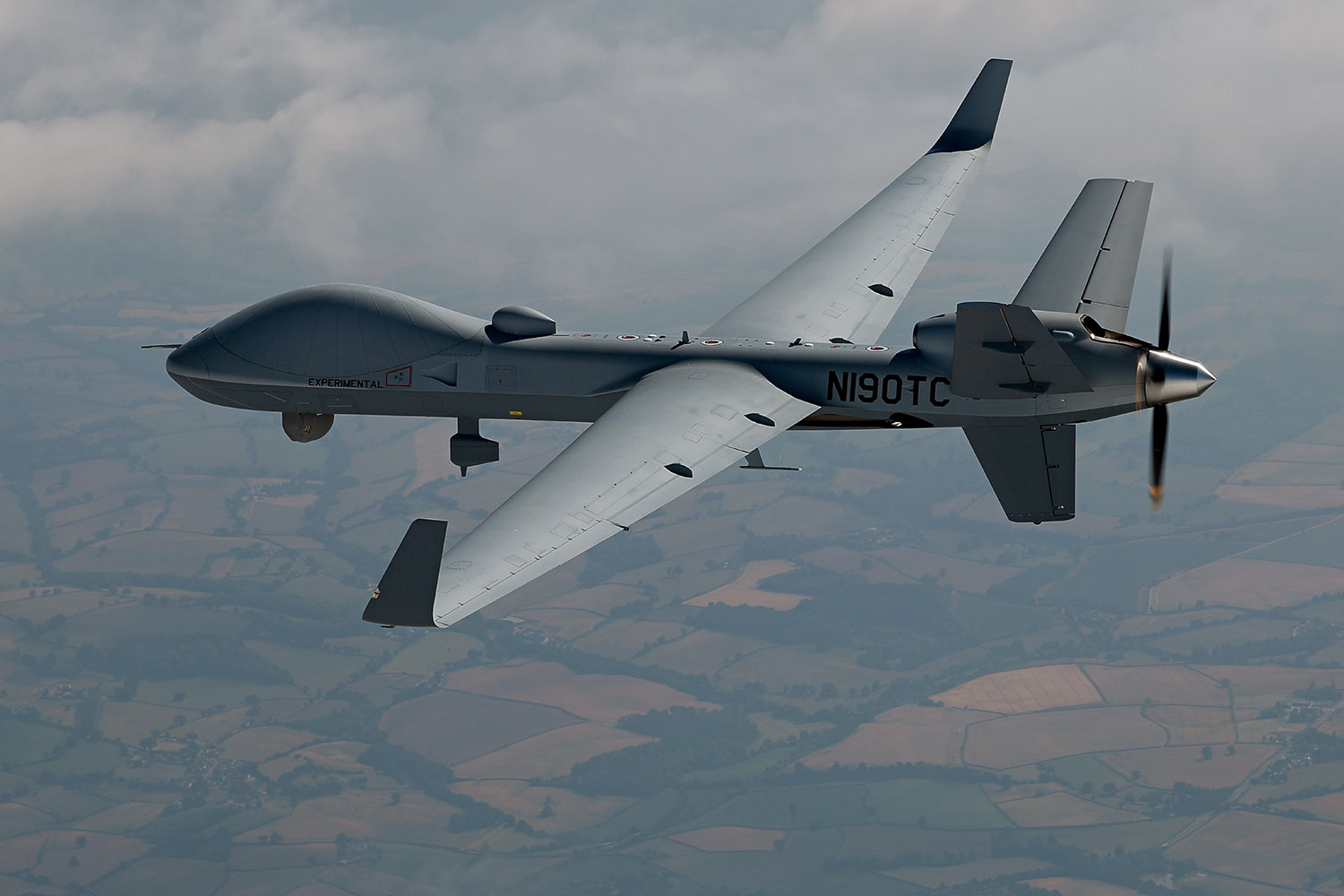
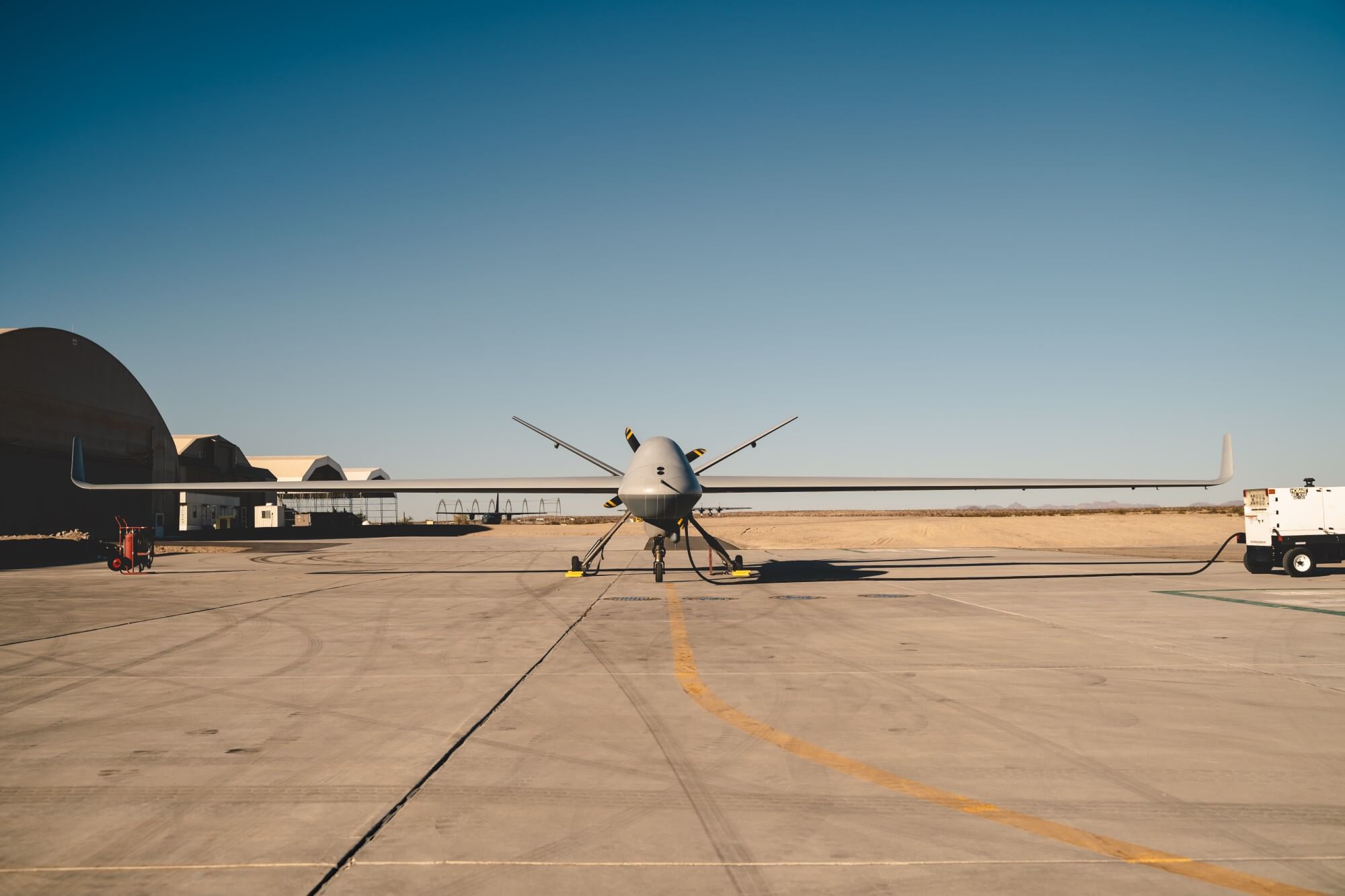
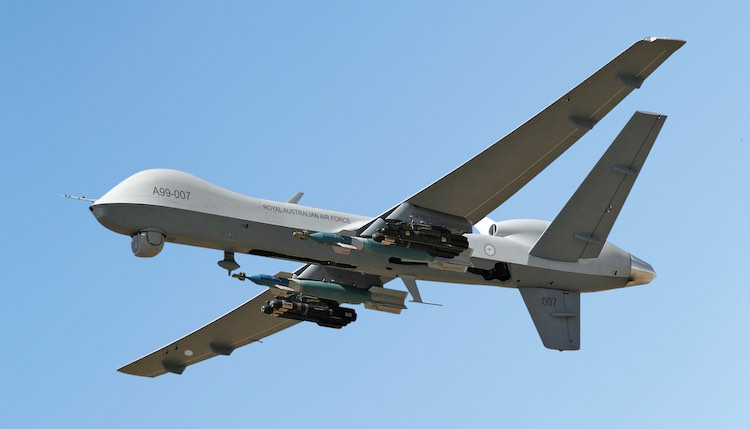
- Australia had been seeking to purchase 12 MQ-9B SkyGuardian armed drones since 2018 [1]
- The United States approved the sale in April 2021 [1]
- The program was valued at approximately $1.3 billion (or about $2 billion total including associated costs mentioned in some sources) [1][2]
- US contractor General Atomics was notified of the cancellation during the April 1, 2022 Senate Estimates hearing [2]
- Initial operating capability had been expected in the mid-2020s [2]
- Approximately $10 million had been spent on the program prior to cancellation [2]
- Only second pass approval had been planned for that year [2]
The decision was not announced in the preceding Tuesday's budget papers [1], and it was revealed during Senate Estimates rather than through a press release or ministerial statement [2].
對 duì 於 yú 如此 rú cǐ 規模 guī mó 的 de 項 xiàng 目來 mù lái 說 shuō , , 這確 zhè què 實是 shí shì 不 bù 尋常 xún cháng 的 de 。 。
This is legitimately unusual for a project of this magnitude.
However, the cancellation was not hidden indefinitely—it came to light through normal parliamentary scrutiny processes at a Senate Estimates hearing [1].
Defence Minister Peter Dutton was questioned about changes to the department's Integrated Investment Program on the Wednesday before the Estimates hearing, and while he did not provide specific details about the drone cancellation at that point, he indicated there would be further announcements about affected programs [1].
The $1.3 billion in SkyGuardian funding (along with other sources) was being redirected to the **Resilience, Effects, Defence, Space, Intelligence, Cyber and Enablers (REDSPICE)** program [1][2].
REDSPICE received $9.9 billion in the 2022 Budget to significantly expand Australia's offensive and defensive cyber security capabilities, including doubling the size of the Australian Signals Directorate with 1,900 new staff over the next decade [2].
Of the $4.2 billion provided over four years, around $588.7 million was new funding, with the remainder sourced from Defence's integrated investment program, including the SkyGuardian allocation [2].
This reallocation decision reflected a government assessment that cyber capability needed prioritization in the context of geopolitical changes and changing strategic threats [2].
Labor's defence spokesperson Brendan O'Connor criticized the decision for not providing advance notice to Australian defence industry, stating it demonstrated the government did not care about Australian manufacturing [1].
Local defence contractors were expecting to participate, but the primary contractor was American.
這與 zhè yǔ O O ' ' Connor Connor 聲明 shēng míng 中 zhōng 提到 tí dào 的 de 攻擊級 gōng jī jí 潛艇 qián tǐng 等 děng 項目 xiàng mù 不同 bù tóng , , 後 hòu 者 zhě 涉及 shè jí 直接 zhí jiē 的 de 澳大利 ào dà lì 亞 yà 製 zhì 造 zào 合作 hé zuò 夥 huǒ 伴關 bàn guān 係 xì 。 。
This differs from programs like Attack Class submarines (mentioned in O'Connor's statement), which involved direct Australian manufacturing partnerships.
The outlet is generally considered reputable mainstream media with no particular partisan lean, though it covers politics extensively. [1]
**AeroTime:** AeroTime is a specialized aviation and aerospace trade publication.
It provides factual reporting on the cancellation but with less contextual depth than the Canberra Times piece.
它 tā 對 duì 取消 qǔ xiāo 事件 shì jiàn 進行 jìn xíng 了 le 事實 shì shí 報導 bào dǎo , , 但 dàn 背景 bèi jǐng 深度 shēn dù 不如 bù rú Canberra Canberra Times Times 的 de 文章 wén zhāng 。 。
The outlet is focused on the aviation industry rather than being a general news source, making it suitable for technical/industry details but not comprehensive policy analysis. [2]
Both sources accurately reported the cancellation and the April 1, 2022 Senate Estimates disclosure date.
**Did Labor do something similar?**
Search conducted: "Labor government military procurement cancellation armed drone Australia"
**Finding:** The Labor government under Prime Minister Anthony Albanese (since 2022) **has not cancelled an equivalent armed drone program.** Instead, the Albanese government has invested heavily in drone capability expansion [3][4][5].
**Labor's Drone Approach (Post-2022):**
The Albanese Government announced major drone acquisition programs:
- Invested over $100 million to boost ADF drone arsenals with lethal and non-lethal capabilities [4]
- Committed over $10 billion on drone capability development over the next decade, including at least $4.3 billion on uncrewed aerial systems [3]
- Issued $16.9 million in initial contracts to 11 vendors for drone and counter-drone technologies (Project LAND 156) [3]
- Accelerating acquisition of cutting-edge drone and counter-drone technologies in response to changing security environment [3]
**Critical Comparison:** Rather than cancelling drone programs like the Coalition did, Labor has **expanded** Australian drone capabilities significantly.
* * * *
The Albanese government's approach shows commitment to armed and uncrewed aerial systems development, contrasting sharply with the Morrison government's decision to redirect SkyGuardian funding.
搜索 sōu suǒ 進行 jìn xíng : : 「 「 Labor Labor government government military military procurement procurement cancellation cancellation armed armed drone drone Australia Australia 」 」 ( ( 工黨 gōng dǎng 政府 zhèng fǔ 軍事 jūn shì 採購 cǎi gòu 取消 qǔ xiāo 武裝 wǔ zhuāng 無人機 wú rén jī 澳大利 ào dà lì 亞 yà ) )
Labor's approach represents prioritization of drones, while Morrison's represented deprioritization in favor of cyber capabilities.
**Labor's Historical Precedent:** Labor governments have historically faced military procurement controversies (Attack Class submarine cost blowouts under Rudd/Gillard, various equipment delays), but there is no direct precedent of Labor cancelling a major armed platform acquisition post-signature to reallocate to cyber/intelligence capabilities.
取消 qǔ xiāo 在 zài 幾個 jǐ gè 方面 fāng miàn 確實 què shí 存在 cún zài 問題 wèn tí : :
The cancellation was genuinely problematic for several reasons:
1. **Lack of Notice:** The decision was not communicated in advance to the defense industry or announced publicly through normal channels, only emerging during Senate Estimates [1].
This created legitimately unfair conditions for contractors and suppliers who had made investments expecting project continuation.
2. **Timing and Transparency:** The fact that this major decision wasn't included in budget papers despite its significance, and only emerged during parliamentary questioning, raises legitimate concerns about government communication and transparency [1].
3. **Strategic Capability Loss:** Australia was abandoning development of an armed medium-altitude long-endurance remotely piloted aircraft capability after years of planning and U.S. approval [1].
這為 zhè wèi 期望 qī wàng 項目 xiàng mù 繼續 jì xù 進行 jìn xíng 而 ér 做出 zuò chū 投資 tóu zī 的 de 承包商 chéng bāo shāng 和 hé 供 gōng 應商 yīng shāng 創造 chuàng zào 了 le 確實 què shí 不 bù 公平 gōng píng 的 de 條件 tiáo jiàn 。 。
This represents a significant gap in the capability spectrum.
4. **Industry Confidence:** The decision reverberated through Australian defense industry during a period already marked by the Attack Class submarine cancellation, creating legitimate uncertainty about government commitment to major defence projects [1].
1. **Cyber Threat Priority:** The geopolitical context in early 2022 (Russian invasion of Ukraine, escalating China-Taiwan tensions, cyber threats) made the case for cyber capability expansion legitimate [2].
The government assessed that strategic priorities had shifted toward cyber and intelligence capabilities.
2. **Budget Constraints:** The Morrison government faced real budget pressures.
The entire $1.3 billion SkyGuardian allocation was being redirected, not spent on cyber *in addition to* existing budgets [2].
### ### 合理 hé lǐ 的 de 理由 lǐ yóu / / 背景 bèi jǐng
This was a trade-off decision, not a case of cost-saving creating windfalls.
3. **Program Maturity:** Only $10 million had been spent on SkyGuardian, and only initial acquisition had been approved with second-pass approval still pending [2].
This was not cancelling a well-advanced program, but stopping one in the early phases.
4. **General Atomics as Contractor:** The primary contractor was American, not Australian, limiting the "Australian manufacturing" argument compared to local-content programs.
Australian firms were expecting to support, but the main contractor was foreign [1].
5. **Government Prerogative:** Governments have the legitimate authority to reprioritize defence spending based on changing strategic assessments.
The Morrison government in April 2022 may have genuinely believed cyber was more critical than armed drones in that moment.
**Key Context:** This is not unique to the Coalition.
The cancellation was disclosed through proper parliamentary processes (Senate Estimates) on April 1, 2022, though not announced in advance to the public or industry.
The decision was strategically motivated (cyber capability prioritization) and legally within government authority, though the manner and timing of disclosure was problematic and lack of industry notice was unfair [1][2].
最終分數
6.0
/ 10
部分真實
該主張 gāi zhǔ zhāng 在 zài 事實 shì shí 上 shàng 是 shì 準確 zhǔn què 的 de — — — — 莫里森 mò lǐ sēn 政府 zhèng fǔ 確實 què shí 取消 qǔ xiāo 了 le 一項 yī xiàng 價值 jià zhí 13 13 億 yì 美元 měi yuán 的 de 無人機 wú rén jī 採購 cǎi gòu 合約 hé yuē 。 。
The claim is factually accurate—the Morrison government did cancel a $1.3 billion drone procurement contract.
The cancellation was disclosed through proper parliamentary processes (Senate Estimates) on April 1, 2022, though not announced in advance to the public or industry.
The decision was strategically motivated (cyber capability prioritization) and legally within government authority, though the manner and timing of disclosure was problematic and lack of industry notice was unfair [1][2].